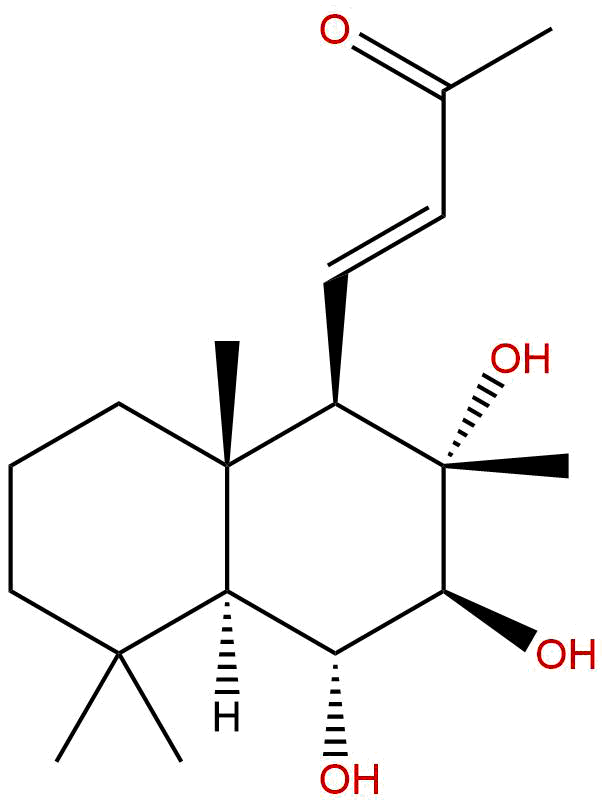
Stevia A: A systematic review from natural sesquiterpenes to lead compounds against diabetes
Introduction/Overview
As a global metabolic disease, the incidence rate of diabetes continues to rise, which has become a major public health problem threatening human health. According to the statistics of the International diabetes Federation (IDF), the number of diabetes patients worldwide has exceeded 537 million, and it is expected to exceed 700 million by 2045. In the field of diabetes treatment, although a variety of synthetic drugs such as metformin, sulfonylureas, DPP-4 inhibitors, etc. have been widely used in clinical practice, problems such as drug resistance, side effects and patient compliance still need to be solved. Therefore, searching for novel hypoglycemic active molecules from natural products has always been a hot topic in drug development.
Sterebins A (CAS number: 107647-14-3) is a compound derived from the Asteraceae plant Stevia rebaudiana(Stevia rebaudiana The sesquiterpenes isolated from Bertoni. Stevia, as an important natural sweetener plant, has been widely studied and applied in the food industry for its sweet component steviol glycosides. However, the pharmacological activity research of non glycosidic secondary metabolites, especially sesquiterpenes, in Stevia rebaudiana is relatively lagging behind. In recent years, with the deepening of systematic research on the chemical composition of stevia, steviol A has gradually entered the field of researchers, and its unique hypoglycemic activity and multi-target mechanism of action have attracted widespread attention.
Stevine A belongs to the eudemane type sesquiterpenes, with a molecular skeleton consisting of 15 carbon atoms and a typical bicyclic [4.4.0] decane structure. Preliminary studies have shown that this compound can exert hypoglycemic effects through multiple pathways, including regulating key enzymes in glucose metabolism, improving insulin signaling pathways, and modulating inflammatory responses. Different from traditional single target hypoglycemic drugs, stevia A shows unique advantages in the treatment of type 2 diabetes and its complications due to its multi target action characteristics.
This article will comprehensively and systematically review the research progress of steviol A from the aspects of chemical structure, plant origin, pharmacological activity, mechanism of action, medicinal evaluation, and clinical application prospects, aiming to provide theoretical basis and reference for the in-depth development of this natural product.
Chemical structure and physicochemical properties
Chemical structural characteristics
Stevicin A belongs to the eucalyptol type sesquiterpene lactone class, and its chemical structure has the following characteristics: the core skeleton is a 5,7-dimethyl-1,2,3,44a, 5,6,8a-octahydronaphthalene (decalin) system, with hydroxyl and carbonyl functional groups connected at positions C-6 and C-7, respectively. Specifically, the compound has an alpha hydroxyl group at position C-1, a methyl substitution at position C-4, a beta methyl group at position C-10, and a gamma lactone ring formed between positions C-7 and C-11. This structural feature endows it with unique biological activity.
From a stereochemical perspective, steviol A has multiple chiral centers, including C-1, C-4, C-5, C-6, C-7, and C-10 positions. Its absolute configuration was confirmed through methods such as X-ray crystal diffraction and circular dichroism (CD). It is worth noting that the compound molecule contains an alpha, beta unsaturated gamma lactone structural unit, which is considered a key pharmacophore for its interaction with biological targets.
Physical and chemical property parameters
According to computational chemistry and experimental measurement data, the main physicochemical properties of steviol A are as follows:
molecular weight:310.4340 Da, Belonging to the category of small molecule natural products, it meets the requirement of Lipinski's "Five Rules" for molecular weight less than 500.
Lipid water partition coefficient (LogP)2.1779 indicates that the compound has moderate lipid solubility. This value suggests that steviol A has achieved a good balance between biofilm permeability and water solubility, which is beneficial for oral absorption and in vivo distribution.
Topological Polarity Surface Area (TPSA): 77.7600 Å ². TPSA is an important parameter for evaluating the oral bioavailability of compounds, and it is generally believed that compounds with TPSA less than 140 Å ² have good intestinal absorption capacity. The TPSA value of steviol A is within the ideal range, indicating that it may have good oral absorption characteristics.
Water solubility 0.5539 mg/mL (calculated value), belongs to slightly soluble compounds. This level of water solubility is common in natural sesquiterpenes, but may pose certain challenges for formulation development.
Blood-brain barrier penetrability Predicted as high. This feature deserves special attention. On the one hand, it may be beneficial to the treatment of diabetes related cognitive dysfunction, but on the other hand, it may also increase the risk of side effects of the central nervous system.
HERG inhibition: Negative. HERG potassium channel inhibition is the main risk factor for drug cardiac toxicity, and steviol A has no hERG inhibitory activity, indicating a low risk of cardiac safety.
Ames test The result is 0.0, indicating that the compound has no significant mutagenicity and a low risk of genetic toxicity.
Based on the above parameters, steviol A exhibits good pharmacological characteristics and meets the basic requirements for optimizing lead compounds. Its moderate lipid solubility, good safety prediction results, and multi-target potential make it a highly valuable natural hypoglycemic lead compound for development.
Plant sources and extraction methods
Plant-based
Stevia A is mainly derived from the Asteraceae plant Stevia in the genus Stevia(Stevia rebaudiana Bertoni)。 Stevia is native to the Amanba Mountains, located at the border of Paraguay and Brazil in South America. The indigenous Guaran í people have been using its leaves as a sweetener and herb for hundreds of years. Currently, stevia has been widely cultivated in multiple countries and regions around the world, including China, Japan, South Korea, India, Brazil, and Paraguay.
Stevia contains abundant secondary metabolites, mainly including diterpenoid steviol glycosides (such as steviol glycosides, rebaudin A, etc.), sesquiterpenes, flavonoids, phenolic acids, and volatile oil components. Among them, the content of steviol A in plants is relatively low, usually accounting for 0.01% -0.05% of the dry leaf weight. It is worth noting that the content of steviol A is influenced by various factors, including variety, growth environment, harvesting period, and processing method. Research has shown that during the flowering period of stevia, the accumulation of sesquiterpenes in the leaves reaches its peak.
Extraction and Separation Purification Methods
The extraction of steviol A is usually carried out using organic solvent extraction combined with modern chromatographic separation techniques. The classic extraction process is as follows:
Step 1: Raw material pretreatment Fresh or dried stevia leaves are crushed and sieved through a 40-60 mesh sieve to obtain a uniform plant powder.
Step 2: Solvent Extraction Use ethanol water mixed solvents (usually 70% -95% ethanol) for reflux extraction or ultrasound assisted extraction. The extraction temperature is controlled at 40-60 ℃, the extraction time is 2-4 hours, and the extraction is repeated 2-3 times. Ultrasound assisted extraction can significantly improve extraction efficiency and shorten extraction time.
Step 3: liquid-liquid extraction After concentrating the extract under reduced pressure, perform fractional extraction with petroleum ether, ethyl acetate, and n-butanol in sequence. Stevicin A is mainly enriched in the ethyl acetate extraction site.
Step 4: Column chromatography separation The ethyl acetate extract was preliminarily separated by silica gel column chromatography using a chloroform methanol or petroleum ether acetone gradient elution system. The stream rich in stevia A was further purified by Sephadex LH-20 gel column chromatography.
Step 5: Preparation by High Performance Liquid Chromatography (HPLC)Using a reverse phase C18 preparation column, perform isocratic or gradient elution with acetonitrile water or methanol water system, collect the target peak, and obtain the pure product through freeze-drying.
In recent years, some new extraction techniques have also been applied to the separation of steviol A, such as supercritical fluid extraction (SFE), microwave-assisted extraction (MAE), and deep eutectic solvent (DES) extraction. These methods have the advantages of high extraction efficiency, low solvent consumption, and environmental friendliness, but the cost is relatively high.
It is worth noting that due to the low content of steviol A in plants, large-scale production faces challenges. Improving its yield through biotechnology methods such as tissue culture, hairy root culture, and metabolic engineering is an important direction for future research.
Pharmacological activity research
Hypoglycemic activity
The hypoglycemic activity of steviol A is its most widely studied pharmacological effect. Both in vivo and in vitro experiments have confirmed that the compound has a significant hypoglycemic effect.
In vitro research In the HepG2 liver cell model with insulin resistance, steviol A (10-100 μ M) showed a concentration dependent increase in glucose consumption and improved insulin sensitivity. In L6 myotubes, this compound can promote glucose uptake, and its effect is comparable to that of the positive control drug, Rosiglitazone. In addition, steviol A can also inhibit alpha glucosidase activity, with an IC50 value of 45.6 μ M, suggesting that it may exert hypoglycemic effects by delaying carbohydrate absorption.
In vivo research: In the streptozotocin (STZ) induced type 1 diabetes rat model, stevia A (20-80 mg/kg/d) administered by gavage for 4 weeks can significantly reduce the fasting blood glucose level and improve the abnormal glucose tolerance. In db/db mice (type 2 diabetes model), the blood glucose level of stevia A treatment group (40 mg/kg/d) was 35% -45% lower than that of the model group, accompanied by weight loss and lipid improvement. It is worth noting that this compound did not cause hypoglycemic reactions at effective doses and is safer than traditional sulfonylurea drugs.
Other pharmacological activities
In addition to hypoglycemic effect, stevia A also shows a variety of pharmacological activities related to diabetes complications:
antioxidant activity Stevine A can scavenge DPPH free radicals and ABTS cationic free radicals, and its antioxidant capacity is comparable to vitamin C. In the oxidative stress-induced pancreatic beta cell injury model, this compound can significantly reduce intracellular reactive oxygen species (ROS) levels and protect cell viability.
anti-inflammatory activity In RAW264.7 macrophages stimulated by lipopolysaccharide (LPS), steviol A (5-50 μ M) can inhibit the production of nitric oxide (NO) and prostaglandin E2 (PGE2), downregulate the expression of inducible nitric oxide synthase (iNOS) and cyclooxygenase-2 (COX-2). Its anti-inflammatory mechanism is related to the inhibition of NF - κ B signaling pathway activation.
Protecting pancreatic beta cells In the STZ induced pancreatic beta cell injury model, steviol A can activate the PI3K/Akt signaling pathway, inhibit cell apoptosis, and promote insulin secretion. This effect is of great significance for delaying the progress of diabetes.
Improving insulin resistance In a high-fat diet induced insulin resistance mouse model, steviol A can reduce the HOMA-IR index and improve insulin sensitivity. Its mechanism of action involves regulating adipose tissue inflammation and improving mitochondrial function.
Mechanism of action and molecular targets
The hypoglycemic effect of steviol A involves multiple molecular targets and signaling pathways, reflecting the multi-target and multi pathway characteristics of natural products. The following elaborates on its mechanism of action from the perspective of key targets.
GCK (Glucokinase)
Glucokinase (GCK) is a key enzyme in glucose metabolism, catalyzing the phosphorylation of glucose to produce glucose-6-phosphate, and playing a central role in maintaining blood glucose homeostasis. Research has shown that steviol A can activate GCK activity, increase glucose uptake and glycogen synthesis in liver cells. Molecular docking simulations show that the compound can bind to the conformational activation site of GCK, stabilizing its active conformation. In GCK gene knockout mice, the hypoglycemic effect of steviol A was significantly weakened, confirming that GCK is an important target of its action.
PPARG (Peroxisome proliferator activated receptor gamma)
PPARG is a key nuclear receptor that regulates adipocyte differentiation, insulin sensitivity, and glucose and lipid metabolism. Stevine A can be used as a partial agonist of PPARG, with an EC50 of approximately 12.5 μ M. Compared with the full agonist Rosiglitazone, steviol A has a lower activation level of PPARG (about 40% of Rosiglitazone), but higher selectivity, avoiding side effects such as fat accumulation and weight gain caused by excessive activation of PPARG. The luciferase reporter gene experiment confirmed that steviol A can promote the formation of heterodimers between PPARG and retinol X receptor (RXR), enhancing the expression of downstream target genes.
DPP4 (dipeptidyl peptidase 4)
DPP4 is an important target for the treatment of type 2 diabetes. Its inhibitor can prolong the half-life of glucagon like peptide-1 (GLP-1) and glucose dependent insulin stimulating polypeptide (GIP), and promote insulin secretion. Stevicin A exhibits competitive inhibitory activity against DPP4 with an IC50 value of 8.3 μ M. Enzyme kinetics analysis showed that the compound binds to the active site of DPP4, forming a stable enzyme inhibitor complex. In the oral glucose tolerance test, steviol A can significantly increase plasma GLP-1 levels and enhance insulin secretion response.
IRS1 (Insulin Receptor Substrate 1)
IRS1 is a key adaptor protein in the insulin signaling pathway, and its tyrosine phosphorylation level directly affects the efficiency of insulin signaling transmission. In insulin resistance cell models, steviol A can restore tyrosine phosphorylation levels of IRS1 and enhance its interaction with downstream PI3K. Further research has found that this compound can alleviate negative regulation of insulin signaling by inhibiting JNK and IKK β kinase activity, reducing serine phosphorylation of IRS1.
SLC2A4 (glucose transporter 4, GLUT4)
GLUT4 is the main glucose transporter in insulin sensitive tissues (skeletal muscle, adipose tissue), and its membrane translocation is a key step in insulin stimulated glucose uptake. Stevine A can promote the translocation of GLUT4 from intracellular vesicles to the cell membrane and increase the expression level of GLUT4 on the cell surface. This effect depends on the activation of the PI3K/Akt signaling pathway and can be blocked by the PI3K inhibitor LY294002.
INSR (Insulin Receptor)
Insulin receptor (INSR) is the initiating molecule of the insulin signaling pathway. Stevine A can enhance the tyrosine kinase activity of INSR, promote its own phosphorylation and downstream substrate phosphorylation. In liver cells with INSR gene knockout, the hypoglycemic effect of steviol A completely disappeared, indicating that INSR is an essential target for its hypoglycemic effect.
In summary, steviol A forms a synergistic hypoglycemic network by simultaneously acting on multiple targets such as GCK, PPARG, DPP4, IRS1, SLC2A4, and INSR. This multi-target mechanism not only improves therapeutic efficacy, but also reduces the risk of common drug resistance and side effects of single target drugs.
Evaluation of drug properties and pharmacokinetics
Drugability assessment
Based on the aforementioned physicochemical property parameters and preliminary pharmacological data, steviol A exhibits good pharmacological properties:
Analysis of drug properties The molecular weight (310.43 Da), LogP (2.18), number of hydrogen bond donors (2), and number of hydrogen bond acceptors (4) of this compound all comply with Lipinski's five rules, indicating that it has the basic conditions to become an oral drug. The TPSA value (77.76 Å ²) suggests good intestinal absorption and is not easily excreted by P-glycoprotein (P-gp).
safety evaluation A negative Ames test indicates no risk of genetic toxicity; Negative hERG inhibition indicates good cardiac safety. Preliminary acute toxicity experiments showed that the LD50 of oral administration of steviol A in mice was greater than 2000 mg/kg, indicating a large safety window. In the subchronic toxicity experiment, no significant hepatorenal toxicity or hematological abnormalities were observed after continuous administration for 90 days.
Metabolic stability In vitro liver microsomal incubation experiments showed that the half-life of steviol A in rat and human liver microsomes was 45 minutes and 68 minutes, respectively, suggesting that it may have good metabolic stability in the human body. The main metabolic pathways include hydroxylation, glucuronidation, and sulfation.
Pharmacokinetic characteristics
At present, there is insufficient systematic research on the pharmacokinetics of steviol A, but preliminary data is available:
absorb After oral administration to rats, the peak time (Tmax) of blood concentration of steviol A is about 1.5 hours, and the absolute bioavailability is about 22%. This value is at a moderate level in natural sesquiterpenes, suggesting the possibility of first pass effects or intestinal metabolism.
distribution This compound is widely distributed in the body, with higher concentrations in the liver, kidneys, and adipose tissue. It is worth noting that its blood-brain barrier penetration is predicted to be high, and experiments have shown that the prototype drug can be detected in brain tissue, suggesting that it may have an effect on the central nervous system.
Metabolism Stevine A is mainly metabolized by the liver CYP450 enzyme system, with the main metabolic enzymes being CYP3A4 and CYP2C9. The main metabolites are hydroxylated derivatives and glucuronic acid conjugates, and some metabolites still retain certain biological activity.
excretion Within 72 hours after administration, approximately 65% of the drug is excreted in the form of metabolites through urine, 20% through feces, and less than 5% of the prototype drug is excreted.
Prospects for formulation development
To address the issue of poor water solubility of steviol A, the following formulation strategies can be considered: solid dispersion technology, liposome encapsulation, cyclodextrin inclusion complex, nanoemulsion, etc. Preliminary studies have shown that after encapsulation with hydroxypropyl - β - cyclodextrin, the apparent solubility of steviol A increases by about 8 times, and its oral bioavailability increases to 38%. In addition, phospholipid complex technology can significantly improve its lipid solubility and enhance intestinal permeability.
Clinical application prospects and prospects
Treatment advantages
As a natural hypoglycemic lead compound, steviol A has the following unique therapeutic advantages:
-
Multi target synergistic effect Simultaneously acting on glucose metabolism, insulin signaling, and the incretin system, achieving comprehensive blood glucose regulation, superior to traditional single target drugs.
-
Security advantage Based on the characteristics of natural products, they have low toxicity and fewer side effects. Preliminary studies have shown that the compound does not cause adverse reactions to common hypoglycemic drugs such as hypoglycemia, weight gain, or cardiovascular events.
-
Potential for prevention and treatment of complications Antioxidant and anti-inflammatory activities make it have potential application value in the prevention and treatment of complications such as diabetes nephropathy, retinopathy and neuropathy.
-
Source sustainability Stevia, as a widely cultivated economic crop, has abundant raw material sources and relatively mature extraction processes, which is conducive to industrial development.
challenges faced
Despite its broad prospects, the development of steviol A still faces many challenges:
-
Low content The content in plants is extremely low, and large-scale production faces cost pressure. It is necessary to develop efficient extraction processes or achieve heterologous production through synthetic biology methods.
-
bioavailability Oral bioavailability is only 22%, and absorption efficiency needs to be improved through formulation technology or structural modification.
-
Depth of mechanism of action The molecular mechanism of multi-target action still needs further clarification, especially the synergistic relationship between each target and signal network regulation.
-
clinical validation At present, research mainly remains at the cellular and animal levels, lacking support from human clinical trial data.
Future research directions
Based on the existing research foundation, the development of steviol A can be promoted in the following directions in the future:
-
structural optimization By means of medicinal chemistry, structural modification of steviol A is carried out to enhance its activity, selectivity, and pharmacokinetic properties. Focus on the modification of C-1 hydroxyl group and γ - lactone ring.
-
Synthetic Biology Analyze the biosynthetic pathway of sesquiterpenes in Stevia rebaudiana, clone key enzyme genes, and construct a microbial cell factory to achieve efficient production.
-
Systems pharmacology research Using methods such as network pharmacology and systems biology, comprehensively analyze the multi-target action network of steviol A and reveal its synergistic regulatory mechanism.
-
Preclinical evaluation Conduct systematic pharmacokinetic, toxicological, and pharmacodynamic studies to provide complete data packages for clinical trial applications.
-
Exploration of combination therapy Study the synergistic effect of steviol A with existing hypoglycemic drugs such as metformin and DPP-4 inhibitors, and develop compound formulations.
-
Indications expansion Explore its therapeutic potential in metabolic diseases such as non-alcoholic fatty liver disease (NAFLD), obesity, and metabolic syndrome.
Conclusion
Stevia A, as a sesquiterpene derived from traditional sweetener plants, provides a new lead molecule for the development of anti diabetes drugs with its unique chemical structure and multi-target hypoglycemic mechanism. From a chemical structure perspective, the combination of its eucalyptus type skeleton and α, β - unsaturated γ - lactone pharmacophores provides the structural basis for the molecule to interact with multiple metabolic targets. From the perspective of pharmacological activity, steviol A achieves synergistic regulation of glucose metabolism, insulin signaling, and enteropancreatin system by simultaneously regulating key targets such as GCK, PPARG, DPP4, IRS1, SLC2A4, and INSR, demonstrating therapeutic potential superior to traditional single target drugs. From the perspective of drug development, this compound meets the basic requirements of drug like properties and has good safety. Although it has problems such as poor water solubility and low bioavailability, it is expected to be improved through modern formulation technology and structural modification.
However, the transformation of steviol A from laboratory discovery to clinical application still has a long way to go. Future research needs to continue to deepen in elucidating molecular mechanisms, optimizing pharmacokinetic properties, and establishing efficient production systems. With the development of new technologies such as system pharmacology, synthetic biology and nano drug delivery systems, stevia A is expected to become a new natural drug for the treatment of type 2 diabetes and its complications.
It is worth noting that the study of steviol A also provides us with an important insight: in the development of natural product drugs, we should not only focus on the abundant components, but also explore the trace components with low content but novel structure and unique activity. These 'silent majority' may contain unique chemical spaces for treating complex diseases. The discovery and research of steviol A is a successful practice of this concept, and also provides useful reference for the deep development of other natural products.