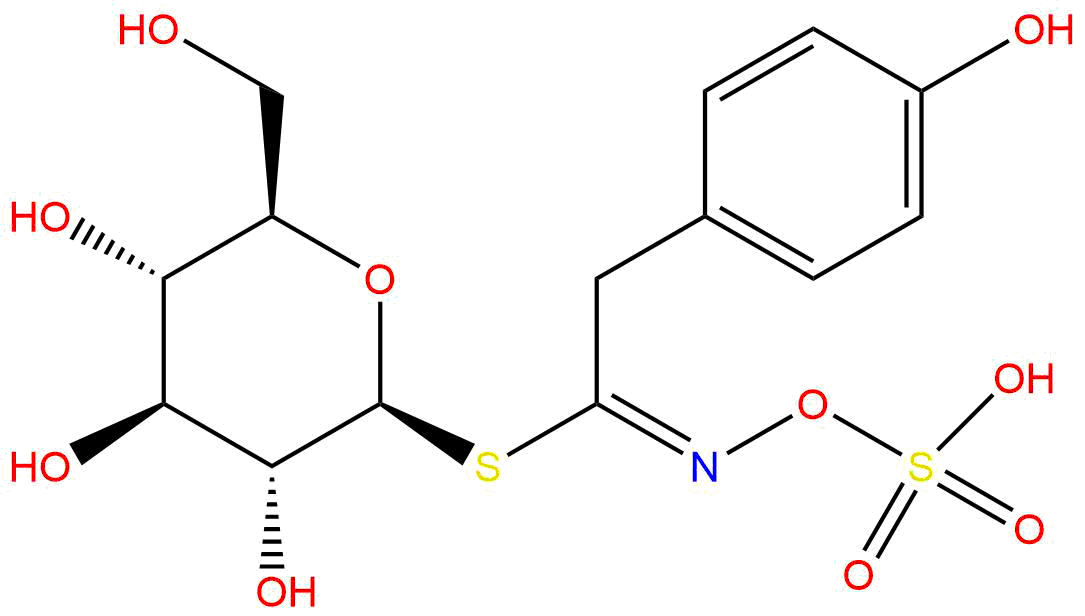


Product name: Glucosinalbin
Synonym name: Glucosinalbate; Sinalbin; Sinalbine
Catalogue No.: BP4442
Cas No.: 19253-84-0
Formula: C14H19NO10S2
Mol Weight: 425.423
Botanical Source:
Type of Compound:
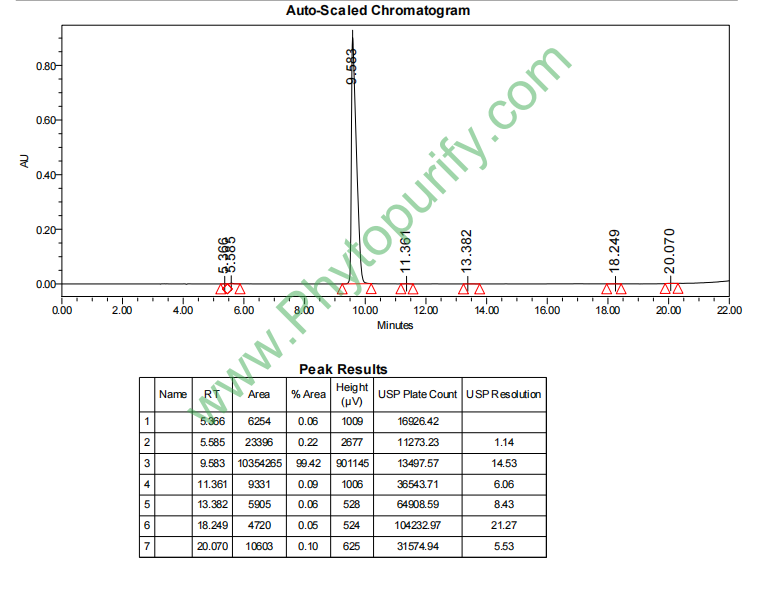
Purity: 95%~99%
Analysis Method: HPLC-DAD or/and HPLC-ELSD
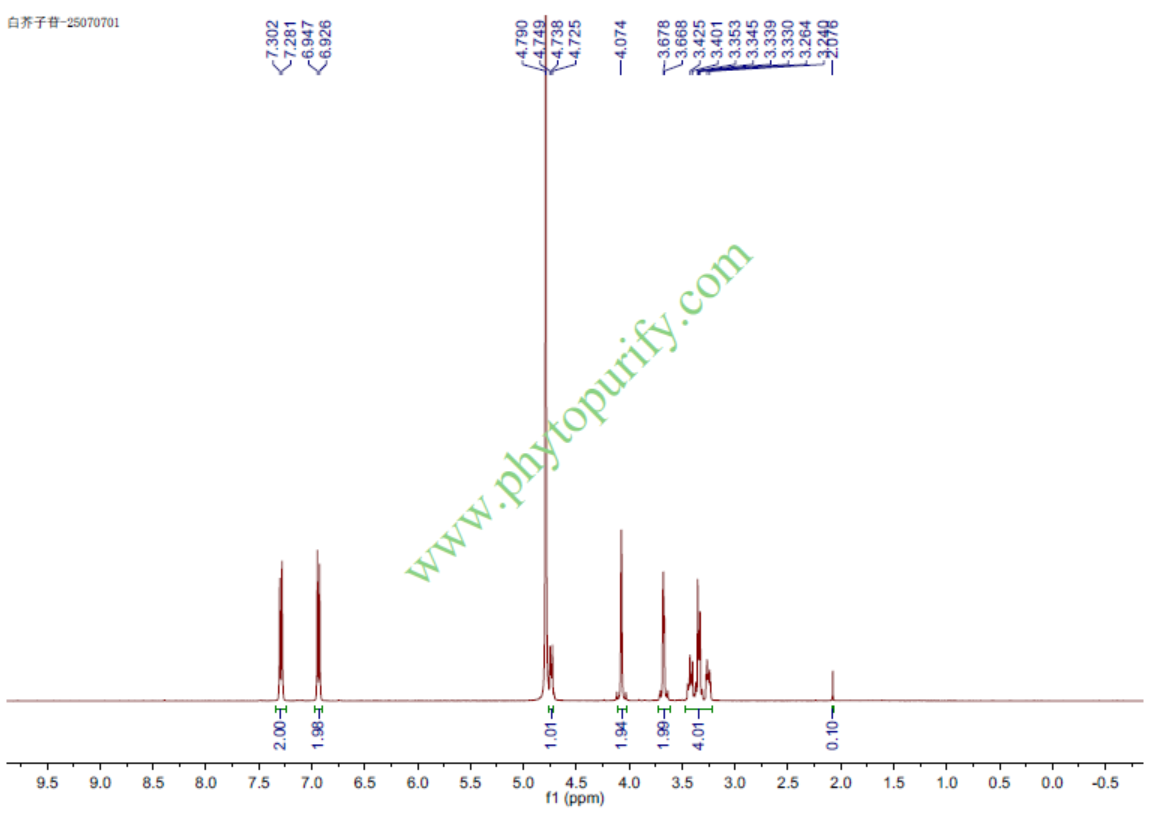
Identification Method: Mass, NMR
Packing: Brown vial or HDPE plastic bottle
Storage: Store in a well closed container, protected from air and light. Put into refrigerate or freeze for long term storage.
Whenever possible, you should prepare and use solutions on the same day. However, if you need to make up stock solutions in advance, we recommend that you store the solution as aliquots in tightly sealed vials at -20℃. Generally, these will be useable for up to two weeks.
The product could be supplied from milligrams to grams
Inquire for bulk scale.
For Reference Standard and R&D, Not for Human Use Directly.
HPLC of Glucosinalbin
HNMR of Glucosinalbin
Storage conditions:Short-term storage at 2~8℃, long-term storage at -20 ~ -80℃
186.3400
-.8210
-2.1204
8.4284
.4136
.1108
Low
51.0912
4.2253
Yes
No
No
No
No
No
0.9
Yes
No
Yes
No
In the vast field of natural product chemistry and pharmacology research, mustard oil glycoside compounds have attracted much attention due to their unique chemical structures and extensive biological activities. Glucosinalbin, as an important alkyl glucosinolate, is a characteristic secondary metabolite commonly found in cruciferous plants. Its CAS number is 19253-84-0, and its chemical nature is a derivative of glucuronic acid. Traditionally, plants rich in glucosinolates such as mustard greens(Sinapis alba L. Seed (i.e. white mustard seed) is commonly used in folk medicine for expectorant, cough suppressant, and topical treatment of inflammation. Modern pharmacological research has gradually revealed that glucosinolates are not only its precursor substances, but also its hydrolysis products (such as isothiocyanates) exhibit multiple biological activities including antimicrobial, anti-inflammatory, antioxidant, and even potential anti-tumor effects. Especially in the context of the increasingly severe challenge of microbial resistance worldwide, the search for novel antibacterial lead compounds from natural products has become a research hotspot. White mustard glycoside and its derivatives exhibit unique antimicrobial potential by acting on multiple key targets such as Toll like receptor 4 (TLR4), nucleotide binding oligomerization domain protein 2 (NOD2), and dihydrofolate reductase (DHFR). This article aims to systematically review the chemical properties, plant sources, pharmacological activities, mechanisms of action, pharmacological evaluation, and clinical application prospects of glucosinolates, in order to provide scientific basis for the deep development and utilization of this natural product.
The chemical name of glucosinolate is 4-hydroxybenzyl glucosinolate, which is a sulfur-containing glucoside. Its molecular formula is C14H19NO9S2, and its molecular weight is 425.4370. Its core structure consists of three parts: a β - D-glucosyl group, a sulfated oxime group (- C (=N-OSO3-)) connected by a thiol bond, and an alkyl side chain (R group) connected by a sulfur atom. In white mustard glycoside, the R group is 4-hydroxybenzyl, which determines the specificity of its hydrolysis products.
The physicochemical properties of this compound are closely related to its biological activity and metabolism. The calculated lipid water partition coefficient (LogP) is -0.8210, indicating that it has good hydrophilicity. The topologically polar surface area (TPSA) is as high as 186.34 Å ², mainly attributed to the presence of multiple hydroxyl, sulfate ester, and oxygen atoms on the sugar ring in the molecule, which are potential hydrogen bond donors and acceptors, resulting in strong molecular polarity. The theoretically calculated water solubility value is 8.4284 (usually measured in mg/mL or log mol/L depending on the model), confirming its good water solubility. These properties indicate that glucosinolates are more likely to be distributed in hydrophilic environments within living organisms, and are less likely to penetrate the lipid bilayer, which has a significant impact on their absorption, distribution, and metabolism.
The stability of glucosinolates is significantly affected by pH value, temperature, and enzyme activity. In intact plant tissues, it is physically separated from endogenous myrosinase. When tissues are damaged (such as cutting or chewing), enzymes come into contact with substrates and rapidly catalyze the hydrolysis of glucosinolates, producing glucose, hydrogen sulfate ions, and unstable intermediates. The intermediate is mainly converted into p-hydroxyphenyl isothiocyanate through Lossen rearrangement, which is the key active substance for its various biological activities. In addition, under specific conditions such as low pH, presence of iron ions or thiol proteins, thiocyanates or nitriles may also be generated.
White mustard glycoside is one of the characteristic components of cruciferous plants, especially in white mustard(Sinapis alba L. The seeds have the richest content, which is also the origin of their name. In addition, it also exists in cruciferous vegetables such as rapeseed, certain varieties of mustard, radish, broccoli, etc., but the content and specific types vary. The content of glucosinolates in white mustard seeds can reach 2-5% of the dry weight of the seeds, making it the main glucosinolate component.
Extracting glucosinolates from plant materials requires careful consideration of their water solubility and instability to enzymatic hydrolysis. The classic extraction process typically includes the following key steps:
1. Raw material pretreatment Crush plant seeds to increase contact area, but pay attention to temperature control to avoid activation of endogenous myrosinase. Common methods include using boiling methanol or ethanol to instantly inactivate enzymes, or drying and crushing at low temperatures.
2. Solvent extraction Due to the high polarity and good water solubility of glucosinolates, the most commonly used extraction solvents are methanol, ethanol, or methanol water mixed solutions. Sometimes hot water extraction is used, but it is necessary to thoroughly inactivate myrosinase beforehand, otherwise the extraction process will undergo hydrolysis.
3. Degreasing and Purification Seed materials usually contain a large amount of oil and can be degreased with non-polar solvents (such as petroleum ether) first. After filtration and concentration, the extract can be enriched using macroporous adsorption resins such as AB-8 and D101, and gradient elution can be performed using ethanol water solutions of different concentrations. Further purification can be achieved through techniques such as silica gel column chromatography, reverse phase high performance liquid chromatography (RP-HPLC), or preparative liquid chromatography.
4. Identification and quantification The purified white mustard glycoside can be structurally confirmed by nuclear magnetic resonance (NMR, especially 1H-NMR and 13C-NMR) and mass spectrometry (MS). Conventional quantitative analysis often uses high-performance liquid chromatography ultraviolet detection (HPLC-UV) or liquid chromatography-mass spectrometry (LC-MS). Due to its lack of strong ultraviolet absorption, it is often indirectly quantified by detecting specific hydrolysis products generated by myrosinase, or by using its terminal absorption for detection.
In recent years, green technologies such as ultrasound assisted extraction and microwave-assisted extraction have also been applied to improve extraction efficiency, shorten time, and reduce solvent usage.
As a prodrug of glucosinolates, the direct biological activity of glucosinolates is relatively scarce, but their enzymatic hydrolysis products, especially p-hydroxyphenyl isothiocyanates, have been proven to have a wide range of pharmacological activities. At present, research mainly focuses on its antimicrobial, anti-inflammatory, antioxidant and other aspects.
1. Antimicrobial activity
This is the most widely studied area in the field of white mustard glycoside related research. Numerous in vitro studies have shown that its hydrolysis products have inhibitory or bactericidal effects on various bacteria and fungi.
* Antibacterial effect Hydroxybenzyl isothiocyanate has significant inhibitory effects on Staphylococcus aureus (including methicillin-resistant MRSA), Escherichia coli, Listeria monocytogenes, Helicobacter pylori, and other bacteria. It has a rapid effect and can damage the integrity of cell membranes, leading to leakage of contents.
* Antifungal effect It exhibits activity against pathogenic fungi such as Candida albicans, Candida albicans, and Aspergillus fumigatus, and can interfere with hyphal growth and spore germination.
* Antiparasitic effect Preliminary studies have shown that it may also have inhibitory effects on certain intestinal parasites.
The intact glycoside form of glucosinolates has a weak ability to penetrate microbial cell membranes, and its antimicrobial activity mainly depends on the release of active isothiocyanates after enzymatic or chemical hydrolysis at the site of infection or around microorganisms.
2. Anti inflammatory and immune regulatory activity
The intake of cruciferous vegetables is associated with a reduced risk of chronic inflammatory diseases, with glucosinolates and their hydrolysates being key contributors. Research has shown that the hydrolysis products of glucosinolates can inhibit the excessive production of nitric oxide (NO), prostaglandin E2 (PGE2), and pro-inflammatory cytokines (such as TNF - α, IL-1 β, IL-6) induced by lipopolysaccharides (LPS) and other factors in macrophages. Its anti-inflammatory effect is closely related to the regulation of inflammatory signaling pathways such as nuclear factor kappa B (NF - κ B) and mitogen activated protein kinase (MAPK).
3. Antioxidant activity
Hydroxybenzyl isothiocyanate can induce the expression of phase II detoxifying enzymes (such as glutathione S-transferase and quinone oxidoreductase) in cells, which is usually mediated by the Nrf2/ARE signaling pathway. These enzymes help to clear reactive oxygen species (ROS), enhance cellular antioxidant defense capabilities, and protect cells from oxidative stress damage.
4. Other potential activities
Some studies suggest that glucosinolates and their hydrolysates may have chemopreventive effects by regulating the metabolism of carcinogens, inducing cell cycle arrest and apoptosis, and potentially inhibiting the occurrence and development of certain cancers. However, data on the specificity of glucosinolates is still limited and further exploration is needed.
The pharmacological effects of glucosinolates and their active hydrolysates involve complex mechanisms involving multiple targets and pathways, particularly in the areas of antimicrobial and anti-inflammatory effects.
1. Mechanism and targets of antimicrobial action
Its antimicrobial mechanism is not singular, but rather a multi-faceted approach:
* Cell membrane and cell wall targets Active isothiocyanates are electrophilic molecules that can react with thiol groups, amino groups, and other nucleophilic groups on bacterial cell membranes, disrupting membrane lipids and protein functions, increasing membrane permeability, and leading to leakage and death of cell contents. This is related to the impact on targets such as PBP2 (penicillin binding protein 2, involved in cell wall synthesis). For fungi, they may inhibit ERG11 (lanosterol 14 α - demethylase) or CYP51 (cytochrome P450 family 51, similar in function), interfere with ergosterol synthesis, and disrupt fungal cell membrane integrity. In addition, it may affect the fungal cell wall β -1,3-glucan synthase FKS1.
* Intracellular metabolic enzyme targets Isothiocyanates can enter microbial cells and inhibit key metabolic enzymes. For example, it may competitively inhibit bacterial dihydrofolate reductase (DHFR), interfere with folate metabolism, and thus inhibit nucleic acid synthesis. It may also act on DNA gyrase (GYRB subunit) and affect DNA replication.
* Innate immune receptor activation In recent years, studies have found that certain glucosinolates or their degradation products may act as analogs of microbial associated molecular patterns (MAMPs), directly or indirectly activating the host's pattern recognition receptor (PRR). The TLR4 and NOD2 mentioned in the white mustard glycoside related targets are two important types of PRRs. After TLR4 recognizes LPS, it initiates downstream signals through the adaptor protein MYD88, triggering the production of pro-inflammatory factors and antimicrobial peptides (such as defense factor β 1, DEFB1). NOD2 perceives intracellular peptidoglycan fragments. White mustard glycoside or its metabolites may regulate these pathways, enhance the host's innate immune response, and indirectly exert anti infective effects.
2. Mechanisms of anti-inflammatory and antioxidant effects
* Inhibition of NF - κ B and MAPK pathway Active hydrolysis products can inhibit the activity of I κ B kinase (IKK), prevent I κ B degradation, and thus inhibit NF - κ B nuclear translocation and its transcriptional activity. At the same time, it can also inhibit the phosphorylation of MAPKs such as p38 and JNK. These two pathways are the core of the production of inflammatory mediators, and their inhibition leads to a decrease in the expression of TNF - α, IL-6, COX-2, and other factors.
* Nrf2/ARE pathway activation Isothiocyanates are classic Nrf2 activators. It can modify the cysteine residues on Keap1 protein, causing Nrf2 to dissociate from the Keap1 complex and transfer to the nucleus, binding to antioxidant response elements (ARE), initiating the expression of a series of antioxidant and phase II detoxifying enzyme genes (such as HO-1, NQO1, GST), and enhancing cellular antioxidant capacity.
Based on the provided pharmacological parameters and existing knowledge, a preliminary evaluation is conducted on the characteristics of sinapine as a potential drug lead compound
1. Analysis of pharmacological parameters
* Molecular weight (425.4)Slightly higher than the 500 Da upper limit recommended by Lipinski's "Five Rules", but still within the range of many oral medications.
* LogP (-0.82) and TPSA (186.34 Å ²)Significant hydrophilicity and high polarity surface area are its most prominent features. This suggests that its oral bioavailability may be low, as it is difficult to passively diffuse through the lipid membrane of intestinal epithelial cells. High TPSA is often associated with low blood-brain barrier permeability.
* Water solubility Good water solubility is beneficial for making injectable or oral liquid formulations, but not conducive to transmembrane absorption.
* Blood-brain barrier permeability Predicted as' low ', which is consistent with high TPSA and hydrophilicity, meaning it may not easily enter the central nervous system, which is disadvantageous for central infection treatment, but may reduce central side effects.
* HERG inhibition'No' is a positive signal indicating a lower risk of potential cardiac toxicity (causing long QT syndrome).
* Ames test (0.9)This value usually refers to the recovery mutation rate, which is considered a negative result (no mutagenicity) when it is close to 1 or below 2, indicating that its genetic toxicity risk may be low.
2. Pharmacokinetic characteristics
The pharmacokinetic research on glucosinolates themselves is very limited, and their characteristics are mainly inferred based on the universal laws of glucosinolates
* absorb After oral administration, complete glucosinolates are minimally absorbed in the upper gastrointestinal tract. It mainly reaches the colon and is hydrolyzed by glucosidase secreted by the gut microbiota, releasing active isothiocyanates. The latter can be absorbed by the colon or further metabolized.
* distribution After absorption, isothiocyanates have a low concentration in the blood, a short half-life, and are widely bound to glutathione (GSH) to form the mercapturic acid pathway, which is their main metabolic pathway. The polarity of the conjugate is greater, distributed in various tissues throughout the body, but the concentration is not high.
* Metabolism As mentioned earlier, the main metabolic pathway is to bind with GSH, which is then catalyzed by gamma glutamyltransferase, cysteine glycinase, and N-acetyltransferase, ultimately producing N-acetylcysteine complex (mercaptoacetate) that is excreted from urine. A small amount may undergo cyclization or other modifications.
* excretion Mainly in the form of thiol uric acid complexes, they are rapidly excreted through the kidneys and urine.
In summary, glucosinolates themselves are not ideal direct pharmaceutical molecules, as their high hydrophilicity leads to poor membrane permeability and extremely low oral bioavailability. Its value lies more in serving as Precursor compound The design strategy may include developing a co delivery system based on glucosinolates and myrosinase (such as targeted colon delivery), or structural modification using its active hydrolysate (isothiocyanate) as the parent nucleus to improve its lipid solubility and stability while retaining its activity, or developing it as a topical formulation (such as anti skin infection ointment, mouthwash, etc.) to bypass the bottleneck of systemic absorption.
The multiple biological activities of glucosinolates and their active products provide possibilities for their application in multiple medical fields, but also face challenges.
1. Potential clinical application directions
* Local anti infective treatment Given the broad-spectrum inhibitory effect of its hydrolysis products on various bacteria and fungi, as well as the low risk of systemic toxicity, the development of topical formulations has broad prospects. For example, creams, gel or lotions used for the treatment of bacterial skin infections (such as folliculitis, wound infections), fungal infections (such as tinea pedis, cutaneous candidiasis). Oral mouthwash can be used to prevent and treat pathogenic bacteria related to dental caries and periodontal disease.
* Gastrointestinal Health and Infection As a prodrug, white mustard glycoside can target the colon and release active substances locally under the action of intestinal microbiota, which is used to regulate intestinal microbiota, treat intestinal infections (such as Clostridium difficile infection) or as an adjuvant therapy for inflammatory bowel disease (IBD). Its activation of NOD2 and regulation of intestinal immunity are particularly worthy of in-depth research in the field of IBD.
* Functional foods and dietary supplements Extracts of cruciferous vegetables rich in glucosinolates can serve as functional ingredients for preventing chronic inflammation and enhancing immunity. It is necessary to standardize its content and activity, and clarify the safe dosage for long-term consumption.
* Agriculture and Food Preservation Its antimicrobial activity can be used to develop plant-based biopesticides or natural food preservatives, reducing the use of chemical agents.
2. Challenges and Future Research Directions
* Stability and delivery system Active isothiocyanates have active, unstable, and volatile chemical properties. How to design stable prodrug forms (such as glucosinolate itself) or develop advanced drug delivery systems (nanoparticles, liposomes, microcapsules) to protect active molecules and control their release location and time is the key to transformation.
* Deep analysis of mechanism Although multiple targets are known, the direct interaction mode and precise binding site of glucosinolates and their products with immune receptors such as TLR4 and NOD2 are still unclear. More structural biology studies such as molecular docking, point mutations, and co crystallization are needed to clarify.
* System efficacy and safety evaluation Currently, most of the activity data comes from in vitro studies, and there is an urgent need to validate its in vivo efficacy in appropriate animal models of infection or inflammation. Although Ames test and hERG inhibition suggest good safety, comprehensive preclinical toxicology studies are still needed, including subchronic toxicity, reproductive toxicity, etc.
* structural optimization Using p-hydroxyphenyl isothiocyanate as a lead, rational chemical modification is aimed at improving its stability, reducing irritation, and enhancing pharmacokinetic properties, which is a necessary path to discover better candidate drugs.
* Potential for combination therapy Exploring its synergistic effect with existing antibiotics may help reduce antibiotic dosage and delay the development of resistance.
As a characteristic alkyl glucosinolate in cruciferous plants, white mustard glycoside is not only an important plant secondary metabolite, but also a natural compound treasure trove containing rich pharmacological activities. As a precursor, it hydrolyzes under specific conditions to produce p-hydroxyphenylmethyl isothiocyanate, exhibiting significant multiple biological activities such as antimicrobial, anti-inflammatory, and antioxidant effects. The study of its mechanism of action revealed that it exerts a multi-target synergistic effect by directly acting on microbial cell membranes/walls, key metabolic enzymes, and regulating multiple signaling pathways such as TLR4, NOD2, Nrf2 in the host. Although its inherent strong hydrophilicity and prodrug properties pose challenges for direct systemic administration, it has demonstrated clear application potential in areas such as local anti infective therapy, colon targeted drug delivery, and as a functional food ingredient. Future research should focus on overcoming its stability and delivery challenges, delving into the details of its molecular action, and verifying its safety and effectiveness through systematic preclinical and clinical studies. With the continuous advancement of natural product research technology, glucosinolates, an ancient plant component, are expected to be revitalized in modern pharmacy, providing important candidate molecules and ideas for the development of new anti infective and anti-inflammatory drugs.
