Storage conditions:Short-term storage at 2~8℃, long-term storage at -20 ~ -80℃
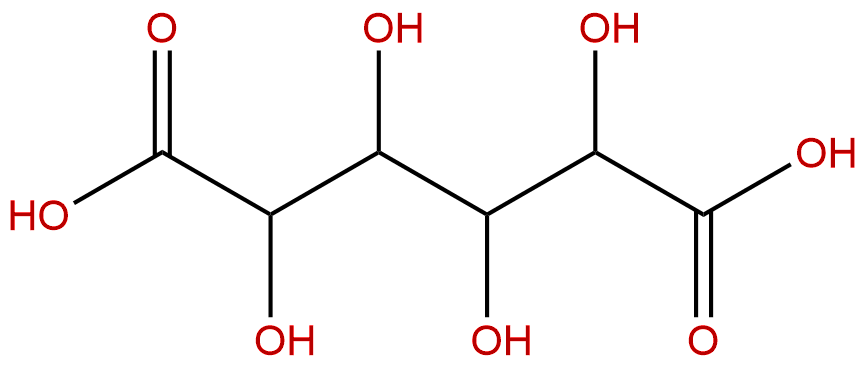
Mucic acid, also known as galacturonic acid, is a hexacarboxylic acid compound generated by the formal oxidative ring cleavage reaction of galactose. Its molecular formula is C6H10O8 and its CAS number is 526-99-8. As an important natural product and human metabolite, viscous acid plays a crucial role in the metabolic network of organisms. In recent years, with the deepening development of natural product pharmacology, viscous acids have gradually attracted widespread attention in the scientific research community due to their unique chemical structure and multiple biological activities, especially their potential applications in the field of antibacterial.
This review aims to systematically summarize the chemical structure and physicochemical properties of viscous acids, their plant sources and extraction methods, pharmacological activities and mechanisms of action, drug evaluation and pharmacokinetic characteristics, and to provide prospects for their clinical applications. By integrating the latest research progress, it is expected to provide theoretical basis and practical guidance for the subsequent development of natural product drugs.
Mucic acid is a fully oxidized product of galactose, structurally belonging to hexacarboxylic acid compounds with a molecular weight of 210.1380. Its molecular structure contains six carbon atoms, each connected to a carboxyl group (- COOH), making it highly polar and acidic. The chemical formula of viscous acid is C6H10O8, and its structural formula can be regarded as a linear hexacarboxylic acid formed by the oxidative cleavage of the cyclic structure of lactose.
In terms of physical and chemical properties, viscous acid exhibits high water solubility (about 179 mg/mL), with a LogP value of -1.8370, showing strong hydrophilicity and low lipid solubility. This characteristic gives it good dispersibility in aqueous environments, but limits its ability to penetrate lipid membranes. The polarity of viscous acid is manifested in its high topological polar surface area (TPSA) of 155.52 Å ², which usually means its ability to cross the blood-brain barrier is low, consistent with its low blood-brain barrier permeability in pharmacokinetics. In addition, viscous acid did not exhibit hERG channel inhibitory activity, and the Ames mutagenicity test result was 0, indicating its high safety and potential for drug development.
As an oxidized product of lactose, viscous acid is widely present in various plant and microbial metabolites. Its natural sources mainly include plant polysaccharide degradation products rich in galactose, such as pectin substances in certain leguminous plants, seaweed, and fruits. Galactopolysaccharides in plant cell walls can generate viscous acids through the action of oxidases. In addition, the production of viscous acids can also be detected during the fermentation process of certain fungi and bacteria.
Traditional extraction methods often rely on acidic hydrolysis and oxidation treatment of plant materials. The specific steps usually include:
In recent years, the development of green chemistry and biocatalytic technology has promoted innovation in the extraction methods of viscous acids. For example, using microbial fermentation to directly convert galactose into viscous acid, or using enzyme catalyzed oxidation instead of traditional chemical oxidation, significantly improves yield and purity, and reduces environmental pollution.
The pharmacological activity research of viscous acids mainly focuses on their antibacterial effects. Multiple in vitro experiments have shown that viscous acids have inhibitory effects on various Gram positive and Gram negative bacteria. Its antibacterial spectrum covers common pathogenic bacteria such as Staphylococcus aureus, Escherichia coli, Streptococcus pneumoniae, etc., demonstrating a wide range of antibacterial potential.
In addition, viscous acids also exhibit certain activity in the field of antifungal treatment, especially with significant inhibitory effects on yeast and certain skin fungi. Its antibacterial activity is related to its polycarboxylic acid structure, which may be achieved by interfering with bacterial cell wall synthesis, membrane function, and metabolic pathways.
In addition to antibacterial effects, viscous acids have also been reported to have potential activities in antioxidant, anti-inflammatory, and promoting cellular metabolism. Although the relevant research is still in the preliminary stage, these multiple biological activities provide rich directions for the pharmacological study of viscous acids.
The antibacterial mechanism of viscous acid has not been fully elucidated, but based on existing target analysis and molecular docking studies, it is speculated that its mechanism of action involves multi-target synergistic effects. The main targets include:
The multiple mechanisms of action of the above-mentioned targets make viscous acids have broad application prospects in antibacterial therapy, especially in the prevention and treatment of drug-resistant strains with potential advantages.
The evaluation of drug properties is an important step in the development of natural product drugs. The physicochemical properties of viscous acid show that it has good water solubility and low fat solubility, making it suitable for oral or local administration. Its LogP value is -1.8370, indicating that its distribution in the body is biased towards aqueous environments and difficult to penetrate lipid membrane structures, such as the blood-brain barrier, which is consistent with the experimental data of low blood-brain barrier permeability.
In terms of safety, viscous acid did not exhibit hERG channel inhibition, reducing the risk of cardiac toxicity; The Ames test result is negative, indicating no significant mutagenicity. In addition, as a human metabolite, viscous acid has good biocompatibility and metabolic stability.
Pharmacokinetic studies have shown that viscous acids are mainly excreted through the kidneys in the body, and their bioavailability is limited by their polarity and molecular size. Its absorption rate is fast, but its distribution range is limited, and its metabolic pathway still needs further research. In the future, its pharmacokinetic properties may be improved through structural modification or carrier system optimization.
The antibacterial activity and good safety of viscous acid provide a solid foundation for its clinical application. With the increasingly serious problem of antibiotic resistance, the development of new antibiotics has become a focus of global medical research. As a natural product with multi-target effects, viscous acid is expected to become a candidate molecule for antibacterial drugs.
Future research should focus on:
In addition, the potential of viscous acids in other pharmacological fields such as anti-inflammatory and antioxidant is also worth exploring, providing possibilities for the development of multifunctional drugs.
As a widely sourced and structurally unique natural product, viscous acid has become a hot topic in natural product pharmacology research due to its significant antibacterial activity and good safety. Through a systematic review of its chemical properties, pharmacological mechanisms, and pharmacological characteristics, this article provides theoretical support and research directions for the development of viscous acid drugs. In the future, with the advancement of technology and in-depth research, viscous acids are expected to play an important role in the field of antibiotics and become a powerful weapon to solve the challenge of antibiotic resistance.