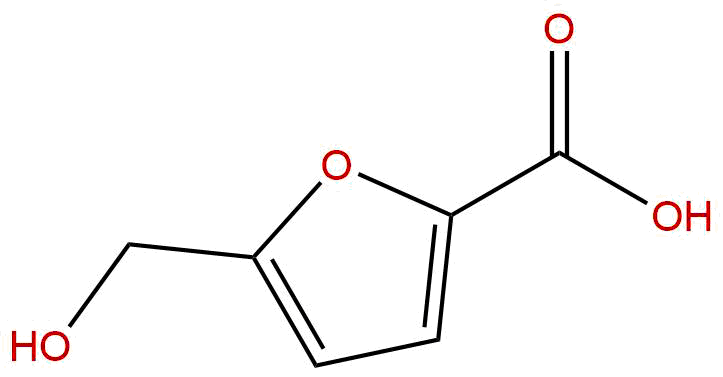


Product name: 5-Hydroxymethyl-2-furoic acid
Synonym name: Sumiki's acid;5-(Hydroxymethyl)-2-furoic acid
Catalogue No.: BP5410
Cas No.: 6338-41-6
Formula: C6H6O4
Mol Weight: 142.11
Botanical Source:
Type of Compound:
Purity: 95%~99%
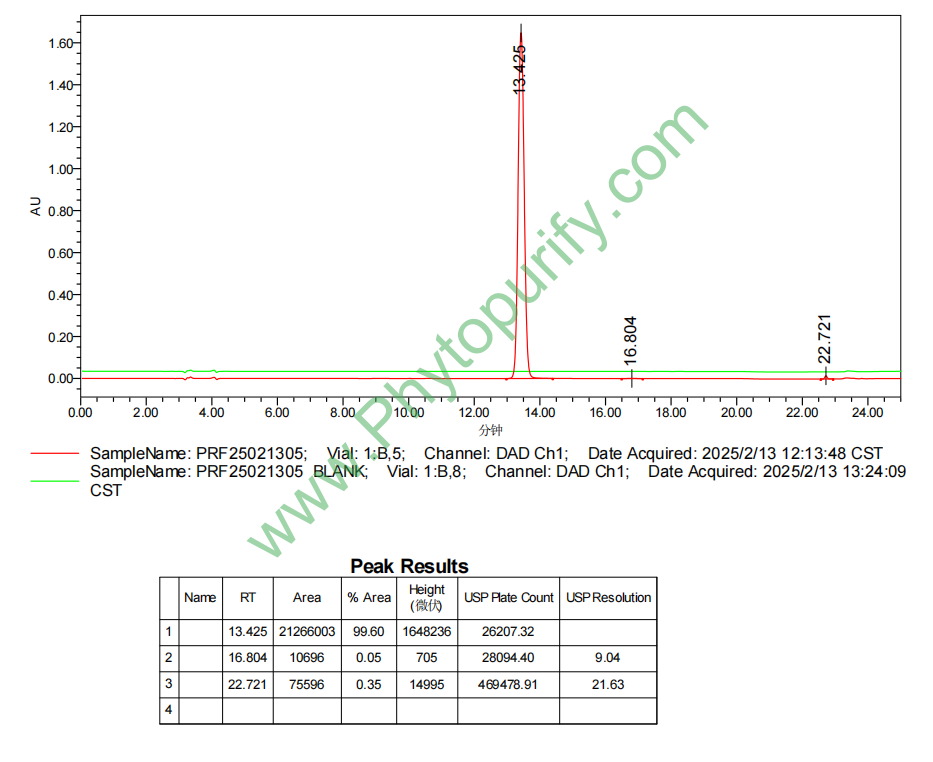
Analysis Method: HPLC-DAD or/and HPLC-ELSD
Identification Method: Mass, NMR
Packing: Brown vial or HDPE plastic bottle
Storage: Store in a well closed container, protected from air and light. Put into refrigerate or freeze for long term storage.
Whenever possible, you should prepare and use solutions on the same day. However, if you need to make up stock solutions in advance, we recommend that you store the solution as aliquots in tightly sealed vials at -20℃. Generally, these will be useable for up to two weeks.
The product could be supplied from milligrams to grams
Inquire for bulk scale.
For Reference Standard and R&D, Not for Human Use Directly.
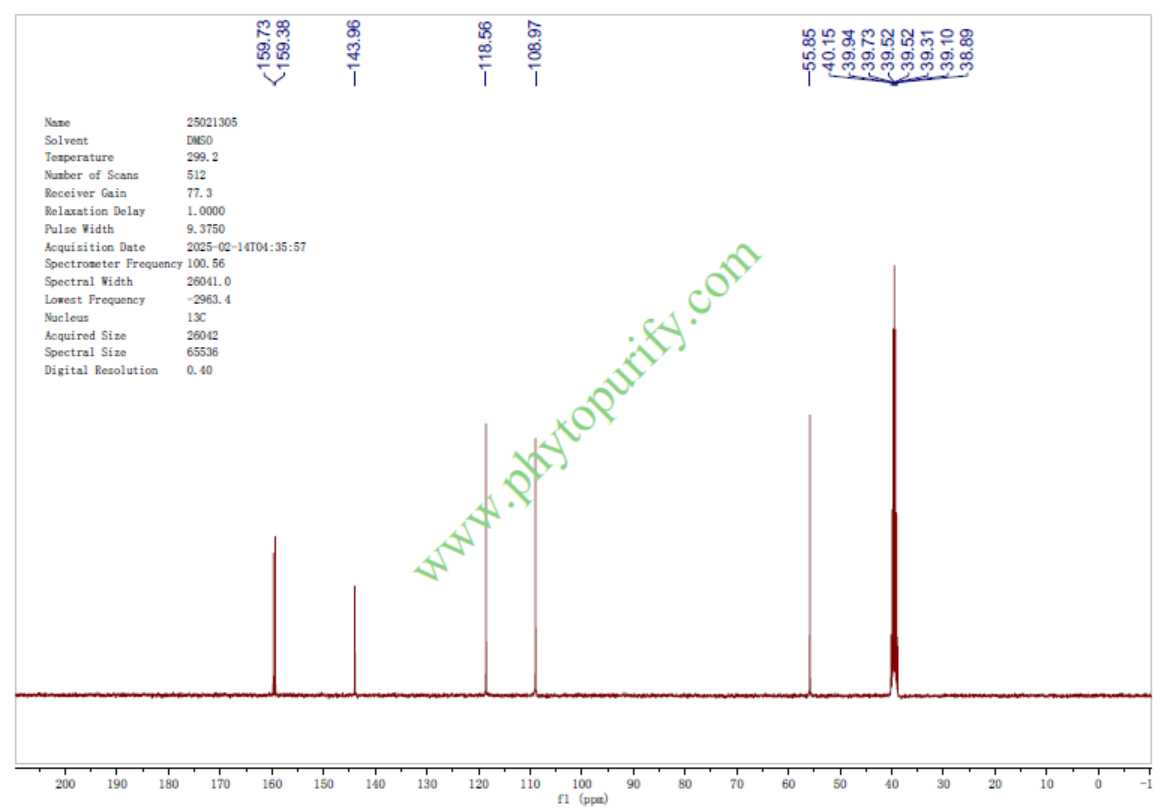
NMR of 5-Hydroxymethyl-2-furoic acid
HPLC of 5-Hydroxymethyl-2-furoic acid
Storage conditions:Short-term storage at 2~8℃, long-term storage at -20 ~ -80℃
70.6700
.4734
-1.4341
10.8616
3.6498
3.2581
Low
59.5284
2.1010
Yes
No
No
No
No
Yes
0.6
Yes
No
Yes
Yes
Natural products have always been an important source of drug discovery, especially in the field of anti infective drugs. Screening active molecules from microbial secondary metabolites has become a classic strategy. Furan compounds are widely present in nature and are key intermediates in the metabolic processes of many plants, fungi, and bacteria. Among them, 5-hydroxymethyl-2-furonic acid (5-HMFA), as a structurally simple derivative of furan carboxylic acid, has attracted the attention of researchers in recent years due to its unique biological activity spectrum.
5-hydroxymethyl-2-furancarboxylic acid is a product of 2-furanic acid substituted by a hydroxymethyl group at position 5, belonging to the family of furfuric acid compounds. The compound was initially identified as a metabolite of fungi, and its presence was subsequently detected in human urine, suggesting its possible involvement in endogenous metabolism or metabolic activity of the gut microbiota. It is worth noting that 5-HMFA exhibits significant nematode killing activity, and as a bacterial metabolite, it may play a role as a signaling molecule or defense factor in microbial ecosystems.
In recent years, with the continuous rise of the incidence rate of fungal infection and the increasingly serious problem of drug resistance, the development of new antifungal drugs has become an urgent clinical need. The antifungal activity of 5-HMFA and its potential regulatory effects on multiple fungal targets make it a candidate molecule in the development of antifungal drugs. This review aims to systematically summarize the chemical properties, natural sources, pharmacological activities, mechanisms of action, and pharmacological characteristics of 5-hydroxymethyl-2-furancarboxylic acid, providing comprehensive academic references for subsequent research.
The chemical formula of 5-hydroxymethyl-2-furancarboxylic acid is C ₆ H ₆ O ₄, with a molecular weight of 142.1100 g/mol. Its core structure is a furan ring, with a carboxyl group (- COOH) attached at the 2nd position and a hydroxymethyl group (- CH ₂ OH) attached at the 5th position. This structure endows the molecule with amphiphilic features: carboxyl groups provide acidic sites and hydrogen bond donor/acceptor abilities, while hydroxymethyl groups increase the polarity and water solubility of the molecule. The aromaticity of furan ring gives the molecule a certain planarity and π - electron conjugation system, which may affect its interaction mode with biological targets.
From a structural classification perspective, 5-HMFA belongs to the derivatives of aromatic primary alcohols and furfuric acids. Its IUPAC name is 5- (hydroxymethyl) -2-furancarboxylic acid, and its CAS registration number is 6338-41-6. In the natural product database, this compound is often classified as a furan like natural product or a furfuryl acid metabolite.
According to computational chemistry and experimental measurement data, 5-HMFA exhibits the following key physicochemical properties:
Lipid water partition coefficient (LogP): 0.4734. This value is at a moderately low level, indicating that the compound has moderate lipophilicity but is more inclined towards a hydrophilic environment. This characteristic is beneficial for its dissolution and transport in aqueous media, and can also penetrate biofilms to a certain extent.
Topological Polarity Surface Area (TPSA): 70.6700 Å ². TPSA is an important parameter for predicting drug oral absorption and blood-brain barrier penetration ability. It is generally believed that molecules with TPSA less than 60 Å ² have good blood-brain barrier penetration, while molecules larger than 140 Å ² are difficult to penetrate. The TPSA value of 70.67 Å ² indicates that 5-HMFA has moderate polarity, and its blood-brain barrier penetration ability is evaluated as' low ', which is consistent with the calculated prediction results.
Water solubility:10.8616 mg/mL。 This compound exhibits good water solubility, mainly due to the two polar groups of carboxyl and hydroxymethyl in the molecule. High water solubility is advantageous for the development of drug formulations, especially in injectable and oral liquid formulations.
Blood-brain barrier penetrability: Low. This characteristic may be a favorable factor for antifungal drugs, as most systemic fungal infections do not involve the central nervous system, and reducing blood-brain barrier penetration can reduce the risk of central nervous system toxicity.
HERG inhibition: No. HERG potassium channel inhibition is an important predictor of drug cardiac toxicity. 5-HMFA is predicted to have no hERG inhibitory effect, which reduces its risk of causing QT interval prolongation and arrhythmia, and is a good safety signal.
Ames test: 0.6. The Ames test is used to evaluate the mutagenicity of compounds, with results expressed as positive/negative or numerical values. The value of 0.6 suggests that the compound may exhibit weak positivity or be in a critical state in the Ames test, and further genetic toxicity studies are needed to confirm its safety.
5-hydroxymethyl-2-furancarboxylic acid is widely distributed in nature, but usually exists in trace or intermediate metabolite form. Its main sources include:
Fungal metabolites Multiple filamentous fungi and yeast can produce 5-HMFA during metabolic processes. For example, certain strains of Aspergillus spp. and Penicillium spp. can accumulate this compound under specific culture conditions. The biosynthesis of 5-HMFA in fungi is usually related to the oxidative metabolism pathway of furan ring, which may involve the catalytic action of hydroxymethyl oxidase.
Bacterial xenobiotics The gut microbiota and soil bacteria may convert precursor substances such as 5-hydroxymethylfurfural (5-HMF) into 5-HMFA when decomposing plant derived furan compounds. This transformation is usually mediated by aldehyde dehydrogenase or oxidase and is part of microbial detoxification or energy metabolism.
Human urine metabolites 5-HMFA can be detected in the urine of healthy individuals, and its sources may include dietary intake (such as foods containing furan compounds) and gut microbiota metabolism. As a urinary metabolite, the concentration changes of this compound may be related to dietary structure, gut microbiota status, and certain metabolic diseases.
Plant-based Although 5-HMFA is not the main secondary metabolite in plants, its presence can be detected in certain plant tissues such as coffee beans and grain processing by-products. The 5-HMFA in plants may originate from the oxidation of 5-HMF, which is produced by the degradation of sugars during thermal processing.
Given that the content of 5-HMFA in natural products is usually low, efficient and specific methods are required for its extraction and purification. Common extraction strategies include:
Solvent extraction method Using the polarity characteristics of 5-HMFA, extraction is carried out using water, methanol, ethanol, or their mixed solvents. For fungal fermentation broth, liquid-liquid extraction is usually carried out using medium polarity solvents such as ethyl acetate, and then crude extract is obtained by vacuum concentration. For urine samples, solid-phase extraction (SPE) is a commonly used enrichment method, and C18 or mixed mode adsorbents can effectively capture target compounds.
Chromatographic separation technology The 5-HMFA in the crude extract can be purified by various chromatographic methods. Silica gel column chromatography is a classic method that can achieve preliminary separation using chloroform methanol or ethyl acetate methanol gradient elution. High performance liquid chromatography (HPLC) is the preferred method for obtaining high-purity samples, typically using a reverse phase C18 column with water acetonitrile or water methanol (containing 0.1% formic acid) as the mobile phase, and a UV detection wavelength of 260-280 nm.
Emerging Extraction Technologies In recent years, some green extraction techniques have been applied to the extraction of furan compounds. For example, microwave-assisted extraction (MAE) and ultrasound assisted extraction (UAE) can shorten extraction time and improve yield. Supercritical fluid extraction (SFE) uses CO ₂ as a solvent and is suitable for the extraction of thermosensitive compounds, but requires the addition of polar modifiers to improve the extraction efficiency of 5-HMFA.
Structural Identification The purified compound can be structurally confirmed by nuclear magnetic resonance spectroscopy (¹ H-NMR, ¹ ³ C-NMR), mass spectrometry (MS), and infrared spectroscopy (IR). The characteristic NMR signals of 5-HMFA include the characteristic coupling of the 3rd and 4th protons on the furan ring (δ 6.5-7.5 ppm), the methylene proton of the hydroxymethyl group (δ 4.5-4.7 ppm), and the carboxyl proton (δ 11-13 ppm, exchangeable).
The most noteworthy pharmacological activity of 5-hydroxymethyl-2-furancarboxylic acid is its antifungal effect. Multiple studies have shown that the compound has inhibitory activity against various pathogenic fungi, including Candida spp., Aspergillus spp., and Cryptococcus spp.
Inhibition of Candida albicans Candida albicans is the most common conditionally pathogenic fungus in clinical practice. The half maximal inhibitory concentration (IC ₅₀) of 5-HMFA against Candida albicans is usually in the micromolar range. Although its activity intensity is slightly lower than that of azole antifungal drugs such as fluconazole, it still exhibits inhibitory effects on certain drug-resistant strains. It is worth noting that 5-HMFA also exhibits broad-spectrum activity against non Candida albicans, such as Candida glabrata and Candida tropicalis.
Inhibition effect on Aspergillus Aspergillus fumigatus is the main pathogen of invasive aspergillosis. 5-HMFA has inhibitory effects on the hyphal growth and spore germination of Aspergillus fumigatus, and its mode of action may be related to the destruction of fungal cell wall integrity.
synergistic effect Research has found that the combination of 5-HMFA and azole antifungal drugs (such as fluconazole and itraconazole) can produce a synergistic effect, reducing the minimum inhibitory concentration (MIC) of azole drugs. This discovery is of great significance for overcoming fungal resistance, suggesting that 5-HMFA may be used as an antifungal adjuvant therapy.
In addition to its antifungal effect, 5-HMFA also exhibits significant nematode killing activity. Nematodes are parasitic pests of plants and pathogens of certain parasitic diseases in humans. Research has shown that 5-HMFA has lethal effects on pine wood nematodes (Bursaphelenchus xylophilus) and root knot nematodes (Meloidogyne spp.), and its mechanism of action may be related to interference with nematode nerve conduction or energy metabolism. This activity provides a candidate molecule for the development of novel biological nematodes.
antioxidant activity Furan compounds usually have a certain antioxidant capacity. The hydroxymethyl and carboxyl groups of 5-HMFA can participate in free radical scavenging reactions, but their antioxidant activity is relatively weak and may not be their main pharmacological effect.
anti-inflammatory activity Preliminary studies have shown that 5-HMFA can inhibit the release of macrophage inflammatory factors (such as TNF - α and IL-6) induced by lipopolysaccharide (LPS) in vitro, suggesting its potential anti-inflammatory potential. However, further in vivo experiments are needed to validate this activity.
Metabolic regulation effect As an endogenous metabolite in human urine, 5-HMFA may be involved in metabolic regulation in the body. Some studies suggest that the change of its concentration is related to metabolic diseases such as diabetes and obesity, but its causal relationship is still unclear.
The antifungal activity of 5-hydroxymethyl-2-furancarboxylic acid involves multiple molecular targets, exhibiting a synergistic feature of multiple targets. According to existing research, its mechanism of action mainly includes the following aspects:
Inhibition of ergosterol biosynthesis Ergosterol is a key component of fungal cell membranes, and its biosynthetic pathway is an important target for antifungal drugs. 5-HMFA can inhibit the activity of ERG11 (CYP51 homolog in fungi), and the lanosterol 14 α - demethylase encoded by ERG11 is a classic target of azole drugs. By inhibiting the enzyme, 5-HMFA can block the synthesis of ergosterol, leading to abnormal cell membrane structure and functional disorders. It is worth noting that the inhibitory mode of 5-HMFA on ERG11 may be different from that of azole drugs, which may be one of the reasons why it is still effective against drug-resistant strains. In humans, CYP51A1 is a homolog of ERG11 and is involved in cholesterol metabolism. The potential impact of 5-HMFA on CYP51A1 needs attention, but existing data suggests that its selectivity may be good.
Cell wall synthesis interference The fungal cell wall is an important structure for maintaining cell morphology and resisting osmotic pressure. 5-HMFA can affect the expression or activity of multiple genes related to cell wall synthesis. FKS1 encodes β -1,3-glucan synthase, which is a target of echinocandin drugs; CHS3 encodes chitin synthase and participates in chitin synthesis. Research has shown that 5-HMFA can downregulate the expression of FKS1 and CHS3, thereby weakening the mechanical strength of the cell wall and leading to fungal cell lysis. MLS1 (mannosyltransferase) also participates in the synthesis of cell wall mannose proteins, and its activity is inhibited by 5-HMFA.
External pump regulation One of the important mechanisms of fungal resistance is the overexpression of drug efflux pumps. CDR1 and CDR2 (Candida resistance genes) encode ABC transporters, while MDR1 encodes the major chemokine superfamily transporter. These efflux pumps can pump drugs out of the cell and reduce intracellular drug concentrations. 5-HMFA has been found to inhibit the expression or activity of CDR1, CDR2, and MDR1, thereby increasing the sensitivity of fungal cells to azole drugs. This mechanism explains the synergistic effect of 5-HMFA in combination with azole drugs.
Inhibition of biofilm formation Fungi such as Candida albicans can form biofilms, enhancing their tolerance to antifungal drugs. ALS3 encodes adhesins, which are involved in the adhesion of fungal cells to host cells and biofilm matrices. 5-HMFA can downregulate the expression of ALS3, inhibit the formation and maturation of biofilms, and make planktonic fungi easier to be cleared by drugs.
Based on the above mechanisms, the antifungal effect of 5-HMFA involves a complex molecular target network, including:
This multi-target mode of action makes it difficult for 5-HMFA to induce fungal resistance and provides a theoretical basis for developing combination therapy strategies. It is worth noting that these targets include both fungal specific targets (such as FKS1, CHS3) and targets similar to human homologs (such as ERG11 and CYP51A1), so their selective toxicity needs to be carefully evaluated.
Systematic evaluation of the pharmacological properties of 5-hydroxymethyl-2-furancarboxylic acid based on medicinal chemistry and computational pharmacology methods:
Drug Evaluation According to Lipinski's "Rule of Five", the molecular weight of 5-HMFA (142.11 Da) is less than 500, LogP (0.47) is less than 5, the number of hydrogen bond donors (2: carboxyl and hydroxymethyl) is less than 5, and the number of hydrogen bond acceptors (4: 2 oxygen atoms of carboxyl and 1 oxygen atom of hydroxymethyl, plus 1 oxygen atom of furan ring) is less than 10. Therefore, the compound fully complies with the drug like rules and has good oral drug potential.
Absorption and distribution High water solubility (10.86 mg/mL) and moderate LogP value are beneficial for the dissolution and absorption of drugs in the gastrointestinal tract. However, due to its high polarity, its ability to passively diffuse through the cell membrane may be limited and may require active transport mediated by transport proteins. Low blood-brain barrier penetration reduces the risk of central nervous system toxicity, but also limits its application in the treatment of central nervous system fungal infections.
Metabolism and excretion The metabolic pathway of 5-HMFA may include further oxidation of hydroxymethyl to generate dicarboxylic acid (5-carboxy-2-furancarboxylic acid), or binding with glucuronic acid, sulfuric acid, etc. to form phase II metabolites. Its excretion may mainly be in the form of its original form or metabolites through the kidneys. Due to its small molecular weight and high polarity, glomerular filtration may be the main clearance pathway.
safety evaluation HERG inhibition negative is a positive safety signal indicating a low risk of cardiac toxicity. However, the Ames test result was 0.6, indicating the possibility of weak mutagenicity and requiring a more comprehensive genetic toxicity assessment (such as in vivo micronucleus test, chromosome aberration test). In addition, potential inhibition of CYP51A1 may affect human cholesterol metabolism, and selective studies are needed to ensure a safe window for treatment.
At present, there is limited pharmacokinetic data on 5-HMFA in vivo, but based on its physicochemical properties and studies of similar compounds, the following characteristics can be inferred:
absorb After oral administration, 5-HMFA may be rapidly absorbed in the gastrointestinal tract, but due to its high polarity, its bioavailability may be moderate. Food may affect its absorption rate and degree.
distribution The distribution volume may be small, mainly distributed in the extracellular fluid. Due to its high polarity, tissue penetration is limited, but it may be enriched in certain organs such as the liver and kidneys.
Metabolism The liver may be the main metabolic organ. The oxidation of hydroxymethyl to carboxyl is a possible metabolic pathway, and the generated 5-carboxy-2-furancarboxylic acid may have different pharmacological activities.
excretion Renal excretion is the main clearance pathway, and the half-life may be short (several hours), requiring frequent administration to maintain effective blood drug concentration.
Regarding the physicochemical properties of 5-HMFA, the following formulation strategies can be considered:
The application prospects of 5-hydroxymethyl-2-furancarboxylic acid in the field of antifungal treatment are mainly reflected in the following aspects:
Treatment of drug-resistant fungal infections With the widespread use of azole and echinocandin drugs, the number of drug-resistant fungal strains is increasing. The multi-target mechanism of action of 5-HMFA allows it to maintain activity against certain drug-resistant strains, especially its inhibitory effect on efflux pumps, which can reverse fungal resistance to azole drugs. Therefore, 5-HMFA can be used as a component of combination therapy, synergizing with existing antifungal drugs to improve treatment efficacy.
Adjuvant treatment for invasive fungal infections: For invasive fungal infection in patients with low immune function (such as organ transplantation, chemotherapy, AIDS patients), 5-HMFA can be used as an auxiliary treatment drug to enhance the efficacy of major antifungal drugs and reduce drug dose and toxicity.
Local antifungal preparations For superficial fungal infections such as dermatophytosis and vaginal candidiasis, 5-HMFA can be developed as a topical preparation. Its good water solubility and low irritation make it suitable for preparation into creams or detergents.
The nematode killing activity of 5-HMFA provides the possibility for its application in the agricultural field. As a naturally occurring compound, its environmental friendliness is superior to that of chemically synthesized nematodes. Can be developed as a biopesticide for controlling nematode diseases on vegetables, fruit trees, and ornamental plants. In addition, its antifungal activity can also be used to prevent and control plant fungal diseases such as powdery mildew and gray mold.
Although 5-HMFA has many advantages, its antifungal activity is relatively weak (at the micromolar level) and may have weak mutagenicity. Therefore, using it as a lead compound for structural optimization is a key direction to enhance drug efficacy:
Structural modification strategy:
1. Carboxyl modification Esterification of carboxyl groups (such as methyl and ethyl esters) can improve lipid solubility and cell membrane penetration; Reducing carboxyl groups to alcohols or aldehydes may alter the activity spectrum.
2. Hydroxymethyl modification Oxidation of hydroxymethyl to aldehydes or carboxyl groups can be studied to investigate the effects of different oxidation states on activity; Etherification or esterification of hydroxymethyl can regulate polarity and metabolic stability.
3. Furan ring modification Introducing substituents (such as halogen, methyl, methoxy) at other positions of the furan ring may enhance the binding affinity with the target; Replacing the furan ring with other heterocycles (such as thiophene, pyrrole) can explore the activity of bioelectronic isotopes.
4. Dimeric or heterozygous molecules Linking 5-HMFA with other active fragments (such as azoles and polyenes) to construct dual or multi-target hybrid molecules.
Study on Structure Activity Relationship By studying the structure-activity relationship (SAR) of the system, the contributions of various functional groups in 5-HMFA molecules to activity are clarified, providing guidance for the rational design of more efficient derivatives.
security issue The weak positive results of Ames test need to be highly valued. Comprehensive genetic toxicity studies should be conducted, including in vivo micronucleus testing, comet assay, and long-term carcinogenicity testing. If genetic toxicity is confirmed, mutagenicity can be eliminated through structural modification or developed as a local drug to reduce systemic exposure.
Pharmacokinetic optimization Short half-life and low bioavailability may be potential issues. Pre drug design, sustained-release formulations, or nanocarrier systems can improve pharmacokinetic characteristics.
Target selectivity The selectivity of fungal ERG11 and human CYP51A1 needs to be accurately evaluated. Through structural biology and molecular docking studies, derivatives with higher selectivity towards fungal targets can be designed.
5-hydroxymethyl-2-furancarboxylic acid, as a structurally simple natural furan carboxylic acid derivative, exhibits remarkable multi-target antifungal activity and nematode killing effect. Its mechanism of action involves multiple links such as inhibition of ergosterol biosynthesis, interference with cell wall synthesis, regulation of efflux pumps, and inhibition of biofilm formation. This multi-target feature gives it a unique advantage in dealing with fungal drug resistance. From the perspective of drug development, this compound conforms to the rules of drug likeness, has good water solubility and safety characteristics (hERG inhibition negative), but the weak positive signal and relatively weak activity of Ames test are obstacles that need to be overcome.
Looking ahead to the future, research on 5-HMFA should focus on the following directions: firstly, conducting in-depth studies on structure-activity relationships, and obtaining derivatives with stronger activity, higher selectivity, and better safety through systematic structural modifications; The second is to improve pharmacokinetic and toxicological evaluations, clarify their fate and potential risks in vivo; The third is to explore combination therapy strategies and leverage their unique value in reversing drug resistance; The fourth is to expand the application fields, such as agricultural disease prevention and control and the development of biological pesticides.
Natural products have always been a treasure trove for drug discovery, and the case of 5-HMFA once again proves that even structurally simple natural metabolites may contain unique pharmacological activities and mechanisms of action. With a deeper understanding of fungal resistance mechanisms and continuous advances in medicinal chemistry techniques, 5-hydroxymethyl-2-furancarboxylic acid and its derivatives are expected to become important candidate molecules in the development of antifungal drugs, providing new options for the treatment of clinical fungal infections.
