Introduction/Overview
Natural products, as an important source of drug discovery, play an irreplaceable role in the history of human disease treatment. Among them, terpenoids have always been a hot topic in medicinal chemistry and pharmacology research due to their structural diversity and wide range of biological activities. Euphorbol (CAS number: 566-14-3), as a tetracyclic diterpenoid compound isolated from Euphorbia plants, has attracted much attention in recent years due to its multi-target and multi pathway pharmacological activities in the field of anti-tumor. Traditionally, Euphorbia plants have been used in folk medicine to treat inflammation, infections, and tumor related diseases, providing important clues for modern research on their active ingredients. As one of its representative components, the discovery of the anti-tumor activity of Euphorbia provides not only a modern scientific basis for understanding the traditional medicinal value of Euphorbia plants, but also a highly promising lead compound for the development of new anti-tumor drugs. This article aims to systematically review the chemical structure, plant origin, pharmacological activity, molecular mechanism of action, pharmacological evaluation, and clinical application prospects of Euphorbiamol, in order to provide comprehensive references for the in-depth research and development of this compound.
Chemical structure and physicochemical properties
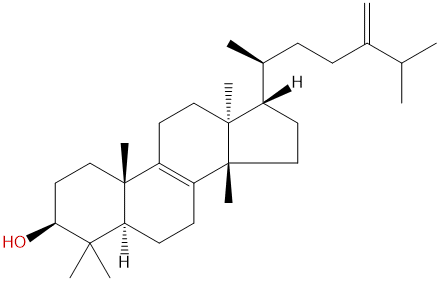
Da Ji Chun is a tetracyclic diterpenoid compound with a molecular formula of C ₂₀ H ∝₂ O ₅ and a molecular weight of 440.7560. Its core structure is composed of three hexagonal rings and one pentagonal ring fused together, belonging to the tigliane type diterpene skeleton, which is a common feature of many bioactive diterpenes in Euphorbia plants. The structure of Euphorbiamol contains multiple hydroxyl groups, which have important effects on its biological activity and physicochemical properties.
From the analysis of parameters related to drug properties, Euphorbiamol exhibits typical lipophilic characteristics. The calculated LogP value is as high as 8.8686, indicating that the compound has extremely strong lipid solubility. Correspondingly, its water solubility is extremely low, only 0.0001 mg/mL, indicating that its solubility and bioavailability in conventional aqueous systems may face challenges. Its topological polar surface area (TPSA) is 20.2300 Å ², which is a relatively small value, further confirming its low molecular polarity. These physicochemical properties determine its distribution characteristics in the body: predictions show high blood-brain barrier permeability, suggesting its potential to act on central nervous system related diseases. In terms of early safety evaluation, existing computational prediction models show that Euphorbiamol has no significant inhibitory risk on hERG potassium channels (predicted as "no"), and the Ames test prediction value is 0.0, suggesting that it may not have direct genetic toxicity. However, these computational predictions need to be validated through rigorous in vitro and in vivo experiments.
Plant sources and extraction methods
Euphorbiaceae is mainly derived from various plants in the Euphorbia genus of the Euphorbiaceae family. This genus of plants is widely distributed worldwide and has a wide variety of species, many of which have been recorded in traditional medical systems in Asia, Europe, and the Americas. Common species rich in Euphorbia kansui include but are not limited to Euphorbia kansui, Euphorbia fischeriana, Euphorbia lathyris, and others. These plants typically contain complex mixtures of diterpenes, with Euphorbia often coexisting with other structurally similar diterpenoid esters such as phorbol esters, but typically existing in the form of free alcohols or aglycones.
The extraction and separation of Euphorbiamol from plant materials are usually carried out using organic solvent extraction combined with various chromatographic techniques. The conventional extraction process is as follows: first, dry plant roots, stems, or whole plants are crushed, and then extracted by cold soaking or heating reflux with medium polarity solvents (such as methanol, ethanol, or acetone). After vacuum concentration, the crude extract obtained was subjected to gradient extraction using solvents such as petroleum ether and ethyl acetate to preliminarily enrich diterpenoid components. Subsequently, further separation and purification were carried out using methods such as silica gel column chromatography, reverse phase column chromatography (such as ODS), preparative thin layer chromatography, or high-performance liquid chromatography (HPLC). Due to the similar polarity of Euphorbiamol and its structural analogues, the separation and purification process often requires optimizing chromatographic conditions and utilizing techniques such as mass spectrometry (MS) and nuclear magnetic resonance (NMR) for structural identification and purity analysis. In recent years, modern separation techniques such as high-speed countercurrent chromatography have also been applied to improve the separation efficiency and yield of Euphorbiamol.
Pharmacological activity research
The most notable pharmacological activity of Euphorbiamol is its extensive anti-tumor effects. A large number of in vitro studies have shown that Euphorbia officinalis has significant proliferation inhibitory and apoptosis inducing activities on a variety of human tumor cell lines, including but not limited to lung cancer, breast cancer, liver cancer, colon cancer, leukemia and glioma cells.
Its anti-tumor effect is mainly reflected in the following aspects:
1. Inhibit cell proliferation Euphorbiamol can significantly inhibit the growth of various cancer cells in a dose-dependent and time-dependent manner, with its half maximal inhibitory concentration (IC ₅₀) typically at the micromolar level.
2. Inducing cell apoptosis Flow cytometry and detection of apoptosis related proteins have confirmed that Euphorbiamol can effectively trigger apoptosis in tumor cells, manifested as nuclear condensation, DNA fragmentation, and formation of apoptotic bodies.
3. Block cell cycle Research has shown that berberine can block cancer cells at specific phases of the cell cycle (such as G0/G1 or G2/M phase), thereby preventing them from undergoing mitosis.
4. Inhibit invasion and metastasis Euphorbiamol can downregulate the expression of matrix metalloproteinases (such as MMP2) closely related to tumor invasion and metastasis, thereby inhibiting the migration and invasion ability of cancer cells.
5. Angiogenesis inhibition By targeting pathways such as hypoxia inducible factor HIF1A, Euphorbiamol can inhibit tumor angiogenesis and cut off the tumor's nutritional supply.
In addition to its anti-tumor activity, based on its traditional use in plants, Euphorbiamol has also shown certain research potential in anti-inflammatory and antibacterial aspects. However, there are relatively few related reports, and its role as the main active ingredient in these areas needs further clarification and in-depth exploration.
Mechanism of action and molecular targets
The anti-tumor effect of Euphorbiamol is not achieved through a single pathway, but involves a complex multi-target regulatory network. Existing research has preliminarily revealed that it acts on multiple key cellular signaling pathways and molecular targets, which explains the molecular basis of its broad-spectrum anti-tumor activity.
-
Regulating apoptosis related proteins (BCL2 family and MCL1)Da Ji Chun can downregulate the expression of anti apoptotic proteins B cell lymphoma 2 (BCL2) and myeloid leukemia 1 (MCL1), while possibly upregulating the expression of pro apoptotic proteins such as BAX, thereby disrupting mitochondrial membrane potential, promoting cytochrome C release, activating Caspase cascade reaction, and ultimately leading to cell apoptosis.
-
Inhibition of Signal Transduction and Transcription Activation Factor 3 (STAT3)STAT3 is an important oncogenic transcription factor that is continuously activated in various tumors. Euphorbiamol can inhibit the phosphorylation (activation) of STAT3, suppress its nuclear translocation, and inhibit the transcription of downstream target genes (such as Cyclin D1, Survivor, Bcl-2), thereby inhibiting cell proliferation and promoting apoptosis.
-
Interference with DNA Topoisomerase (TOP1 and TOP2A) Activity DNA topoisomerase is a key enzyme involved in DNA replication, transcription, and repair. Research has shown that Euphorbiamol may cause DNA damage and replication fork arrest by interfering with the functions of TOP1 and TOP2A, thereby triggering DNA damage responses and activating apoptotic pathways.
-
Inhibition of Matrix Metalloproteinase 2 (MMP2)MMP2 is one of the main enzymes that degrade extracellular matrix and is closely related to tumor invasion and metastasis. Euphorbiamol can inhibit the gene expression and enzyme activity of MMP2, thereby reducing the invasive ability of cancer cells.
-
Regulating hypoxia inducible factor 1 alpha (HIF1A)In the hypoxic microenvironment of tumors, HIF1A is stably expressed and activates a series of genes that promote angiogenesis and metabolic adaptation. Euphorbiamol can interfere with tumor hypoxia adaptation and angiogenesis by promoting the degradation of HIF1 α protein or inhibiting its transcriptional activity.
-
Affects the mitogen activated protein kinase (MAPK1/ERK2) pathway The MAPK/ERK pathway regulates cell growth and survival. Euphorbiamol may regulate cell fate by modulating the activity of this pathway, affecting the function of downstream transcription factors.
-
Potential interactions with hormone receptors and synthases The potential effect of euphorbiol on estrogen receptor (ESR1) and aromatase (CYP19A1) suggests that it may interfere with estrogen signaling pathway, which may be of special significance for the treatment of hormone dependent tumors (such as some breast cancer).
These targets and pathways intertwine to form a complex network of anti-tumor effects of Euphorbiamol, reflecting its "multi-target" nature.
Evaluation of drug properties and pharmacokinetics
Although Euphorbiamol has shown excellent anti-tumor activity in vitro, its drug affinity still faces many challenges, mainly due to its unfavorable physicochemical properties.
Drug Challenge:
- Solubility and permeability The high LogP value and extremely low water solubility are the main obstacles to its development into oral or injectable formulations. This may lead to poor oral absorption, low bioavailability, and difficulty in producing stable water-soluble injections.
- Metabolic stability As a terpenoid compound, Euphorbiamol may be easily metabolized by the liver cytochrome P450 enzyme system, resulting in a short half-life in the body.
- Potential toxicity Although the predicted Ames test is negative, many members of the diterpenoid family to which Euphorbiamol belongs have irritant or pro cancer activity (such as phorbol esters). Therefore, the long-term toxicity and potential side effects of Euphorbiamol need to be systematically evaluated.
Prospects of Pharmacokinetic (PK) Research:
At present, there are very limited research reports on the pharmacokinetics of Euphorbiamol system, which constitutes a key knowledge gap in its preclinical development. Future research needs to focus on:
1. absorb Examine its absorption degree and rate under different administration routes (oral, intravenous, intraperitoneal).
2. distribution Using radioactive labeling or LC-MS/MS technology to study its distribution in plasma and major organs (especially tumor tissue). The prediction of high blood-brain barrier permeability is worth verifying in brain tumor models.
3. Metabolism Identify its main metabolites, key enzyme systems involved in metabolism (such as CYP450 subtypes), and evaluate the activity and toxicity of metabolites.
4. excretion Identify its main excretion pathways (bile, urine) and excretion rate.
Formulation strategy:
To improve its pharmacological properties, advanced formulation techniques may be required, such as:
- Nano delivery system Encapsulate it in liposomes, polymer nanoparticles, or micelles to enhance its water solubility, target tumor sites, and reduce systemic toxicity.
- Prodrug strategy By introducing hydrophilic groups through chemical modifications such as esterification and salt formation, water-soluble prodrugs are prepared and released in vivo through enzymatic interpretation.
- Eutectic/co amorphous Form eutectic or amorphous complexes with other medicinal excipients to improve their solubility and dissolution rate.
Clinical application prospects and prospects
As a natural lead compound with multi-target anti-tumor activity, Euphorbiamol has broad clinical application prospects, but the road ahead is long and full of challenges.
Potential application directions:
1. Development of anti-tumor drugs This is the most core direction. Given its inhibitory effects on multiple key targets such as STAT3, BCL2 family, topoisomerases, etc., Euphorbiamol or its structurally optimized derivatives are expected to be developed for the treatment of malignant tumors that are resistant or difficult to treat with existing targeted drugs, especially those cancer types with abnormal activation of the STAT3 signaling pathway.
2. Combination therapy sensitizer The multi-channel intervention characteristics of Euphorbiamol make it an ideal candidate for combination with traditional chemotherapy drugs (such as topoisomerase inhibitors), radiotherapy, or other targeted drugs, overcoming drug resistance through synergistic effects, reducing individual doses, and minimizing toxic side effects.
3. Treatment of central nervous system tumors Its predicted high blood-brain barrier permeability provides a unique potential advantage for its use in the treatment of malignant brain tumors such as glioblastoma.
Future research focus and prospects:
1. In depth mechanism research It is necessary to use techniques such as gene knockout/knockdown, chromatin immunoprecipitation (ChIP), proteomics, etc. to more accurately elucidate the direct interaction mode between Euphorbiamol and the above-mentioned targets, and to draw a complete cellular signaling network map.
2. Preclinical evaluation of the system Establishing animal models such as human tumor xenograft (PDX) models that are more closely related to clinical practice, comprehensively evaluating their in vivo efficacy, pharmacokinetic characteristics, acute and chronic toxicity, safety pharmacology, etc., is the cornerstone of promoting their clinical translation.
3. Research on Structural Optimization and Structure Performance Relationship Based on the core skeleton of Euphorbiamol, systematic chemical modification is carried out to improve its water solubility, metabolic stability, target selectivity, and safety, and to discover candidate drugs with greater development potential.
4. Innovative formulation research and development As mentioned earlier, developing advanced delivery systems targeting its physical and chemical property defects is a key technical guarantee for translating its activity into clinical efficacy.
5. Explore other indications Based on the traditional use of Euphorbia plants, the potential application value of Euphorbia alcohol in anti-inflammatory, anti fibrotic and other fields can be explored appropriately.
Conclusion
Da Ji Chun is a tetracyclic diterpenoid compound with significant multi-target anti-tumor activity isolated from the traditional medicinal plant Da Ji genus. It exhibits strong potential in inhibiting tumor cell proliferation, inducing apoptosis, blocking the cell cycle, and resisting invasion and metastasis by regulating multiple key oncogenic targets and pathways such as MCL1, BCL2, STAT3, TOP1/2A, MMP2, and HIF1A. However, its extremely low solubility and pharmacokinetic and safety characteristics that require comprehensive validation constitute the main bottlenecks for its drug conversion. Future research should focus on in-depth analysis of its molecular mechanism of action, systematic preclinical efficacy and safety evaluation, and overcoming its drug defects through rational structural modification and innovative formulation strategies. The research on Euphorbia is not only expected to provide valuable lead structures for the development of new multi-target anti-tumor drugs, but also to further promote the scientific understanding and modern utilization of traditional medicinal plants in the Euphorbia genus. With the continuous deepening of interdisciplinary research, Euphorbiamol is expected to move from the laboratory to clinical practice, providing new options for tumor treatment.