Introduction/Overview
Natural products have long been an important source of innovative drug discovery, and their structural diversity and biological activity provide unique molecular templates for addressing complex diseases, especially malignant tumors. Among numerous natural compounds, phenanthrene derivatives have attracted much attention due to their wide range of biological activities. Monbarbatan A (CAS number: 138711-55-4), as a dimeric phenanthrene compound isolated from rare orchids, has gradually entered the field of pharmacology researchers in recent years due to its multi-target and multi pathway inhibitory potential in the anti-tumor field. Its unique chemical structure enables it to interact with multiple key tumor development related targets, including apoptosis regulatory proteins, signal transduction factors, matrix metalloproteinases, and DNA topoisomerases, providing highly attractive lead compounds for the development of novel multi-target anti-tumor drugs. This article aims to systematically review the chemical properties, plant origin, pharmacological activity, mechanism of action, pharmacological evaluation, and clinical application prospects of Monbatain A, in order to provide comprehensive academic references for the in-depth research and development of this compound.
Chemical structure and physicochemical properties
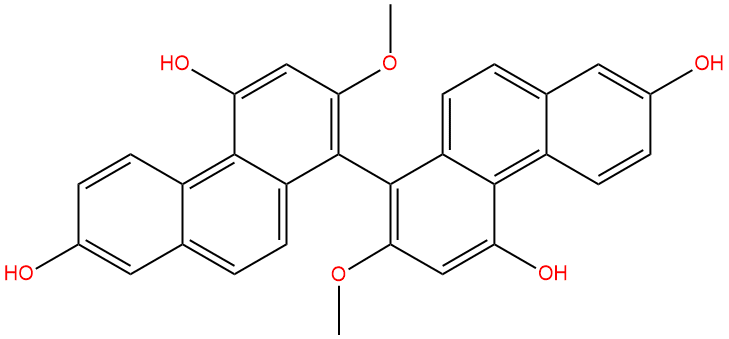
The chemical structure of Monbarbatan A belongs to the class of dimeric phenanthrene compounds. Its molecular formula is C28H22O7 and its molecular weight is 478.5000. This structure is composed of two phenanthrene skeleton units connected by specific chemical bonds, forming a complex polycyclic aromatic hydrocarbon system with three-dimensional spatial conformation. The structure usually contains multiple oxygen-containing functional groups such as phenolic hydroxyl and methoxy groups, which not only determine its physicochemical properties, but also play a crucial role in its biological activity and binding mode with target proteins.
From the analysis of physicochemical parameters related to drug properties, Monbarbatan A exhibits typical natural hydrophobic compound characteristics. Its lipophilic water partition coefficient (LogP) is 5.5893, indicating that the compound has a high degree of lipophilicity. The topological polar surface area (TPSA) is 99.3800 Å ², which is relatively moderate, but combined with its high LogP value, it suggests that its membrane permeability may be good, but its water solubility is extremely low, only 0.0009 mg/mL. This "insoluble" characteristic is a key challenge that needs to be overcome in subsequent formulation development. In addition, preliminary in vitro safety screening showed that its Ames test result was 0.6 (generally considered>1.5 as a potential mutagenic positive), indicating a low risk of genetic toxicity; At the same time, it has no significant inhibitory effect on hERG potassium channels, indicating that its potential risk of inducing QT interval prolongation in the heart is relatively small. However, its blood-brain barrier permeability is predicted to be 'low', which limits its direct effect on central nervous system tumors, but may also reduce potential neurotoxic side effects.
Plant sources and extraction methods
Monbarbatain A was originally derived from Orchidaceae plants Monomeria barbata It was isolated from (commonly known as "Bearded Single Seed Orchid"). Monomeria barbata is an epiphytic orchid with a relatively narrow distribution area, mainly growing in specific tropical or subtropical forest environments. This rare plant source means that the natural content of Monbartain A is limited, and large-scale acquisition relies on breakthroughs in plant cultivation techniques or the development of chemical synthesis/biosynthetic pathways.
The extraction and separation of Monbartain A from plant materials typically follow the classic process of natural product chemistry. Firstly, the dried Monomeria barbata whole plant or specific parts (such as pseudobulbs) are crushed and subjected to extraction or reflux extraction using organic solvents such as methanol, ethanol, or acetone to fully dissolve secondary metabolites including phenanthrene. After vacuum concentration, the crude extract obtained is subjected to preliminary fractionation using liquid-liquid distribution method (such as extraction with petroleum ether, ethyl acetate, and n-butanol in sequence). Monbarbatan A is usually enriched in the ethyl acetate extraction site due to its equipolarity.
Further purification relies on the combination of multiple chromatographic techniques. Silica gel column chromatography is commonly used for preliminary separation, using solvent systems of different polarities (such as chloroform methanol gradient elution) for elution. Then, it was repeatedly purified by combining reversed-phase silica gel column chromatography (such as C18 packing, eluted with methanol water or acetonitrile water system), dextran gel column chromatography (Sephadex LH-20) and high performance liquid chromatography (HPLC, preparative or semi preparative) until a high-purity Monbarbatain A monomer compound was obtained. Structural identification is accomplished through spectroscopic techniques such as nuclear magnetic resonance (NMR, including 1H, 13C, and 2D NMR), mass spectrometry (MS), ultraviolet (UV), and infrared (IR) spectroscopy.
Pharmacological activity research
The most notable pharmacological activity of Monbartain A is its antitumor activity Numerous in vitro studies have shown that it exhibits significant proliferative inhibitory activity against various human tumor cell lines.
- Broad spectrum anti-tumor cell activity: Research shows that Monbarbatain A has a dose-dependent growth inhibition and cytotoxicity effect on breast cancer (such as MCF-7, MDA MB-231), liver cancer (HepG2), lung cancer (A549), colon cancer (HCT-116), leukemia (HL-60) and other cancer cells. Its IC50 value is usually at the level of μ M or even sub μ M, showing a strong anti-tumor potential in vitro.
- Inducing cell apoptosis Monbarbatan A treatment can significantly induce apoptosis in tumor cells, manifested as morphological changes (such as chromatin agglutination, nuclear fragmentation), phosphatidylserine eversion (increased Annexin V positive cells), and activation of caspase family proteases (such as caspase-3, -9).
- Inhibit cell migration and invasion In addition to inhibiting proliferation, Monbarbatain A can effectively suppress the migration and invasion ability of tumor cells, which is closely related to its inhibition of matrix metalloproteinases (such as MMP2), suggesting its potential for anti-tumor metastasis.
- In vivo anti-tumor activity: In nude mice transplanted tumor models (such as breast cancer and liver cancer transplanted tumor), intraperitoneal injection or intragastric administration of Monbarbatain A can significantly inhibit the growth of tumor, and does not show significant toxicity to the body weight and main organs of mice within a certain dose range, which initially confirmed its anti-tumor effectiveness in vivo.
Mechanism of action and molecular targets
The anti-tumor effect of Monbarbatan A is not achieved through a single pathway, but is characterized by multi-target and multi pathway synergistic intervention, mainly attributed to its complex chemical structure that can interact with multiple protein targets.
- Regulating the apoptotic pathway of cells:
- Targeting Bcl-2 family proteins Monbarbatan A has been shown to directly or indirectly inhibit anti apoptotic proteins MCL1 and BCL2 The expression or function. By disrupting the balance between these proteins and pro apoptotic proteins such as Bax and Bak, it promotes an increase in mitochondrial outer membrane permeability, releases cytochrome c, and initiates the endogenous apoptotic pathway.
- Interference with cellular signal transduction:
- Inhibition of STAT3 signaling pathway:STAT3 It is an important oncogenic transcription factor. Monbarbatan A can inhibit the phosphorylation (activation) of STAT3, prevent its nuclear translocation and the transcription of downstream target genes (such as Cyclin D1, Bcl-2, Survivor), thereby inhibiting cell proliferation, promoting apoptosis, and weakening tumor immune escape.
- Regulating the MAPK/ERK pathway: Yes MAPK1(ERK2) The impact of activity may interfere with signals related to cell growth and differentiation.
- Affects estrogen signaling: Through and ESR1 (estrogen receptor alpha) Interaction may interfere with the growth signal of estrogen dependent tumors (such as some breast cancer).
- Inhibit tumor invasion and angiogenesis:
- Inhibition of matrix metalloproteinases: Direct inhibition MMP2 Reduce the activity or expression of extracellular matrix degradation, thereby inhibiting the invasion and metastasis of tumor cells.
- Inhibition of hypoxia inducible factor: Downward adjustment HIF-1αThe stability or transcriptional activity of the tumor inhibits the expression of downstream genes such as vascular endothelial growth factor (VEGF), thereby combating tumor angiogenesis.
- Interference with DNA metabolism and hormone synthesis:
- Inhibition of Topoisomerase Research shows that Monbarbatan A can inhibit TOP1 and TOP2A The activity interferes with DNA replication, transcription, and repair processes, leading to DNA damage and cell death.
- Inhibit aromatase: Yes CYP19A1 (aromatase) It can reduce the transformation of androgen to estrogen, which is significant for the treatment of hormone dependent cancer (such as breast cancer).
In summary, Monbarbatan A forms a multi-target anti-tumor network by simultaneously acting on multiple key links such as apoptosis regulation, signal transduction, invasion and metastasis, and DNA metabolism, which helps to overcome the problem of drug resistance that may arise from single target drugs.
Evaluation of drug properties and pharmacokinetics
Although Monbarbatan A has shown good anti-tumor activity in vitro and preliminary in vivo models, its drug affinity still faces challenges and requires systematic pharmacokinetic (PK) and toxicological evaluation.
- Prediction and Challenges of Absorption, Distribution, Metabolism, and Excretion (ADME):
- absorb High LogP values and low TPSA indicate that it may have good passive transmembrane absorption potential. However, the extremely low water solubility (0.0009 mg/mL) is the main bottleneck limiting its oral bioavailability, which may lead to irregular and incomplete absorption.
- distribution The predicted blood-brain barrier permeability is low, which limits its application in treating brain tumors, but may be beneficial in reducing central nervous system side effects. Its high lipophilicity may lead to accumulation in adipose tissue.
- Metabolism As a polyphenolic compound, Monbarbatan A is likely to undergo extensive phase I (such as cytochrome P450 enzyme catalysis) and phase II (such as glucuronidation and sulfation) metabolism in vivo. It is necessary to clarify its main metabolic enzymes, metabolites, and their activity/toxicity.
- excretion Metabolites may be mainly excreted through bile and kidneys.
- Pharmaceutical Strategy To improve its water solubility and bioavailability, advanced drug delivery systems need to be developed. Possible strategies include: making nanocrystals, liposomes, micelles, solid dispersions, or cyclodextrin inclusion complexes. These technologies can increase their dissolution rate and apparent solubility, improving absorption.
- Preliminary safety Ames test negative (0.6) and hERG inhibition negative are its early safety advantages. However, comprehensive toxicological evaluations, including acute toxicity, subchronic toxicity, genetic toxicity (complete test combination), and reproductive toxicity, have not been systematically reported yet, which is the necessary path for its clinical advancement.
- Gap in pharmacokinetic research At present, there is very limited publicly available data on the systematic pharmacokinetics of Monbarbatain A, including its absolute bioavailability in different species, plasma protein binding rate, tissue distribution characteristics, main metabolic pathways, elimination half-life, and other key parameters that need to be elucidated through standardized preclinical pharmacokinetic experiments.
Clinical application prospects and prospects
Monbarbatan A, as a multi-target anti-tumor natural lead compound, has broad clinical application prospects, but the road ahead is long and requires interdisciplinary collaboration.
- As a lead compound for novel multi-target anti-tumor drugs Its unique multi target mechanism of action provides a new idea for the development of malignant tumors (such as triple negative breast cancer, liver cancer, pancreatic cancer, etc.) that are resistant to single target drugs or driven by complex signal networks. Through reasonable structural modification and optimization, it is expected to improve its drug defects while maintaining multi-target advantages.
- Exploration of Combination Therapy Strategies The combination of Monbarbatan A with existing chemotherapy drugs (such as topoisomerase inhibitors, microtubule inhibitors) or targeted drugs may produce synergistic effects, reducing individual doses, minimizing toxic side effects, and overcoming or delaying the development of drug resistance.
- Challenges faced and future research directions:
- Resource sustainability Addressing the issue of limited plant sources. The future focus should be on Total chemical synthesis or Microbial biosynthesis Develop the route to achieve large-scale and sustainable production.
- structural optimization Based on structure-activity relationship (SAR) studies, structural modifications were performed on Monbarbatain A with the aim of reducing LogP values, improving water solubility, optimizing metabolic stability, enhancing selectivity or efficacy towards specific targets, and further reducing potential toxicity.
- In depth preclinical development It is necessary to complete preclinical pharmacodynamics (validated on more clinical models such as PDX models), pharmacokinetics, and toxicology studies of the system to provide sufficient data support for its application for clinical trials (IND).
- Deepening the mechanism of action Although multiple targets are known, it is necessary to more accurately elucidate their direct binding modes (such as eutectic structures), binding strengths, and the primary and secondary contributions of each target, in order to lay the foundation for rational drug design.
- Exploration of new indications In addition to anti-tumor effects, based on its multi-target properties (such as anti-inflammatory and antioxidant), its potential applications in other chronic diseases (such as fibrosis and autoimmune diseases) can be explored.
Conclusion
Monbarbatain A is a naturally occurring dimeric phenanthrene with significant anti-tumor activity isolated from the rare orchid Monomeria barbata. Its greatest scientific value lies in demonstrating the possibility of intervening multiple key tumor targets (such as MCL1, STAT3, MMP2, TOP1/2, etc.) through a single molecule, providing new strategies for addressing tumor heterogeneity and drug resistance. Although it faces typical challenges in terms of physicochemical properties (especially water solubility) and pharmacokinetics, these are not insurmountable. By utilizing modern techniques in medicinal chemistry, pharmacy, and synthetic biology to systematically optimize its structure and modify its formulation, Monbarbatan A is expected to gradually develop from a promising natural lead compound into a novel multi-target anti-tumor candidate drug with clinical application value. Continued in-depth research on it will not only promote the development of the compound itself, but also provide valuable experience and inspiration for exploring multi-target drugs from complex natural products.