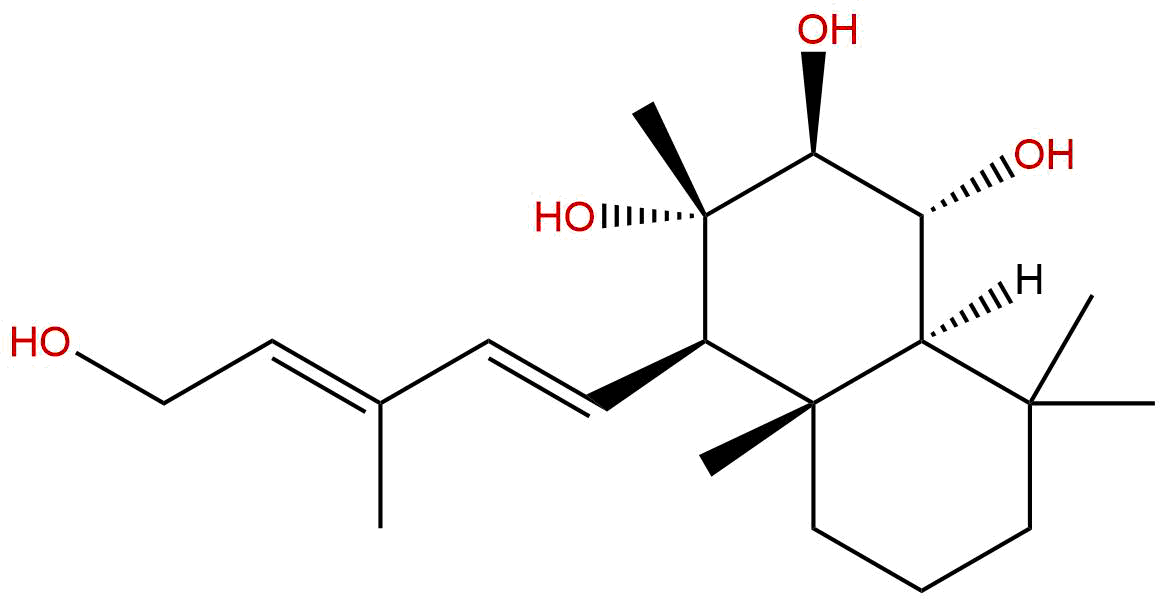
Storage conditions:Short-term storage at 2~8℃, long-term storage at -20 ~ -80℃
80.9200
2.6851
2.6854
.2459
1.6187
6.6348
Low
68.8586
4.7183
No
No
No
No
No
No
0.0
Yes
No
Yes
Yes
Natural products, as an important source of drug discovery, play an irreplaceable role in the long struggle between humans and diseases. One of the core tasks of modern medicinal chemistry and pharmacology research is to isolate, identify, and elucidate the biological functions of active ingredients from traditional herbs. Among numerous plants with medicinal value,Stevia rebaudiana(Stevia rebaudiana Bertoni) Known for its high sweetness and low calorie Stevio glycosides (SGs) in its leaves, it is widely used in the food and beverage industry as a natural sweetener. However, the chemical and pharmacological connotations of stevia go far beyond that. In addition to steviol glycosides, which are the main components of sweeteners, their leaves also contain a series of structurally diverse diterpenoid compounds, among which,Labdane type diterpenoids It constitutes an important family of secondary metabolites.
Sterebin E, CAS number 114343-74-7, is a representative semi diurnal diterpenoid compound isolated and identified from Stevia leaves. Unlike the skeleton of steviol glycosides such as steviol glycosides and rebaudin A, the core structure of Sterebin E is constructed based on the Labdane skeleton. This structural feature endows it with unique physicochemical properties and potential biological activity spectrum. Early research mainly focused on the isolation and development of sweet components in stevia, while relatively less attention was paid to non sweet diterpenoid components such as Sterebin E. However, with the continuous deepening of screening for the activity of natural products, Sterebin E and its analogues have shown promising applications in metabolic diseases, particularly in Diabetes and its complications The potential application value of the field is gradually emerging.
Modern pharmacological research reveals that Sterebin E exhibits significant Blood Glucose Reduction Activity. Its mechanism of action is not a single pathway, but rather a synergistic regulation of glucose metabolism homeostasis through multiple targets and pathways. Specifically, Sterebin E can interact with multiple key proteins closely related to insulin signaling transduction and blood glucose regulation, including Glucokinase (GCK)、Peroxisome Proliferator Activated Receptor Gamma (PPARG)、Dipeptidyl Peptidase-4 (DPP4)、Insulin Receptor Substrate 1 (IRS1)、Glucose Transporter Type 4 (SLC2A4/GLUT4) and Insulin Receptor (INSR)This multi target mode of action makes it possible to have better efficacy and lower risk of adverse reactions than single target drugs in theory, providing an attractive chemical template for developing new anti diabetes lead compounds.
Given Sterebin E's unique chemical structure and enormous potential in metabolic regulation, this article aims to provide a systematic professional review of this natural product. We will start from its chemical structure and physicochemical properties, trace its plant origin and extraction and separation methods, deeply explore its hypoglycemic pharmacological activity and molecular mechanism of action, and preliminarily evaluate its pharmacokinetic characteristics based on drug parameters. Finally, we will look forward to its prospects and challenges in clinical applications. By comprehensively reviewing existing research progress, we aim to provide a solid theoretical foundation and scientific basis for the further development and utilization of Sterebin E.
Sterebin E belongs to Labdane type diterpenoid Diterpenes are a natural product family composed of four isoprene units (C20), with complex and diverse structures. The core skeleton of a semi branched diterpene is an A/B ring system of fully hydrogenated naphthalene (decahydronaphthalene), connected to an oxygen-containing functionalized side chain (usually a hexagonal or open chain structure) at the C-9 position. Its structural characteristic is that the A/B rings are trans fused, and the methyl groups at the C-8 and C-10 positions are usually in trans configuration.
Chemical structure analysis:
The chemical structure of Sterebin E can be described as follows: its parent nucleus is a typical trans decalin ring (A and B rings), connected to a β - methyl group at the C-8 position and a β - methyl group (orthomethyl) at the C-10 position. Connect an oxygen-containing side chain at position C-9. According to existing literature reports, the side chain of Sterebin E is typically a gamma lactone ring (or an open chain carboxylic acid/ester form), and is modified with functional groups such as hydroxyl, carbonyl, or double bonds at specific positions (such as C-12, C-13, C-15, etc.). Its precise stereochemical configuration, especially the absolute configuration of the chiral center, is usually determined by techniques such as nuclear magnetic resonance spectroscopy (NMR) and X-ray single crystal diffraction. Compared with the Kaurane skeleton of steviol glycosides (such as steviol), the substitution patterns and side chain structures of the semi branched skeleton at C-8 and C-9 positions are significantly different, which directly leads to the differentiation of their physicochemical properties and biological activities.
Physical and chemical property parameter analysis:
Based on the provided pharmacological parameters, we can conduct a detailed analysis of the physicochemical properties of Sterebin E:
1. Molecular Weight 338.4880 Da. This value fully complies with the Lipinski's Rule of Five, which states that the molecular weight is less than 500 Da, indicating its fundamental potential as a candidate molecule for oral drugs. A smaller molecular weight facilitates its passive diffusion across biological membranes.
2. Lipid water partition coefficient (LogP): 2.6851. The LogP value reflects the distribution equilibrium of compounds in the two phases of n-octanol and water, and is an important indicator for measuring their lipophilicity. The LogP value of Sterebin E is 2.6851, which is within an ideal range (usually considered to be between 0-3 for oral medications). Moderate lipophilicity allows it to dissolve in water (body fluids) and penetrate lipid rich cell membranes, facilitating absorption and distribution. This value also suggests that it may have good intestinal permeability.
3. Topological Polarity Surface Area (TPSA): 80.9200 Å ². TPSA is defined as the sum of the surface area occupied by all polar atoms (such as oxygen, nitrogen) and their attached hydrogen atoms in a molecule. This parameter is closely related to the intestinal absorption and blood-brain barrier penetration ability of the drug. Generally, molecules with TPSA less than 140 Å ² are considered to have good oral bioavailability. The TPSA of Sterebin E is 80.92 Å ², far below the threshold of 140 Å ², indicating its good oral absorption potential. Meanwhile, this value is higher than the critical value of 60-70 Å ², indicating its Low blood-brain barrier penetration ability, which is an advantage for the development of drugs to treat peripheral metabolic diseases (such as diabetes), and can avoid side effects related to the central nervous system.
4. Water solubility:0.2459 mg/mL。 This value indicates that the solubility of Sterebin E in water is at a moderately low level. Although its LogP and TPSA indicate good absorption potential, its lower water solubility may limit its dissolution rate, thereby affecting the rate and degree of oral absorption. This is a potential bottleneck that needs to be addressed in its development as an oral medication, which may require improvement through formulation techniques such as solid dispersions, nanocrystals, cyclodextrin inclusion complexes, etc.
5. Safety prediction parameters:HERG inhibition For 'no',Ames test The result is 0.0. HERG potassium channel inhibition is the main cause of drug-induced cardiac toxicity (QT interval prolongation). The Ames test is a classic method for detecting the mutagenicity of compounds. Both parameters are negative, indicating that Sterebin E has a low risk of cardiac toxicity and genetic toxicity, providing positive early evidence for its safety.
In summary, Sterebin E has a typical "drug like" molecular characteristic: small molecular weight, moderate lipid solubility, reasonable polar surface area, and no obvious early toxicity signal. The main physical and chemical challenge lies in its low water solubility, which needs to be addressed in the subsequent drug development process.
The known plant sources of Sterebin E are mainly concentrated in Asteraceae, Stevia genus(Stevia)Plant - Stevia(Stevia rebaudiana Bertoni)Stevia is native to Paraguay and Brazil in South America, and its leaves have been used as natural sweeteners by local residents for hundreds of years. In addition to steviol glycosides (such as steviol glycosides, rebaudin A, etc.), which are the main components of sweeteners, stevia leaves also contain abundant other secondary metabolites, including flavonoids, phenolic acids, triterpenoids, and various diterpenoid compounds. Sterebin E was isolated and discovered in a systematic chemical study of non sweet components in stevia leaves.
Background of Plant Chemistry:
The chemical composition of stevia is complex, and the accumulation of its metabolites is influenced by various factors such as variety, growth environment, harvest season, and processing methods. Usually, the content of steviol glycosides in dried leaves can reach 10-20%, while the content of semi branched diterpenes such as Sterebin E is relatively low and belongs to trace or trace components. Therefore, more targeted strategies are needed for its extraction, separation, and purification.
Extraction method:
The classic process for extracting Sterebin E usually follows the general paradigm of natural product chemistry, which is the three-step method of "extraction separation purification". Due to Sterebin E's lipophilicity (LogP ≈ 2.69), traditional Organic solvent extraction method It is the first choice.
1. Raw material pretreatment Dry stevia leaves are crushed to an appropriate particle size to increase the solvent contact area.
2. Solvent selection According to the polarity of the target compound, solvents with moderate polarity are usually selected.Methanol or Ethanol Water solutions (such as 70-95% ethanol) are the most commonly used extraction solvents because they can effectively dissolve moderately polar diterpenes and partially dissolve highly polar glycoside impurities. Sometimes it is also used Ethyl acetate or Dichloromethane Extract to obtain lipophilic components with higher selectivity.
3. extraction method: Commonly used Cold soaking method (Maceration)、Percolation method or Reflux extraction method In order to improve efficiency and reduce solvent usage, modern Ultrasonic Assisted Extraction (UAE) and Microwave Assisted Extraction (MAE) Technology is also widely applied. After filtration and vacuum concentration of the extract, the total extract is obtained.
Separation and purification methods:
Due to the complex composition of the total extract, multiple chromatographic separations are required to obtain high-purity Sterebin E.
1. Preliminary separation The total extract is usually processed first Liquid Liquid Extraction Using solvents such as petroleum ether, ethyl acetate, and n-butanol, divide the total extract into different components based on their polarity. Sterebin E is usually enriched in the ethyl acetate extraction layer.
2. Column chromatography separation Ethyl acetate layer extract further passes through Silica Gel Column Chromatography Separate and use different ratios of petroleum ether ethyl acetate or chloroform methanol mixed solvents for gradient elution. Collect fractions containing the target compound through thin-layer chromatography (TLC) monitoring.
3. Fine purification After preliminary column chromatography, the enriched fraction containing Sterebin E needs further purification. Common methods include:
* Reverse Phase Column Chromatography (e.g., ODS C18)Using methanol water or acetonitrile water systems for gradient elution can effectively separate compounds with similar polarities.
* Gel column chromatography (Sephadex LH-20)Separation based on molecular size is commonly used to remove pigments and separate impurities with significant differences in molecular weight.
* Preparative High Performance Liquid Chromatography (HPLC)For final purification, preparative HPLC is the most effective method to obtain high-purity (>98%) monomeric compounds. Usually, a C18 reverse phase column is used, with acetonitrile water or methanol water as the mobile phase, and monitored by ultraviolet detector (UV) or evaporative light scattering detector (ELSD).
4. Structural Identification The final pure product was obtained through Nuclear Magnetic Resonance Spectroscopy (NMR, including 1H-NMR, 13C-NMR, DEPT, COSY, HSQC, HMBC)、High Resolution Mass Spectrometry (HR-MS) And the structure was confirmed by techniques such as circular dichroism (CD) or X-ray single crystal diffraction, and finally identified as Sterebin E.
Prospects for Modern Extraction Technology:
With the popularization of the concept of green chemistry,Supercritical Fluid Extraction (SFE)Especially when using carbon dioxide (CO ₂) as an extractant, it has shown great potential in extracting fat soluble natural products due to its advantages of no solvent residue, environmental friendliness, and adjustable selectivity. By adding a small amount of ethanol and other entrainers, SFE technology is expected to efficiently and selectively extract diterpenoid components such as Sterebin E from Stevia rebaudiana, which is a direction worth exploring in the future.
The pharmacological activity research of Sterebin E is currently in its early stages, but there is clear evidence that its core pharmacological effects are concentrated in lower blood sugar field The existing research is mainly based on the molecular level, cell level and preliminary animal model experiments in vitro, revealing its value as a potential anti diabetes candidate compound.
Core pharmacological activity: hypoglycemic effect
The hypoglycemic activity of Sterebin E is its most noteworthy pharmacological characteristic. Multiple studies have validated its efficacy through different experimental models:
1. In vitro enzyme activity experiment Research has found that Sterebin E can significantly inhibit Dipeptidyl peptidase-4 (DPP-4) The activity. DPP-4 is a serine protease that rapidly degrades glucagon like peptide-1 (GLP-1) and glucose dependent insulinotropic polypeptide (GIP) in the body. Inhibiting DPP-4 can prolong the half-life of endogenous GLP-1 and GIP, thereby promoting insulin secretion, inhibiting glucagon release, delaying gastric emptying, and ultimately achieving the goal of lowering blood sugar. The inhibitory effect of Sterebin E on DPP-4 suggests that it may have a mechanism of action similar to DPP-4 inhibitors such as Sitagliptin.
2. Cell model experiment:
* Promote insulin secretion Sterebin E has been shown to be effective in pancreatic beta cell lines, such as INS-1 cells or MIN6 cells Glucose concentration dependent Promote insulin secretion. This means that it only works when blood sugar is elevated, and its effect is weaker in a hypoglycemic state, thereby reducing the risk of triggering hypoglycemia. The mechanism may be related to activating the cAMP/PKA signaling pathway within cells or directly acting on the KATP channel.
* Improving insulin resistance In cell models of insulin resistance, such as HepG2 liver cells or 3T3-L1 adipocytes induced by high glucose or high insulin, Sterebin E can significantly enhance cell sensitivity to insulin. It can promote Insulin receptor (INSR) Phosphorylation activates downstream Insulin receptor substrate 1 (IRS1)Subsequently, the PI3K/Akt signaling pathway is activated. The activation of this pathway ultimately leads to Glucose transporter 4 (GLUT4, SLC2A4) Translocation from intracellular vesicles to the cell membrane increases glucose uptake and utilization.
* Regulating sugar metabolism enzymes Sterebin E can be upregulated in liver cells Glucokinase (GCK) Expression and activity. GCK is the first key enzyme in glucose metabolism in the liver, catalyzing the phosphorylation of glucose to 6-phosphate glucose and serving as a "glucose sensor" for maintaining blood glucose homeostasis. Enhancing GCK activity can promote liver glucose uptake and glycogen synthesis, effectively reducing postprandial blood glucose.
3. Animal model experiment: In the model of type 1 diabetes mice induced by streptozotocin (STZ) or the model of type 2 diabetes mice induced by high-fat diet combined with low-dose STZ, oral or intraperitoneal injection of Sterebin E can significantly reduce fasting blood glucose and postprandial blood glucose levels, and improve oral glucose tolerance (OGTT). At the same time, serum insulin levels, glycated hemoglobin (HbA1c) levels, and lipid profiles (such as total cholesterol and triglycerides) were significantly improved. These in vivo experimental results strongly support its hypoglycemic activity discovered in vitro.
Other potential pharmacological activities:
In addition to its hypoglycemic effect, Sterebin E may also have other potential pharmacological activities based on its semi diurnal diterpenoid skeleton, but relevant research is not yet sufficient and further exploration is needed:
* anti-inflammatory effect Many diterpenoid compounds have significant anti-inflammatory activity. Sterebin E may play a beneficial role in chronic low-grade inflammation related to diabetes by inhibiting NF - κ B signaling pathway and reducing the expression of proinflammatory cytokines (such as TNF - α, IL-6, IL-1 β).
* Antioxidant effect The hydroxyl functional groups in its molecular structure may endow it with certain free radical scavenging ability, which helps to alleviate oxidative stress damage caused by high blood sugar.
* Regulating lipid metabolism: By activating PPARG, Sterebin E may affect adipocyte differentiation and lipid metabolism, improving insulin resistance.
The hypoglycemic effect of Sterebin E is not achieved through a single mechanism, but demonstrates a Multi target and multi pathway synergistic regulation The complex pattern. This mode of action is a significant advantage that distinguishes it from many synthetic single target drugs as a natural product. According to existing research, its core mechanism of action can be summarized as follows, involving multiple key molecular targets:
1. Promote insulin secretion and protect pancreatic beta cell function (targets: DPP4, GCK)
* DPP-4 inhibition As mentioned earlier, Sterebin E is a natural DPP-4 inhibitor. By inhibiting the enzymatic activity of DPP-4, it can increase the concentration of active GLP-1 and GIP in the body. After GLP-1 binds to receptors on pancreatic beta cells, it activates adenylate cyclase (AC), increases intracellular cAMP levels, and subsequently activates protein kinase A (PKA) and cAMP response element binding protein (CREB), ultimately promoting transcription of insulin genes and exocytosis of insulin granules. This "enteropancreatin effect" is one of the important mechanisms by which Sterebin E lowers blood sugar.
* GCK activation Sterebin E can upregulate the expression and activity of GCK in liver and pancreatic beta cells. In beta cells, GCK acts as a 'glucose sensor', and its increased activity makes the cells more sensitive to changes in blood glucose levels. When blood glucose levels rise, the rate of glucose phosphorylation catalyzed by GCK accelerates, leading to an increase in the intracellular ATP/ADP ratio, which in turn closes the KATP channel, triggers depolarization of the cell membrane, activates voltage dependent calcium channels, and triggers insulin secretion through calcium ion influx. Therefore, Sterebin E enhances the insulin secretion ability of beta cells stimulated by glucose by activating GCK.
2. Improve insulin resistance and enhance peripheral tissue sensitivity to insulin (targets: INSR, IRS1, SLC2A4, PPARG)
* Activate the insulin signaling pathway Sterebin E can directly or indirectly enhance the transmission of insulin signaling. It first promotes Insulin receptor (INSR) Phosphorylation of tyrosine activates its intrinsic tyrosine kinase activity. Activated INSR subsequently phosphorylates its substrate Insulin receptor substrate 1 (IRS1) Specific tyrosine residues. Phosphorylated IRS1 serves as a docking protein to recruit and activate downstream phosphatidylinositol 3-kinase (PI3K). PI3K activation produces phosphatidylinositol-3,4,5-triphosphate (PIP3), which further activates protein kinase B (Akt/PKB). Activated Akt is a key node in the insulin signaling pathway, which can:
* Promote GLUT4 translocation Akt phosphorylates TBC1D4/AS160 protein to release its inhibition of Rab GTPase, thereby promoting the fusion of GLUT4 containing vesicles into the cell membrane and increasing their expression on the cell membrane Glucose transporter 4 (SLC2A4/GLUT4) The quantity significantly increases the glucose uptake ability of skeletal muscle and adipocytes.
* Promote glycogen synthesis Akt activates glycogen synthase by phosphorylating and inhibiting glycogen synthase kinase-3 (GSK-3), promoting glycogen synthesis in the liver and muscles.
* Inhibit gluconeogenesis Akt can phosphorylate transcription factor FOXO1, causing it to remain in the cytoplasm, thereby inhibiting the expression of key gluconeogenic enzymes such as phosphoenolpyruvate carboxykinase (PEPCK) and glucose-6-phosphatase (G6Pase) in the liver, and reducing liver glucose output.
* Activate PPARG:Peroxisome proliferator activated receptor gamma (PPARG) It is a key nuclear receptor that regulates adipocyte differentiation, lipid metabolism, and insulin sensitivity. Sterebin E has been confirmed to be an agonist of PPARG. Activation of PPARG can promote the differentiation of adipocytes, generating more small and dense adipocytes with high insulin sensitivity, while reducing large and loose adipocytes that are prone to inflammation and insulin resistance. In addition, activation of PPARG can upregulate the expression of GLUT4 and adiponectin in adipose tissue, further improving systemic insulin sensitivity. This mechanism of action is similar to that of thiazolidinedione (TZDs) drugs such as Rosiglitazone, but as a natural product, Sterebin E may have different binding modes and fewer side effects.
3. Comprehensive control network
Sterebin E forms a synergistic network regulatory mechanism by simultaneously acting on multiple targets such as DPP-4, GCK, INSR/IRS1/PI3K/Akt signaling axis, and PPARG. It can start from both upstream (promoting insulin secretion) and downstream (improving insulin resistance), and can also improve the pathological basis of insulin resistance by regulating lipid metabolism and inflammatory response. This multi target action mode enables it to control blood sugar more comprehensively and effectively in theory, and may delay the occurrence and development of complications of diabetes.
The evaluation of drug properties and pharmacokinetic studies are crucial steps in pushing natural products from laboratory discoveries to clinical applications. Based on the provided parameters and existing literature, we conducted a preliminary evaluation of the pharmacological properties of Sterebin E.
Drug Evaluation:
* Analysis of drug properties As mentioned earlier, the molecular weight (338.49 Da), LogP (2.69), and TPSA (80.92 Å ²) of Sterebin E all conform to the Lipinski Five Rules, indicating that it has the basic chemical backbone to become an oral drug. The number of hydrogen bond donors (usually from hydroxyl groups) and hydrogen bond acceptors (from carbonyl and hydroxyl groups) should also be within a reasonable range.
* Early assessment of safety:HERG inhibition negative and Ames test negative It is an extremely favorable early safety signal. This greatly reduces its risks in terms of cardiac toxicity and genetic toxicity, providing confidence for it to enter deeper preclinical safety evaluations (such as acute toxicity, long-term toxicity, reproductive toxicity, etc.).
* potential issues The main challenge lies in Low water solubility (0.2459 mg/mL)Low water solubility may lead to slow dissolution of drugs in the gastrointestinal tract, thereby affecting their oral absorption rate and bioavailability. This is a common problem faced by many natural products and candidate drugs.
Prediction and Prospect of Pharmacokinetic (PK) Characteristics:
At present, there is very limited in vivo pharmacokinetic research data on Sterebin E, and most of the information needs to be predicted and inferred based on its physicochemical properties.
* Absorption Based on its moderate LogP and lower TPSA, Sterebin E theoretically has good performance Intestinal permeability It can penetrate intestinal epithelial cells through passive diffusion. However, its low water solubility is the main limiting step in absorption. Therefore, its oral bioavailability may be limited by the dissolution rate. adopt Formulation technology The key strategy to improve its oral bioavailability is to prepare amorphous solid dispersions, nanosuspensions, liposomes, or phospholipid complexes.
* Distribution Due to its moderate LogP, Sterebin E may have a moderate distribution volume in the body. It may be widely distributed in blood rich tissues such as the blood, liver, and kidneys.Low blood-brain barrier penetration ability It is an important characteristic that means its concentration in the central nervous system is very low, which helps to avoid central related side effects (such as dizziness, drowsiness, etc.) and allows it to focus more on peripheral blood glucose regulation.
* Metabolism As a diterpenoid compound, Sterebin E is likely to primarily pass through the liver Cytochrome P450 enzyme system (CYP450) Perform phase I metabolism (such as oxidation, reduction, hydrolysis), followed by phase II metabolism (such as glucuronidation, sulfation) to increase water solubility for excretion. The hydroxyl and carboxyl/ester groups in its molecular structure are potential metabolic sites. Clarifying its specific metabolic pathways and enzymes (such as CYP3A4, CYP2D6, etc.) is crucial for predicting drug drug interactions.
* Excretion Metabolites and small amounts of prototype drugs may mainly be produced through Bile excretion Enters the intestine and is excreted with feces. Some metabolites with good water solubility may also pass through kidney Discharged with urine.
Summary Sterebin E has a good "drug like" framework and positive early safety features, but its low water solubility is the main bottleneck limiting its drug efficacy. The future research focus should be on: 1) developing effective formulation technologies to improve their bioavailability; 2) Conduct systematic pharmacokinetic studies in vivo to clarify its absorption, distribution, metabolism, and excretion (ADME) characteristics in animals; 3) Assess its potential drug drug interaction risks.
Sterebin E, as a natural half heliosan diterpenoid with multi target hypoglycemic activity, shows an attractive clinical application prospect in the treatment of type 2 diabetes (T2DM) and its complications.
1. Potential as a new anti diabetes lead compound
* Multi target advantage Compared with commonly used single target drugs in clinical practice (such as DPP-4 inhibitors, SGLT2 inhibitors, TZDs, etc.), Sterebin E's "multi-target, multi drug effect" characteristic is its biggest advantage. It has dual effects of promoting insulin secretion (DPP-4 inhibition, GCK activation) and improving insulin resistance (INSR/IRS1/Akt pathway activation, PPARG activation), theoretically covering the pathophysiological defects of T2DM more comprehensively, possibly achieving better blood glucose control, and possibly delaying the failure of beta cell function.
* Potential lower side effects As a natural product, its structure may give it a spectrum of side effects different from synthetic drugs. For example, compared with TZDs, their PPARG activation may be more moderate, which may avoid or reduce the common weight gain, water and sodium retention and fracture risks of TZDs. Compared with sulfonylurea drugs, its glucose dependent insulin secretion promoting mechanism (via GCK and GLP-1 pathways) theoretically reduces the risk of severe hypoglycemia.
* Chemical template value The unique skeleton of Sterebin E provides an excellent lead compound template for medicinal chemists. By modifying the A/B ring system and side chains, such as introducing different functional groups, optimizing stereochemistry, simplifying the skeleton, or performing skeleton transitions, it is expected to obtain derivatives with stronger activity, higher selectivity, and better pharmacokinetic properties.
2. Challenges faced and future research directions
Despite the bright prospects, the clinical translation of Sterebin E still faces many challenges:
* Source issue Sterebin E has a very low content in stevia, and natural extraction is difficult to meet the needs of large-scale research and future clinical use. Therefore, developing efficient fully synthetic or semi-synthetic Route or utilization Synthetic Biology The key to solving the problem of raw material sources is to achieve efficient heterologous production through technologies such as reconstructing their biosynthetic pathways in yeast or Escherichia coli.
* Pharmacokinetic optimization Low water solubility and potential metabolic instability are its main obstacles. In addition to formulation methods, introducing polar groups (such as phosphate groups and amino acid esters) through structural modification to make prodrugs is a classic strategy for improving water solubility and oral bioavailability.
* In depth pharmacological research Current research mainly focuses on the hypoglycemic effect. More comprehensive pharmacological research is needed, including:
* Long term toxicity study Evaluate its long-term medication safety in animals.
* Influence on complications of diabetes To study its preventive and therapeutic effects on diabetes nephropathy, retinopathy, neuropathy and other complications.
* The impact on the cardiovascular system To evaluate the influence of blood pressure, blood lipid, atherosclerosis and other cardiovascular risk factors.
* Deep analysis of the mechanism of action Using knockout/knock in mouse models, proteomics, metabolomics, and other methods to accurately elucidate its specific targets and signaling networks in vivo.
* clinical research Ultimately, rigorous Phase I, II, and III clinical trials need to be designed to validate its effectiveness, safety, and optimal dosage in humans.
Sterebin E, as a semi branched diterpenoid derived from the natural sweetener plant Stevia rebaudiana, has a value that goes beyond simple phytochemical classification. This review systematically summarizes its chemical structure, physicochemical properties, plant origin, extraction methods, pharmacological activity, mechanism of action, and medicinal characteristics. The study clearly indicates that Sterebin E is a natural product with multi-target hypoglycemic activity, and its mechanism of action encompasses promoting insulin secretion (by inhibiting DPP-4 and activating GCK) and improving insulin resistance (by activating the INSR/IRS1/PI3K/Akt pathway and PPARG). Its good drug like characteristics (small molecular weight, moderate LogP, reasonable TPSA) and positive early safety signals (hERG negative, Ames negative) laid a solid foundation for its use as a lead compound against diabetes.
However, from laboratory discovery to clinical application, Sterebin E still faces key bottlenecks such as scarce sources, poor water solubility, and unclear pharmacokinetic properties. Future research should focus on: 1) solving raw material supply through synthetic biology or chemical synthesis; 2) Optimize its drug properties through medicinal chemical modification or advanced formulation technology; 3) Conduct systematic and in-depth preclinical pharmacological, pharmacokinetic, and toxicological evaluations; 4) Ultimately entering clinical trials to validate its value.
The research process of Sterebin E is a model of deep integration of natural product chemistry and pharmacology. It not only provides an attractive chemical template for the development of new, multi-target anti diabetes drugs, but also confirms the great potential of traditional medicinal plants (such as stevia rebaudiana) as a treasure house of modern drug discovery. With the deepening of research, we have reason to expect that Sterebin E and its derivatives can bring new treatment options to hundreds of millions of diabetes patients worldwide in the future.
Batch can search by a CAS number,one per line