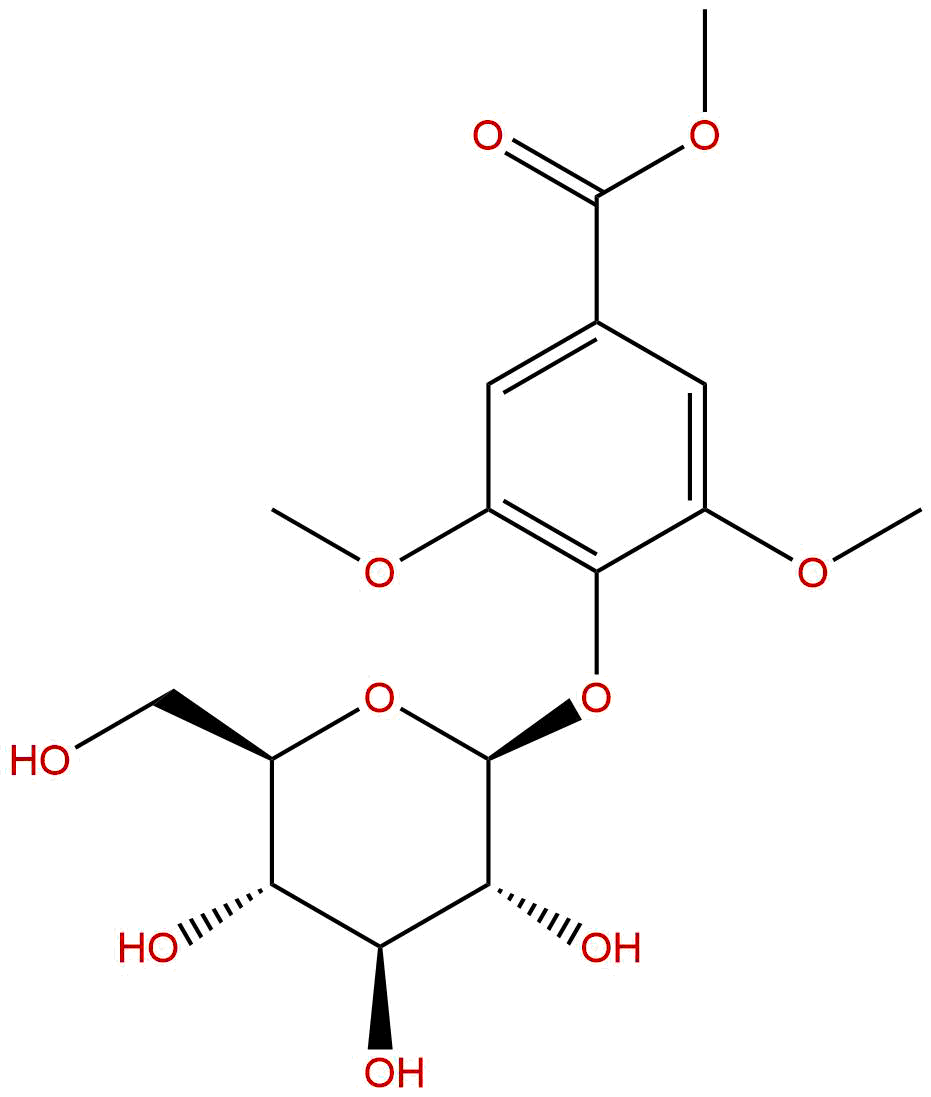


Product name: Methyl syringate-4-O-β-D-glucopyranoside
Synonym name:
Catalogue No.: BP2403
Cas No.: 586398-39-2
Formula: C16H22O10
Mol Weight: 374.342
Botanical Source:
Type of Compound:
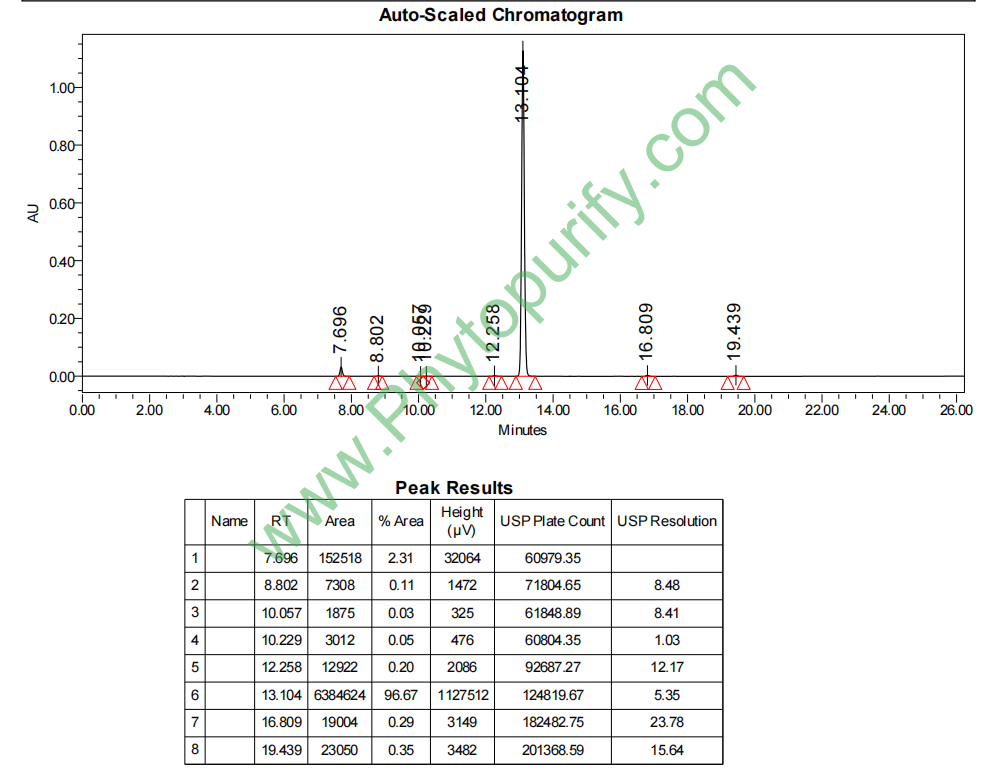
Purity: 95%~99%
Analysis Method: HPLC-DAD or/and HPLC-ELSD
Identification Method: Mass, NMR
Packing: Brown vial or HDPE plastic bottle
Storage: Store in a well closed container, protected from air and light. Put into refrigerate or freeze for long term storage.
Whenever possible, you should prepare and use solutions on the same day. However, if you need to make up stock solutions in advance, we recommend that you store the solution as aliquots in tightly sealed vials at -20℃. Generally, these will be useable for up to two weeks.
The product could be supplied from milligrams to grams
Inquire for bulk scale.
For Reference Standard and R&D, Not for Human Use Directly.
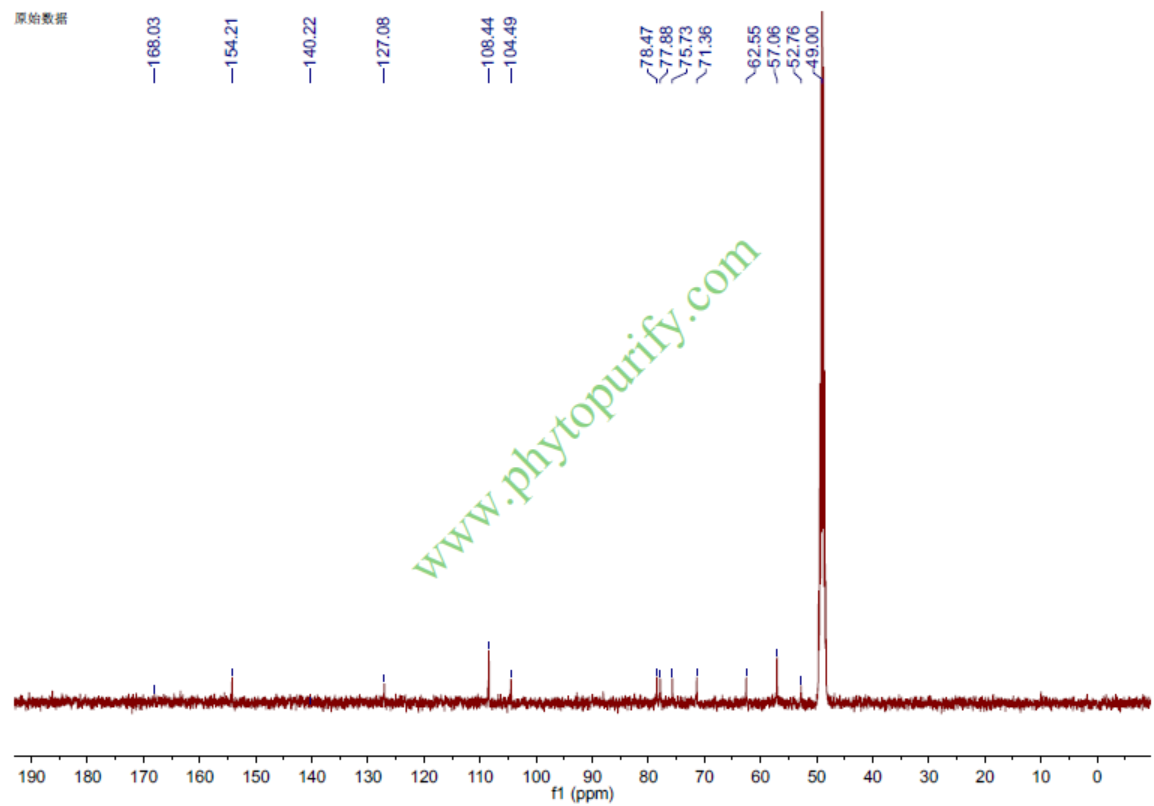
NMR of Methyl syringate-4-O-β-D-glucopyranoside
HPLC of Methyl syringate-4-O-β-D-glucopyranoside
Storage conditions:Short-term storage at 2~8℃, long-term storage at -20 ~ -80℃
144.1400
-.4474
-.4474
34.4264
.6537
.1493
Low
37.8823
3.4715
Yes
No
No
No
No
No
0.0
Yes
No
Yes
Yes
Natural products, as an important source of drug discovery, play an irreplaceable role in the long history of human struggle against diseases. From crude extracts of traditional herbs to purified monomers in modern medicinal chemistry, the diverse types and structures of secondary metabolites in nature continue to provide valuable lead compounds for the development of innovative drugs. Among numerous natural products, phenolic acids and their glycosides have attracted much attention due to their wide range of biological activities. Methyl syringate-4-O - β - D-glucopyranoside (MSG), as a derivative of syringic acid, is a component with unique pharmacological activity isolated and identified from various medicinal plants in recent years. Its structure is composed of a methyl syringic acid core connected to a molecule of glucose through a β - glycosidic bond, which endows it with physicochemical and biological properties distinct from its aglycone syringic acid.
Oral disease, especially caries and periodontal disease, is one of the most common chronic infectious diseases worldwide, which seriously affects the quality of life and general health of human beings. Oral pathogenic bacteria, such as Streptococcus mutans(Streptococcus mutans)Porphyromonas gingivalis(Porphyromonas gingivalis)And Candida albicans(Candida albicans)Waiting is the main pathogen of these diseases. Traditional antibacterial therapies, such as the use of antibiotics and chemically synthesized preservatives (such as chlorhexidine), although effective, long-term use may lead to dysbiosis, drug resistance, and local side effects (such as tooth discoloration and taste changes). Therefore, the search for efficient, low toxicity, and resistant natural antibacterial active ingredients has become a research hotspot in the field of oral disease prevention and treatment. MSG has gradually entered the field of researchers due to its inhibitory activity against various oral pathogenic bacteria, as well as its potential multiple pharmacological effects such as anti-inflammatory and antioxidant effects.
This article aims to provide a systematic professional review of the natural product methyl syringate glucoside (MSG). The article will delve into its chemical structure and physicochemical properties, plant sources and extraction methods, pharmacological activity research, mechanism of action and molecular targets, evaluation of drug properties and pharmacokinetic characteristics, as well as clinical application prospects, in order to provide comprehensive scientific basis and theoretical reference for the subsequent research and development of this natural product.
The chemical structure of methyl syringate glucoside (MSG) exhibits typical phenolic glycoside characteristics. Its core structure is methyl syringate, which is 3,5-dimethoxy-4-hydroxybenzoic acid methyl ester. A molecule of D-glucopyranose is connected to the 4-hydroxy group of methyl syringate through a β - glycosidic bond. Therefore, its systematic name is usually 4-hydroxy-3,5-dimethoxybenzoic acid-4-O - β - D-glucopyranose. The chemical formula of this molecule is C ₁₆ H ₂ O ₁₀, and the molecular weight is 374.3420 g/mol.
From the perspective of physicochemical properties, the sugar moiety of MSG endows it with significant water solubility. The calculated LogP value is -0.4474, indicating that the compound has hydrophilicity and is not easily able to penetrate the lipid bilayer of biological membranes. Its topological polar surface area (TPSA) is 144.1400 Å ², much higher than the recommended threshold for oral medications (<140 Å ²), which further confirms its high polarity and strong water solubility. The solubility parameter is 34.4264 mg/mL, which belongs to highly water-soluble compounds. Although this high water solubility is beneficial for its dissolution and distribution in aqueous environments such as saliva and blood, it may also limit its ability to passively diffuse through cell membranes. In addition, MSG has a moderate molecular weight, meeting the basic requirements for molecular weight in Lipinski's Rule of Five (<500 Da), but its high polarity (LogP<0) and TPSA value suggest that it may face challenges in oral absorption. In terms of spectroscopic characteristics, UV absorption spectra typically have characteristic absorption peaks at around 270-280 nm, attributed to the π→π * transition of the benzene ring. Infrared spectroscopy can observe characteristic absorption peaks of hydroxyl (~3400 cm ⁻¹), carbonyl (~1700 cm ⁻¹), and glycosidic bond (C-O-C). Nuclear magnetic resonance spectroscopy (¹ H-NMR and ¹ ³ C-NMR) is a key means of identifying its structure, where the coupling constant (J value) of the sugar end proton (H-1 ') is typically 7-8 Hz, confirming the configuration of the β - glycosidic bond.
Methyl syringate glucoside is not widely present in all plants, but is isolated from specific medicinal plants. The main sources of current literature reports include:
For the extraction of MSG, classical phytochemical methods are usually used, with the core being the utilization of its high polarity. The main process includes:
In recent years, research on the pharmacological activity of MSG has gradually deepened, mainly focusing on the following aspects:
Anti oral pathogenic bacteria activity This is the pharmacological activity of MSG that has received the most attention. Research has shown that MSG has inhibitory effects on various common oral pathogens.
anti-inflammatory activity In addition to its direct antibacterial effect, MSG also exhibits anti-inflammatory potential. In the macrophage model stimulated by lipopolysaccharide (LPS), MSG can significantly reduce the production of pro-inflammatory cytokines such as tumor necrosis factor - α (TNF - α), interleukin-6 (IL-6), and interleukin-1 β (IL-1 β). This activity is particularly important for the treatment of inflammatory diseases such as periodontitis, as the destruction of periodontal tissue is largely mediated by the host's excessive inflammatory response to bacterial infections.
antioxidant activity The phenolic hydroxyl structure of MSG endows it with the ability to scavenge free radicals. In vitro DPPH, ABTS and other free radical scavenging experiments showed that MSG has certain antioxidant activity. Although its activity may be weaker than some potent antioxidants such as vitamin C, as a glycoside, it has better stability and water solubility, and may exert sustained antioxidant protection under physiological conditions, reducing oxidative stress damage to oral tissues.
Other activities: The preliminary study also suggests that MSG may have a slight analgesic effect and inhibit the activity of some enzymes (such as α - glucosidase), suggesting its potential value in the management of diabetes and its complications, but the research on these aspects is not yet in-depth.
The pharmacological activity of MSG, especially its anti oral pathogenic effect, involves multiple molecular targets and signaling pathways. According to the information you provided, its potential targets include GYRA, DHFR, FOLA, GYRB, PBP2, ERG, GTFB, and FTFA. These targets cover multiple key life processes such as bacterial DNA replication, folate metabolism, cell wall synthesis, cell membrane function, and extracellular polysaccharide synthesis.
Inhibition of DNA replication and folate metabolism:
Destruction of cell walls and membranes:
Inhibition of virulence factors and biofilm formation:
In summary, the mechanism of action of MSG is multi-target and multi pathway. It can directly inhibit bacterial growth by acting on targets such as GYRA/DHFR, inhibit bacterial virulence factors by acting on targets such as GTFB/FTFA, and regulate host responses through anti-inflammatory and antioxidant activities. This multi-target mode of action is its core advantage as a natural candidate for oral infections.
Based on the pharmacological parameters you provided, a preliminary evaluation of the drug like properties of MSG can be conducted.
Overall, the pharmacological characteristics of MSG exhibit a double-edged sword effect. Its high water solubility, low hERG inhibition risk, and non mutagenicity are significant advantages. However, its high polarity (low LogP, high TPSA) is the main obstacle to its oral bioavailability. Therefore, MSG may not be suitable for development as a traditional oral systemic administration formulation, but rather as a local administration formulation.
Based on the unique pharmacological activity and good safety characteristics of MSG, its application prospects in the field of oral health are very broad.
New anti caries and periodontal disease drugs The multi-target mechanism of action of MSG, especially its ability to inhibit biofilm formation, makes it an ideal lead compound for developing novel anti caries and periodontal disease drugs. It can be developed into:
Anti oral candidiasis The activity of MSG against Candida albicans makes it potential for the treatment of fungal infections such as dental stomatitis and thrush, especially strains that develop resistance to traditional antifungal drugs such as fluconazole.
Oral mucosal protectant Combining its anti-inflammatory and antioxidant activities, MSG can be used as an adjuvant therapy for inflammatory diseases such as oral ulcers and oral lichen planus, reducing pain and promoting healing.
Synergistic effects with other drugs The combination of MSG with existing antibiotics (such as chlorhexidine, fluoride) or natural products (such as tea polyphenols) may produce synergistic effects, thereby reducing effective concentrations, minimizing side effects, and reducing the risk of drug resistance.
Future research directions:
Methyl syringate glucoside (MSG), as a natural phenolic acid glycoside derived from traditional medicinal plants, has shown remarkable potential in the field of oral disease prevention and treatment due to its unique chemical structure and multi-target pharmacological activity. It can not only directly inhibit the growth of various oral pathogenic bacteria, but also effectively inhibit the formation of biofilms by interfering with the synthesis of key virulence factors - extracellular polysaccharides. This mode of action is particularly valuable in addressing the increasingly severe problem of bacterial resistance. Meanwhile, its good water solubility, low toxicity (no hERG inhibition, Ames test negative), as well as anti-inflammatory, antioxidant and other auxiliary activities further enhance its attractiveness as a candidate drug.
Although MSG has the limitation of low bioavailability in oral systemic administration, this provides an opportunity for its application in the field of oral local treatment. By developing suitable local administration formulations, MSG is expected to become a new generation of safe, efficient, and resistant oral care products or therapeutic drugs. Future research should focus on the in-depth elucidation of its mechanism of action, systematic exploration of structure-activity relationships, and the establishment of clinical translation pathways. We have reason to believe that with the continuous deepening of research, methyl syringate glucoside, a gift from nature, will play a greater value in maintaining human oral health and even overall health.
