Introduction/Overview
Natural products, as an important source of drug discovery, play an irreplaceable role in the long history of human struggle against diseases. Among numerous structurally diverse natural products, phenylethanoid glycosides have attracted much attention due to their extensive biological activities, particularly their significant anti-inflammatory, antioxidant, antibacterial, and hypoglycemic effects. Leucosceptoside A, as a typical phenylethanoid glycoside, was originally derived from the Lamiaceae plant Leucosceptoside A(Leucosceptrum canum)After isolation and identification, it was found that it is widely present in various medicinal plants. This compound has become a hot topic in natural product pharmacology research due to its unique chemical structure and multifaceted pharmacological activities, especially its potential in the fields of anti hyperglycemia and anti hypertension in recent years.
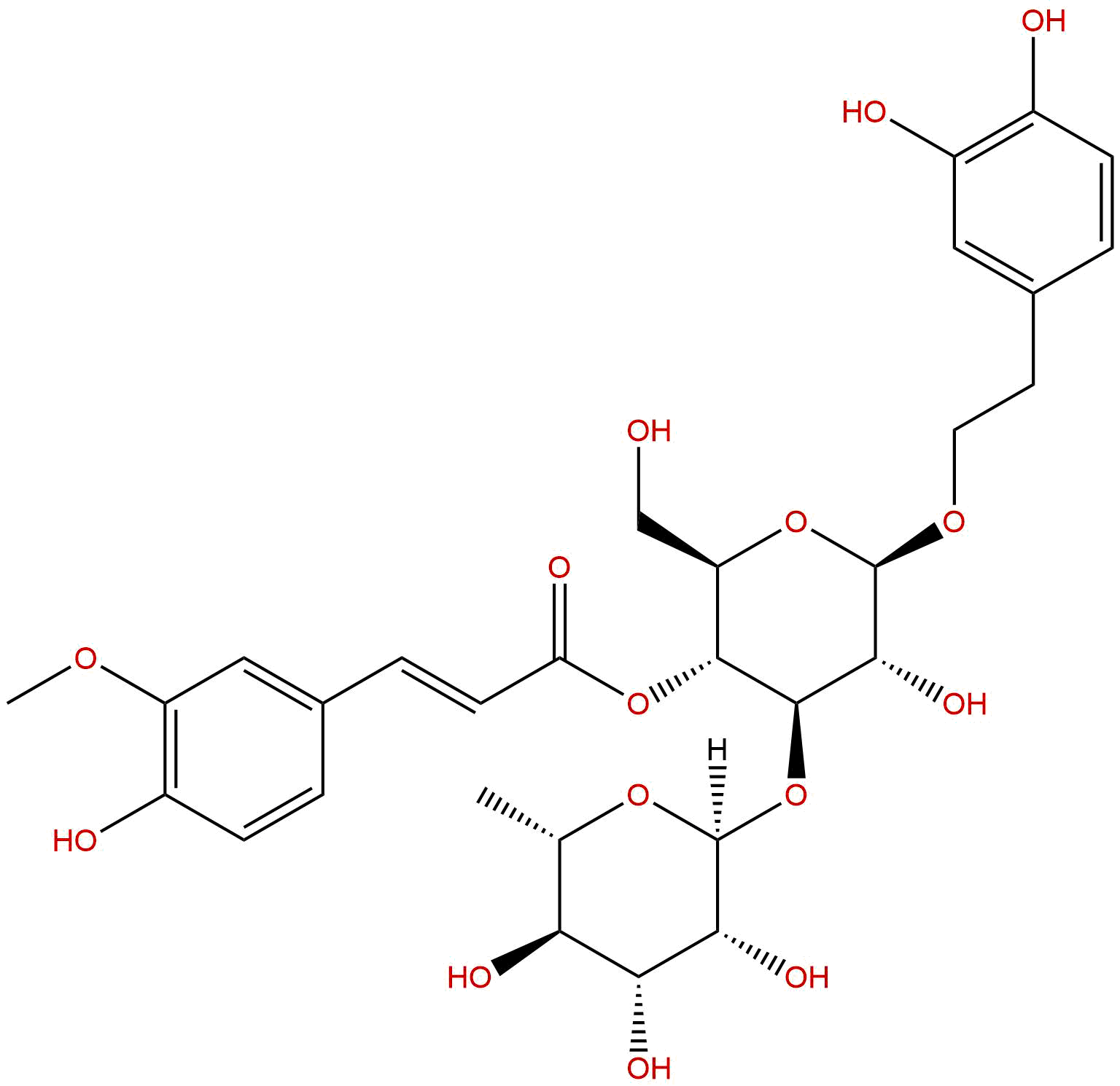
The molecular formula of amygdalin A is C ₂₉ H ∝₄ O ₁₆, with a molecular weight of 638.6190 and a CAS number of 83529-62-8. Its structural core consists of caffeoyl, hydroxytyrosol (a phenylethanolic glycoside), and a disaccharide unit containing glucose and xylose. This complex glycosylation and acylation pattern is the structural basis for its various biological activities. Early research mainly focused on its antibacterial properties, but as research deepened, the discovery of its inhibition of α - glucosidase and protein kinase C α (PKC α) activity pushed its research into the field of metabolic diseases. α - glucosidase is the key enzyme to control postprandial blood glucose rise, and the abnormal activation of PKC α is closely related to the complications of diabetes and vascular diseases of hypertension. Therefore, oryzaoside A shows its potential value in the treatment of type 2 diabetes, its complications and hypertension through dual target inhibition.
This review aims to systematically review the research progress of amygdalin A, including its chemical structure and physicochemical properties, plant sources and extraction methods, pharmacological activity, mechanism of action, evaluation of drug properties, and clinical application prospects, in order to provide scientific basis for the in-depth development and utilization of this natural product.
Chemical structure and physicochemical properties
The chemical structure of rice flower glycoside A belongs to the phenylethanolic glycoside class, and its basic skeleton consists of phenylethanolic aglycone (usually hydroxytyrosol or similar), a central sugar unit (usually glucose), and substituents connected by ester or glycosidic bonds (such as caffeoyl, feruloyl, etc.). Specifically, the structural characteristics of amygdalin A are as follows: 3,4-dihydroxyphenylethanol (hydroxytyrosol) is connected to the 1st carbon of β - D-glucopyranose through a β - glycosidic bond, while the 4th hydroxyl group of glucose forms a glycosidic bond with α - L-glucopyranose. In addition, the caffeoyl group (3,4-dihydroxycinnamoyl) is connected to the 6-position hydroxyl group of glucose through ester bonds. This specific connection method endows the molecule with a unique spatial configuration and physicochemical properties.
From the perspective of physical and chemical properties, the molecular weight of amygdalin A is 638.6190 g/mol, which is a medium-sized natural product. The LogP of its lipid water partition coefficient is 0.3529, indicating that the compound has good hydrophilicity, which is related to the presence of multiple hydroxyl and sugar groups in its molecule. The topologically polar surface area (TPSA) is as high as 234.2900 Å ², which is much higher than the recommended upper limit of 140 Å ² for oral medications. This suggests that its membrane permeability may be poor, posing challenges for oral absorption. The water solubility parameter is 4.2046, indicating that it has a certain solubility in water, which provides a basis for its dispersion and function in biological fluids. It is worth noting that its blood-brain barrier (BBB) penetration ability was evaluated as "low", which is consistent with its high polarity and high molecular weight, indicating that the compound mainly acts on peripheral tissues and has less direct effect on the central nervous system. In addition, computer simulations predicted that it does not have hERG (human ether-a-go-go related gene) potassium channel inhibitory activity (hERG inhibition: no), and the Ames test result was 0.0, indicating a low risk of genetic toxicity. These physicochemical properties provide key information for subsequent pharmacokinetic studies and formulation design.
Plant sources and extraction methods
Mizucchini A was originally derived from the Lamiaceae plant Mizucchini(Leucosceptrum canum)It was separated from the middle, which is also the origin of its name. However, subsequent studies have found that the compound is not unique to rice flowers, but is widely present in various plants, especially in other plants of the Orobanchaceae, Scrophulariaceae, and Lamiaceae families. For example, in the traditional Chinese medicine Rehmannia glutinosa(Rehmannia glutinosa)Cistanche deserticola(Cistanche deserticola)Mao Rui Hua(Verbascum thapsus)And some Artemisia species(Pedicularis)The presence of amygdalin A has been detected in all plants. This wide distribution provides multiple options for its raw material sources, but the content varies greatly among different plants, usually requiring optimization based on specific plant species and parts.
In terms of extraction methods, due to its good water solubility and alcohol solubility, commonly used extraction solvents include methanol, ethanol, water, or their mixed solvents. Traditional extraction methods such as immersion, percolation, and reflux extraction can all be used. In order to improve extraction efficiency and purity, modern extraction techniques such as ultrasound assisted extraction, microwave-assisted extraction, and enzyme assisted extraction are also widely used. For example, using a certain concentration of ethanol (such as 70% ethanol) as a solvent, combined with ultrasound assistance, can achieve a higher extraction rate in a shorter period of time. After concentration, the extraction solution usually requires a series of purification steps. The commonly used purification methods include liquid-liquid extraction (such as solvent allocation extraction with ethyl acetate, n-butanol, etc.), macroporous adsorption resin column chromatography (such as D101, AB-8 resin, used to enrich phenylethanolic glycosides), silica gel column chromatography, ODS (octadecylsilane bonded silica gel) reverse phase column chromatography, and preparative high-performance liquid chromatography (Prep HPLC). Among them, the combination of macroporous adsorption resin and preparative HPLC is a common strategy for obtaining high-purity amygdalin A. In recent years, new separation technologies such as high-speed countercurrent chromatography (HSCCC) have also shown advantages in separating such polar compounds.
Pharmacological activity research
The pharmacological activity research of amygdalin A covers multiple fields, among which anti hyperglycemic, anti hypertensive, and antibacterial activities are the focus of research.
1. Anti hyperglycemic activity
This is one of the most highly regarded pharmacological activities of rice dumpling glycoside A. Research has shown that amygdalin A can effectively inhibit the activity of α - glucosidase, with a half maximal inhibitory concentration (IC ₅₀) of 19.0 μ M. Alpha glucosidase is located at the brush border of the small intestine and is responsible for breaking down oligosaccharides (such as starch and sucrose) in food into absorbable monosaccharides (such as glucose). Inhibiting the activity of this enzyme can delay the digestion and absorption of carbohydrates, thereby effectively reducing postprandial blood glucose peaks. This mechanism of action is similar to the widely used hypoglycemic drug acarbose in clinical practice, but as a natural product, amygdalin A may have lower side effects. In addition, some studies suggest that anthocyanins A may exert hypoglycemic effects through other pathways such as improving insulin resistance and promoting glucose uptake, but the specific mechanism still needs further clarification.
2. Antihypertensive activity
Hypertension is a common complication of diabetes. Rice flower glycoside A has been found to have anti hypertensive activity, and its mechanism of action is related to the inhibition of protein kinase C α (PKC α). PKC α is a serine/threonine protein kinase that plays a critical role in the contraction, proliferation, and migration of vascular smooth muscle cells. In a hyperglycemic environment, PKC α is abnormally activated, leading to vasoconstriction, endothelial dysfunction, and vascular remodeling, thereby promoting the occurrence and development of hypertension. Mizucchini A can inhibit the activity of PKC α (IC ₅₀ is 19.0 μ M), thereby blocking this pathological process and exerting vasodilatory and antihypertensive effects. This dual target characteristic of simultaneously acting on α - glucosidase and PKC α makes it have unique advantages in the treatment of type 2 diabetes with hypertension.
3. Antibacterial activity
The antibacterial activity of amygdalin A is one of its earliest discovered pharmacological effects. Research has shown that it has inhibitory effects on various bacteria and fungi. Its antibacterial target spectrum is extensive, including:
- Bacterial targets: DNA gyrase A subunit (GYRA), DNA gyrase B subunit (GYPB), cell division protein FtsZ (FTSZ), acyl ACP reductase (FABI), dihydrofolate reductase (DHFR), penicillin binding protein 2a (MECA, associated with methicillin-resistant Staphylococcus aureus MRSA), penicillin binding protein (PENA).
- Fungal targets Wool sterol 14 α - demethylase (ERG11/CYP51A1) and multidrug resistance protein CDR1 (CDR1).
This multi-target mechanism of action makes it difficult for amygdalin A to develop resistance, especially showing potential inhibitory effects on drug-resistant strains such as MRSA. Its antibacterial mechanism may be related to the destruction of bacterial cell membrane integrity and inhibition of key enzyme activities such as DNA replication, cell wall synthesis, and folate metabolism.
4. Other activities
In addition to the main activities mentioned above, research has also found that anthocyanins A have antioxidant, anti-inflammatory, and hepatoprotective effects. The multiple phenolic hydroxyl groups in its molecular structure endow it with strong free radical scavenging ability, which can alleviate oxidative stress damage. At the same time, it can also inhibit the production of inflammatory mediators such as NO, TNF - α, IL-6, and exert anti-inflammatory effects. These activities may be closely related to their protective effects in metabolic diseases and infectious diseases.
Mechanism of action and molecular targets
The pharmacological activity of amygdalin A is rooted in its interaction with specific biomolecules. Its mechanism of action can be summarized as follows:
1. Enzyme inhibition mechanism
- α - glucosidase inhibition Rice dumpling glycoside A competitively inhibits the binding of substrates (oligosaccharides) to the active site of α - glucosidase through its caffeoyl and glycosyl moieties, thereby reducing the efficiency of enzyme catalyzed hydrolysis. Molecular docking studies may reveal the formation of hydrogen bonds and hydrophobic interactions with key amino acid residues in enzyme active centers (such as Asp214, Glu276, Asp349, etc.), stabilizing enzyme inhibitor complexes.
- PKC α inhibition The activation of PKC α requires binding to membrane phospholipids (such as phosphatidylserine) and conformational changes. Mizucchini A may interfere with the binding of PKC α to membranes or ATP by interacting with its regulatory or catalytic domains, thereby inhibiting its kinase activity. The specific binding sites may involve C1 or C2 domains, or competition with ATP binding pockets.
2. Antibacterial mechanism
The antibacterial effect of rice flower glycoside A is multi-target, and its molecular targets include:
- GYRA/GYPB Inhibit bacterial DNA gyrase, hinder the formation of DNA supercoils, and thus inhibit DNA replication and transcription.
- FTSZ FtsZ is a key protein for bacterial cell division, forming the Z loop. Rice flower glycoside A may bind to FtsZ, interfering with its polymerization and Z-ring formation, thereby inhibiting bacterial division.
- FABI FABI is a key enzyme in the bacterial fatty acid synthesis pathway, and inhibiting it can block the synthesis of cell membrane phospholipids.
- DHFR Dihydrofolate reductase is a key enzyme in folate metabolism, and inhibiting it can block the synthesis of nucleotides and amino acids.
- MECA/PENA Interacting with penicillin binding protein (PBP) may interfere with the synthesis of peptidoglycans in bacterial cell walls, particularly inhibiting the resistance mechanism of MRSA (PBP2a).
- ERG11/CYP51A1 Inhibit the synthesis of ergosterol in fungal cell membranes and disrupt membrane integrity.
- CDR1 Inhibit the multidrug resistance efflux pump of fungi and increase their sensitivity to drugs.
3. Signal pathway regulation
In addition to direct enzyme inhibition, amygdalin A may also exert its effects by regulating cellular signaling pathways. For example, its antioxidant and anti-inflammatory activities may be related to the inhibition of inflammatory signaling pathways such as NF - κ B and MAPK. In metabolic diseases, it may improve energy metabolism and insulin sensitivity by activating the AMPK (AMP activated protein kinase) pathway.
Evaluation of drug properties and pharmacokinetics
The evaluation of drug properties is a crucial step in determining whether natural products can be transported from the laboratory to clinical practice. Based on the physicochemical properties and preliminary pharmacokinetic studies of amygdalin A, its pharmacological properties can be preliminarily evaluated.
1. Analysis of drug properties
According to the Lipinski Five Rules, the molecular weight (638.6) of amygdalin A is greater than 500, the LogP (0.35) is less than 5, the number of hydrogen bond donors (- OH and - COOH, approximately 12) is greater than 5, and the number of hydrogen bond acceptors (O atoms, approximately 16) is greater than 10. It violates multiple rules, especially with high molecular weight and excessive hydrogen bond donors/acceptors, which usually indicate that its oral bioavailability may be low. Its high TPSA (234.29 Å ²) also supports this viewpoint, indicating that it is difficult to passively diffuse through the cell membrane. Therefore, Mifepristone A belongs to a typical "non class drug" molecule, and oral administration may face problems such as poor absorption and rapid metabolism.
2. Pharmacokinetic characteristics
At present, there are relatively limited direct research reports on the pharmacokinetics of paeoniflorin A in vivo, but based on its structural characteristics and studies of similar compounds, it can be inferred that:
- absorb Oral absorption is poor and may mainly be absorbed through intestinal transporters (such as PEPT1) or cellular pathways, but the efficiency is very low.
- distribution Due to its high polarity and low fat solubility, its distribution volume may be small and mainly distributed in extracellular fluid. The blood-brain barrier has low penetration ability and is mainly distributed in peripheral tissues.
- Metabolism May undergo extensive metabolism, including hydrolysis (deglycosylation) by microbial communities in the intestine, or phase II metabolic reactions such as glucuronidation, sulfation, methylation in the liver. Its metabolites may still be active.
- excretion Mainly excreted in the form of metabolites through urine and bile.
3. Safety evaluation
The computer prediction shows that it has no hERG inhibitory activity and Ames mutagenicity, indicating a low risk of cardiac toxicity and genetic toxicity. However, this is only a preliminary prediction and systematic in vitro and in vivo toxicology studies are still needed, including acute toxicity, chronic toxicity, reproductive toxicity, etc., to comprehensively evaluate its safety.
4. Strategies for enhancing drug properties
Given the challenge of low oral bioavailability, future research needs to explore strategies to improve its pharmacological properties:
- Prodrug design Modify the phenolic hydroxyl or carboxyl groups in the molecule through esterification, etherification, and other methods to improve lipid solubility, allowing them to be interpreted by enzymes and released as active ingredients in the body.
- nano-formulation Using carrier technologies such as liposomes, polymer nanoparticles, and solid lipid nanoparticles to improve their solubility and oral absorption, and achieve targeted delivery.
- Simplified structure Search for its pharmacophore, synthesize analogs with simpler structures, smaller molecular weights, and more suitable LogP, in order to obtain lead compounds with higher oral bioavailability.
- Non oral administration route Develop non oral dosage forms such as injections, transdermal patches, and inhaled formulations to bypass absorption barriers.
Clinical application prospects and prospects
As a natural phenylethanolic glycoside with multiple pharmacological activities, rice flower glycoside A has broad clinical application prospects, but also faces many challenges.
1. Main application directions
- Type 2 diabetes and its complications: It simultaneously inhibits the dual effects of α - glucosidase and PKC α, making it an ideal candidate drug for the treatment of type 2 diabetes, especially patients with hypertension and vascular complications. It can be used as a postprandial blood glucose control agent to delay or prevent the occurrence and development of diabetes nephropathy, retinopathy and cardiovascular diseases.
- Antibiotic resistant bacterial infection Its multi-target inhibitory effect on drug-resistant bacteria such as MRSA makes it a potential source for developing new antibiotics. Especially in today's increasingly severe antibiotic resistance, the development of natural products with new mechanisms that are not easily resistant to antibiotics is of great value.
- Hypertension Its direct vasodilation provides a new choice for the treatment of hypertension, especially for patients with diabetes and hypertension.
2. Challenges and Solutions Faced
- Low oral bioavailability This is the biggest obstacle to its clinical translation. As mentioned earlier, modern drug delivery technologies such as prodrug design and nanomedicine are needed to overcome this challenge.
- The mechanism of action is unclear Although it is known to inhibit alpha glucosidase and PKC alpha, its exact network of action in vivo, interactions with other targets, and the activity of its metabolites are not fully understood. It is necessary to conduct in-depth research by combining methods such as systems biology and network pharmacology.
- Lack of systematic pharmacokinetic and toxicological data Currently, research mostly focuses on in vitro and animal levels, lacking pharmacokinetic parameters and long-term toxicological evaluations in humans. This is a task that must be completed before entering clinical trials.
- Source issue Although widely distributed, the content in natural plants is usually low, making it difficult to meet the needs of large-scale production. Efficient chemical or biological synthesis methods need to be developed, or yield can be increased through plant cell culture, genetic engineering, and other means.
3. Future research directions
- In depth mechanism research Using CRISPR-Cas9 gene editing, proteomics and other technologies, accurately identify its direct target and elucidate its regulatory role in the cellular signaling network.
- Research on Structural Optimization and Structure Performance Relationship Systematically study the contribution of different functional groups (such as caffeoyl, glycosyl, phenylethanol) in its molecules to activity, search for key pharmacophores, and design and synthesize a series of structurally similar compounds to screen for compounds with stronger activity and better drug properties.
- Development of new formulations Focus on developing oral or injectable formulations based on nanotechnology to address their bioavailability issues.
- Combination therapy research Explore its synergistic effect with existing hypoglycemic, antihypertensive, or antibacterial drugs in order to reduce dosage, minimize side effects, and improve efficacy.
- Preclinical and clinical research After completing sufficient pharmacological, pharmacokinetic, and toxicological evaluations, promote its entry into clinical trials to verify its safety and efficacy in humans.
Conclusion
As a structurally unique phenylethanoid glycoside, Mi Tuan Hua Glycoside A exhibits significant potential in the fields of anti hyperglycemic and anti hypertensive effects due to its dual activity of inhibiting α - glucosidase and PKC α. Meanwhile, its broad-spectrum antibacterial activity, especially against drug-resistant strains, has opened up new directions for its application in the field of anti infection. However, its inherent defect as a natural product - low oral bioavailability - is the main bottleneck restricting its clinical translation. Despite facing challenges, with the advancement of modern pharmaceutical chemistry, pharmacy, and biotechnology, these obstacles are expected to be overcome through strategies such as prodrug design, nanomedicine, and structural optimization. Future research should focus on further elucidating its mechanism of action, optimizing its drug properties, and conducting systematic preclinical and clinical studies. The study of amygdalin A not only enriches the content of natural product chemistry and pharmacology, but also provides valuable lead compounds for the development of multi-target, low toxicity new drugs derived from nature. We have reason to believe that, with the unremitting efforts of scientific researchers, Mizuoside A and its derivatives will eventually become a new weapon for the treatment of metabolic diseases and infectious diseases.