Introduction/Overview
Methyl vanillate (CAS number 3943-74-6), as a natural benzoate compound, has attracted widespread attention in the field of natural product pharmacology in recent years due to its unique chemical structure and diverse biological activities. This compound is mainly extracted from plants such as rice and is a methyl derivative of vanillic acid. It has significant antioxidant activity and the potential to regulate cellular signaling pathways. Of particular note is that methyl vanillic acid has been found to activate the Wnt/β - catenin signaling pathway, which plays a critical role in physiological processes such as cell proliferation, differentiation, and tissue repair. In addition, its antioxidant mechanism involves multiple key enzymes and transcription factors, demonstrating its potential application value in the prevention and treatment of oxidative stress-related diseases.
This article aims to systematically review the chemical structure and physicochemical properties, plant sources and extraction methods, pharmacological activity and mechanism of action, pharmacological evaluation and pharmacokinetic characteristics of methyl vanillic acid. Combining current research progress, it explores its clinical application prospects and future development directions, providing comprehensive references for researchers in related fields.
Chemical structure and physicochemical properties
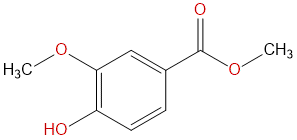
Vanillic acid methyl ester is a benzoate compound with the chemical formula C9H10O4 and a molecular weight of 182.1750 Da. Its structural feature is that the carboxyl group of vanillic acid is esterified with methanol to form a methyl ester functional group, and the molecule contains a methoxy (- OCH3) and a hydroxyl (- OH) substituted benzene ring. This structure endows it with a certain polarity and good chemical stability.
In terms of physical and chemical properties, the LogP value of methyl vanillic acid is 1.7148, indicating its moderate lipid solubility, which is beneficial for membrane penetration and in vivo distribution. The topological polar surface area (TPSA) is 55.76 Å ², indicating that its molecular polarity is moderate and may affect its absorption and bioavailability. The water solubility is 2.9758 (unit not specified, usually referring to mg/mL or logS), indicating that it has a certain solubility in water, which is conducive to the development of oral administration forms. The high penetration ability of the blood-brain barrier suggests its potential role in the central nervous system. The negative result of hERG inhibition experiment indicates a low risk of cardiac toxicity. The Ames test result is 0.0, indicating no significant mutagenicity and good safety.
In summary, the physicochemical properties of methyl vanillic acid meet the basic requirements of drug development and have good pharmacokinetic potential.
Plant sources and extraction methods
Vanillin methyl ester mainly exists in grains such as rice (Oryza sativa) and some aromatic plants, as a secondary metabolite involved in plant physiological regulation and defense mechanisms. Although its content is not as abundant as the main phenolic substances, it has become a hot topic in natural product research due to its unique structure and function.
The extraction method usually uses solvent extraction combined with chromatographic separation technology. Common solvents include polar or medium polar solvents such as methanol, ethanol, and ethyl acetate to ensure efficient dissolution of methyl vanillic acid. The extraction process generally includes the following steps:
- Sample Pretreatment Drying and crushing rice or plant tissues to increase surface area.
- Solvent extraction Using ultrasound assisted or reflux extraction to improve extraction efficiency.
- Crude extract concentration Concentrate the extract by rotary evaporation.
- Separation and purification Separation and purification of methyl vanillic acid using techniques such as silica gel column chromatography and reverse phase high performance liquid chromatography (RP-HPLC).
- Structural Identification Confirm the structure of the compound through methods such as mass spectrometry (MS) and nuclear magnetic resonance (NMR).
In recent years, green extraction technologies such as supercritical CO2 extraction and microwave-assisted extraction have also been attempted to be applied to the extraction of methyl oxalate, aiming to improve extraction efficiency and reduce the use of organic solvents, in line with the needs of sustainable development.
Pharmacological activity research
Antioxidant effect
The antioxidant activity of methyl vanillic acid is one of its most significant pharmacological properties. Numerous in vitro and in vivo studies have shown that this compound can effectively scavenge free radicals, inhibit lipid peroxidation, and protect cells from oxidative damage. Its antioxidant mechanism is mainly achieved by regulating the expression and activity of various antioxidant enzymes and transcription factors.
The relevant targets include:
- Superoxide dismutase (SOD1, SOD2)Promote the conversion of superoxide anions and alleviate oxidative stress.
- Catalase (CAT)Decompose hydrogen peroxide to prevent oxidative damage to cells.
- Glutathione peroxidase 1 (GPX1)Protect cell membrane lipids from oxidative damage.
- Heme oxygenase-1 (HMOX1)By degrading hemoglobin to produce antioxidant products, oxidative stress can be alleviated.
- Nuclear factor E2 related factor 2 (NFE2L2/NRF2)As a key transcription factor, it regulates the expression of antioxidant genes.
In addition, methyl vanillic acid can inhibit the activity of matrix metalloproteinases (MMP1, MMP3) and alleviate tissue damage caused by oxidative stress. Its regulatory effect on tyrosinase (TYR) also suggests its potential in melanin synthesis and skin protection.
Activation of Wnt/β - catenin signaling pathway
The Wnt/β - catenin signaling pathway plays a central role in cell proliferation, differentiation, and tissue repair. Vanillin methyl ester has been shown to activate this pathway, promote the stability and nuclear translocation of β - catenin, and thereby regulate downstream gene expression. This role provides a theoretical basis for its potential applications in tissue regeneration, anti-aging, and tumor treatment.
Other pharmacological activities
Although there is currently limited research, some preliminary data suggest that methyl vanillic acid may have anti-inflammatory, anti-tumor, and neuroprotective activities. Its high blood-brain barrier permeability suggests its potential application in central nervous system diseases and deserves further in-depth research.
Mechanism of action and molecular targets
The pharmacological effects of methyl vanillic acid depend on its interactions with various molecular targets, mainly including antioxidant related enzymes and signal transduction molecules.
Antioxidant related targets
- NFE2L2/NRF2 Vanillin methyl ester enhances the transcriptional activation of antioxidant genes (such as HMOX1, SOD1, GPX1, etc.) by promoting the translocation of NRF2 from the cytoplasm to the nucleus, thereby improving cellular antioxidant defense capabilities.
- SOD1、SOD2、CAT、GPX1 Vanillin methyl ester upregulates the expression and activity of these key antioxidant enzymes, promotes free radical scavenging, and reduces oxidative damage.
- MMP1、MMP3 By inhibiting the activity of matrix metalloproteinases, extracellular matrix degradation is prevented, and tissue structural integrity is protected.
- TYR Regulating tyrosinase activity may affect melanin production and skin protection mechanisms.
Wnt/β - catenin signaling pathway
Vanillin methyl ester activates the Wnt receptor complex, inhibits the degradation of β - catenin, promotes its nuclear accumulation, and activates related gene expression. This mechanism helps regulate the cell cycle, promote tissue repair, and anti-aging processes.
Other potential targets
Current research has not fully revealed all the targets of action of methyl vanillic acid. In the future, with the help of proteomics and molecular docking technology, it is expected to discover more related molecular targets and enrich its mechanism of action map.
Evaluation of drug properties and pharmacokinetics
Drugability assessment
The molecular weight of methyl vanillic acid (182.1750 Da) conforms to Lipinski's rule and is beneficial for oral bioavailability. Its LogP value (1.7148) is moderate, indicating that it has both lipid solubility and water solubility, which is beneficial for distribution in the body. TPSA (55.76 Å ²) indicates that the molecular polarity is moderate and helps to penetrate the cell membrane.
Moderate water solubility, convenient for formulation development. High blood-brain barrier permeability provides the possibility for the treatment of neurological diseases. The negative results of hERG channel inhibition and Ames test indicate good safety, with low risks of cardiac toxicity and genetic toxicity.
Pharmacokinetic characteristics
At present, the systematic pharmacokinetic studies of methyl vanillic acid are not sufficient. Previous in vivo experiments have shown that it is well absorbed orally and widely distributed in the body, especially with high accumulation in brain tissue. The metabolic pathway may involve the hydrolysis of liver esterases into vanillic acid and methanol, followed by further metabolism and excretion. Key parameters such as half-life and bioavailability still require systematic evaluation.
Future research should focus on its in vivo metabolic stability, drug interactions, and long-term safety, providing data support for clinical applications.
Clinical application prospects and prospects
Vanillin methyl ester has shown broad application prospects in the prevention and treatment of various diseases due to its significant antioxidant activity and activation of the Wnt/β - catenin signaling pathway.
Antioxidant related diseases
Oxidative stress is an important link in the pathogenesis of many chronic diseases (such as cardiovascular diseases, neurodegenerative diseases, diabetes and tumors). Vanillin methyl ester has potential preventive and therapeutic value by regulating various antioxidant enzymes and transcription factors, reducing oxidative damage.
Organizational Repair and Regenerative Medicine
The Wnt/β - catenin signaling pathway plays a crucial role in tissue repair and stem cell regulation. The activation effect of methyl vanillic acid provides a theoretical basis for its application in wound healing, bone tissue regeneration, and anti-aging fields.
Neurological disorders
Its excellent blood-brain barrier permeability and antioxidant properties make methyl oxalate have potential in the study of neurodegenerative diseases such as Alzheimer's disease and Parkinson's disease.
Skin Protection and Beauty
By regulating tyrosinase activity and antioxidant activity, methyl vanillic acid may be applied in the development of sunscreen, whitening, and anti-aging cosmetics.
Future research directions
- Systematic pharmacokinetic and toxicological studies Ensure its safety and effectiveness.
- Preclinical and clinical trials Verify its therapeutic effect and dosage range.
- Structural modification and drug design Optimize its pharmacological and pharmacokinetic properties.
- Combination therapy research Explore synergistic effects with other drugs or natural products.
Conclusion
Vanillin methyl ester, as a natural benzoate compound derived from rice, has shown unique research value and application potential in the field of natural product pharmacology due to its excellent antioxidant activity and ability to activate the Wnt/β - catenin signaling pathway. Its good pharmacological parameters and safety provide a solid foundation for further development. In the future, with the deepening of pharmacokinetics, mechanism of action, and clinical research, methyl vanillic acid is expected to become a new drug or health ingredient for preventing and treating oxidative stress-related diseases and promoting tissue repair. Researchers should strengthen interdisciplinary cooperation, promote the transformation from basic research to clinical applications, and assist in the development of natural product pharmacology.