Introduction/Overview
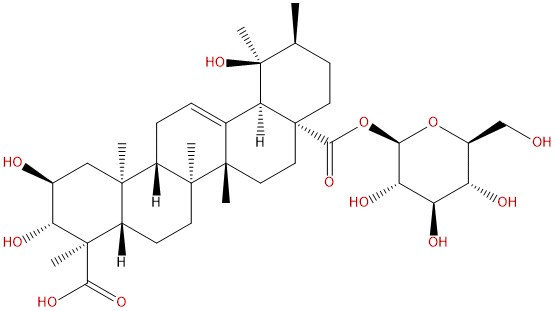
Suavissimoside R1 (CAS number: 95645-51-5) is a natural product extracted from the roots of Rubus parvifolus, a plant in the Rosaceae family. In recent years, it has attracted much attention due to its significant neuroprotective effects and potential anti Parkinson's disease (PD) activity. Parkinson's disease, as a common neurodegenerative disease, is mainly characterized by movement disorders and non movement symptoms. Its pathogenesis is complex, involving multiple cellular signaling pathways and neuroinflammatory responses. The current treatment methods mainly focus on symptom relief, lacking intervention drugs with fundamental pathological mechanisms. Therefore, the search for new neuroprotective agents has become a research hotspot. Sweet leaf glycoside R1 has demonstrated excellent pharmacological activity and safety due to its unique chemical structure and multi-target effects, making it an important research object in the field of natural product pharmacology.
This article provides a systematic review of the chemical structure and physicochemical properties, plant sources, and extraction methods of Sweet Leaf Glycoside R1. It delves into its pharmacological activity and mechanism of action, analyzes its pharmacokinetic characteristics through drug evaluation, and finally looks forward to its clinical application prospects, providing theoretical basis and reference for subsequent related research and drug development.
Chemical structure and physicochemical properties
The molecular formula of Sweet Leaf Glycoside R1 is C34H-44O15, with a molecular weight of 680.8320, belonging to the glycoside class of natural products. Its structural characteristics include a multi hydroxy substituted glycosidic moiety connected to the phenylpropanoid parent nucleus, with high polarity and complex spatial conformation. The LogP value is 1.8557, indicating that it has moderate hydrophobicity, which is conducive to membrane penetration but not too hydrophobic to affect bioavailability. The extremely large topological polar surface area (TPSA) is 214.44 Å ², reflecting the presence of a large number of polar groups on the molecular surface, especially hydroxyl and ether bonds, which are of great significance for its binding to biomolecule targets.
The water solubility is 0.1387, indicating that the solubility of sweetener R1 in water is relatively low, but it still has a certain hydrophilicity, which is beneficial for in vivo distribution. The low permeability of the blood-brain barrier suggests its limited ability to directly enter the central nervous system, but this does not rule out its neuroprotective effect through indirect mechanisms. The hERG channel inhibition test result was negative, indicating a low risk of cardiac toxicity. The Ames mutagenicity test result was 0.0, indicating an extremely low genetic toxicity risk and good safety.
In summary, the physicochemical properties of Sweet Leaf Glycoside R1 indicate that it has certain advantages in drug design, especially in terms of safety. However, its low blood-brain barrier permeability may limit its direct central nervous system effects and require optimization strategies such as drug carriers or structural modifications.
Plant sources and extraction methods
Sweet leaf glycoside R1 mainly comes from Rubus parvifollus (small leaved raspberry), which belongs to the Rubus genus of the Rosaceae family and is widely distributed in East Asia. The roots of this plant are rich in various glycoside compounds, among which sweet leaf glycoside R1 is one of the main active ingredients with high content and biological activity.
The extraction method usually uses dry root materials, which are crushed and then subjected to reflux extraction using methanol or ethanol aqueous solution. After concentration, the extraction solution is subjected to liquid-liquid partitioning to remove lipophilic impurities, followed by purification by silica gel column chromatography or high-performance liquid chromatography (HPLC). During the purification process, by utilizing the polarity characteristics of Sweet Leaf Glycoside R1 and using a methanol water gradient elution system, the target compound can be effectively separated. Finally, its structure was confirmed by mass spectrometry and nuclear magnetic resonance (NMR) techniques.
In recent years, the application of ultrasound assisted extraction and microwave-assisted extraction technologies has improved the extraction efficiency and purity of sweetener R1, reduced the use of organic solvents, and is in line with the concept of green chemistry. In addition, for large-scale production, researchers are also exploring plant cell culture and biosynthetic pathways to achieve sustainable supply of sweetener R1.
Pharmacological activity research
The pharmacological activity of Sweet Leaf Glycoside R1 mainly focuses on neuroprotection and anti Parkinson's disease potential. Studies on both in vitro cell models and in vivo animal models have shown that sweetener R1 can significantly alleviate oxidative stress and inflammatory responses in nerve cells, protecting dopaminergic neurons from toxic damage.
-
Neuroprotective effect
Multiple studies have confirmed that Sweet Leaf Glycoside R1 has antioxidant activity, which can clear free radicals, inhibit lipid peroxidation, and alleviate oxidative damage to nerve cells. In addition, Sweet Leaf Glycoside R1 can regulate the expression of intracellular antioxidant enzymes such as superoxide dismutase (SOD) and glutathione peroxidase (GPx), enhancing the cell's own antioxidant defense ability.
-
anti-inflammatory effect
Sweet leaf glycoside R1 alleviates neuroinflammatory responses by inhibiting the release of inflammatory factors such as TNF - α, IL-1 β, and IL-6. It has an inhibitory effect on the activation of microglia, blocks inflammatory signaling pathways, and slows down neurodegenerative processes.
-
Potential for anti Parkinson's disease treatment
In animal models of Parkinson's disease, sweetener R1 can improve motor dysfunction and reduce the loss of dopaminergic neurons. Its mechanism of action involves regulating mitochondrial function, inhibiting cell apoptosis signaling pathways, and protecting neuronal survival. In addition, Sweet Leaf Glycoside R1 also exhibits the potential to regulate neurotransmitter balance and improve neurological function.
-
Hypoglycemic related activity
Although the main research of stevioside R1 focuses on neuroprotection, it has potential interactions with a variety of hypoglycemic targets (such as GCK, PPARG, DPP4, IRS1, SLC2A4, INSR), suggesting that it may have the potential to regulate glucose metabolism, providing new ideas for the treatment of diabetes and its complications.
Mechanism of action and molecular targets
The pharmacological effects of Sweet Leaf Glycoside R1 involve complex regulation of multiple targets and pathways, mainly including the following aspects:
-
Antioxidant mechanism
Sweet leaf glycoside R1 activates the Nrf2 ARE signaling pathway, induces the expression of downstream antioxidant enzymes, and enhances the antioxidant capacity of cells. At the same time, inhibiting NADPH oxidase activity, reducing reactive oxygen species (ROS) generation, and alleviating oxidative stress.
-
Anti inflammatory mechanism
Sweet leaf glycoside R1 inhibits the activation of the NF - κ B signaling pathway, reduces the expression of pro-inflammatory cytokines, and alleviates inflammatory responses. It also regulates the transcription of inflammation related genes by inhibiting the MAPK pathway, including p38, JNK, and ERK.
-
Neuroprotective and anti apoptotic mechanisms
Sweet leaf glycoside R1 regulates mitochondrial membrane potential, inhibits cytochrome C release, and blocks mitochondrial pathway induced cell apoptosis. It also regulates the expression of Bcl-2 family proteins, promotes the upregulation of anti apoptotic protein Bcl-2, inhibits the expression of pro apoptotic protein Bax, and protects neuronal survival.
-
Dopaminergic neuron protection
Sweet leaf glycoside R1 maintains neurotransmitter balance and reduces damage to dopaminergic neurons by regulating the activity of dopamine synthesis and metabolism related enzymes. In addition, it may affect the aggregation of alpha synuclein and slow down the pathological progression of Parkinson's disease.
-
The effect of blood glucose lowering targets
Sweet leaf glycoside R1 interacts with targets such as insulin receptor (INSR), glucose transporter protein (SLC2A4), and insulin receptor substrate 1 (IRS1) to promote insulin signaling and glucose uptake. Its regulation of PPARG contributes to the improvement of lipid metabolism and insulin sensitivity. The inhibitory effect of DPP4 may prolong the half-life of glucagon like peptide-1 (GLP-1) and promote insulin secretion.
Evaluation of drug properties and pharmacokinetics
The pharmacological evaluation of Sweet Leaf Glycoside R1 shows that it has good safety and potential drug development value. The specific analysis is as follows:
-
Drug safety
The hERG channel inhibition experiment was negative, indicating that the risk of cardiac toxicity of Sweet Leaf Glycoside R1 is low. The Ames test result is 0.0, indicating no significant mutagenicity and a low risk of genetic toxicity. In vitro cytotoxicity experiments also showed that it has low toxicity to normal cells and a wide safety window.
-
Pharmacokinetic characteristics
Sweet leaf glycoside R1 has a relatively large molecular weight (680.8 Da) and high TPSA, which may limit its oral bioavailability. Low water solubility may affect its absorption and distribution. The low permeability of the blood-brain barrier limits its ability to directly act on the central nervous system, but improving drug delivery systems such as nanocarriers and liposomes is expected to overcome this barrier.
-
Metabolism and excretion
At present, there is limited research on the metabolic pathways of sweet leaf glycoside R1 in vivo, and it is speculated that it mainly undergoes glycoside hydrolysis and corresponding phase I and phase II metabolic reactions through the liver enzyme system. Further in vivo pharmacokinetic studies are needed in the future to clarify its absorption, distribution, metabolism, and excretion (ADME) characteristics.
-
Potential for drug interactions
The interaction of stevioside R1 with a variety of metabolic enzymes and transporters has not been systematically clarified, and its possible drug drug interaction needs to be concerned, especially in the application of multi drug combination therapy in Parkinson's disease and diabetes patients.
Clinical application prospects and prospects
Sweet leaf glycoside R1, as a natural product with neuroprotective and anti Parkinson's disease potential, has broad clinical application prospects. Its multi-target mechanism of action provides a new pharmacological basis for the treatment of neurodegenerative diseases, especially in early disease intervention and pathological mechanism regulation, with unique advantages.
-
Anti Parkinson's disease treatment
Sweet leaf glycoside R1 is expected to become an adjuvant therapy for Parkinson's disease by reducing oxidative stress, inhibiting neuroinflammation, and protecting dopaminergic neurons. Combining existing dopamine replacement therapies may improve patients' motor symptoms and quality of life.
-
Widely used in neurodegenerative diseases
In addition to Parkinson's disease, the potential role of sweetener R1 in neurodegenerative diseases such as Alzheimer's disease and stroke deserves further investigation. Its anti-inflammatory and antioxidant properties help slow down the process of nerve damage.
-
Diabetes and metabolic diseases
The interaction between stevioside R1 and a variety of hypoglycemic targets suggests that it may have the function of regulating glucose metabolism, providing a new idea for the treatment of diabetes and its neurological complications.
-
Drug development and formulation optimization
Given the low blood-brain barrier permeability of Sweet Leaf Glycoside R1, future efforts should focus on developing nanocarriers, liposomes, or other novel drug delivery systems to enhance the bioavailability of the central nervous system. Meanwhile, structural modification and derivative design are also important directions to enhance its pharmacological and pharmacokinetic properties.
-
Safety and clinical trials
Based on its good safety characteristics, Sweet Leaf Glycoside R1 has the foundation for conducting preclinical and clinical research. In the future, a systematic evaluation of its toxicological characteristics and long-term medication safety is needed to lay the foundation for clinical application.
Conclusion
Sweet leaf glycoside R1, as a natural glycoside extracted from the roots of Rubus parvifolus, has shown significant potential in neuroprotection and anti Parkinson's disease fields due to its unique chemical structure and multi-target pharmacological activity. Its multiple mechanisms of antioxidant, anti-inflammatory, and regulation of neuronal survival provide new strategies for the treatment of neurodegenerative diseases. Meanwhile, the interaction between Sweet Leaf Glycoside R1 and various hypoglycemic targets suggests its application value in metabolic diseases.
Despite its low blood-brain barrier permeability, it is expected to overcome this limitation and promote its clinical translation through modern drug delivery technology and structural optimization. In the future, systematic research on the pharmacokinetics, toxicology, and clinical efficacy of Sweet Leaf Glycoside R1 should be strengthened to promote its development as a novel neuroprotective drug and multifunctional therapeutic agent. In summary, Sweet Leaf Glycoside R1 not only enriches the research content of natural product pharmacology, but also opens up new directions for the treatment of neurodegenerative and metabolic diseases.