Introduction/Overview
Malignant tumors are a major disease that seriously threatens human health, and the exploration of their treatment strategies has always been at the forefront of pharmacological research. Among numerous anti-tumor drugs, compounds derived from natural products have become an important treasure trove for innovative drug development due to their unique chemical structures and diverse biological activities. Maytansine and its derivatives are one of the highly anticipated star molecules. Maytansinol, also known as Ansamitocin P-0, is the core nucleus structure of maytanshinol compounds and exhibits significant anti-tumor activity on its own. As an efficient inhibitor of microtubule polymerization, Meidengol exerts anti-tumor effects by interfering with cell mitosis, inducing cell apoptosis, and other pathways. Compared to its esterified derivatives such as DM1 and DM4, methoxyl has irreplaceable value as a key starting material for medicinal chemical modification and a model molecule for pharmacological mechanism research. This article aims to provide a systematic review of the chemical properties, sources, pharmacological activities, mechanisms of action, drug properties, and application prospects of metformin in the development of anti-tumor drugs, in order to provide reference for in-depth research in related fields.
Chemical structure and physicochemical properties
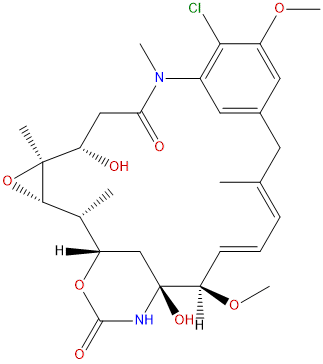
The chemical name of Medenol is (2S, 3R, 4S, 5S, 6R) -2- [(2R, 3S, 4S, 5S, 6S) -4- (acetylamino) -5- [(2S, 3S, 4S, 5S, 6R) -4,5-dihydroxy-6-methyl-2-methoxytetrahydro-2H-pyran-3-yl] oxy-6-methyl-2-methoxytetrahydro-2H-pyran-3-yl] oxy-6- [(1S, 2R, 3S, 4R, 9S, 12S, 13S) -12- [(2R) -3-amino-2-hydroxypropionyl] oxy-4-hydroxy-2,5,9,13-tetramethyl-10-oxatetracyclo [7.7.0.0 ^ {2,7}. 0 ^ ^ {11,15}] Hexacarbon-5,7,11,15-tetraen-3-yl] oxy-5-hydroxytetrahydro-2H-pyran-3,4-diol, CAS number 57103-68-1.
Its molecular structure is complex and belongs to the Ansamycin class of macrocyclic amide compounds. The core structure is composed of a 19 membered macrocyclic lactone (Ansha bridged ring) connected to a unique aromatic ring (triphenylphenol derivative) via an amino group, and linked to multiple sugar groups (such as N-acetylglucosamine) and functional groups (such as the C-3 ester bond, which is a hydroxyl group in methoxyl alcohol). It is the hydroxyl group at position C-3 that makes it a key site for subsequent chemical modifications, such as connecting antibodies to form antibody conjugated drug ADCs. Its molecular weight is 565.0630, belonging to medium to large molecules.
According to the analysis of the parameters related to drug properties, its lipid water partition coefficient (LogP) is 2.53, indicating that it has a certain degree of lipophilicity, but not extremely strong. The topologically polar surface area (TPSA) is as high as 130.09 Å ², mainly due to the presence of multiple polar groups such as hydroxyl, amino, and ether bonds in the molecule, which limits its membrane permeability. The calculated water solubility is 0.1091 mg/mL, which belongs to insoluble compounds. These physicochemical properties determine the absorption and distribution characteristics of metformin in the body: its ability to cross the blood-brain barrier is predicted to be "low", which to some extent limits its direct effect on central nervous system tumors, but may also reduce the associated neurotoxicity risk. In terms of preliminary safety prediction, the lack of significant inhibition of hERG potassium channels by medendazole suggests a low risk of causing QT interval prolongation in the heart, while a negative Ames test result (0.0) suggests no direct genetic toxicity. However, these computer predictions need to be further validated through rigorous in vitro and in vivo experiments.
Plant sources and extraction methods
Meidengol was not initially obtained in large quantities directly from plants, but was recognized as a biosynthetic precursor or degradation product of Meidengol compounds. The main natural sources of these compounds are various higher plants and microorganisms.
1. Plant-based The most famous source is the Celastraceae genus, which belongs to the family Celastraceae(Maytenus)Plants, such as Ophiopogon japonicus(Maytenus ovatus)Hebuchang Meidengmu(Maytenus buchananii)Wait. Meidensu and a series of structural analogues can be isolated from the roots and stem bark of these plants, among which Meidenol is one of the important members.
2. Microbial source Microbial sources have greater potential for industrial production. Nocardia actinomycetes(Actinosynnema pretiosum)It is the main strain for producing Ansamitocin P3, while Ansamitocin P-0 is an intermediate or secondary metabolite in this biosynthetic pathway. Through microbial fermentation production, large-scale and sustainable preparation of metformin and its derivatives can be achieved, which is crucial for subsequent drug development.
Extraction and Separation Methods Usually following the conventional process of natural product chemistry:
1. Extract For plant materials, organic solvents such as methanol, ethanol, and chloroform methanol mixtures are often used for extraction or percolation. For microbial fermentation broth, solid-liquid separation is required first. The mycelium is extracted with organic solvents, and the fermentation supernatant can be enriched with macroporous adsorption resin.
2. Separation and purification The crude extract is subjected to preliminary fractionation through solvent partitioning (such as n-hexane, ethyl acetate, n-butanol/water system). Medonol is mainly concentrated in the ethyl acetate fraction. Further purification is highly dependent on chromatographic techniques, including normal phase silica gel column chromatography, reverse phase C18 column chromatography (HPLC), gel chromatography (Sephadex LH-20), etc. Due to the presence of UV chromophores in its structure, it can be monitored using a UV detector. The final acquisition of high-purity methoxyl often requires fine separation by preparative high-performance liquid chromatography (Prep HPLC).
3. appraisal Structural identification involves the comprehensive use of spectroscopic methods such as mass spectrometry (MS) and nuclear magnetic resonance (NMR, including 1H, 13C, 2D-NMR such as COSY, HSQC, HMBC) to compare and confirm with known literature data or standards.
Pharmacological activity research
The core pharmacological activity of metoclopramide is its broad-spectrum and potent anti-tumor effect. Numerous in vitro studies have shown that it exhibits nanomolar (nM) cytotoxicity towards various human tumor cell lines.
- cytotoxicity: Medenol showed significant proliferation inhibitory activity on leukemia cells (such as HL-60), breast cancer cells (such as MCF-7), lung cancer cells (such as A549), colon cancer cells (such as HCT-116), ovarian cancer cells (such as SK-OV-3), etc. Its IC50 value is usually much lower than many traditional chemotherapy drugs.
- In vivo anti-tumor activity In nude mouse transplant tumor models, Meidengol itself or its appropriate form of administration (such as liposome encapsulation) can significantly inhibit tumor growth and even induce tumor regression. However, due to its narrow therapeutic window (effective dose close to toxic dose) and systemic toxicity, directly developing it as a small molecule chemotherapy drug faces challenges.
- Other potential activities In addition to directly killing tumor cells, research also suggests that metformin may affect the tumor microenvironment. For example, its potential inhibitory effect on matrix metalloproteinase 2 (MMP2) may interfere with tumor invasion and metastasis processes. In addition, by affecting targets such as HIF1A (hypoxia inducible factor 1 alpha), it may regulate the metabolic adaptation and angiogenesis of tumor cells. However, the specific contributions and mechanisms of these effects still need to be further explored.
Mechanism of action and molecular targets
The core mechanism by which metformin exerts anti-tumor effects is by inhibiting the polymerization of microtubules, but its biological effects go far beyond this and involve complex signaling network regulation.
-
Core mechanism: microtubule dynamic disruption
Meidengol and vinblastine drugs have similar binding sites and can bind to specific sites of microtubules with high affinity (vinblastine binding sites), inhibiting microtubule polymerization and promoting the depolymerization of formed microtubules. Microtubules are a crucial component of the cytoskeleton, playing a central role in the formation of mitotic spindles, maintenance of cell morphology, and transport of intracellular substances. Medonol disrupts microtubule dynamics, causing cell mitosis to stagnate in the G2/M phase, thereby preventing cell division.
-
Apoptosis induction and related targets
The sustained blockade of mitosis ultimately triggers cell apoptosis. Meidengol induced apoptosis involves multiple pathways:
- Mitochondrial apoptosis pathway Microtubule damage can lead to an imbalance in the regulation of Bcl-2 family proteins. Research has shown that medendazole may downregulate the expression or function of anti apoptotic proteins MCL1 and BCL2, thereby promoting increased mitochondrial outer membrane permeability, cytochrome C release, activating the caspase cascade reaction, and ultimately leading to cell apoptosis.
- Signal Transduction and Transcription Activation Factor 3 (STAT3)STAT3 is an important oncogenic transcription factor that is continuously activated in various tumors. Medonol has been reported to inhibit the phosphorylation (activated form) of STAT3 and the expression of its downstream target genes (such as Survivin, Cyclin D1), which is closely related to its induction of cell cycle arrest and apoptosis.
- Mitogen activated protein kinase (MAPK) pathway Medonol may activate stress-related signaling pathways such as MAPK1 (ERK2), but its role in determining cell fate (promoting survival or death) is context dependent.
-
Other potential molecular targets
- Topoisomerase (TOP1, TOP2A)There are studies suggesting that metformin like compounds may interfere with the function of topoisomerases, leading to DNA damage, which may be a supplementary mechanism of their cytotoxicity. However, direct evidence for this effect of metformin is not yet sufficient.
- Estrogen receptor (ESR1) and aromatase (CYP19A1)In view of the high sensitivity of medentol to some breast cancer cells, there is a hypothesis that it may interfere with estrogen signaling pathway. However, there is currently no direct evidence to suggest that metformin is a ligand for ESR1 or an effective inhibitor of CYP19A1. Its anti breast cancer activity is more likely due to microtubule inhibition.
- Hypoxia inducible factor 1 alpha (HIF1A)As a microtubule disruptor, metoprolol may indirectly affect the nuclear translocation or stability of HIF1A, thereby interfering with the adaptive ability of tumor cells under hypoxic conditions.
In summary, the mechanism of action of metformin is as follows:Microtubule inhibition As a starting point, trigger Mitotic disaster And through regulation MCL1、BCL2、STAT3 Waiting for key apoptosis regulatory factors, ultimately efficiently guiding Tumor cell apoptosis Its impact on targets such as MMP2 and HIF1A may play an auxiliary role in its anti invasion and anti angiogenic effects.
Evaluation of drug properties and pharmacokinetics
Despite its excellent in vitro activity, the pharmacokinetics (PK) and toxicity of Meidengol as a single small molecule drug face significant challenges in terms of its pharmacological properties.
- Absorption and distribution As mentioned earlier, the high molecular weight, high TPSA, and low water solubility of metformin result in extremely low oral bioavailability and typically require intravenous administration. Its lipophilicity (LogP~2.5) makes it widely distributed in the body, but difficult to penetrate the blood-brain barrier. In plasma, it may bind to proteins, affecting its free drug concentration.
- Metabolism and excretion Meidengol may undergo extensive metabolism in the body, including hydrolysis of ester bonds (although its C-3 position is hydroxyl, other ester bonds may be hydrolyzed), oxidation or binding reactions of hydroxyl groups (such as glucuronidation, sulfation). The liver may be its main metabolic site. The prototype drug and its metabolites may be excreted through bile and kidneys. The specific metabolic enzyme spectrum (such as whether it is metabolized by CYP450 enzymes) still needs to be studied in detail.
- toxicity The main dose limiting toxicity of metformin is related to its mechanism of action, which is damage to rapidly proliferating normal tissues, especially myelosuppression Neutropenia and thrombocytopenia Gastrointestinal toxicity(Nausea, vomiting, diarrhea). In addition, although the predicted risk of hERG inhibition is low, microtubule inhibitors have the potential to neurotoxicity(such as peripheral neuropathy) still requires close attention.
- Treatment window The effective anti-tumor dose is very close to the dose that produces severe toxicity, and the therapeutic index is narrow, which limits its direct clinical application.
It is precisely these drug-induced defects that have spurred the development of revolutionary drug delivery strategies - antibody coupled drugs (ADCs). Medonol itself acts as a "warhead" by covalently linking with monoclonal antibodies targeting tumor associated antigens through cleavable or non cleavable linkers, forming ADCs (such as T-DM1/Do trastuzumab emtansine using the Medonol derivative DM1). This design cleverly solves the delivery problem of metformin: antibodies provide targeting and selectively deliver metformin to tumor cells; ADC is stable in the blood circulation, reducing system exposure and toxicity; After internalization, active methoxyl derivatives are released within tumor cells, exerting efficient killing effects and greatly expanding the therapeutic window.
Clinical application prospects and prospects
The direct clinical application prospects of metoclopramide are limited, but as a Core cytotoxicity payload of ADC drugs We have achieved milestone success and demonstrated a vast future.
- The cornerstone of ADC field ADC drugs targeting tumors using derivatives of metformin (such as DM1, DM4) as warheads are an important pillar of current tumor targeted therapy. T-DM1(Kadcyla ®) For the second-line treatment of HER2 positive breast cancer, it has proved its excellent efficacy and controllable toxicity. This success validates the enormous value of the Meiden alcohol warhead in the ADC platform.
- Optimization of New Meidenol Derivatives and ADC:
- Connection sub technology Develop more stable linkers with higher specific release efficiency in tumor cells to further reduce off target toxicity and improve therapeutic efficacy.
- Bullet engineering Structural modification of the Meidengol nucleus to optimize its efficacy, metabolic stability, bystander effect (killing ability against adjacent non internalized ADC tumor cells), and drug resistance. For example, adjusting the type of C-3 linker or modifying other sites in the maternal nucleus to overcome drug resistance mediated by efflux pumps such as P-gp.
- New target ADC: Explore the combination of antibodies against new tumor antigens (such as TROP2, c-Met, B7-H3, etc.) and medenol warheads, and expand its indications to lung cancer, gastric cancer, bladder cancer, and other solid tumors and blood tumors.
- Combination therapy strategy The therapy based on metformin ADC can be combined with other treatment modalities, such as immune checkpoint inhibitors (PD-1/PD-L1 antibodies). The immunogenic death of tumor cells induced by ADC may activate anti-tumor immunity and have a synergistic effect with immunotherapy.
- Overcoming drug resistance research In depth research on the resistance mechanism of tumor cells to Meidengol ADC (such as downregulation of target expression, internalization disorders, lysosomal dysfunction, apoptotic pathway defects, etc.), and the development of corresponding strategies to overcome them, is the key to maintaining its long-term clinical benefits.
- Exploration of other delivery systems In addition to ADC, other targeted delivery systems can also be studied, such as peptide drug conjugates (PDCs), small molecule drug conjugates (SMDCs), or nanoformulations (liposomes, albumin nanoparticles) encapsulating metformin, to provide alternative solutions for targets or situations where ADC cannot be used.
Conclusion
Medenol, as the core active structure of natural products of the Medenol class, has attracted the attention of researchers since its discovery due to its powerful microtubule inhibition and anti-tumor activity. Although its inherent drug defects hinder its direct development as a traditional chemotherapy drug, this "drawback" has precisely stimulated innovation in drug delivery technology. Through ADC, a "biological missile" technology, Medtronic is able to accurately and efficiently act on tumor cells, achieving a magnificent transformation from highly toxic natural products to revolutionary targeted drugs. From exploring plants and microorganisms, to analyzing and modifying chemical structures, to analyzing the mechanisms of action layer by layer, and finally converging on the clinical translation of ADC drugs, the research process of Meidengol can be regarded as a model of modern pharmacological research on natural products. In the future, with a deeper understanding of the mechanism of action of metformin and its derivatives, as well as continuous innovation in ADC technology and combination therapy strategies, intelligent drugs targeting metformin will play a more important and extensive role in the battle against cancer, bringing hope to more patients.