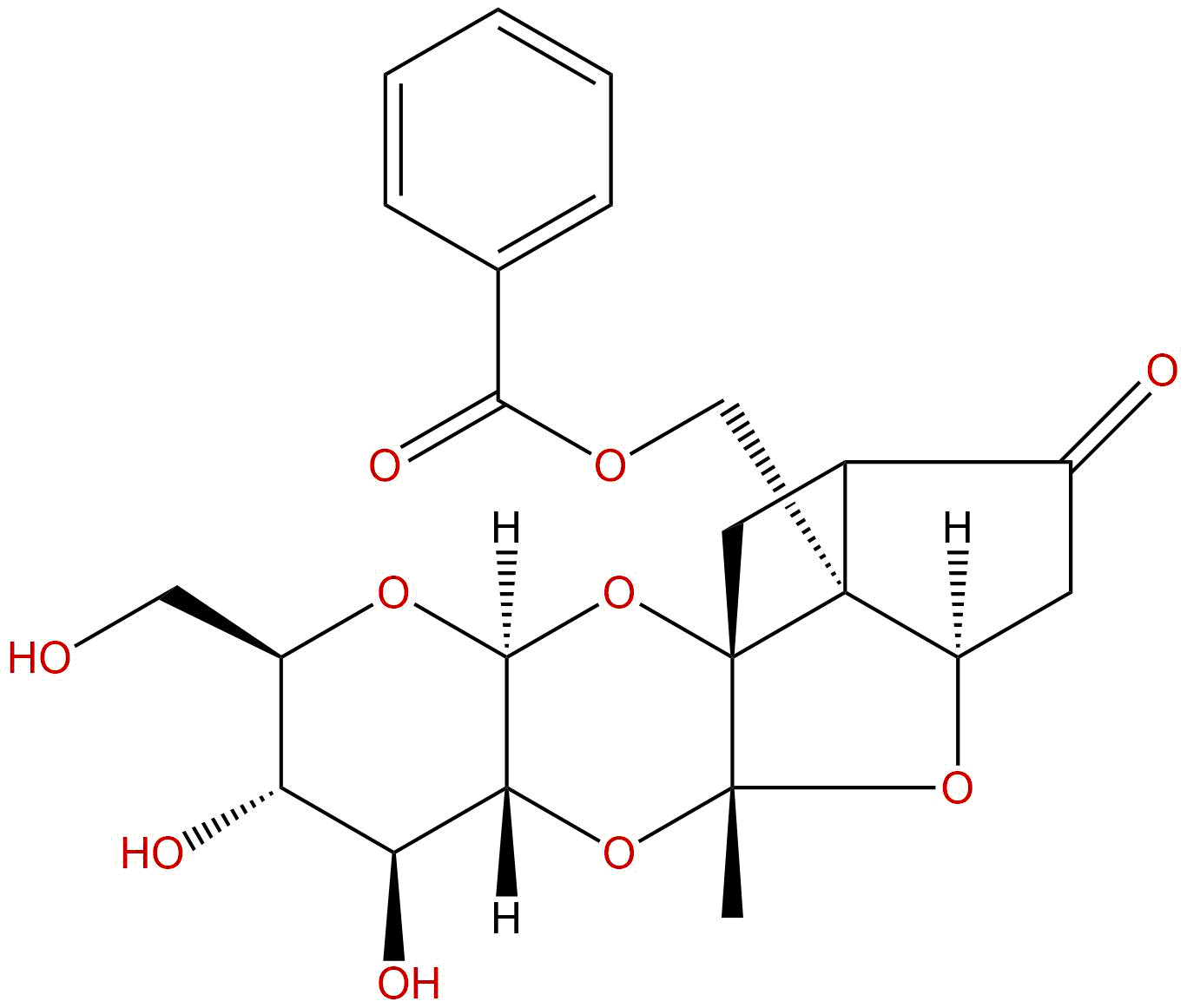


Product name: Lactiflorin
Synonym name:
Catalogue No.: BP4407
Cas No.: 1361049-59-3
Formula: C23H26O10
Mol Weight: 462.451
Botanical Source:
Type of Compound:
Purity: 95%~99%
Analysis Method: HPLC-DAD or/and HPLC-ELSD
Identification Method: Mass, NMR
Packing: Brown vial or HDPE plastic bottle
Storage: Store in a well closed container, protected from air and light. Put into refrigerate or freeze for long term storage.
Whenever possible, you should prepare and use solutions on the same day. However, if you need to make up stock solutions in advance, we recommend that you store the solution as aliquots in tightly sealed vials at -20℃. Generally, these will be useable for up to two weeks.
The product could be supplied from milligrams to grams
Inquire for bulk scale.
For Reference Standard and R&D, Not for Human Use Directly.
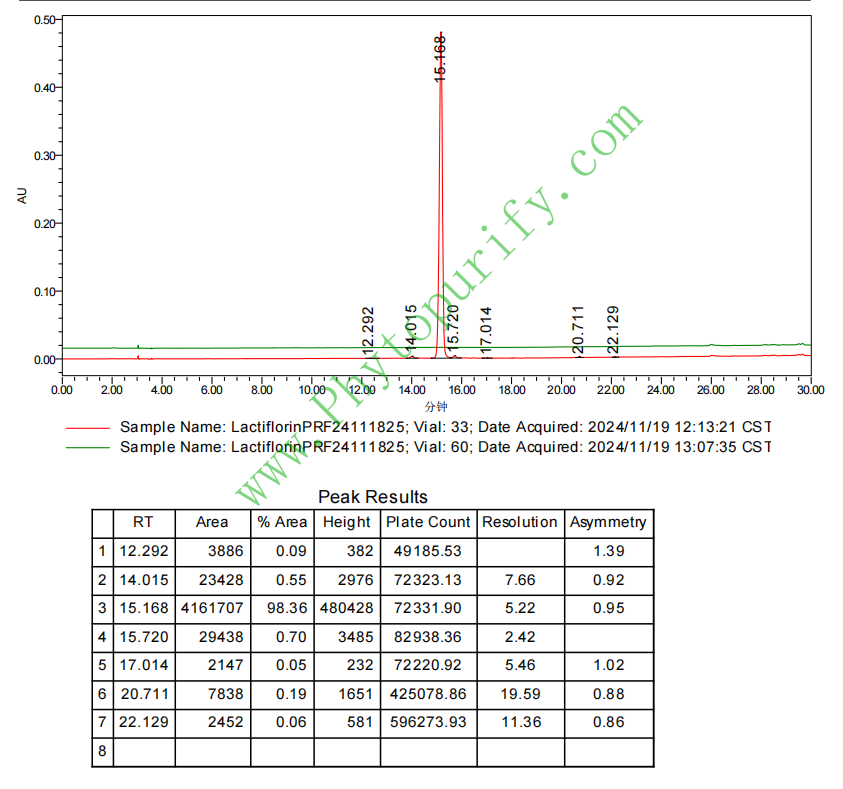
HPLC of Lactiflorin
Storage conditions:Short-term storage at 2~8℃, long-term storage at -20 ~ -80℃
Lactiflorin, CAS number 1361049-59-3, is a natural monoterpenoid glycoside isolated from plants of the Paeonia genus. As an organic heterocyclic compound, paeoniflorin has a unique chemical structure and diverse biological activities, especially exhibiting significant pharmacological effects in the fields of kidney protection and anti-inflammatory. In recent years, with the in-depth study of the pharmacological mechanisms of natural products, paeoniflorin has gradually become one of the hotspots in the development of natural medicines due to its multi-target regulatory ability and superior safety. This article will systematically review the chemical structure and physicochemical properties, plant sources and extraction methods, pharmacological activity and mechanism of action, pharmacological evaluation and pharmacokinetic characteristics of paeoniflorin, and explore its clinical application prospects and research prospects, in order to provide scientific basis for the in-depth research and clinical translation of this compound.
The chemical formula of paeoniflorin is C23H26O10, with a molecular weight of 462.4510. Its structure belongs to the monoterpenoid glycoside class, containing organic heterocyclic ring structures, specifically including bridging compounds, benzoate esters, cyclic ketones, and cyclic ketal functional groups. These structural features endow it with strong biological activity and good water solubility (0.4544), with a LogP value of 0.3479, indicating moderate lipophilicity that is beneficial for in vivo distribution but has low blood-brain barrier penetration ability. Its topological polar surface area (TPSA) is 140.98 Å ², indicating its high polarity, which may affect its cell membrane permeability and oral absorption. The hERG channel inhibition experiment showed a negative result, indicating that paeoniflorin has a low risk of cardiac toxicity; The Ames test value is 1.2, indicating low mutagenicity and good safety.
Paeoniflorin is mainly found in plants of the Paeonia genus, especially in some traditional Chinese medicinal herbs such as Paeonia lactiflora Pall, which are rich in content. The extraction is usually carried out using solvent extraction method, and commonly used solvents include ethanol, water, or their mixed solvent systems. The extraction process generally includes the following steps:
In recent years, ultrasound assisted extraction and microwave-assisted extraction techniques have also been applied to the extraction of paeoniflorin, significantly improving extraction efficiency and purity. In addition, the application of modern separation techniques such as counter current chromatography and preparative HPLC provides effective means for obtaining high-purity paeoniflorin.
The pharmacological activity of paeoniflorin mainly focuses on its renal protection and anti-inflammatory effects. A large number of in vitro and in vivo experiments have shown that paeoniflorin can significantly reduce kidney damage, improve renal function indicators, inhibit inflammatory reactions, and alleviate tissue inflammatory damage.
Paeoniflorin has shown protective effects in many kidney disease models, including acute kidney injury (AKI), chronic kidney disease (CKD) and diabetes nephropathy (DKD). Its mechanism of action involves multiple aspects such as antioxidant, anti-inflammatory, anti fibrotic, and cell apoptosis regulation. For example, in the renal ischemia-reperfusion injury model, paeoniflorin can reduce the generation of oxidative stress products, inhibit apoptosis of renal tubular epithelial cells, and promote renal tissue repair. In the model of diabetes nephropathy, paeoniflorin alleviates glomerulosclerosis and basement membrane thickening by regulating glucose and lipid metabolism and inhibiting the expression of inflammatory factors.
The anti-inflammatory effect of paeoniflorin has been validated in various inflammatory models. It can significantly downregulate the expression of pro-inflammatory cytokines such as IL-6 and TNF - α, inhibit the activation of inflammatory signaling pathways, and alleviate the release of inflammatory mediators. In vitro cell experiments have shown that paeoniflorin inhibits the activation of macrophages and other immune cells, and reduces the expression of inflammatory response related genes.
In addition, paeoniflorin has shown certain alleviating effects on disease models such as neuroinflammation, arthritis, and intestinal inflammation, indicating its broad anti-inflammatory potential.
The multi-target mechanism of action of paeoniflorin is the basis of its pharmacological activity. By regulating multiple signaling pathways and key molecules, paeoniflorin exerts its renal protective and anti-inflammatory effects.
Paeoniflorin exerts anti-inflammatory effects by inhibiting the IL-6/STAT3 and NF - κ B signaling pathways, reducing the expression and release of pro-inflammatory factors. Meanwhile, paeoniflorin regulates TRPV1/TRPA1 channels, alleviating neuroinflammation and pain. Its inhibitory effect on CASP1 reduces the cytokine maturation mediated by inflammasomes, further alleviating the inflammatory response.
In addition, paeoniflorin promotes the expression of antioxidant enzymes and protects kidney cells from oxidative damage by regulating oxidative stress-related signaling pathways such as Nrf2/ARE.
The pharmacological parameters of paeoniflorin indicate that it has good potential for drug development. The molecular weight is moderate (462.45 Da), with a LogP value of 0.3479, indicating good water lipid balance and favorable distribution in the body. However, the blood-brain barrier permeability is low, reducing the risk of adverse reactions in the central nervous system. A high TPSA value (140.98 Å ²) suggests strong polarity and may affect oral absorption, but its bioavailability can be optimized through structural modification or formulation techniques.
In terms of safety, the hERG channel inhibition test was negative, indicating a low risk of cardiac toxicity; The Ames test results indicate that it has low mutagenicity and good genetic safety.
Pharmacokinetic studies have shown that paeoniflorin is absorbed quickly after oral administration, and the peak plasma concentration appears for a short period of time. However, its bioavailability is limited by its polarity and water solubility. It is mainly metabolized by the liver in the body, and the metabolites are mostly water-soluble complexes that are easy to excrete. Moderate half-life, suitable for daily administration. Future research needs to further clarify its metabolic enzyme system and drug interaction characteristics.
Paeoniflorin has broad clinical application prospects due to its significant renal protection and anti-inflammatory activity. Its potential therapeutic value in diabetes nephropathy, acute and chronic renal injury and various inflammatory diseases has attracted great attention in the field of drug research and development.
Future clinical research should focus on the following aspects:
In addition, the structural diversity and good safety of paeoniflorin provide a solid foundation for its chemical modification and derivative development. In the future, its efficacy and pharmacokinetic properties can be improved through structural optimization, promoting the transformation of natural products into innovative drugs.
Paeoniflorin, as a natural monoterpenoid glycoside derived from Paeonia plants, has a unique chemical structure and significant renal protection and anti-inflammatory activity. It exerts a wide range of pharmacological effects through multi-target and multi signal pathway regulation, and has good safety and drug properties. With the continuous deepening of pharmacological research on natural products, paeoniflorin is expected to become a new candidate drug for the treatment of kidney diseases and inflammation related diseases. However, current research on its clinical application is still in its infancy, and there is an urgent need for systematic pharmacokinetic, toxicological, and clinical trial data support. In the future, through interdisciplinary cooperation and technological innovation, the drug development and clinical translation of paeoniflorin have broad prospects and deserve continuous attention and in-depth exploration.
