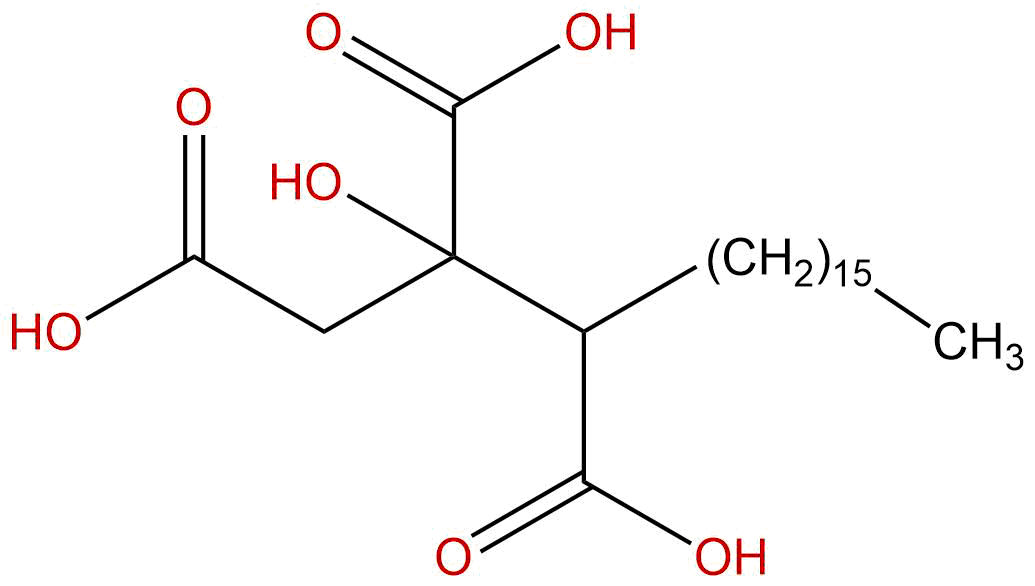


Product name: Agaricic acid
Synonym name: Agaricin; Agaricinic acid; Laricic acid
Catalogue No.: BP4352
Cas No.: 666-99-9
Formula: C22H40O7
Mol Weight: 416.555
Botanical Source:
Type of Compound:
Purity: 95%~99%
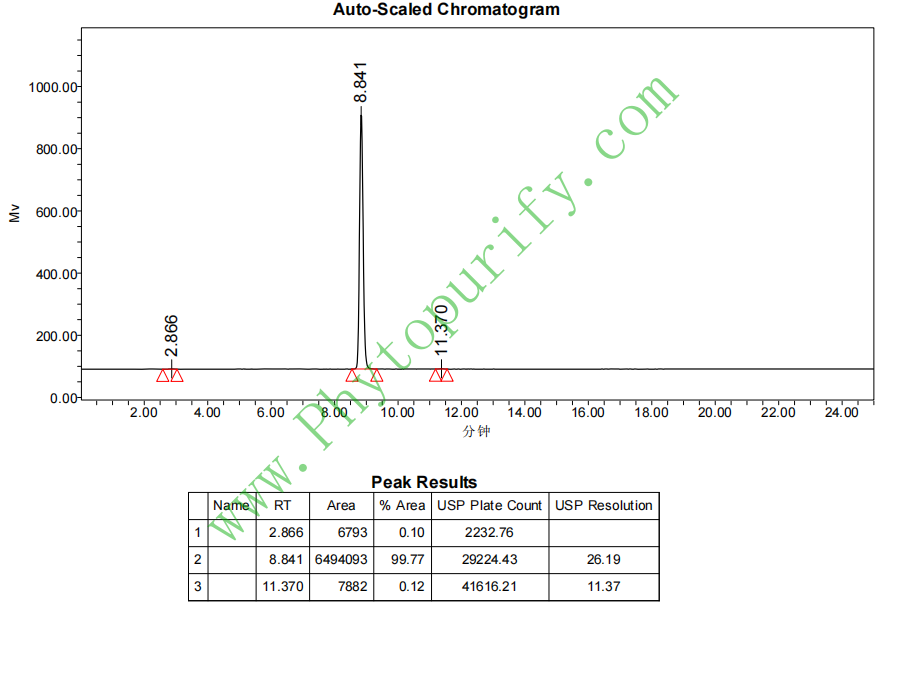
Analysis Method: HPLC-DAD or/and HPLC-ELSD
Identification Method: Mass, NMR
Packing: Brown vial or HDPE plastic bottle
Storage: Store in a well closed container, protected from air and light. Put into refrigerate or freeze for long term storage.
Whenever possible, you should prepare and use solutions on the same day. However, if you need to make up stock solutions in advance, we recommend that you store the solution as aliquots in tightly sealed vials at -20℃. Generally, these will be useable for up to two weeks.
The product could be supplied from milligrams to grams
Inquire for bulk scale.
For Reference Standard and R&D, Not for Human Use Directly.
HPLC of Agaricic acid
Storage conditions:Short-term storage at 2~8℃, long-term storage at -20 ~ -80℃
Agaric acid, CAS number 666-99-9, is a natural carbonyl compound with unique structural characteristics, first isolated from certain fungi in the family Auriculariaceae. As an important molecule in the pharmacological research of natural products, muscarinic acid has attracted much attention due to its significant antifungal activity. Fungal infection, as a common and increasingly serious public health problem in clinical practice, especially in immunocompromised patients, leads to increased difficulty in treatment and frequent drug resistance issues. Although traditional antifungal drugs such as fluconazole and amphotericin B are effective, their side effects and drug resistance limit the breadth of clinical application. Therefore, exploring new, safe, and efficient antifungal natural products has become an important direction for drug development. Pine mushroom acid, with its unique chemical structure and multi-target mechanism of action, has demonstrated excellent antifungal potential. In recent years, related research has been continuously deepened, covering multiple aspects such as its chemical properties, pharmacological activity, mechanism of action, and drug evaluation.
The purpose of this article is to systematically review the chemical structure and physicochemical properties, plant sources and extraction methods, pharmacological activity and mechanism of action, pharmacological evaluation and pharmacokinetic characteristics of pine mushroom acid, and to comprehensively explore its clinical application prospects, in order to provide theoretical support and research ideas for the further development and application of this natural product.
The molecular formula of pine mushroom acid is C26H-40O5, with a molecular weight of 416.5550. It belongs to carbonyl compounds and contains multiple hydroxyl and carboxyl groups in its structure, giving it strong polarity and biological activity. Its LogP value is 4.0930, indicating that muscarinic acid has moderate lipid solubility, which is beneficial for penetrating cell membranes but not excessively hydrophobic, balancing bioavailability and solubility. The topological polar surface area (TPSA) is 132.1300, indicating that its molecular surface has many polar groups, which may affect its binding ability with target proteins and its distribution in vivo.
Low water solubility (0.0872 mg/mL) suggests limited solubility in aqueous media, which poses certain challenges for formulation development. The low permeability of the blood-brain barrier means that muscarinic acid is less likely to enter the central nervous system, reducing the risk of central nervous system toxicity. The hERG channel inhibition experiment result was negative, indicating that the potential risk of prolonged QT interval in the heart is low with regard to mycorrhizal acid. The Ames mutagenicity test showed a value of 0.0, indicating a low risk of genotoxicity and high safety.
The presence of carbonyl groups in the chemical structure of pine mushroom acid is not only a key functional group for its biological activity, but also provides possibilities for its binding to various enzymes and receptors. The detailed analysis and modification of its molecular structure lay the foundation for subsequent structure-activity relationship (SAR) studies.
Pine mushroom acid mainly comes from fungi in the family Auriculariaceae, especially some wild and cultivated Agaricus spp. fungi. This type of fungus is widely distributed in nature and has abundant bioactive components. As one of the main active carbonyl compounds, mycolic acid, although not very high in content, has become a research focus due to its biological activity.
The common methods for extracting muscarinic acid include solvent extraction, ultrasound assisted extraction, and liquid-liquid partitioning. Ethanol or methanol is usually used as the extraction solvent, and the extraction rate is improved by reflux or ultrasound assisted extraction. After concentration, separation, and purification, the extract was purified using techniques such as silica gel column chromatography and reverse phase high performance liquid chromatography (RP-HPLC) to obtain high-purity pine mushroom acid.
In recent years, green extraction techniques such as supercritical CO2 extraction and microwave-assisted extraction have also been attempted to be applied to the extraction of mycotic acid, aiming to improve extraction efficiency, reduce solvent residue, and environmental pollution. In addition, biological fermentation technology and genetic engineering methods have also been explored to improve the yield and purity of mycotic acid, providing technical support for its large-scale production.
The pharmacological activity research of pine mushroom acid mainly focuses on its antifungal effect. Multiple in vitro experiments have shown that mycorrhizal acid has significant inhibitory effects on various pathogenic fungi, including Candida albicans, Aspergillus spp., Cryptococcus neoformans, and others. Its minimum inhibitory concentration (MIC) showed good activity in different fungal strains and was equally effective against some drug-resistant strains.
In addition, pine mushroom acid also exhibits certain antibacterial, anti-inflammatory, and immune regulatory effects, but related research is still in the preliminary stage and needs further in-depth verification. In in vivo experiments, mycorrhizal acid has shown good therapeutic potential and safety by reducing fungal load and improving pathological changes at the site of infection.
The antifungal activity of pine mushroom acid is not limited to a single target, but is achieved through the synergistic action of multiple targets, which provides the possibility to overcome single target resistance. It has inhibitory effects on multiple key biological processes such as fungal cell membrane synthesis, cell wall construction, and drug efflux pumps.
The antifungal mechanism of pine mushroom acid involves multiple key targets, mainly including ERG11, CYP51A1, CDR1, FKS1, MLS1, CYP51, MDR1, CHS3, ALS3, and CDR2. These targets play important roles in the biosynthesis, membrane structure maintenance, and drug tolerance of fungal cells.
ERG11/CYP51A1/CYP51 These genes encode the key enzyme for sterol synthesis in fungal cell membranes -14 α - demethylase. Pine mushroom acid inhibits the activity of these enzymes, blocks the synthesis of fungal cell membrane sterols, leads to membrane structural damage, and inhibits fungal growth.
CDR1/CDR2/MDR1 These genes encode the ABC and MFS transporters of fungi, which participate in drug efflux and lead to antifungal drug resistance. Pine mushroom acid can inhibit the expression or function of these transporters, enhance intracellular accumulation of antifungal drugs, and overcome drug resistance.
FKS1 Encoding β -1,3-glucan synthase, it is a key enzyme in fungal cell wall synthesis. The inhibitory effect of pine mushroom acid on FKS1 weakens the integrity of the cell wall and increases its fragility.
CHS3 Encoding chitin synthase, involved in the synthesis of chitin components in the cell wall. Pine mushroom acid further destroys cell wall structure by affecting the activity of CHS3.
ALS3 Encoding fungal adhesion proteins that affect fungal adhesion and biofilm formation. Pine mushroom acid inhibits ALS3 expression, reduces fungal adhesion ability, and lowers infectivity.
MLS1 Further research is needed to investigate the regulatory effect of mycorrhizal acid on the metabolic regulation of fungi.
In summary, mycorrhizal acid exhibits broad-spectrum and effective antifungal activity through multi-target synergistic effects, interfering with the synthesis and function of fungal cell membranes and walls, inhibiting drug efflux, reducing fungal adhesion and biofilm formation ability.
Pine mushroom acid shows good potential in medicinal properties. Its molecular weight is 416.5550, which meets the basic requirements of Lipinski's rule. LogP is 4.0930, indicating moderate lipid solubility and favorable cell membrane penetration. The TPSA is 132.1300, slightly higher than the ideal range, but still within an acceptable range, indicating that it has more polar groups that may affect oral absorption.
The low water solubility (0.0872 mg/mL) is a major limitation for its medicinal properties, and its bioavailability needs to be improved through formulation optimization techniques such as nanocarriers and solid dispersions. The low permeability of the blood-brain barrier reduces the risk of central nervous system toxicity, but limits its application in fungal infections of the central nervous system.
In terms of safety, the hERG channel inhibition test was negative, indicating a low risk of cardiac toxicity. The Ames test showed 0 and no significant mutagenicity, indicating high safety. Preliminary pharmacokinetic studies have shown that ferulic acid is widely distributed in the body, but the metabolic pathways and clearance mechanisms still require further investigation.
Future research should focus on the optimization of pharmacokinetic parameters, improvement of metabolic stability, and formulation modification of mycorrhizal acid to enhance its clinical feasibility.
With the increasingly severe problem of antifungal resistance, mycorrhizal acid, as a natural multi targeted antifungal molecule, has shown broad clinical application prospects. Its effective inhibition of multiple drug-resistant fungal strains provides new ideas and candidate drugs for the clinical treatment of fungal infections.
In the future, mycorrhizal acid can be developed as a single antifungal drug or used in combination with existing antifungal drugs to achieve synergistic effects and reduce the risk of drug resistance. In addition, the anti-inflammatory and immunomodulatory potential of muscarinic acid provides possibilities for its application in complex infectious environments.
However, the clinical research on mycorrhizal acid is still in its early stages and lacks systematic clinical trial data. Future research needs to strengthen the evaluation of its pharmacokinetics, toxicology, and clinical efficacy, and promote its transition from laboratory to clinical application. Meanwhile, the design and synthesis of derivatives based on the structure of pine mushroom acid will also provide abundant chemical space for the development of new antifungal drugs.
As a natural carbonyl compound derived from fungi in the family Auriculariaceae, mycorrhizal acid exhibits significant pharmacological activity and good safety due to its unique chemical structure and multi-target antifungal mechanism. Its research in the field of antifungal therapy not only enriches the theoretical system of natural product pharmacology, but also provides valuable resources for the development of new antifungal drugs.
Although pine mushroom acid has shown good antifungal effects in vitro and animal models, issues such as poor water solubility and unclear pharmacokinetic properties still need to be addressed. In the future, through structural modification, formulation innovation, and systematic clinical evaluation, mycorrhizal acid is expected to become an important candidate drug in the field of antifungal therapy.
In summary, the research on mycorrhizal acid not only promotes the development process of natural antifungal drugs, but also provides new strategies and directions for addressing clinical challenges of fungal infections, which is worthy of continuous in-depth exploration in basic and applied research.
