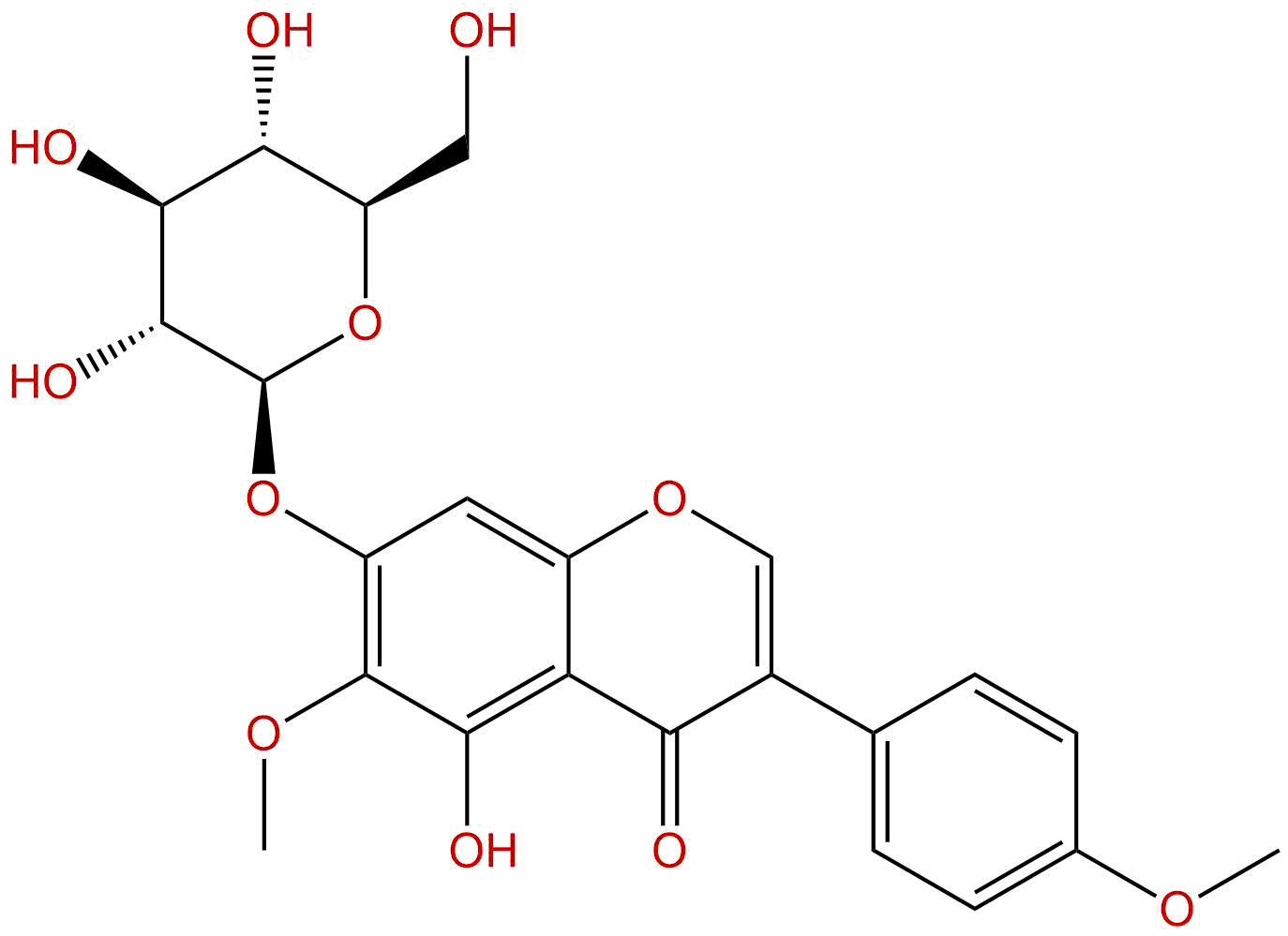


Product name: Irisolidone 7-O-glucoside
Synonym name: Kakkalidone
Catalogue No.: BP2209
Cas No.: 126308-74-5
Formula: C23H24O11
Mol Weight: 476.434
Botanical Source:
Type of Compound:
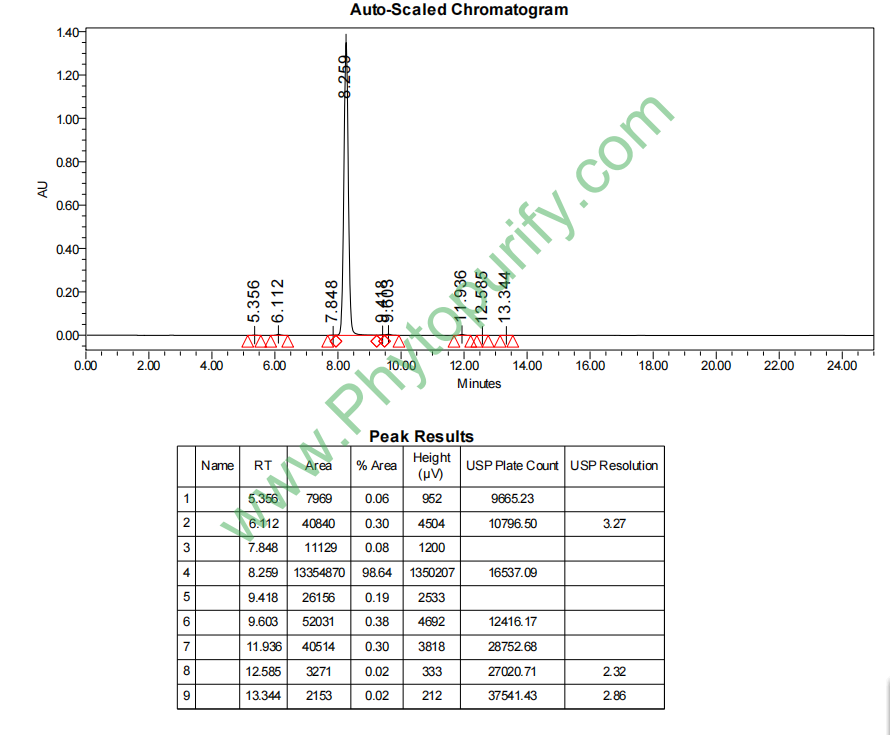
Purity: 95%~99%
Analysis Method: HPLC-DAD or/and HPLC-ELSD
Identification Method: Mass, NMR
Packing: Brown vial or HDPE plastic bottle
Storage: Store in a well closed container, protected from air and light. Put into refrigerate or freeze for long term storage.
Whenever possible, you should prepare and use solutions on the same day. However, if you need to make up stock solutions in advance, we recommend that you store the solution as aliquots in tightly sealed vials at -20℃. Generally, these will be useable for up to two weeks.
The product could be supplied from milligrams to grams
Inquire for bulk scale.
For Reference Standard and R&D, Not for Human Use Directly.
HPLC of Irisolidone 7-O-glucoside
Storage conditions:Short-term storage at 2~8℃, long-term storage at -20 ~ -80℃
Irisolidone 7-O-glucoside (CAS number 126308-74-5) is a natural flavonoid product mainly found in Pueraria lobata. As an important member of the isoflavone family, Nepalese irisin-7-glucoside has received widespread attention in recent years due to its significant biological activity, especially its hepatoprotective effect and efficient blocking ability on the Volume Regulated Anion Channel (VRAC). In addition, more and more studies reveal its potential application value in the field of anti diabetes, involving multiple key metabolic targets. This article aims to systematically review the chemical structure, plant origin, pharmacological activity, mechanism of action, pharmacological evaluation, and clinical application prospects of Nepalese irisin-7-glucoside, providing theoretical basis and reference for subsequent research and development.
Nepalese irisin-7-glucoside belongs to the class of isoflavones, with a molecular weight of 476.4340 and a molecular formula of C22H2O12. Its structural characteristics include a typical tricyclic isoflavone skeleton, where the 7-hydroxyl group is connected to glucose molecules through glycosidic bonds to form 7-O-glucoside. This glycosylation modification significantly affects its water solubility and bioavailability.
In terms of physical and chemical properties, the LogP value of Nepalese irisin-7-glucoside is 0.4561, indicating that it has low lipid solubility and a water solubility of 0.5576, demonstrating good water solubility. The polar surface area (TPSA) is 168.2800, and higher TPSA values are usually associated with poorer cell membrane permeability, which is also consistent with their low blood-brain barrier permeability. The hERG channel inhibition experiment showed a negative result, indicating a low risk of cardiac toxicity. The Ames test score is 0.9, indicating a low risk of genetic toxicity and good safety.
Nepalese irisin-7-glucoside is mainly distributed in the flowers of Pueraria lobata, which is the flower part of the leguminous plant Pueraria lobata. It is commonly used in traditional Chinese medicine to relieve fever, detoxify, and improve blood circulation. Ge Gen Hua is rich in various isoflavone compounds, among which Nepalese irisin-7-glucoside has a higher content and is one of its main active ingredients.
The extraction method usually uses alcohol extraction combined with liquid chromatography separation technology. The specific steps include:
1. Take dried kudzu root flowers and crush them. Use 70% ethanol for reflux extraction, and the extraction time is generally 2-3 hours.
2. After filtration and concentration, the extract is separated and purified using silica gel column chromatography or reverse phase high performance liquid chromatography (RP-HPLC).
3. Confirm the structure and purity through mass spectrometry (MS) and nuclear magnetic resonance (NMR).
In recent years, ultrasound assisted extraction and microwave-assisted extraction techniques have also been applied to improve extraction efficiency and purity, further promoting the research and development of this compound.
Nepalese irisin-7-glucoside exhibits significant hepatoprotective effects. Multiple in vitro and in vivo experiments have shown that this compound can effectively alleviate liver cell damage and inhibit the progression of liver fibrosis. Its liver protection mechanism mainly includes antioxidant stress, inhibition of inflammatory cytokine release, and regulation of cell apoptosis signaling pathways. For example, in a liver injury model, Nepalese irisin-7-glucoside can significantly reduce malondialdehyde (MDA) levels, increase superoxide dismutase (SOD) activity, and alleviate oxidative damage.
Nepalese irisin-7-glucoside has a highly effective blocking effect on volume regulated anion channels (VRAC), with an IC50 of approximately 9.8 μ M. VRAC plays a key role in cell volume regulation, apoptosis, and ion homeostasis, and its abnormal activation is associated with various diseases such as brain edema and tumor cell proliferation. Nepalese irisin-7-glucoside may regulate intracellular and extracellular ion balance by blocking VRAC, exerting a protective effect on cells, indicating its potential application value in the treatment of related diseases.
In recent years, the research of Nepalese iris flavin-7-glucoside in the field of anti diabetes has gradually increased. Its function involves multiple metabolic signaling pathways and targets, including AMPK (PRKAA1), SGLT2, GCK, PPARG, AKT1, DPP4, IRS1, SLC2A4, and PIK3R1. Experimental data show that this compound can regulate glucose metabolism, enhance insulin sensitivity, promote glucose uptake, inhibit the activity of diabetes related enzymes, thereby improving blood glucose levels and metabolic disorders. Its multi target mechanism provides a theoretical basis for the development of new anti diabetes drugs.
The pharmacological mechanism of Nepalese irisin-7-glucoside is complex, involving multiple molecular targets and signaling pathways.
AMPK signaling pathway
AMPK, as a key regulatory factor in cellular energy metabolism, participates in the regulation of glucose and lipid metabolism. Nepalese iris flavin-7-glucoside can activate AMPK, promote glucose uptake and fatty acid oxidation, improve insulin resistance, and play an anti diabetes role.
SGLT2 inhibition
SGLT2 is a transporter protein responsible for glucose reabsorption in the renal proximal tubules. Nepalese irisin-7-glucoside promotes urinary glucose excretion and lowers blood sugar by inhibiting SGLT2.
PPAR γ activation
PPAR γ is an important regulatory factor for adipocyte differentiation and insulin sensitivity. This compound activates PPAR γ, regulates lipid metabolism, and improves symptoms related to metabolic syndrome.
DPP4 inhibition
DPP4 can degrade glucagon like peptide-1 (GLP-1) and affect insulin secretion. Nepalese irisin-7-glucoside inhibits DPP4 activity, prolongs GLP-1 action time, and promotes insulin secretion.
Anion channel VRAC blockade
By blocking VRAC, regulating cell ion balance, reducing cell damage and apoptosis, protecting liver cells and other tissue cells.
The multi-target and multi pathway mechanisms mentioned above provide a molecular basis for the multiple pharmacological activities of Nepalese irisin-7-glucoside.
The pharmacological parameters of Nepalese irisin-7-glucoside indicate that it has certain potential for drug development. The molecular weight is 476.4340, which is within a reasonable range. The LogP value of 0.4561 indicates that it has strong hydrophilicity and is suitable for oral administration. The higher TPSA (168.2800) and lower blood-brain barrier permeability suggest that it mainly acts on peripheral tissues, reducing the risk of central nervous system side effects.
In terms of safety, the hERG channel inhibition test was negative, indicating a low risk of cardiac toxicity. The Ames test score is 0.9, indicating a low risk of genetic toxicity and good safety.
At present, there is limited research on the pharmacokinetics of irisin-7-glucoside in Nepal. Preliminary data indicates that the compound has good oral absorption, but due to its glycosidic structure, it may undergo hydrolysis under the action of gut microbiota, affecting its bioavailability. Further pharmacokinetic, metabolic pathway, and toxicological evaluations are needed in the future to clarify the safety and effective dosage of its clinical application.
Nepalese iris flavin-7-glucoside shows broad clinical application prospects by virtue of its significant liver protection, anti diabetes and anion channel blocking activities. Its potential therapeutic value in chronic liver disease, metabolic syndrome, diabetes and other diseases deserves further exploration.
Future research directions include:
- Pharmacokinetic and Toxicological System Research To provide safety and dosage basis for clinical trials.
- Structural modification and drug design By optimizing its drug properties through chemical modification, its bioavailability and targeting can be improved.
- In depth analysis of multi-target mechanism Combining omics techniques to reveal its functional network and promote the development of precise treatment strategies.
- Preclinical animal models and human clinical trials To verify its efficacy and safety, and promote clinical translation.
- Combination therapy research Explore synergistic effects with existing drugs to enhance treatment efficacy.
In addition, considering its low blood-brain barrier permeability, Nepalese irisin-7-glucoside is more suitable for treating peripheral metabolic diseases and reducing the risk of central nervous system side effects.
Nepalese iris flavin-7-glucoside, as an important isoflavone natural product in Pueraria lobata, has multiple pharmacological activities, especially in the field of liver protection and anti diabetes, showing good application potential. Its multi-target and multi mechanism mode of action provides a model for the pharmacological research of natural products. Although pharmacokinetics and clinical research are still in their infancy, with the development of modern drug research and development technology, Nepalese irisin-7-glucoside is expected to become a candidate molecule for new natural medicines, bringing new hope for the treatment of related diseases. In the future, it is necessary to strengthen basic and translational research, promote its transition from laboratory to clinical application, and maximize the value of natural products in modern medicine.
