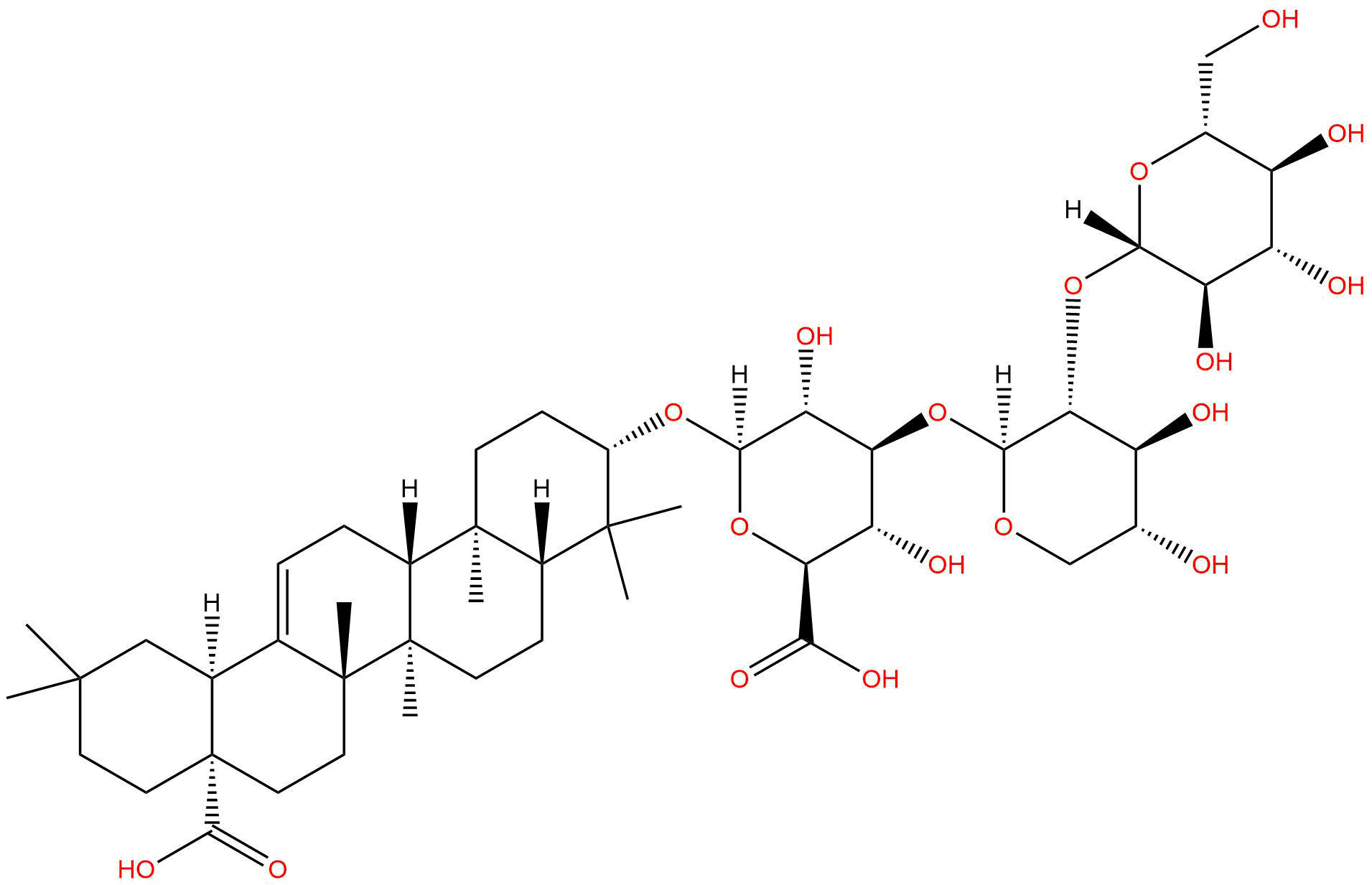


Product name: Oleanolic acid -3-O-glucosyl(1-2)xylyl(1-3)glucosiduronic acid
Synonym name:
Catalogue No.: BP4427
Cas No.: 1447508-78-2
Formula: C47H74O18
Mol Weight: 927.091
Botanical Source:
Type of Compound:
Purity: 95%~99%
Analysis Method: HPLC-DAD or/and HPLC-ELSD
Identification Method: Mass, NMR
Packing: Brown vial or HDPE plastic bottle
Storage: Store in a well closed container, protected from air and light. Put into refrigerate or freeze for long term storage.
Whenever possible, you should prepare and use solutions on the same day. However, if you need to make up stock solutions in advance, we recommend that you store the solution as aliquots in tightly sealed vials at -20℃. Generally, these will be useable for up to two weeks.
The product could be supplied from milligrams to grams
Inquire for bulk scale.
For Reference Standard and R&D, Not for Human Use Directly.
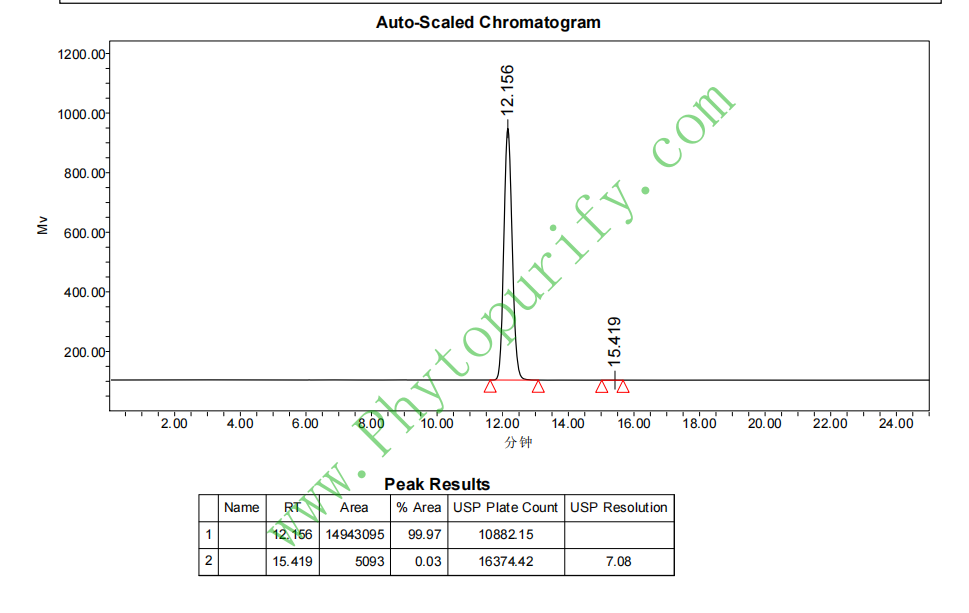
HPLC of Oleanolic acid -3-O-glucosyl(1-2)xylyl(1-3)glucosiduronic acid
Storage conditions:Short-term storage at 2~8℃, long-term storage at -20 ~ -80℃
291.8200
2.1915
-.7534
.1376
.5397
.1085
Low
84.9932
6.2504
No
No
Yes
No
Yes
No
0.0
Yes
No
No
No
Inflammation is a complex defense response of the body in response to infection, injury, or stress, and its precise regulation is crucial for maintaining internal environmental stability. However, uncontrolled chronic inflammation is the core pathological basis of many major diseases, including rheumatoid arthritis, atherosclerosis, neurodegenerative diseases and many cancers. Currently widely used non steroidal anti-inflammatory drugs (NSAIDs) and glucocorticoids in clinical practice have clear therapeutic effects, but long-term use often accompanies serious side effects such as gastrointestinal injury, cardiovascular risk, and metabolic disorders. Therefore, exploring novel anti-inflammatory lead compounds with high efficiency and low toxicity from natural products has always been an important direction in drug development. Due to its extensive and significant anti-inflammatory activity, quinine type pentacyclic triterpenoid saponins have become a research hotspot in the field of natural medicinal chemistry. Among them, 3-O-glucosinolate (Oleanolic acid-3-O-glucosyl (1-2) xylyl (1-3) glucuronic acid), as a structurally unique disaccharide chain saponin, has attracted much attention in recent years due to its multi-target and multi pathway regulatory effects in various inflammatory models. This article aims to provide a systematic review of the chemical characteristics, plant sources, pharmacological activities, molecular mechanisms of action, and potential medicinal properties of the saponin Ic from Kochia scoparia, in order to provide comprehensive scientific references for the in-depth research and development of this compound.
The chemical system name of Dioscorea scoparia saponin Ic is oleanolium-3-O-glucosyl (1-2) xylosyl (1-3) glucuronide, and its CAS number is 1447508-78-2. This compound belongs to the oleanane type pentacyclic triterpenoid saponin, and its parent nucleus is oleanolic acid. Its structural feature is that a complex disaccharide chain is connected to the hydroxyl group at position C-3 of the parent nucleus of oleanolic acid. This sugar chain is composed of a molecule of glucuronic acid and a molecule of glucose connected by specific glycosidic bonds. glucuronic acid is directly connected to the C-3 position of the nucleus through its C-1 position, while glucose is connected to the C-2 position of glucuronic acid through a β - (1 → 2) glycosidic bond. At the same time, a molecule of xylose is also connected to the C-3 position of glucuronic acid, forming a unique branched structure. This glycosylation pattern has a decisive impact on its water solubility, biological activity, and recognition of target proteins.
Its molecular formula is C ₄₇ H ₇₄ O ₁₈, and its molecular weight is 927.0910. The calculated lipid water partition coefficient (LogP) is 2.1915, indicating that the compound has a certain degree of lipophilicity. However, due to the presence of multiple hydrophilic hydroxyl and carboxyl groups in its molecule, its topological polar surface area (TPSA) is as high as 291.8200 Å ², which gives it an overall amphiphilic characteristic. The theoretically calculated water solubility value is 0.1376 mg/mL, which belongs to the category of slight solubility. This suggests that solubilization strategies may need to be considered in formulation development. Preliminary pharmacological predictions indicate that the compound has a low ability to cross the blood-brain barrier (BBB), which to some extent limits its direct effect on central nervous system inflammation, but may also reduce the potential risk of neurotoxicity. In addition, the predictive model showed no significant hERG potassium channel inhibitory activity (hERG inhibition: No), and the Ames test predicted a negative result (0.0), suggesting a low potential risk of arrhythmia and genotoxicity, providing preliminary positive signals for subsequent safety evaluation.
The main source of saponin Ic in Kochia scoparia is from the plant Kochia scoparia in the family Mucaceae(Kochia scoparia The dried and ripe fruit of (L.) Schrad, also known as the traditional Chinese medicine "Di Fu Zi". Di Fu Zi, as a commonly used traditional Chinese medicine, was first recorded in the "Shen Nong Ben Cao Jing". It has the effects of clearing heat and dampness, dispelling wind and itching, and is commonly used in clinical practice to treat skin inflammatory diseases such as eczema and urticaria. Modern plant chemistry research has confirmed that triterpenoid saponins are the main active ingredient group for the pharmacological effects of Kochia scoparia, and Kochia scoparia saponin Ic is one of the important representative components.
The extraction and isolation of saponins Ic from plant materials typically involves a multi-step combination process. Firstly, methanol, ethanol, or their aqueous solutions are often used to heat reflux or ultrasound assisted extraction of Kochia scoparia powder to fully extract the polar saponin components. Subsequently, the crude extract was preliminarily enriched and decolorized using macroporous adsorption resins (such as D101, AB-8, etc.), and gradient elution was performed with water and different concentrations of ethanol. Saponins are usually concentrated in the 30% -70% ethanol elution site. After obtaining the saponin enrichment site, various chromatographic techniques such as normal phase silica gel column chromatography, reverse phase silica gel column chromatography (such as ODS-C18), and high performance liquid chromatography (HPLC) need to be further used for fine separation and purification. Due to the presence of carboxyl groups in the Ic structure of Kochia scoparia saponins, a small amount of formic acid or acetic acid is often added to the mobile phase in reverse phase chromatography separation to improve peak shape and enhance separation efficiency. Structural identification involves the comprehensive use of mass spectrometry (MS, especially high-resolution mass spectrometry HR-MS), nuclear magnetic resonance (NMR, including two-dimensional spectra such as ¹ H-NMR, ¹ ³ C-NMR, HSQC, HMBC, etc.), and comparative methods with reference standards.
Numerous in vitro and in vivo pharmacological studies have confirmed that the saponin Ic from Kochia scoparia has broad and significant anti-inflammatory activity, covering various models such as acute inflammation, chronic inflammation, and immune inflammation.
In In vitro research Among them, the saponin Ic from Kochia scoparia can effectively inhibit the inflammatory response of macrophages (such as RAW264.7 cells) induced by lipopolysaccharide (LPS). Research has shown that this compound can significantly reduce the excessive production of nitric oxide (NO), prostaglandin E ₂ (PGE ₂), and key inflammatory factors such as tumor necrosis factor - α (TNF - α), interleukin-6 (IL-6), and interleukin-1 β (IL-1 β) in macrophages stimulated by LPS in a dose-dependent manner. In addition, in classic acute inflammation models such as rat paw swelling induced by carrageenan or histamine, and increased intra-abdominal capillary permeability induced by acetic acid in mice, intraperitoneal injection or gavage administration of dioscin Ic showed clear anti-inflammatory effects, reducing tissue edema and inflammatory exudation.
In more complex Chronic inflammation and immune inflammation models In addition, the saponin Ic from Kochia scoparia also showed therapeutic potential. For example, in a rat arthritis model induced by Freund's complete adjuvant (CFA), the compound can alleviate joint swelling, reduce synovial tissue inflammatory cell infiltration, and cartilage damage. Its anti-inflammatory effect is not limited to systemic inflammation. In skin inflammation models such as allergic contact dermatitis and atopic dermatitis, local or systemic administration of icariin Ic can effectively improve pathological manifestations such as skin redness, swelling, and thickening, and reduce the level of inflammatory mediators in local tissues. These studies collectively point out that the saponin Ic from Kochia scoparia is a natural compound with multi model and multi link anti-inflammatory activity.
The anti-inflammatory effect of icariin Ic is not achieved through a single pathway, but involves network regulation of multiple key inflammatory signal transduction nodes and molecular targets, which is highly consistent with its multi-target prediction results.
Inhibition of NF - κ B signaling pathway Nuclear factor kappa B (NF - κ B) is the core transcription factor in inflammatory response. Research has shown that saponin Ic from Kochia scoparia can inhibit LPS induced degradation of I κ B α protein, prevent the transfer of NF - κ B p65 subunit into the nucleus, and downregulate the expression of many downstream inflammatory mediator genes, including TNF - α, IL-6, inducible nitric oxide synthase (iNOS/NOS2), and cyclooxygenase-2 (COX-2/PTGS2). This may be one of the core mechanisms by which it exerts broad-spectrum anti-inflammatory effects.
Regulating MAPK and JAK-STAT pathways The mitogen activated protein kinase (MAPK) and Janus kinase signal transducer and activator of transcription (JAK-STAT) pathways are important pathways for inflammatory signaling. The saponin Ic from Kochia scoparia has been shown to inhibit the phosphorylation activation of p38 MAPK, JNK, and ERK induced by LPS. At the same time, it can interfere with the IL-6 mediated JAK-STAT3 signaling pathway, reduce the tyrosine phosphorylation and transcriptional activity of STAT3, which is of great significance for inhibiting chronic inflammation and inflammation related tumor growth.
Intervention in inflammasome activation The excessive activation of NLRP3 inflammasome is a key event leading to the mature release of IL-1 β and IL-18, which is associated with various autoimmune diseases. Preliminary studies suggest that the saponin Ic from Kochia scoparia may intervene in the inflammasome pathway by inhibiting the activation of CASP1 (Caspase-1) and reducing the conversion of pro-IL-1 β to mature IL-1 β.
Regulating ion channels and enzyme activity The compound has also been predicted or preliminarily validated to potentially act on transient receptor potential vanillic acid subtype 1 (TRPV1) and ANKTM1 (TRPA1) channels, which are involved in the regulation of pain and neurogenic inflammation. In addition, its direct or indirect inhibitory effects on cyclooxygenase-1 (COX-1/PTGS1) and inducible nitric oxide synthase (iNOS/NOS2) also contribute to its anti-inflammatory and analgesic effects.
In summary, the saponin Ic of Kochia scoparia forms a multi-level anti-inflammatory network by synergistically acting on multiple targets such as NF - κ B, STAT3, CASP1, PTGS1/2, NOS2, etc., providing a molecular basis for its treatment of complex inflammatory diseases.
Despite its excellent pharmacological activity, the drug like and pharmacokinetic (PK) properties of Kochia scoparia saponin Ic are the key factors determining its successful development as a drug.
Based on it Physicochemical properties The molecular weight is close to 1000 Da and the TPSA value is high, which is in line with the warning in the Rule of Five that oral absorption may pose challenges. A higher polar surface area and molecular weight may affect its transmembrane passive diffusion ability, resulting in lower expected oral bioavailability (BA). The characteristic of its slight solubility also requires the use of solubilization techniques such as nanocrystals, phospholipid complexes, and cyclodextrin inclusion complexes in pharmaceutical research to improve its solubility and absorption.
At present, there is a lack of information regarding the IC system of saponins in Kochia scoparia Pharmacokinetic study The report is not yet sufficient, which is a key information gap for the development of this compound. Based on the PK behavior of similar triterpenoid saponins, it is speculated that after oral administration, their sugar chains may be partially hydrolyzed by gut microbiota to generate secondary glycosides (such as oleanolic acid) that are absorbed, and the absorption of the original drug may be limited. After absorption, triterpenoid saponins usually have a high binding rate with plasma proteins, a moderate distribution volume, and are mainly metabolized by the liver. They may involve hydrolysis, oxidation, and binding reactions (such as glucuronidation and sulfation), and are ultimately excreted through bile and kidneys. Its lower BBB permeability prediction value is consistent with the distribution characteristics of most polar saponins.
In safety On the one hand, preliminary computer predictions (hERG inhibition negative, Ames test negative) provide optimistic prospects, but must be validated through standardized preclinical toxicology tests (such as acute toxicity, long-term toxicity, reproductive toxicity, etc.). Its multi-target mechanism of action not only brings therapeutic advantages, but also requires vigilance against potential off target effects and long-term medication safety issues.
As a natural compound with clear multi-target anti-inflammatory activity, Kochia scoparia saponin Ic has broad clinical application prospects, but also faces many challenges.
Potential application directions:
1. Skin inflammatory diseases: Originating from its traditional medicinal background, Kochia scoparia saponin Ic has natural advantages to be developed as a topical agent (such as cream, gel) for the treatment of chronic skin inflammation such as atopic dermatitis, psoriasis, eczema, etc. Local administration can avoid the problem of oral absorption and directly act on the target site.
2. Autoimmune diseases such as rheumatoid arthritis Its inhibitory effects on NF - κ B, STAT3, and inflammasomes suggest that it has therapeutic potential for diseases such as RA, and may be developed as an oral or injectable form. It needs to be studied in combination with anti rheumatic drugs (DMARDs) that can improve the condition.
3. Inflammation related pain By acting on the TRPV1/TRPA1 channel and inhibiting the COX-2/PGE2 pathway, this compound is expected to be developed as a novel analgesic and anti-inflammatory drug for the treatment of neuropathic pain, osteoarthritis pain, and other conditions.
4. Assisted anti-tumor therapy Given the close relationship between chronic inflammation and tumor development, its inhibitory effect on tumor related inflammatory pathways such as STAT3 and NF - κ B may be explored as a tumor immune microenvironment regulator or chemotherapy adjuvant drug.
Challenges faced and future research directions:
1. Pharmacokinetic and Formulation Research The primary task is to conduct comprehensive and systematic in vivo PK research to clarify its absorption, distribution, metabolism, and excretion characteristics. At the same time, it is necessary to invest in pharmaceutical research to improve its bioavailability and targeting through novel drug delivery systems such as nanoparticles, liposomes, and prodrug modifications.
2. Deep analysis of the mechanism of action Chemical biological methods such as affinity fishing, molecular docking, and gene knockout/knockdown techniques need to be used to accurately verify its direct interactions and specific sites of action with predicted targets such as STAT3, CASP1, TRP channels, etc.
3. Structure Activity Relationship (SAR) Study Systematically studying the effects of sugar chain structures (such as glucuronic acid, xylose, glucose units) on activity, selectivity, and pharmacokinetic properties, providing a basis for guiding structural optimization and obtaining derivatives with better activity or drug properties.
4. Preclinical and clinical research After completing sufficient pharmacological and safety evaluations, gradually advance clinical trials to verify its effectiveness and safety in humans.
3-O-glucose based triterpenoid saponin Ic is a structurally novel and highly active oleanane type triterpenoid saponin isolated from traditional Chinese medicine, Kochia scoparia. Modern pharmacological research has fully revealed the molecular basis for its therapeutic effects in various inflammatory models by intervening in multiple key signaling pathways such as NF - κ B, STAT3, and inflammasomes, reflecting the characteristic of multi-component and multi-target synergistic effects of natural products. Although there are challenges in developing drug properties such as oral bioavailability, these obstacles are expected to be overcome through in-depth structure-activity relationship studies, rational structural modifications, and advanced drug delivery technologies. In the future, with the development of systematic pharmacokinetic and toxicological studies, Kochia scoparia saponin Ic is expected to be developed as a new drug for the treatment of chronic inflammatory diseases, autoimmune diseases, and inflammation related pain. It will not only provide new treatment options for patients with related diseases, but also provide valuable examples for the modernization of traditional Chinese medicine and the research and development of innovative natural product drugs.
