Introduction/Overview
Neuroinflammation is a complex immune response of the central nervous system to various injuries, infections, or disease states, and is a common pathological feature of various neurological diseases such as Alzheimer's disease, Parkinson's disease, multiple sclerosis, cerebral ischemia-reperfusion injury, and chronic pain. Excessive or sustained neuroinflammatory reactions can lead to neuronal damage, synaptic dysfunction, and even cell death. Therefore, regulating neuroinflammation has become an important strategy for treating related neurological diseases. However, currently used anti-inflammatory drugs in clinical practice, such as nonsteroidal anti-inflammatory drugs and glucocorticoids, have significant limitations in penetrating the blood-brain barrier, targeting central specific inflammatory pathways, and avoiding systemic side effects. This has prompted researchers to turn their attention to natural products in order to discover lead compounds with novel structures, unique activities, and better safety.
Neocindilide (CAS number: 4567-33-3), as a naturally occurring gamma lactone compound, has attracted much attention in recent years due to its multi-target and multi pathway inhibitory activity in the regulation of neuroinflammation. Early research mainly focused on the traditional medicinal value of the Umbelliferae family snake bed genus, which is its plant source. Modern pharmacological studies have gradually revealed the potential of its core active ingredient, new snake bed lactone, in anti-inflammatory, analgesic, neuroprotective and other aspects. Especially its regulatory effect on key neuroinflammatory signaling nodes such as AMPK, TLR4, NF - κ B, and NLRP3 inflammasome provides a solid scientific basis for its application in the treatment of neurodegenerative diseases and neuropathic pain. This article aims to systematically review the chemical properties, plant sources, pharmacological activities, molecular mechanisms of action, pharmacological characteristics, and clinical application prospects of the new snake bed lactone, in order to provide comprehensive references for the in-depth research and development of this natural product.
Chemical structure and physicochemical properties
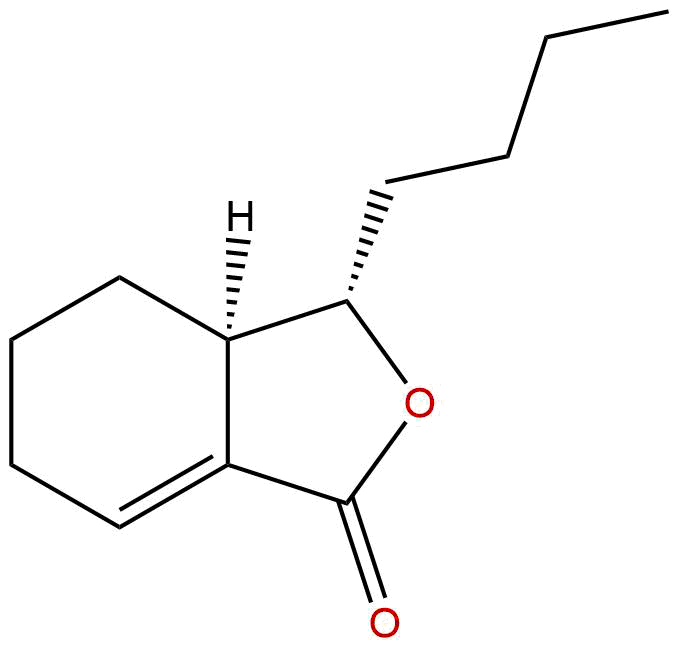
The chemical name of the new snake bed lactone is (3Z, 6Z) -3-ethylene-6- (1-methylethylene) -2-oxohexanone, which is a typical phthalide derivative and belongs to the gamma lactone structure. Its molecular formula is C12H18O2 and its molecular weight is 194.2740. Structurally, its core is a five membered lactone ring (γ - lactone) with specific unsaturated olefin side chains attached to it. This unique structure is the material basis for its biological activity.
Based on its chemical structure, the new snake bed lactone exhibits typical lipophilic characteristics. The calculated lipid water partition coefficient (LogP) is 3.4715, indicating that the compound has good lipid solubility, which is closely related to its ability to effectively penetrate cell membranes and the blood-brain barrier. Its topological polar surface area (TPSA) is relatively low, only 26.3000 Å ², further confirming its low molecular polarity and strong transmembrane transport ability. The water solubility parameter shows that its solubility in water is about 0.1396 mg/mL, which belongs to the category of slightly soluble to poorly soluble. This suggests that in the process of formulation development, it may be necessary to consider the use of solubilization technology or suitable drug delivery carriers.
Of particular importance, preliminary pharmacological prediction analysis indicates that the new snake bed lactone has a high blood-brain barrier permeability, which is crucial for its anti-inflammatory effects in the central nervous system. In addition, the key toxicity risk screening results showed that the hERG channel inhibition risk was negative, and the Ames mutagenicity test predicted a value of 0.0 (negative). These data preliminarily suggest that the new snake bed lactone has a relatively good cardiac safety and genetic toxicity safety spectrum, laying a favorable physicochemical and safety foundation for its subsequent development.
Plant sources and extraction methods
The new snake bed lactone mainly comes from the Apiaceae snake bed genus in the family Apiaceae(Cnidium)Plants, including snake beds(Cnidium monnieri The fruit of (L.) Cusson (often referred to as "snake bed") is the main source. Snake bed seeds, as a traditional Chinese medicine, have the effects of drying dampness, dispelling wind, killing insects and itching, warming the kidneys and strengthening yang. They are commonly used in clinical Chinese medicine to treat conditions such as eczema, vaginal itching, and erectile dysfunction. Modern plant chemistry research has isolated and identified various benzophenone active ingredients, including new snake bed lactones and Osthole, from the volatile oil and lipid soluble parts of snake bed seeds. These ingredients are considered important material basis for their pharmacological effects.
In addition to the snake bed, the new snake bed lactone is also found in other plants of the same family, such as Ligusticum chuanxiong(Ligusticum chuanxiong Hort.)、 Angelica sinensis(Angelica sinensis A small amount of (Oliv. Diels) was found, but the content was relatively low. The content of new snake bed lactone varies in different regions, harvesting seasons, and medicinal parts (such as fruits and rhizomes), and is usually higher in dried and mature fruits.
In terms of extraction and separation, the following methods are currently mainly used:
1. Solvent extraction method The most commonly used method is to use organic solvents (such as petroleum ether, ethyl acetate, ethanol, etc.) for reflux extraction or cold soaking extraction of dried snake bed powder. Due to the strong lipophilicity of the new snake bed lactone, low polarity solvents such as petroleum ether can effectively extract volatile oils and phthalates.
2. Supercritical fluid extraction method The use of supercritical CO ₂ as an extractant has the advantages of high efficiency, low solvent residue, and friendliness towards thermally unstable components, making it an advanced method for obtaining high-purity new snake bed lactones. By adjusting parameters such as pressure and temperature, extraction selectivity can be optimized.
3. steam distillation The traditional method for extracting volatile oils, but the content of new snake bed lactones in volatile oils is limited, and high temperatures may cause changes in some components. Currently, this method is mostly used as an auxiliary or preliminary extraction method.
4. Separation and purification The crude extract is further separated and purified using chromatographic techniques such as silica gel column chromatography, preparative thin-layer chromatography, high-performance liquid chromatography (HPLC), or gas chromatography (GC) to obtain high-purity new snake bed lactone monomers for research.
Pharmacological activity research
Numerous in vitro and in vivo pharmacological experiments have confirmed that the new snake bed lactone has a wide range of biological activities, with its core pharmacological effects focused on anti-inflammatory, neuroprotective, and analgesic fields.
1. Anti neuroinflammatory activity
This is the core activity of the new snake bed lactone that has received the most attention. In lipopolysaccharide (LPS) - induced inflammation models of small glial cells (BV2 cells) or macrophages (RAW264.7 cells), new snake bed lactone can dose dependently inhibit the production of inflammatory mediators such as nitric oxide (NO) and prostaglandin E2 (PGE2). Meanwhile, it can significantly downregulate the protein and mRNA expression levels of inducible nitric oxide synthase (iNOS) and cyclooxygenase-2 (COX-2). In animal models, such as LPS induced systemic inflammation mouse models or Alzheimer's disease mouse models induced by intracerebral injection of A β, pretreatment with new snake bed lactone can effectively reduce microglial activation, astrocyte proliferation, and overexpression of inflammatory factors (such as TNF - α, IL-1 β, IL-6) in brain tissue, improving cognitive dysfunction in animals.
2. Neuroprotective effect
The neuroprotective effect of new snake bed lactone is closely related to its anti-inflammatory activity. In glutamate induced excitotoxicity models of PC12 cells or primary cortical neurons, neoserpentinite can increase cell survival rate, reduce lactate dehydrogenase (LDH) leakage, and inhibit cell apoptosis. In the model of ischemia-reperfusion brain injury in vivo, the treatment with new snake bed lactone can reduce the volume of cerebral infarction, alleviate brain edema, and improve neurological deficit scores. Its protective mechanism involves multiple aspects such as inhibiting oxidative stress, reducing calcium overload, maintaining mitochondrial function, and resisting apoptosis.
3. Analgesic effect
New snake bed lactone has shown analgesic effects in various pain models, especially in neuropathic pain and inflammatory pain. In neuropathic pain models induced by chronic compression injury of the sciatic nerve (CCI) or spinal nerve ligation (SNL), neocobra lactone can significantly increase the mechanical and thermal pain thresholds of animals. Its analgesic effect is not only due to its strong anti-inflammatory ability, which reduces neuroinflammation, but also related to its direct regulation of pain related ion channels (such as TRPV1) and neurotransmitter systems.
4. Other activities
In addition, the study also suggests that the new snake bed lactone may have potential activities such as anti-tumor, antibacterial, and vasodilatory effects, but research in these areas is still in the preliminary stage, and its core position as a neuroinflammatory inhibitor is more clear.
Mechanism of action and molecular targets
The anti neuroinflammatory effect of new snake bed lactone is not achieved through a single target, but through regulating a complex signaling network that acts on multiple key molecular targets. Its core mechanism can be summarized as follows:
1. Activate the AMPK signaling pathway
Adenosine activated protein kinase (AMPK) is a core hub for cellular energy metabolism and inflammation regulation. The new snake bed lactone has been confirmed to be an activator of AMPK (composed of subunits such as PRKAA1). The activation of AMPK can phosphorylate and inhibit the activity of its downstream targets mammalian rapamycin target protein (mTOR) and nuclear transcription factor - κ B (NF - κ B), thereby suppressing the transcription of inflammatory factors. AMPK activation can also promote autophagy, clear damaged organelles and misfolded proteins, and alleviate inflammatory stress.
2. Inhibit the classic inflammatory pathway of TLR4/NF - κ B
Toll like receptor 4 (TLR4) is a key receptor that recognizes patterns of pathogen associated molecules such as LPS. The new snake bed lactone can interfere with the binding of TLR4 to its adaptor protein, or downregulate the expression of TLR4, thereby blocking its downstream signaling. The downstream key node of this signal is the IKK complex (including IKBKB). New snake bed lactone can inhibit the activity of IKBKB, prevent the phosphorylation and degradation of I κ B α, and retain NF - κ B (mainly composed of RELA/p65 subunits) in the cytoplasm, preventing it from entering the nucleus and initiating the transcription of many inflammatory genes such as TNF - α, IL-1 β, IL-6, iNOS (NOS2 encoded), etc.
3. Inhibit NLRP3 inflammasome activation
The NLRP3 inflammasome is an important inflammatory response platform within cells, and its assembly activation leads to the shear activation of Caspase-1 (CASP1), thereby promoting the maturation and release of IL-1 β and IL-18. Research has shown that the new snake bed lactone can inhibit the assembly of NLRP3 inflammasomes, reduce the activity of Caspase-1, and decrease the production of mature IL-1 β. This effect may be related to its inhibition of NF - κ B (which controls the transcription of NLRP3 and pro-IL-1 β) and regulation of upstream signals such as mitochondrial reactive oxygen species (mtROS) and potassium ion efflux.
4. Adjust pain related targets
Transient receptor potential vanillic acid subtype 1 (TRPV1) is a key ion channel mediating thermal pain and inflammatory pain. New snake bed lactone may act as a regulator of TRPV1, inhibiting its excessive activation and reducing the transmission of nociceptive signals. In addition, the α 7 nicotinic acetylcholine receptor (α 7nAChR, encoded by CHRNA7) is the core receptor of the cholinergic anti-inflammatory pathway. Some studies speculate that the new snake bed lactone may directly or indirectly affect α 7nAChR, activate this pathway, and inhibit the inflammatory response of macrophages and microglia.
5. Potential impact on Tau protein
The abnormal excessive phosphorylation and aggregation of microtubule associated protein Tau (MAPT) are characteristics of Tau protein diseases such as Alzheimer's disease. Neuroinflammation can exacerbate Tau pathology. Some studies suggest that the new snake bed lactone may indirectly reduce the abnormal phosphorylation of Tau protein through its anti-inflammatory and possible direct kinase regulatory effects, but its direct target still needs to be clarified.
In summary, the new snake bed lactone passes through Activate AMPK、Inhibition of TLR4/NF - κ B and NLRP3/CASP1 These three core pathways, supplemented by TRPV1、CHRNA7 The regulation of pain and anti-inflammatory targets forms a multidimensional and synergistic anti neuroinflammatory network, providing strong mechanistic support for its treatment of complex neurological diseases.
Evaluation of drug properties and pharmacokinetics
Based on the physical and chemical parameters and preliminary toxicity predictions mentioned earlier, the new snake bed lactone exhibits certain potential for drug development, but its comprehensive pharmacokinetic characteristics and in vivo fate still require systematic research.
Preliminary pharmacokinetic study:
Existing limited pharmacokinetic studies (mainly based on animal experiments) have shown that the new snake bed lactone can be absorbed in the gastrointestinal tract after oral administration, but its absolute bioavailability is limited by its low water solubility. Due to its high lipid solubility and low molecular weight, it can be well distributed to various tissues and organs, especially its High blood-brain barrier permeability This has been experimentally validated as a key advantage in its central role. The metabolism in the body may mainly undergo oxidative metabolism through the liver cytochrome P450 enzyme system (such as CYP3A4, CYP2C9, etc.), and its prototype and metabolites may be excreted through urine and bile. However, there is still a lack of complete data on key pharmacokinetic parameters such as detailed metabolite profiles, major metabolic enzymes, half lives, and clearance rates.
Pharmaceutical advantages:
1. Novel structure As a natural gamma lactone, its structure is different from synthetic anti-inflammatory drugs and may have new modes of action.
2. Multi-target effect Targeting multiple links in the neuroinflammatory network may result in synergistic effects and reduce the risk of drug resistance.
3. Good BBB penetration Can effectively reach the central action site.
4. Preliminary safety is good There is no obvious hERG inhibition or genotoxicity warning signal.
Challenges and improvement directions:
1. Poor water solubility: Affects oral absorption and formulation development. The strategy includes: preparing nanocrystals, liposomes, cyclodextrin inclusion complexes, solid dispersions, etc; Or perform prodrug modification, such as introducing water-soluble functional groups.
2. Pharmacokinetic properties unknown A systematic study of ADME (absorption, distribution, metabolism, excretion) is needed to clarify its in vivo processes and provide a basis for drug administration design.
3. Potential metabolic stability issues The lactone ring may be susceptible to esterase hydrolysis in vivo, and its metabolic stability needs to be evaluated or improved through structural modification.
4. In vivo potency and therapeutic window It is necessary to determine the effective dose range and safety window in animal models that are closer to human diseases.
5. Natural source restrictions Extracting content from plants is limited and costly. In the future, large-scale supply can be achieved through total synthesis or biosynthesis (such as microbial fermentation) pathways.
Clinical application prospects and prospects
As a natural lead compound with clear anti neuroinflammatory activity, the clinical application prospects of new snake bed lactone mainly revolve around neurological diseases.
Potential indications:
1. Neurodegenerative diseases Such as Alzheimer's disease (AD) and Parkinson's disease (PD). By inhibiting chronic inflammation mediated by microglia in the brain, slowing down inflammatory damage around A β plaques and Tau protein pathology, or protecting dopaminergic neurons, it is expected to delay disease progression.
2. Neuropathic Pain: such as diabetes peripheral neuralgia, post herpetic neuralgia, etc. Developing novel analgesic drugs by inhibiting neuroinflammation in the spinal cord and dorsal root ganglia, and regulating pain targets such as TRPV1.
3. Neurological injury after cerebral ischemia/stroke Reduce secondary inflammatory reactions after ischemia-reperfusion, expand the treatment time window, and promote neurological function recovery.
4. Multiple sclerosis As an immunomodulatory agent, it may help control central inflammation and demyelinating lesions during disease recurrence.
5. Other inflammation related central diseases Such as depression (related to neuroinflammation), traumatic brain injury, etc.
Development Strategy and Prospects:
1. lead optimization Conduct systematic structure-activity relationship studies and structural modifications using new snake bed lactone as the parent nucleus. Intended to improve its water solubility, metabolic stability, target selectivity (such as enhancing selectivity for specific pathways), and in vivo activity, while reducing potential toxicity.
2. Development of compound preparations Combining the holistic concept of traditional Chinese medicine, exploring compound formulations of new snake bed lactones with other active ingredients in snake bed seeds (such as snake bed extract) or other drugs with synergistic effects may produce better therapeutic effects and reduce single drug doses.
3. Application of new drug delivery system By utilizing nanotechnology (such as polymer nanoparticles, liposomes) or brain targeted delivery systems (such as modified blood-brain barrier transporter ligands), the delivery efficiency within the brain can be further improved to achieve precise treatment.
4. In depth mechanism exploration Using chemical biology methods such as photoaffinity labeled probes and proteomics to identify their direct targets of action; Utilize advanced models such as organoids and genetically modified animals to validate their role in complex disease networks.
5. Preclinical and clinical translation After completing the drug efficacy evaluation and GLP toxicology research of the system, actively promote preclinical studies and clinical trials that comply with regulations, and ultimately verify its safety and efficacy in humans.
Conclusion
New snake bed lactone is a natural gamma lactone compound with important research value discovered from traditional Chinese medicine snake bed seeds. Its significant anti neuroinflammatory activity stems from its synergistic regulation of multiple key signaling pathways such as AMPK, TLR4/NF - κ B, NLRP3 inflammasome, and has good blood-brain barrier penetration ability. These characteristics demonstrate broad potential in the treatment of major neurological disorders such as Alzheimer's disease, neuropathic pain, and stroke. Although there are still challenges in drug formulation such as water solubility and systemic pharmacokinetics, these challenges are expected to be gradually overcome through the intervention of modern medicinal chemistry, pharmacy, and pharmacology methods. In the future, with more detailed analysis of its mechanism of action, the emergence of structurally optimized products, and innovation in delivery technology, the new snake bed lactone is expected to develop from an excellent natural lead compound into a new drug for treating neuroinflammatory related diseases, providing new solutions for human nervous system health. In depth research on it not only helps to clarify the modern scientific connotation of traditional Chinese medicine snake bed, but also serves as a successful example of finding innovative drugs from the treasure trove of natural products.