Introduction/Overview
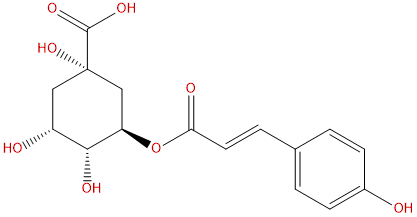
In the field of natural product chemistry and pharmacology research, phenolic acid compounds derived from plants have attracted much attention due to their extensive biological activity and low toxicity. Among them, the ester derivatives formed by quinic acid and cinnamic acid, as important products of plant secondary metabolism, are widely present in various medicinal plants and exhibit diverse pharmacological potentials. 3-O-Coumaroylquinic acid (3-CQA), also known as 5-p-p-Coumaroylquinic acid (CAS: 1899-30-5), is an important member of this class of compounds. It is formed by the condensation of the carboxyl group of coumaric acid (4-coumaric acid) with the 5-hydroxy group of quinic acid (usually (-) - quinic acid) through esterification reaction.
In recent years, with the development of high-throughput screening and molecular biology techniques, the antiviral activity of 3-CQA has gradually become a research hotspot. Preliminary studies have shown that it not only exhibits inhibitory potential against various viruses such as herpes virus and human immunodeficiency virus (HIV), but its effects may involve multiple key targets in the virus replication cycle, such as viral DNA polymerase, protease, integrase, and host cell chemokine receptors. This demonstrates unique value in the development of antiviral drugs, especially in dealing with drug-resistant virus strains. In addition, as one of the isomers of chlorogenic acid compounds, 3-CQA may also share or have its unique auxiliary pharmacological effects such as antioxidant and anti-inflammatory effects.
This article aims to provide a systematic review of the chemical structure, plant origin, pharmacological activity, especially the antiviral mechanism and potential molecular targets of 3-CQA. Combined with its pharmacological parameters, the clinical application prospects of 3-CQA are also discussed, in order to provide scientific references for the in-depth research and development of this natural product.
Chemical structure and physicochemical properties
3-O-hydroxycinnamoylquinic acid is a typical cinnamic acid ester compound, with a molecular formula of C16H18O8 and a molecular weight of 338.3120. Structurally, it is composed of a quinic acid (cyclohexanecarboxylic acid) core and a p-coumaroyl (4-hydroxycinnamoyl) side chain connected by ester bonds. It should be noted that according to the IUPAC nomenclature and common literature, the compound "5-p-p-choumaroylquinic acid" usually refers to the attachment of the p-coumaroyl group to the 5-hydroxy group of quinic acid, which differs from the name "3-O-p-hydroxycinnamoylquinic acid" in terms of numbering due to the chiral center numbering rules or different naming systems of quinic acid. The compound described in this article (CAS: 1899-30-5) is clearly identified in most databases as a structure in which the coumarin group is connected to the 5-hydroxy group of quinic acid, and is a structural analogue of chlorogenic acid (5-caffeoylquinic acid), with the only difference being the substituent on the benzene ring (which is a hydroxyl group rather than the 3,4-dihydroxy group of caffeic acid).
Its physical and chemical properties determine its bioavailability and functional characteristics. The calculated or experimentally measured parameters related to drug properties show that the logarithm of its lipid water partition coefficient (LogP) is approximately -0.1092, indicating that the compound has hydrophilicity and tends to partition in the aqueous phase. The topologically polar surface area (TPSA) is as high as 144.52 Å ², which is closely related to the presence of multiple polar groups such as hydroxyl and carboxyl groups in its molecule, and also suggests its poor membrane permeability. The water solubility value is 3.7343 (usually measured in mg/mL or log mol/L, indicating moderate to high solubility), further confirming its excellent hydrophilic properties. These properties collectively affect its absorption, distribution, metabolism, and excretion (ADME) processes within living organisms.
Plant sources and extraction methods
3-CQA is widely distributed in higher plants and is one of the products of the phenylpropane metabolic pathway in plants. It is commonly found in various edible and medicinal plants, especially in plant families such as Asteraceae, Rosaceae, and Fabaceae. For example, it has been detected in the seeds and seedlings of sunflowers (Helianthus annuus), the leaves of thistle (Cynara scolymus), and various Artemisia plants. In addition, it is also one of the components of chlorogenic acid compounds in many Chinese medicinal herbs and tea leaves (such as chrysanthemum, honeysuckle, echinacea, etc.), often coexisting with caffeoylquinic acid, dicaffeoylquinic acid, etc.
Solvent extraction is commonly used to extract 3-CQA from plant materials. Due to its strong polarity, methanol, ethanol, acetone water mixed solutions, or hot water are commonly used extraction solvents. In order to improve extraction efficiency and selectivity, modern extraction techniques such as ultrasound assisted extraction, microwave-assisted extraction, and pressurized liquid extraction have also been applied. These methods destroy plant cell walls through physical means, accelerate solvent penetration and target compound dissolution, and can achieve higher extraction rates in a shorter time and at lower temperatures.
The crude extract after extraction usually requires further separation and purification to obtain high-purity 3-CQA. Column chromatography is the mainstream method, which often uses silica gel, macroporous adsorption resin (such as AB-8, D101), polyamide or dextran gel (Sephadex LH-20) as the stationary phase, and uses chloroform methanol, ethyl acetate methanol water or pure water ethanol systems with different proportions for gradient elution. High performance liquid chromatography (HPLC), especially preparative HPLC, is the ultimate effective means of obtaining chromatographically pure monomers. The common method for analyzing and identifying this compound is to use a reverse phase C18 chromatography column combined with a UV detector (which has characteristic absorption of coumaril at around 310 nm). Structural identification requires the comprehensive use of nuclear magnetic resonance (NMR, especially 1H NMR and 13C NMR), mass spectrometry (MS), and optical rotation measurement techniques.
Pharmacological activity research
Although the pharmacological activity research of 3-CQA is not as in-depth as its isomer caffeoylquinic acid, there is evidence that it has multiple biological activities, among which antiviral activity is the most prominent.
1. Antiviral activity
This is the most promising pharmacological research direction for 3-CQA. Research suggests that it has inhibitory effects on various viral models:
- Antiherpesvirus Research has shown that plant extracts containing 3-CQA or the compound itself have inhibitory effects on herpes simplex virus types 1 (HSV-1) and 2 (HSV-2). Its function may involve interfering with early viral replication events, such as virus entry or gene expression.
- Anti human immunodeficiency virus (HIV)Computer simulations (in silico) and some in vitro experiments have shown that 3-CQA may inhibit HIV replication by acting on key viral enzymes such as HIV-1 protease (HIV1-PR) and integrase (INT), or by blocking the virus from entering cells using host cell co receptors CCR5 and CXCR4. Its structure is similar to some known HIV entry inhibitors.
- Other viruses There have been sporadic reports on its resistance to cytomegalovirus, influenza virus, etc., but the mechanism is still unclear.
2. Antioxidant and anti-inflammatory activities
As a phenolic acid compound, 3-CQA has the ability to scavenge free radicals (such as DPPH, ABTS free radicals) and reduce metal ions, exhibiting certain in vitro antioxidant activity. The antioxidant effect is usually associated with anti-inflammatory activity. By inhibiting inflammatory signaling pathways such as nuclear factor kappa B (NF - κ B), downregulating the expression of cyclooxygenase-2 (COX-2) and inducible nitric oxide synthase (iNOS), and reducing the production of pro-inflammatory cytokines such as TNF - α and IL-6, 3-CQA may play a protective role in chronic inflammatory diseases.
3. Other potential activities
Some studies also suggest that 3-CQA may have mild antibacterial, hepatoprotective, and neuroprotective effects, but these activities are mostly based on crude extract studies and require further validation of monomeric compounds.
Mechanism of action and molecular targets
3-CQA, Especially its antiviral activity is believed to be achieved through interactions with multiple viruses or host targets. According to existing research, its potential mechanisms of action and molecular targets can be summarized as follows:
1. Direct inhibition of viral enzymes
- Virus DNA polymerase and its auxiliary proteins In herpes viruses such as HSV-1, viral DNA polymerase (encoded by the UL30 gene) and its processing factor UL42 are key replicators. Research has shown that certain phenolic compounds can inhibit their activity. 3-CQA may interfere with viral DNA synthesis through a similar mechanism. In addition, potential effects on viral thymidine kinase (TK) may also interfere with nucleotide metabolism.
- HIV key enzyme Molecular docking studies have shown that 3-CQA can effectively embed into the active pocket of HIV-1 protease (HIV1-PR), forming hydrogen bonds and other interactions with the catalytic site amino acids, which may competitively inhibit the enzyme's cleavage of viral precursor proteins. Similarly, it may also bind to the active site of HIV integrase (INT), preventing the integration of viral DNA into the host genome.
2. Interference with the interaction between viruses and host cells
- Block virus entry For HIV, after the viral envelope glycoprotein gp120 binds to the host cell CD4 receptor, it needs to further bind to the co receptors CCR5 or CXCR4 to mediate membrane fusion. 3-CQA may act as a small molecule antagonist, binding to specific regions of these chemokine receptors to prevent virus gp120 from binding to them, effectively blocking virus entry into cells. This is a highly attractive mechanism for its anti HIV effect.
- Inhibition of viral gene expression For HSV-1, the immediate early protein ICP27 is an important posttranscriptional regulator. Interference with the function of ICP27 can seriously affect viral gene expression and replication. It is worth exploring whether 3-CQA affects the function of such regulatory proteins.
3. Regulating host immunity and oxidative stress response
- Myeloperoxidase (MPO)MPO is an enzyme released by neutrophils during inflammation, which can produce strong oxidative hypochlorous acid and participate in antimicrobial defense. However, excessive activation can also lead to tissue damage. 3-CQA may exert indirect antiviral and organ protective effects by inhibiting MPO activity, reducing oxidative stress damage caused by viruses or inflammation.
- Anti inflammatory pathway By inhibiting classic inflammatory pathways such as NF - κ B, reducing the excessive inflammatory response (cytokine storm) of host cells caused by viral infection, it can help improve disease prognosis.
It should be emphasized that the interactions between most of the above targets (such as UL42, ICP27, gD, CCR5, CXCR4, etc.) and 3-CQA are currently mostly based on computational biology predictions, related compound activity analogies, or crude extract studies. Accurate and direct binding experiments and detailed structure-activity relationships still need to be confirmed by more in-depth biochemical and cell biology research.
Evaluation of drug properties and pharmacokinetics
Based on its physicochemical parameters and preliminary in vitro data, the pharmacological properties of 3-CQA can be preliminarily evaluated
Absorption and distribution A higher TPSA (>140 Å ²) and hydrophilicity (LogP<0) suggest that its oral bioavailability may be lower. Hydrophilic molecules are often difficult to passively diffuse through the lipid bilayer membrane of intestinal epithelial cells. Its blood-brain barrier (BBB) permeability is predicted to be "low", which is consistent with the characteristics of most polar phenolic compounds, meaning that it may not easily enter the central nervous system, which is an adverse factor for treating central nervous system viral infections, but may also reduce potential central nervous system side effects.
Metabolism and excretion As an ester compound, 3-CQA is easily hydrolyzed by esterases (such as carboxylesterases) in the body, producing quinic acid and p-coumaric acid. Xiangdou acid can be further metabolized into products such as hippuric acid and excreted through urine. This rapid hydrolysis may be the main reason why its in vivo activity is lower than its in vitro activity, and it is also the main challenge faced in developing such compounds as oral drugs. Quinic acid may be directly excreted through the kidneys or participate in small amounts of metabolism.
Safety and Toxicity Preliminary in vitro safety indicators show optimism. Its hERG inhibitory activity is' no ', indicating a low risk of causing QT interval prolongation and apical torsion ventricular tachycardia in the heart. The Ames test result is 0.0 (usually indicating no mutagenicity), indicating no signs of genetic toxicity in the testing system used. However, this is only a preliminary screening, and comprehensive preclinical safety evaluations (such as acute toxicity, chronic toxicity, reproductive toxicity, etc.) have not yet been reported.
Optimization direction of drug properties Possible strategies to enhance its medicinal properties include: ① Structural modification By preparing prodrugs (such as esterified carboxyl or hydroxyl groups to improve lipid solubility and membrane permeability, hydrolyzed back to the original drug in vivo), or optimizing the skeleton to enhance the stability of metabolic enzymes. ② Innovation in drug delivery routes Develop non oral routes of administration, such as topical use (for herpes virus infections on the skin or mucous membranes), inhalants, or injections, to bypass first pass effects and intestinal degradation. ③ Application of Formulation Technology Using nanocarriers (such as liposomes, polymer nanoparticles), cyclodextrin inclusion and other technologies to improve their solubility, stability and targeted delivery efficiency.
Clinical application prospects and prospects
As a naturally derived antiviral lead compound, 3-CQA has both clinical application prospects and challenges.
Potential application areas:
1. antiviral therapy As a lead compound for novel antiviral drugs, it is particularly suitable for herpes virus (HSV, VZV) and HIV infections that have developed resistance to existing drugs. Its multi-target mechanism of action may help delay the development of drug resistance. It can be considered for development as a topical preparation for the treatment of genital herpes or oral herpes, or as a supplementary ingredient for HIV combined antiretroviral therapy (cART).
2. Assistive therapy and healthcare By utilizing its antioxidant and anti-inflammatory properties, it can be used as an adjuvant therapeutic ingredient for chronic inflammatory diseases such as metabolic syndrome and hepatitis, or as a functional food and health supplement to enhance the body's immunity and reduce oxidative damage.
3. combination therapy When used in combination with other antiviral drugs or immune modulators, it may produce a synergistic effect, reduce their respective dosages, and minimize toxic side effects.
challenges faced:
1. Activity intensity and selectivity At present, the reported in vitro antiviral activity is mostly at the micromolar level, and its potency needs further optimization and improvement. At the same time, it is necessary to clarify its selectivity towards host cell targets to ensure a sufficiently safe therapeutic window.
2. Pharmacokinetic bottleneck As mentioned earlier, poor oral absorption and rapid metabolism are the main obstacles to its conversion into orally effective drugs.
3. Fuzzy mechanism of action Most potential targets have not been rigorously validated at the molecular and cellular levels, and the mechanism of action network needs to be clearly delineated.
4. Natural source restrictions Obtaining high-purity 3-CQA in large quantities from plants is costly and requires the development of efficient chemical or biological synthesis methods (such as microbial fermentation) to meet subsequent research and development needs.
Future research directions:
Future research should focus on: ① using chemical and biological methods (such as affinity chromatography and photo crosslinking probes) to identify their direct targets and elucidate their precise mechanisms of action; ② Conduct systematic structure-activity relationship (SAR) research, synthesize a series of derivatives through rational drug design, optimize their activity, metabolic stability, and oral bioavailability; ③ Evaluate its in vivo efficacy and safety in more mature animal infection models, such as HSV infected mouse models and humanized mouse HIV models; ④ Explore advanced drug delivery systems to overcome delivery challenges posed by their physicochemical properties.
Conclusion
3-O-hydroxycinnamoylquinic acid, as an important natural phenolic acid ester in the plant kingdom, is gradually entering the field of pharmacology researchers due to its unique chemical structure and preliminary demonstrated multi-target inhibitory potential, especially against various viruses. Although the research on it is still in its early stages, the mechanism of action and in vivo efficacy need to be further explored, and the drug properties also face typical challenges, it undoubtedly provides a valuable new starting point and structural template for the development of antiviral drugs, especially in addressing drug resistance issues. With the cross integration and continuous progress of natural product chemistry, computational biology, drug design and preparation technology, 3-CQA is expected to be transformed from a common plant ingredient into a candidate drug or lead compound with clear clinical application prospects through systematic derivation, mechanism elucidation and delivery strategy innovation, contributing new strength to the prevention and treatment of infectious diseases. The research process once again confirms that finding inspiration from natural treasure trove and combining it with modern science and technology for further innovation is still one of the important ways to discover new drugs.