Introduction/Overview
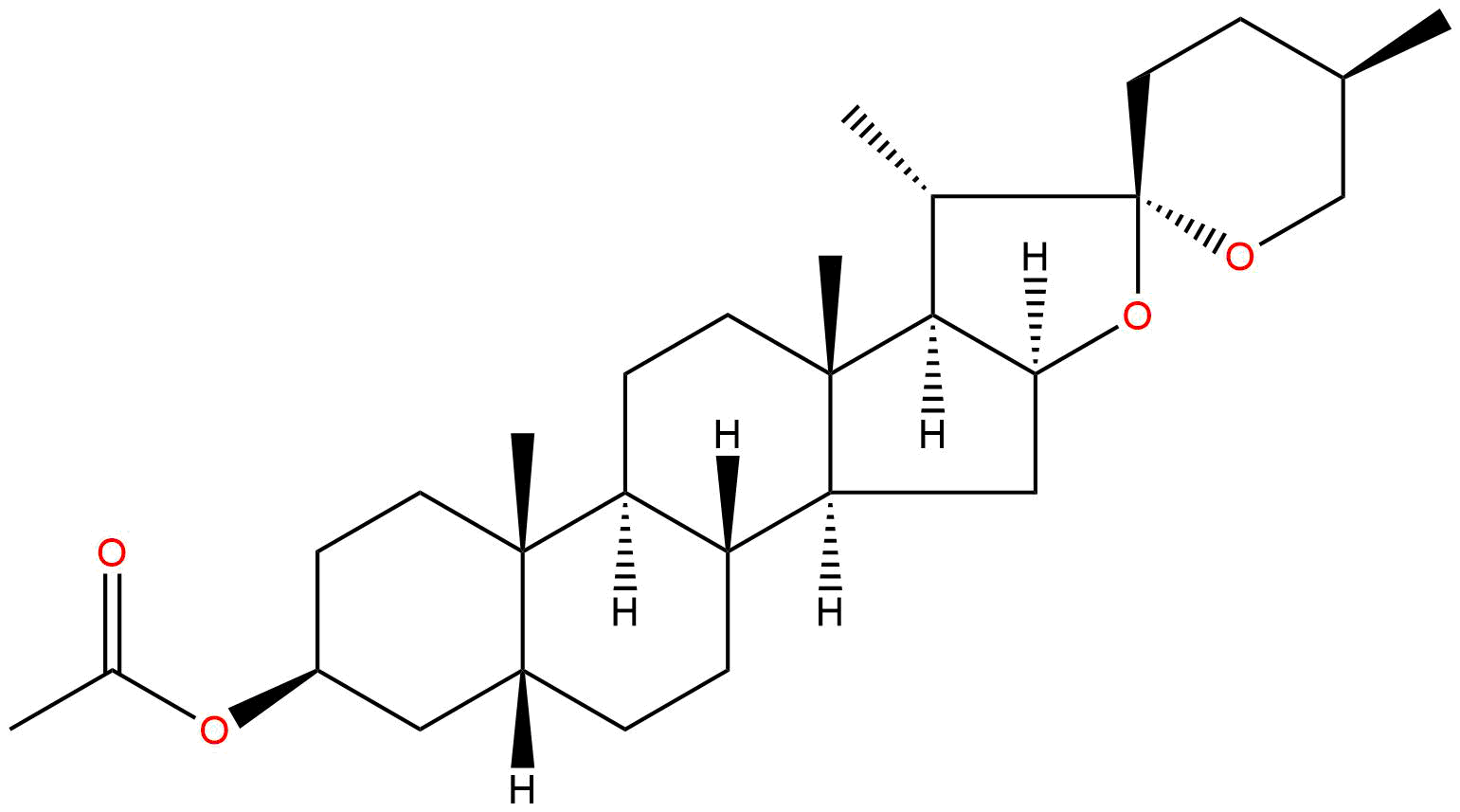
Smilagenin acetate (CAS number: 4947-75-5) is an important sapogenin derivative, which has attracted widespread attention in the field of natural product pharmacology in recent years due to its unique structural characteristics and diverse biological activities. As an acetylated derivative of Smilagenin, acetylated Smilagenin not only exhibits high lipid solubility in structure, but also shows significant pharmacological activity, especially in the potential application value of neurological diseases and bone metabolism regulation. Previous cell experiments have shown that acetyl isoquercetin can upregulate the expression of acetylcholine M2 receptors, indicating its significant importance in the study of neurodegenerative diseases such as dementia.
In addition, research on the application of acetyl isoquercetin in the field of anti osteoporosis is gradually underway, with related targets including estrogen receptor alpha (ESR1), matrix metalloproteinase 9 (MMP9), vitamin D receptor (VDR), osteogenic transcription factor RUNX2, bone formation marker SP7, bone resorption related enzyme CTSK, bone protective protein TNFRSF11B (OPG), bone formation inhibitory factor SOST, collagen COL1A1, and osteocalcin BGLAP, demonstrating its multi-target potential in bone metabolism regulation.
This article aims to systematically review the chemical structure and physicochemical properties, plant sources and extraction methods, pharmacological activity and mechanism of action, pharmacological evaluation and pharmacokinetic characteristics of acetylated isoquercetin saponins. Combined with its clinical application prospects in neurodegenerative diseases and osteoporosis, it comprehensively evaluates the research and development potential and future development directions of this natural product.
Chemical structure and physicochemical properties
Acetylisoquercetin belongs to the sapogenin class and is an acetylated derivative of steroidal saponins. Its molecular formula is C29H46O5 and its molecular weight is 458.6830. Structurally, acetyl isoquercetin contains a typical steroid skeleton, with side chains and ring structures modified by specific hydroxylation, giving it high lipid solubility (LogP=6.0376), which helps it penetrate cell membranes and the blood-brain barrier (BBB penetration is high), providing a physical and chemical basis for its nervous system related pharmacological activities.
Its polar surface area (TPSA) is 44.76 Å ², indicating that its molecular polarity is moderate and conducive to the binding of intracellular targets. The extremely low water solubility (0.0007 mg/mL) suggests that its distribution in vivo mainly depends on lipid mediators, which may have solubility limitations. Pharmaceutical improvements are needed to optimize its bioavailability.
In terms of safety, acetyl isoquercetin did not exhibit hERG channel inhibition, reducing the risk of cardiac toxicity; The Ames test result is 0, indicating that it has no significant genetic toxicity and meets safety requirements.
The detailed analysis of the chemical structure and the detailed description in patent document US 0030004147 A1 provide a theoretical basis for the subsequent design of derivatives through structural modification strategies.
Plant sources and extraction methods
Acetyl isosorbide saponins are mainly derived from steroidal saponins in plants of the isosorbide genus (such as Smilax spp.). The plant of Ganoderma lucidum is widely used in traditional Chinese medicine, with functions such as promoting blood circulation, removing blood stasis, anti-inflammatory and analgesic effects. Acetylisoquercetin, as one of its active ingredients, has been gradually isolated, identified, and used in pharmacological research in recent years.
The extraction method usually uses organic solvent extraction combined with column chromatography separation technology. Common steps include:
- Ingredient Preparation Collect dry rhizomes of Anemarrhena heterophylla and grind them into fine powder.
- Solvent extraction Multiple reflux extractions were performed using methanol or ethanol to extract crude extract containing saponins.
- Coarse separation Remove lipid soluble impurities through liquid-liquid distribution (such as n-hexane ethyl acetate water system).
- Column chromatography purification Using silica gel column chromatography and gradient elution to separate and purify acetyl isoquercetin.
- Structural Identification Confirm the structure through nuclear magnetic resonance (NMR), mass spectrometry (MS), and infrared spectroscopy (IR).
In recent years, the application of ultrasound assisted extraction and high-performance liquid chromatography (HPLC) technology has improved extraction efficiency and purity, providing technical support for large-scale preparation.
Pharmacological activity research
Neurological function
The research on acetylisoquercetin in neuropharmacology mainly focuses on its regulatory effect on the expression of acetylcholine M2 receptor. M2 receptors, as one of the subtypes of acetylcholine receptors, are widely distributed in the central nervous system and participate in regulating neural transmission, cognitive function, and memory formation. Cell experiments have shown that acetyl isoquercetin can significantly upregulate the expression of M2 receptors, suggesting that it may have potential anti dementia effects by enhancing cholinergic nerve function, improving cognitive impairment.
In addition, relevant studies have shown that this compound may further exert neuroprotective effects by regulating neuroinflammatory responses, antioxidant stress, and other pathways, providing new ideas for the treatment of Alzheimer's disease and other neurodegenerative diseases.
Anti osteoporosis effect
Osteoporosis is a metabolic disease characterized by reduced bone mass and microstructural damage to bone tissue, leading to a significantly increased risk of fractures. Acetyl isosorbide saponins exhibit multi-target regulatory effects in the treatment of osteoporosis, involving key molecular pathways related to bone formation and resorption
- Promote osteogenesis Promote osteoblast differentiation and bone matrix synthesis by upregulating osteogenic transcription factors RUNX2 and SP7. Enhanced expression of COL1A1 and BGLAP promotes bone matrix mineralization.
- Inhibit bone resorption Downregulate the bone resorption related enzyme CTSK and reduce osteoclast activity; Regulating the TNFRSF11B (OPG)/RANKL system to inhibit osteoclastogenesis.
- Regulating bone metabolism balance: Affects SOST expression and relieves inhibition of bone formation; Activate vitamin D receptors (VDR) to promote calcium and phosphorus metabolism.
- Regulating matrix degradation Inhibit MMP9, reduce bone matrix degradation, and maintain bone tissue stability.
Animal model studies have shown that acetyl isoquercetin can significantly increase bone density, improve bone microstructure, reduce fracture incidence, and demonstrate good bone protective effects.
Other potential activities
Some studies suggest that acetyl isoquercetin may have multiple activities such as anti-inflammatory and anti-tumor effects, but the relevant data is not sufficient and further systematic validation is needed.
Mechanism of action and molecular targets
The pharmacological effects of acetyl isoquercetin involve multiple signaling pathways and molecular targets, reflecting its multi-target and multi pathway synergistic regulation characteristics.
Neurological targets
- Acetylcholine M2 receptor As a G protein coupled receptor, M2 receptor regulates neuronal excitability and neurotransmitter release. Acetylisoquercetin enhances cholinergic signaling and improves cognitive function by upregulating M2 receptor expression.
- Antioxidant and anti-inflammatory pathways May alleviate neuroinflammation and oxidative stress, and protect neurons by regulating signaling pathways such as NF - κ B and Nrf2.
Bone metabolism targets
- ESR1 (estrogen receptor alpha)Acetylisoquercetin may mimic or enhance estrogen signaling, promote bone formation, and inhibit bone resorption.
- RUNX2 and SP7 Key osteogenic transcription factors regulate osteoblast differentiation and bone matrix synthesis.
- VDR (Vitamin D Receptor)Regulating calcium and phosphorus metabolism and bone cell function.
- MMP9 Matrix metalloproteinases participate in the degradation of bone matrix, and acetyl isoquercetin inhibits their activity, which is beneficial for bone tissue stability.
- CTSK (Bone Gelatinase)Osteoclast specific enzymes participate in the process of bone resorption and inhibit their activity to reduce bone resorption.
- TNFRSF11B (OPG) and RANKL systems Regulate osteoclast generation and activity, maintain bone metabolism balance.
- SOST (Osteopontin)Bone formation inhibitory factor, acetylated isoquercetin regulates its expression and promotes bone formation.
- COL1A1 and BGLAP The main components of bone matrix and osteocalcin promote bone mineralization.
Overall, acetyl isoquercetin achieves anti osteoporosis effects by synergistically regulating bone cell function and bone metabolism pathways through multiple targets.
Evaluation of drug properties and pharmacokinetics
Analysis of drug properties parameters
The molecular weight of acetyl isoquercetin saponins is 458.6830, slightly higher than the recommended range of 500 by Lipinski's rule, but still within an acceptable range. The LogP value is 6.0376, indicating high lipid solubility, which is beneficial for cell membrane penetration and blood-brain barrier permeability, but may lead to poor water solubility, affecting oral absorption and bioavailability.
The TPSA is 44.76 Å ², indicating that the molecular polarity is moderate and conducive to transmembrane transport. Very low water solubility (0.0007 mg/mL) suggests the need to improve solubility and stability through formulation technology.
In terms of safety, no hERG channel inhibition was observed, reducing the risk of cardiac toxicity; Ames test negative, low genetic toxicity risk, meets drug safety requirements.
Pharmacokinetic characteristics
At present, there is limited in vivo pharmacokinetic research on acetylated isoquercetin, but its high lipid solubility and blood-brain barrier penetration suggest:
- absorb Oral absorption may be limited by low water solubility, and dosage forms (such as nanomaterials, solid dispersions) need to be optimized to enhance bioavailability.
- distribution High lipid solubility and moderate TPSA are beneficial for widespread tissue distribution, especially in the central nervous system, supporting its neuroprotective effects.
- Metabolism As a steroid derivative, it may be metabolized by the liver CYP450 enzyme system, and further research is needed on metabolic pathways and metabolite activity.
- excretion Metabolites may be excreted through bile and urine, and the specific excretion kinetics need to be studied.
Overall, acetyl isoquercetin has good potential for drug development, but it needs to overcome the challenges of poor water solubility and low oral bioavailability.
Clinical application prospects and prospects
Acetylisoquercetin, as a natural derivative of steroidal saponins, has shown broad clinical application prospects due to its multi-target regulatory effects in the nervous system and bone metabolism.
Neurodegenerative diseases
Acetylisoquercetin has potential anti dementia effects by upregulating the expression of acetylcholine M2 receptors and improving cholinergic function. In the future, animal models and preclinical studies can be conducted based on the pathological mechanisms of cognitive disorders such as Alzheimer's disease to evaluate their clinical value in improving cognitive function and neuroprotection.
Osteoporosis treatment
The ability of multi-target regulation of bone metabolism makes acetyl isoquercetin a new candidate for the development of anti osteoporosis drugs. Its bidirectional regulatory effect of promoting osteogenesis and inhibiting bone resorption helps restore bone metabolism balance and prevent fractures. In the future, existing anti osteoporosis drugs can be combined to explore combination therapy strategies and improve efficacy.
Challenges and Strategies in Drug Development
The problem of poor water solubility and low bioavailability of acetyl isoquercetin saponins needs to be solved through pharmaceutical methods such as nanocarriers, liposomes, and solid dispersions. Further pharmacokinetic, toxicological, and preclinical safety evaluations are key to its clinical translation.
In addition, structural modification and derivative design can optimize its pharmacological and pharmacokinetic properties, enhance targeting and safety, and promote its clinical application.
Conclusion
Acetylisoquercetin, as a natural product with unique chemical structure and multiple pharmacological activities, has shown broad application prospects in the treatment of neurological diseases and osteoporosis. Its multi-target mechanism of action provides a theoretical basis and practical basis for the development of new natural medicines. In the future, through in-depth pharmacological mechanism research, pharmacokinetic optimization, and preclinical evaluation, it is expected to promote the use of acetyl isoquercetin as an innovative drug for the treatment of diseases such as dementia and osteoporosis. The field of natural product pharmacology should continue to focus on the development and application of steroid saponin derivatives, promoting the rational utilization and modern transformation of natural drug resources.