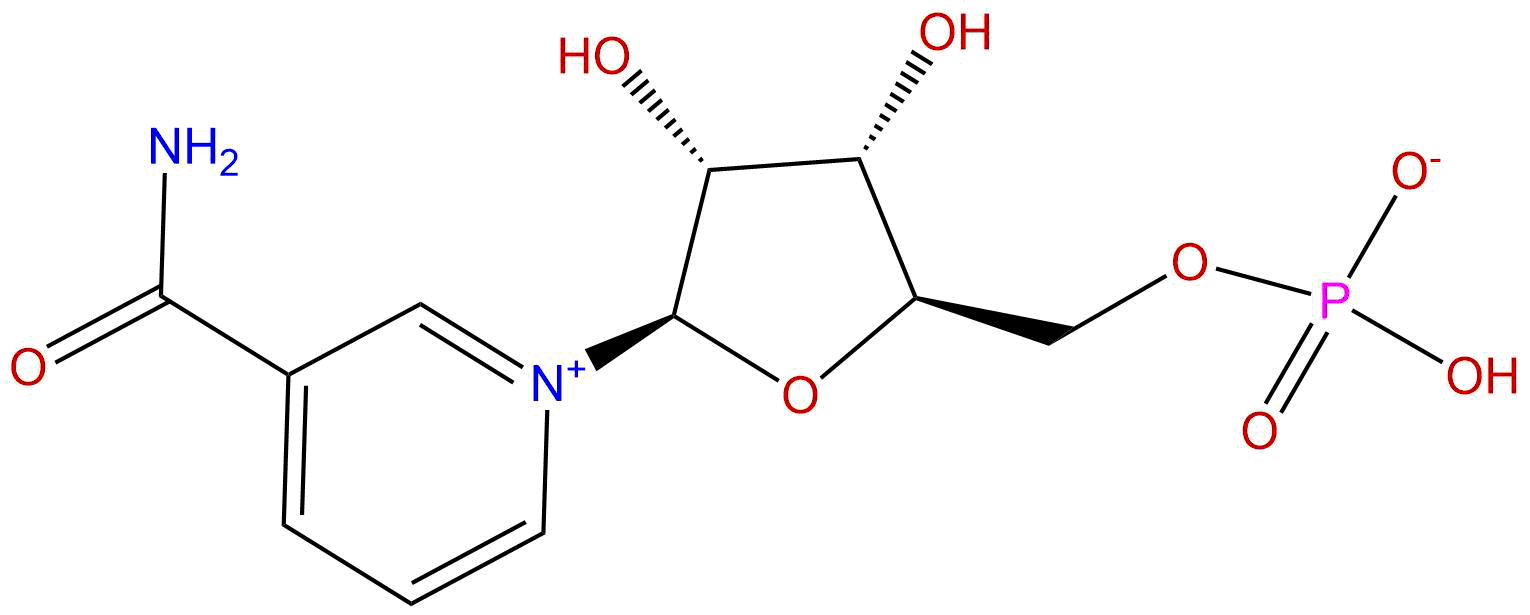


Product name: Nicotinamide mononucleotide;
Synonym name: Nicotinamide ribotide; Nicotinamide ribonucleoside 5'-phosphate; Nicotinamide ribonucleotide
Catalogue No.: BP4241
Cas No.: 1094-61-7
Formula: C11H15N2O8P
Mol Weight: 334.221
Botanical Source:
Type of Compound:
Purity: 95%~99%
Analysis Method: HPLC-DAD or/and HPLC-ELSD
Identification Method: Mass, NMR
Packing: Brown vial or HDPE plastic bottle
The product could be supplied from grams to kilograms.
Inquire for bulk scale.
Nicotinamide mononucleotide ("NMN", "NAMN", and "β-NMN") is a nucleotide derived from ribose and nicotinamide. Like nicotinamide riboside, NMN is a derivative of niacin, and humans have enzymes that can use NMN to generate nicotinamide adenine dinucleotide (NADH). NMN enters cells via the gut within 10 minutes converting to NAD+ through the Slc12a8 NMN transporter. Because NADH is a cofactor for processes inside mitochondria, for sirtuins, and for PARP, NMN has been studied in animal models as a potential neuroprotective and anti-aging agent. Dietary supplement companies have aggressively marketed NMN products claiming those benefits.[5] Doses of up to 500 mg was shown safe in men in a recent human study at Keio University School of Medicine, Shinjuku, Tokyo Japan. Multiple long term human studies are underway.
Nicotinamide ribotide (NMN) is an important intermediate metabolite in the nicotinate and nicotinamide metabolism pathway. Mammals predominantly use nicotinamide rather than nicotinic acid as a precursor for NAD biosynthesis. Instead of the deamidation to nicotinic acid, nicotinamide is directly converted to NMN by nicotinamide phosphoribosyltransferase (NAMPT, EC 2.4.2.12). The enzyme nicotinamide mononucleotide adenylyltransferase (NMNAT, EC 2.7.7.1), which is a member of the nucleotidyltransferase alpha/beta-phosphodiesterase superfamily, catalyzes the reaction NMN + ATP <=> Nicotinamide adenine dinucleotide (NAD) + PPi, representing the final step in the biosynthesis of NAD. NAD is a molecule that plays a fundamental role as a cofactor in cellular redox reactions. Thus NMN is an important metabolite for the maintenance of normal NAD biosynthesis. Circulating NMN levels may play an important role in regulating cell function in physiological and pathophysiological conditions.
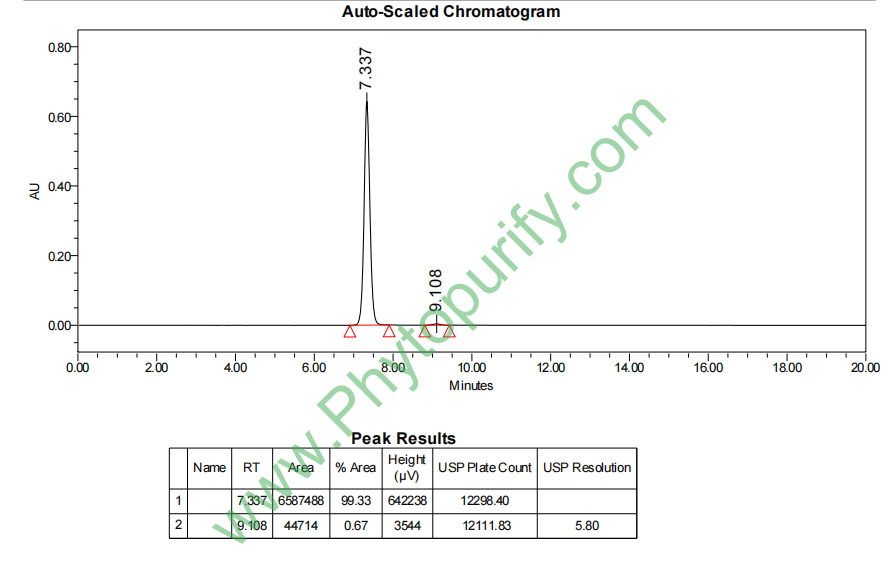
HPLC of Nicotinamide ribotide
Storage conditions:Short-term storage at 2~8℃, long-term storage at -20 ~ -80℃
163.4200
-3.9258
-3.9236
110.9163
.3991
.0987
Low
30.3381
4.5702
No
No
No
No
No
No
1.2
No
Yes
No
No
Nicotinamide mononucleotide (NMN), as an active metabolic intermediate of vitamin B3 (niacin), has attracted widespread attention in the fields of natural product pharmacology and aging biology in recent years. NMN is a direct precursor of nicotinamide adenine dinucleotide (NAD ⁺) and is involved in various key biological processes such as intracellular energy metabolism, DNA repair, gene expression regulation, and redox reactions. With the in-depth study of aging mechanisms and the molecular basis of related diseases, NMN has become a hot molecule in anti-aging and the treatment of various chronic diseases due to its potential in regulating intracellular NAD ⁺ levels, activating longevity proteins (Sirtuins), and inhibiting inflammatory responses.
This article reviews the chemical structure and physicochemical properties of NMN, plant sources and extraction methods, pharmacological activity and mechanism of action, drug evaluation and pharmacokinetic characteristics. Combined with the latest preclinical and clinical research progress, it explores the development potential and future application prospects of NMN as a natural product drug.
The chemical name of NMN is nicotinamide - β - D-ribose monophosphate, with a CAS number of 1094-61-7. Its molecular formula is C11H15N2O8P, with a molecular weight of 335.2290. Structurally, NMN is composed of nicotinamide and ribose monophosphate linked by a β - N-glycosidic bond, containing a phosphate group that gives it strong polarity and hydrophilicity.
In terms of physicochemical properties, the LogP value of NMN is -3.9258, indicating its high hydrophilicity and low lipid solubility. The topological polar surface area (TPSA) is 163.42 Å ², reflecting its strong polarity and hydrogen bonding ability. The water solubility is relatively high, about 110.9 mg/mL, suitable for the development of water-soluble formulations. The low blood-brain barrier permeability of NMN suggests limited direct action in the central nervous system. In addition, NMN does not exhibit hERG channel inhibitory activity, indicating a lower risk of cardiac toxicity. The Ames test value is 1.2, indicating a low risk of genotoxicity and a good safety foundation.
NMN, as a natural nucleotide product, is widely present in various organisms, including bacteria, plants, and mammalian cells. Although the NMN content in plants is relatively low, it is distributed in various foods such as broccoli, cucumber, cabbage, avocado, and tomato. Its biosynthetic pathway is mainly catalyzed by nicotinamide phosphoribosyltransferase (NAMPT) to synthesize NMN from nicotinamide and 5-phosphate ribosyl pyrophosphate.
Traditional extraction methods often rely on water extraction and centrifugal separation of plant tissues, combined with high-performance liquid chromatography (HPLC) or mass spectrometry (MS) techniques for purification and quantification. In recent years, biological fermentation technology and enzyme catalyzed synthesis have gradually become the mainstream methods for industrial scale preparation of NMN. By utilizing genetically engineered strains to efficiently express NAMPT and related enzyme systems, high-purity and high-yield NMN production can be achieved. In addition, chemical synthesis routes have also been developed to meet the demand for pharmaceutical grade NMN.
The pharmacological activity of NMN mainly revolves around its function as a precursor of NAD ⁺. NAD ⁺, as a key coenzyme in cells, participates in energy metabolism, DNA repair, and signal transduction. Its level gradually decreases with age, leading to cellular dysfunction and the occurrence of age-related diseases. Supplementing with NMN can effectively increase intracellular NAD ⁺ levels and restore cell vitality.
Numerous animal experiments have shown that NMN supplementation can delay multi organ dysfunction, improve mitochondrial function, and promote metabolic homeostasis. NMN activates longevity proteins such as SIRT1 and SIRT3, regulates gene expression, inhibits inflammatory responses, and delays the aging process. It has shown significant effects in improving cognitive function, skeletal muscle metabolism, and cardiovascular health.
NMN has the potential to inhibit the growth of tumor cells. Research has found that NMN affects tumor cell metabolism and proliferation by regulating intracellular levels of NAD ⁺, ATP, and reactive oxygen species (ROS). Its inhibitory effects on SIRT2 and SIRT1 (IC50 of approximately 2 μ M) may be involved in regulating the tumor cell cycle and apoptosis process, thereby inhibiting tumor growth and improving survival rate.
NMN hydrochloride exhibits anti hepatitis B virus (HBV) activity, which may be achieved by enhancing the immune response of host cells and regulating the activity of virus replication related enzymes. This feature provides new ideas for NMN in the field of viral hepatitis treatment.
The core mechanism of action of NMN is to restore the physiological level of NAD ⁺ in cells by supplementing NAD ⁺ precursors, thereby regulating the activity of various NAD ⁺ - dependent enzymes.
Sirtuins are a family of NAD ⁺ - dependent deacetylases involved in regulating cellular metabolism, stress response, and aging. NMN activates SIRT1 and SIRT3 by increasing NAD ⁺ levels, promoting mitochondrial function and antioxidant capacity, and delaying cellular aging. Meanwhile, NMN has a direct inhibitory effect on SIRT2 (IC50 of approximately 2 μ M), indicating its complex regulatory network for regulating cell cycle and apoptosis.
Poly ADP ribose polymerase 1 (PARP1) plays an important role in DNA damage repair, consuming a large amount of NAD ⁺. NMN supplementation can maintain intracellular NAD ⁺ levels, support PARP1 mediated DNA repair, reduce genomic instability, and delay the accumulation of age-related gene damage.
CD38 is a major NAD ⁺ consuming enzyme involved in cellular signaling and immune regulation. NMN improves immune function and metabolic homeostasis by regulating CD38 activity, balancing NAD ⁺ metabolism.
Nicotinamide phosphoribosyltransferase (NAMPT) is the rate limiting enzyme in NMN biosynthesis. NMN supplementation can feedback regulate NAMPT expression and maintain the dynamic balance of NAD ⁺ cycle.
NMN, as a natural nucleotide compound, has good water solubility and low fat solubility, making it suitable for oral and injection administration. Its molecular weight is moderate, polarity is high, and its blood-brain barrier permeability is limited, indicating that it mainly acts on peripheral tissues.
Pharmacokinetic studies have shown that oral administration of NMN can be rapidly absorbed by the intestine, enter the bloodstream, and distributed to the liver, muscles, and other metabolically active tissues. NMN is rapidly converted into NAD ⁺ in the body, enhancing cellular energy metabolism. It has a short half-life and requires multiple administrations to maintain stable blood drug concentrations.
In terms of safety, NMN does not inhibit hERG channels, has low genotoxicity, and long-term administration has not shown significant toxic side effects, demonstrating a good safety foundation.
As the incidence rate of aging related diseases continues to rise, NMN, as a key molecule regulating NAD+metabolism, shows broad clinical application prospects. Currently, clinical research on NMN is gradually underway in fields such as anti-aging, metabolic syndrome, neurodegenerative diseases, cardiovascular diseases, and viral hepatitis.
Future research needs to further clarify the dose-response relationship, long-term safety, and interactions with other drugs of NMN. At the same time, developing efficient and stable NMN formulations and optimizing administration routes will promote their clinical translation. Combining the concept of precision medicine and developing personalized NMN treatment plans for different subtypes of aging and disease states will be the key to realizing its clinical value.
In addition, the combination of NMN with other NAD ⁺ precursors (such as nicotinamide nucleoside NR) and Sirtuins activators may produce synergistic effects and expand their therapeutic potential.
Nicotinamide mononucleotide, as an important natural product, has become a research hotspot in the field of anti-aging and related disease treatment due to its unique biological functions and good pharmacological activity. It exhibits significant therapeutic potential by regulating NAD ⁺ metabolism, activating key molecular targets, improving cellular function. In the future, with the deepening of basic research and clinical trials, NMN is expected to become a safe and effective natural medicine, providing new strategies and solutions for human health and longevity.
