Introduction/Overview
Allergic diseases, such as allergic rhinitis, asthma, and atopic dermatitis, have become a global public health problem, and their incidence rate continues to rise worldwide. The pathological and physiological processes of such diseases are complex, involving abnormal activation of multiple immune cells, inflammatory mediators, and signaling pathways. Although traditional therapies such as antihistamines, leukotriene receptor antagonists, and glucocorticoids have achieved certain results in controlling symptoms, long-term use may be accompanied by side effects, and some patients may have poor efficacy. Therefore, searching for efficient and low toxicity new anti allergic drugs from natural products has always been an important direction in the field of drug development.
Plantago asiatica L., as a traditional medicinal plant, is used in various traditional medical systems to treat inflammation, cough, and skin diseases, indicating its potential anti-inflammatory and anti allergic activities. In recent years, with the advancement of separation and identification technology, a series of iridoid glycosides in its methanol extract have attracted widespread attention from researchers. Among them, 10 Hydroxyxy major glycoside (CAS: 259753-12-3), as an active ingredient isolated from methanol extract of Plantago asiatica, has shown significant anti allergic potential in preliminary studies. Its function involves the regulation of multiple key targets and pathways in allergic reactions, indicating that it may become a multi-target anti allergic lead compound. This article aims to provide a systematic review of the chemical properties, plant sources, pharmacological activities, mechanisms of action, and medicinal properties of 10 hydroxydaidzein, in order to provide comprehensive scientific references for the in-depth research and development of this compound.
Chemical structure and physicochemical properties
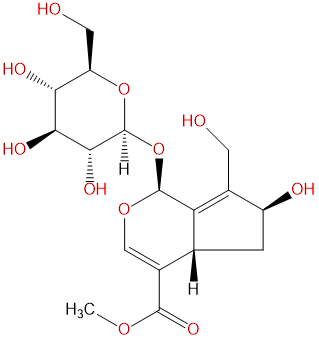
10 Hydroxy Caryophyllin is a cyclic terpenoid glycoside compound. Its molecular formula is C17H24O11 and its molecular weight is 404.3680 g/mol. Structurally, the compound is composed of a ten membered iridoid aglycone linked to a glucose unit via a glycosidic bond. Its structural feature is the presence of a hydroxyl substitution at the C-10 position of the aglycone, which is also the origin of its name "10 hydroxyl". The presence of this hydroxyl group may have a significant impact on its molecular polarity, hydrogen bonding ability, and biological activity.
Based on its chemical structure, 10 hydroxybigastrin glycoside exhibits typical hydrophilic characteristics. The calculated lipid water partition coefficient (LogP) is -1.7009, indicating that the compound has high hydrophilicity and tends to be distributed in the aqueous phase rather than the lipid phase. The topologically polar surface area (TPSA) is as high as 175.37 Å ², mainly attributed to the numerous hydroxyl and glycosidic oxygen atoms in the molecule, which are potential hydrogen bond donors and acceptors, determining the interaction mode between the molecule and biological membranes and protein targets. The theoretically calculated water solubility value is 57.8786 mg/L, further confirming its good water solubility. These physical and chemical parameters collectively point to a conclusion: 10 hydroxy carvacrol is a highly polar and water-soluble small molecule compound, which has a decisive impact on its absorption, distribution, and metabolic behavior in organisms.
Plant sources and extraction methods
10 Hydroxy Plantago asiatica glycosides mainly come from plants of the Plantago genus in the Plantago family, especially the whole plant or aboveground parts of Plantago asiatica L. Plantago asiatica is a traditional medicinal and edible plant with abundant resources in China.
At present, the extraction of 10 hydroxy carvacrol from Plantago asiatica mainly adopts organic solvent extraction method, combined with modern chromatography technology for separation and purification. The most commonly used extraction solvent is methanol. The typical extraction process is as follows: the dried and crushed Plantago asiatica material is leached or refluxed with a certain proportion of methanol (such as 70% -100%). Methanol can effectively dissolve various polar components, including iridoid glycosides. After filtration and vacuum concentration of the extract, a crude extract rich in iridoid glycosides was obtained.
Subsequently, it is necessary to use column chromatography technology to separate and purify the crude extract. Large pore adsorption resins (such as D101, AB-8), silica gel, and reverse phase silica gel (such as ODS) are commonly used as stationary phases for gradient elution with different ratios of alcohol water or chloroform methanol systems. Monitor the separation process by thin layer chromatography (TLC) or high performance liquid chromatography (HPLC) and collect the fractions containing the target components. Finally, it may be necessary to perform purification using preparative high-performance liquid chromatography (pre HPLC) to obtain high-purity 10 hydroxy daidzein monomer compounds. The entire separation process needs to be carried out under mild conditions to avoid structural changes of iridoid glycosides due to heat or acid-base conditions.
Pharmacological activity research
A large number of in vitro and in vivo pharmacological experiments have confirmed that the core pharmacological activity of 10 hydroxydapagliflozin is concentrated in the anti allergic aspect, and its effects widely cover multiple stages of allergic reactions.
1. Inhibit the release of inflammatory mediators: In mast cell and basophil models (such as RBL-2H3 cells), 10 hydroxydapagliflozin can dose dependently inhibit the release of histamine and β - hexosanase stimulated by allergens (such as DNP IgE/BSA) or calcium ion carriers (A23187). Histamine is a rapidly occurring key mediator in type I allergic reactions, and its release is inhibited to directly alleviate symptoms such as itching, vasodilation, and smooth muscle contraction.
2. Regulating cytokine network: This compound has a significant regulatory effect on cytokines related to Th2 type immune response. In vitro, it can inhibit the production of interleukin-4 (IL-4), interleukin-5 (IL-5), and interleukin-13 (IL-13) by lymphocytes, mast cells, or epithelial cells stimulated by allergens or PMA/ionomycin. These cytokines are crucial in the delayed and chronic stages of allergic reactions, promoting IgE class switching, eosinophil activation and recruitment, as well as airway hyperresponsiveness and mucus secretion, respectively.
3. Validation of in vivo anti allergic model: In a passive skin allergic reaction (PCA) mouse model, pre oral or intraperitoneal injection of 10 hydroxydapagliflozin can significantly inhibit the increase in local vascular permeability and pigment exudation mediated by IgE. In a mouse model of allergic asthma induced by ovalbumin (OVA), this compound can reduce the infiltration of airway inflammatory cells, especially eosinophils, lower the levels of Th2 cytokines in bronchoalveolar lavage fluid (BALF), and alleviate airway hyperresponsiveness. In addition, it has shown potential in reducing skin inflammation and itching in animal models of atopic dermatitis.
4. Antioxidant and anti-inflammatory effects: Some studies suggest that 10 hydroxy carvacrol may have certain antioxidant activity, which can clear free radicals and alleviate oxidative stress. Oxidative stress is an amplifier of allergic inflammation, so this activity may synergize with its overall anti allergic effect.
Mechanism of action and molecular targets
The anti allergic effect of 10 hydroxydaidzein is not achieved through a single pathway, but rather through a multi-target, multi pathway intervention mode, mainly acting on key nodes such as signal transduction, mediator synthesis, and immune regulation in allergic reactions.
1. Inhibit the activity of key enzymes and receptors:
* 5-Lipoxygenase (ALOX5): ALOX5 is the rate limiting enzyme for the synthesis of leukotrienes (LTs) in the arachidonic acid metabolic pathway. Leukotrienes (such as LTC4, LTD4) are potent inflammatory mediators that cause bronchial constriction, mucus secretion, and increased vascular permeability. It has been confirmed that 10 hydroxybigastrol glycoside can directly or indirectly inhibit the activity of ALOX5, reduce the production of leukotrienes, and thus block this important inflammatory pathway.
* Thromboxane A2 receptor (TBXA2R) and histamine H1 receptor (HRH1): Research has shown that this compound may act as an antagonist or modulator of these receptors, competitively blocking the binding of thromboxane A2 and histamine to their receptors, thereby inhibiting downstream inflammatory and spasmogenic signals.
2. Regulating immune cell signaling transduction:
* High affinity IgE receptor (Fc ε RI) signaling pathway: Fc ε RI cross-linking is the initiating event that triggers the activation of mast cells and eosinophils. 10 Hydroxy Caryophyllin may inhibit the activation of downstream PLC γ, MAPK (such as ERK, JNK, p38), and NF - κ B signaling pathways by interfering with Fc ε RI mediated activation of tyrosine kinases such as Syk and Lyn, ultimately leading to reduced release of inflammatory mediators.
* Signal Transduction and Transcription Activation Factor 6 (STAT6): STAT6 is a core molecule involved in IL-4 and IL-13 signaling. After binding to its receptor, IL-4/IL-13 activates JAK kinase, leading to phosphorylation, dimerization, and translocation of STAT6 into the nucleus, driving transcription of target genes including IgE heavy chain switching and eosinophil recruitment related genes. 10 Hydroxy Caryophyllin can inhibit the phosphorylation of STAT6, thereby fundamentally suppressing the differentiation and effects of Th2 type immune responses.
3. Impact on upstream alarm factors:
* Thymic stromal lymphopoietin (TSLP): TSLP is mainly produced by epithelial cells under injury or allergen stimulation, and is a key "alarm cytokine" that initiates and maintains Th2 type allergic reactions. It can activate dendritic cells and drive initial T cells to differentiate into Th2 cells. Inhibiting the production or function of TSLP is a new strategy for treating allergic diseases. Research has shown that 10 hydroxy carvacrol can inhibit the production of TSLP in airway epithelial cells and intervene at the source of allergic cascade reactions.
In summary, 10 hydroxy caryophyllin constructs a three-dimensional anti allergic network by simultaneously acting on mediator related targets such as ALOX5, HRH1, TBXA2R, as well as immune signaling core nodes such as Fc ε RI, STAT6, TSLP, which may be the molecular basis for its highly efficient anti allergic activity.
Evaluation of drug properties and pharmacokinetics
Based on computational chemistry and preliminary experimental data, a preliminary evaluation of the pharmacological properties of 10 hydroxy carvacrol was conducted, with mixed results.
Advantages:
1. High security potential: The calculation prediction shows that the compound has no inhibitory activity on hERG potassium channels (hERG inhibition: No), indicating a low risk of causing QT interval prolongation in the heart. The Ames test predicted a negative result (0.0), indicating that it may not have direct genetic toxicity. These are important safety advantages of it as a drug lead.
2. Good water solubility: Good water solubility (57.8786 mg/L) is beneficial for the development of formulations, especially oral and injection forms.
3. Moderate molecular weight: The molecular weight is about 404, which belongs to the common range of drug like molecules.
Challenge aspect:
1. Membrane permeability may be poor: The extremely high polarity (LogP=-1.7) and huge topological polarity surface area (TPSA=175.37 Å ²) strongly suggest that the compound belongs to Class III or IV (high solubility, low permeability) in the Biopharmaceutical Classification System (BCS). Its ability to passively diffuse across the lipid bilayer of gastrointestinal epithelial cells is very limited, which may lead to low oral bioavailability.
2. Difficult to penetrate the blood-brain barrier (BBB): The prediction shows that its blood-brain barrier permeability is "low", which is a disadvantage for central nervous system diseases, but for anti allergic drugs that mainly act on the peripheral system, reducing central side effects may actually be a beneficial characteristic.
3. Pharmacokinetic properties unknown: At present, there is a significant lack of systematic pharmacokinetic studies (such as absorption, distribution, metabolism, excretion, ADME) data on 10 hydroxydaidzein. Cycloterpenoid glycosides are easily hydrolyzed by gut microbiota enzymes in vivo to generate aglycones, whose activity, metabolism, and toxicity may be significantly different from the prototype compounds. The stability, protein binding rate, main metabolic pathways, half-life and other key parameters of it in plasma need to be elucidated through in vitro and in vivo experiments.
Therefore, future research needs to focus on its oral absorption mechanism (whether it involves active transport?), and improve its lipid solubility and membrane permeability through structural modifications (such as preparing prodrugs, modifying glycosides or aglycones), while systematically conducting preclinical pharmacokinetic and toxicological studies.
Clinical application prospects and prospects
As a multi-target anti allergic natural product, 10 hydroxydaidzein has broad clinical application prospects, but solid research work is still needed to pave the way for its transformation.
Potential application directions:
1. Allergic respiratory diseases: Given its ability to inhibit airway inflammation, Th2 cytokines, and airway hyperresponsiveness in asthma models, this compound is expected to be developed as a new drug or adjuvant therapy for the treatment of bronchial asthma and allergic rhinitis.
2. Allergic skin diseases: Based on its inhibitory effect on mast cell degranulation and Th2 response, it has potential in the treatment of diseases such as atopic dermatitis and urticaria.
3. Combination therapy: Its multi-target mechanism of action may have a synergistic effect with traditional antihistamines and leukotriene antagonists, and the development of compound formulations may improve efficacy, reduce single drug doses and side effects.
4. Functional food/health products: Based on the background of "medicinal and edible homology" of Plantago asiatica, it is possible to explore the development of health foods for alleviating mild allergic symptoms while ensuring safety and effectiveness.
Future research prospects:
1. In depth mechanism research: It is necessary to use techniques such as gene knockout, RNA interference, and eutectic structure analysis to accurately elucidate its interaction mode with key targets such as ALOX5 and STAT6, whether it is directly bound or indirectly regulated.
2. Systematic pharmacokinetic studies: A complete ADME study must be conducted to clarify its in vivo fate, especially its intestinal metabolic transformation, in order to provide a basis for dosage form design and administration regimen.
3. Structural optimization and derivative development: In response to its pharmacological shortcomings, reasonable drug chemical modifications were carried out to synthesize a series of derivatives, and candidate compounds with higher activity and better oral bioavailability were screened.
4. Preclinical safety and efficacy evaluation: Adhere to Good Clinical Practice (GLP) for drug non clinical research quality management, complete systematic safety evaluations for acute, long-term, and reproductive toxicity, and validate its efficacy in more animal models that are closer to human diseases, such as non-human primate models.
5. Exploring new indications: Given its anti-inflammatory and immunomodulatory activities, its potential applications in other Th2 related diseases (such as eosinophilic esophagitis) or autoimmune diseases can be explored.
Conclusion
10 Hydroxy Caryophyllin is a cyclic terpenoid glycoside with significant anti allergic activity discovered from the traditional medicinal plant Plantago asiatica. Its pharmacological effects are rich, which can inhibit the release of inflammatory mediators such as histamine and leukotrienes, regulate the production of Th2 cytokines such as IL-4, IL-5, IL-13, and have been proven effective in various in vivo allergy models. Research on its mechanism of action reveals that it exerts its effects through a multi-target approach, including inhibiting ALOX5, antagonizing HRH1/TBXA2R, interfering with Fc ε RI signaling, inhibiting STAT6 activation, and downregulating TSLP expression, forming a synergistic anti allergic network.
Although its calculated safety features are good and its water solubility is good, its extremely high polarity and low permeability are the main obstacles to its conversion to oral drugs. Currently, there is still a lack of systematic pharmacokinetic and toxicological research on this compound. In the future, through in-depth mechanism exploration, systematic preclinical research, and rational drug chemical modification, 10 hydroxydaptomidine is expected to be developed into a novel, multi-target, naturally derived anti allergic therapy drug, or provide valuable lead molecules for the structural optimization of existing anti allergic drugs, bringing new hope to billions of allergic disease patients worldwide.