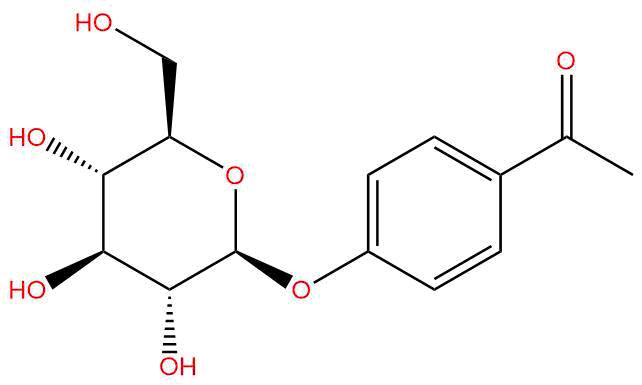


Product name: Picein
Synonym name: Ameliaroside; Piceoside;Salicinerein; Salinigrin
Catalogue No.: BP4519
Cas No.: 530-14-3
Formula: C14H18O7
Mol Weight: 298.291
Botanical Source:
Type of Compound:
Purity: 95%~99%
Analysis Method: HPLC-DAD or/and HPLC-ELSD
Identification Method: Mass, NMR
Packing: Brown vial or HDPE plastic bottle
Storage: Store in a well closed container, protected from air and light. Put into refrigerate or freeze for long term storage.
Whenever possible, you should prepare and use solutions on the same day. However, if you need to make up stock solutions in advance, we recommend that you store the solution as aliquots in tightly sealed vials at -20℃. Generally, these will be useable for up to two weeks.
The product could be supplied from milligrams to grams
Inquire for bulk scale.
For Reference Standard and R&D, Not for Human Use Directly.
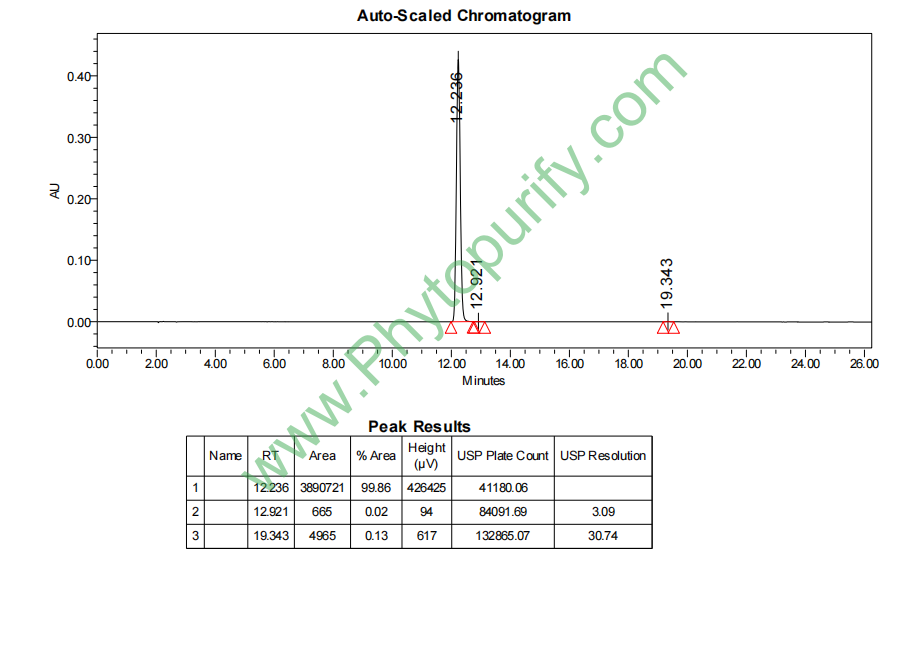
HPLC of Picein
Storage conditions:Short-term storage at 2~8℃, long-term storage at -20 ~ -80℃
116.4500
-.2980
-.2980
18.4108
.9042
.1661
Low
29.6717
3.2752
Yes
No
No
No
Yes
No
0.0
Yes
Yes
Yes
Yes
Natural products have always been an important treasure trove for innovative drug discovery, and their structural diversity and extensive biological activity provide unique molecular foundations for treating various diseases. Picein, chemical name 4-hydroxyphenethyl - β - D-glucoside, CAS number 530-14-3, is a phenylethanoid glycoside widely present in various plants. Although its name originates from the spruce genus, modern pharmacological studies have revealed that one of its more important sources is the traditional medicinal plant Picrorhiza kurroa. Huhuanglian is widely used in Ayurveda and traditional Chinese medicine systems, and is commonly used to treat fever, liver disease, and inflammatory diseases. Spruce glycoside, as one of its main active ingredients, has attracted much attention in recent years due to its significant antioxidant and anti-inflammatory activities. With the development of modern molecular biology technology, the molecular mechanism of its anti-inflammatory effect has gradually been elucidated, involving the regulation of multiple key inflammatory targets such as interleukin-6 (IL-6), signal transduction and transcription activator 3 (STAT3), and nuclear factor kappa B (NF - κ B). This article aims to systematically review the chemical properties, plant sources, pharmacological activities, mechanisms of action, and medicinal properties of spruce glycoside, and to explore its clinical application prospects, in order to provide scientific basis for the deep development and utilization of this natural product.
The molecular formula of spruce glycoside is C14H18O7, with a molecular weight of 298.2910. Its chemical structure is composed of a p-hydroxyphenylethanol glycoside linked to a D-glucose unit via a β - glycosidic bond. This phenylethanolic glycoside structure is the basis of its biological activity, and the presence of phenolic hydroxyl groups endows it with significant antioxidant capacity, effectively clearing free radicals and inhibiting lipid peroxidation.
From the analysis of physical and chemical properties, the lipid water partition coefficient (LogP) of spruce glycoside is -0.2980, indicating its good hydrophilicity. Its topological polar surface area (TPSA) is 116.4500 Å ², reflecting the presence of multiple polar oxygen atoms in the molecule. These parameters collectively determine its good water solubility, with a calculated value of approximately 18.4108 mg/mL, which is beneficial for its dissolution and distribution in living organisms. However, higher polarity and larger TPSA also mean that its ability to penetrate biofilms may be limited, and its blood-brain barrier permeability is predicted to be "low", suggesting that it may have difficulty entering the central nervous system to exert its effects. In terms of preliminary safety evaluation, existing computational models predict that it has no significant hERG potassium channel inhibitory activity (low risk of arrhythmia), and the Ames test predicts a value of 0.0, suggesting that it may not have a direct genetic toxicity risk. These basic pharmacological parameters lay the physical and chemical foundation for subsequent pharmacological research.
Sprucin is relatively widely distributed in nature, mainly found in plants such as Pinaceae, Orobanchaceae, and Plantaginaceae. Although its name originates from the Picea genus, the most medicinal source is undoubtedly Picrorhiza kurroa. Huhuanglian is a perennial herbaceous plant that grows in high-altitude areas of the Himalayas. Its dried rhizomes have a long history of application in traditional medicine and are rich in various iridoid glycosides and phenylethanolic glycosides. Picroside is one of the important water-soluble active ingredients.
The extraction of spruce glycosides from plant materials is usually carried out using solvent extraction method. Due to its polarity, water, methanol, ethanol, or their aqueous solutions are commonly used as extraction solvents. The classic extraction process includes heating and refluxing the dried and crushed roots and stems of Coptis chinensis with an appropriate concentration of ethanol (such as 50% -70%) or ultrasound assisted extraction, followed by filtration and concentration to obtain the crude extract. Further purification relies on column chromatography technology, often using silica gel, macroporous adsorption resin (such as D101, AB-8), or reverse phase silica gel (such as C18) as the stationary phase, and using gradient elution systems such as chloroform methanol water or pure water methanol for separation. High performance liquid chromatography (HPLC) and liquid chromatography-mass spectrometry (LC-MS) techniques are commonly used for monitoring the extraction process and identifying and quantitatively analyzing the purity of the final product. Optimizing the extraction process, such as using response surface methodology design, is crucial for improving the yield of spruce glycosides and maintaining their biological activity.
Numerous in vitro and in vivo pharmacological studies have confirmed that the core biological activity of spruce glycoside is concentrated in antioxidant and anti-inflammatory Two aspects and their potential therapeutic effects on related diseases are derived from this.
1. Antioxidant activity:
The chemical structure of spruce glycoside determines that it is an effective free radical scavenger. Research has shown that it can significantly scavenge 1,1-diphenyl-2-trinitrophenylhydrazine (DPPH) and 2,2 '- diazobis (3-ethylbenzothiazoline-6-sulfonic acid) free radicals, and exhibits strong iron ion reduction/antioxidant capacity (FRAP). In cell models, spruce glycoside can effectively inhibit the increase in intracellular reactive oxygen species (ROS) levels caused by hydrogen peroxide (H ₂ O ₂) or other oxidative stress inducers, protecting cells from oxidative damage. This basic antioxidant effect is a prerequisite for its downstream effects such as anti-inflammatory and hepatoprotective effects.
2. Anti inflammatory activity:
The anti-inflammatory effect is the focus of pharmacological research on spruce glycoside. In various animal models of acute and chronic inflammation, spruce glycoside has shown good effects. For example, in the mouse ear xylene induced inflammation model and the rat paw swelling model induced by carrageenan, spruce glycoside pretreatment can significantly reduce tissue edema and inflammatory cell infiltration. In more complex chronic inflammation models, such as the Freund's complete adjuvant induced arthritis rat model, administration of spruce glycoside can alleviate joint swelling and improve pathological scores, and its effect is closely related to the inhibition of systemic and local inflammatory cytokine levels.
3. Other potential activities:
Based on its anti-inflammatory and antioxidant properties, research also suggests that spruce glycoside may have potential activities such as liver protection and neuroprotection. In the chemical liver injury model, spruce glycoside showed a role in reducing serum transaminase and alleviating liver tissue pathological damage. Although its blood-brain barrier permeability is low, in some peripheral neuroinflammation or degenerative disease models, it may also play an indirect neuroprotective role by regulating systemic inflammation, which needs further research to confirm.
The anti-inflammatory effect of spruce glycoside is not achieved through a single pathway, but through multi-target and multi-level network regulation. Existing research has preliminarily revealed its role in multiple key nodes of inflammatory signal transduction:
1. Inhibit pro-inflammatory cytokines and mediators:
Sprucoside can significantly downregulate the expression of various classic pro-inflammatory factors. Research has shown that it can inhibit the production of tumor necrosis factor - α (TNF - α), interleukin-6 (IL-6), and interleukin-1 β (IL-1 β) in macrophages stimulated by lipopolysaccharides (LPS). The inhibition of IL-1 β may be related to its regulation of caspase-1 (CASP1) activity, which is a key enzyme in inflammasome activation responsible for cleaving IL-1 β precursors into active forms.
2. Regulating key inflammatory signaling pathways:
* NF - κ B pathway: Nuclear factor kappa B (NF - κ B) is the central regulator of inflammatory response. Sprucoside can inhibit the degradation of I κ B α and the nuclear translocation of NF - κ B p65 subunit, thereby blocking the transcriptional activity of NF - κ B and leading to a decrease in the expression of downstream pro-inflammatory genes such as TNF, IL6, NOS2, PTGS2.
* JAK/STAT pathway: Especially the STAT3 signaling pathway, which is continuously activated in chronic inflammation and autoimmune diseases. Sprucoside can inhibit the phosphorylation (activation) of STAT3 and block the pro-inflammatory signals transmitted by cytokines such as IL-6 through this pathway.
* COX pathway: Sprucoside has an inhibitory effect on cyclooxygenase (PTGS, also known as COX), especially downregulating the expression and activity of inducible COX-2 (PTGS2), which directly reduces the synthesis of inflammatory mediators such as prostaglandin E2 (PGE2).
3. Impact on ion channels and enzyme activity:
* TRP channel: Transient receptor potential vanillic acid subtype 1 (TRPV1) and transient receptor potential anchor protein subtype 1 (TRPA1) are important ion channels involved in pain perception and neurogenic inflammation. Research has shown that spruce glycoside may act as a regulator to affect the activity of these channels, providing a mechanistic explanation for its potential analgesic effects.
* Nitric oxide synthase: Sprucoside can inhibit the expression of inducible nitric oxide synthase (NOS2/iNOS), reduce excessive production of nitric oxide (NO), and alleviate NO mediated inflammation and tissue damage.
In summary, spruce glycoside forms a synergistic anti-inflammatory network by simultaneously acting on multiple targets such as IL-6, STAT3, CASP1, NFKB1, PTGS2, TNF, NOS2, etc. This may be the reason why it has a more balanced therapeutic effect and lower potential for side effects compared to single target inhibitors.
Based on its physicochemical properties, spruce glycoside exhibits certain potential for medicinal use, but there are also significant challenges.
Advantage:
1. Good security foundation: Originating from natural plants, long-term traditional applications provide certain safety evidence. Preliminary calculations predict no hERG inhibition or genotoxicity risk.
2. Good water solubility: Good water solubility is beneficial for the development of formulations, especially for oral and injection forms.
3. Multi target effect: For complex inflammatory diseases, multi-target regulation may bring more comprehensive therapeutic effects.
Challenges and unknowns:
1. Pharmacokinetic properties to be elucidated: At present, there is a significant lack of pharmacokinetic research data on the spruce glycoside system, including absorption, distribution, metabolism, and excretion (ADME). Its glycoside structure is easily hydrolyzed by β - glucosidase in gut microbiota or epithelial cells in vivo, producing aglycones (p-hydroxyphenylethanol), which may be the true active form. Therefore, the bioavailability, metabolic pathways, main metabolites, and activities of spruce glycoside in vivo urgently need to be studied.
2. Low blood-brain barrier permeability: This limits its direct therapeutic application for central nervous system inflammatory diseases, but may also reduce the risk of central side effects.
3. Stability and formulation process: Phenolic glycosides may be sensitive to light, heat, and pH, and their stability during formulation and storage needs to be studied. Suitable delivery systems, such as nanoparticles and liposomes, need to be developed to improve their bioavailability or achieve targeted delivery.
As a natural product with clear anti-inflammatory and antioxidant activities, the clinical application prospects of spruce glycoside mainly revolve around chronic inflammatory diseases.
Potential indications:
1. Inflammatory joint disease: Such as rheumatoid arthritis and osteoarthritis. Its multi-target mechanism of inhibiting joint synovitis and cartilage destruction makes it promising for development as a novel anti rheumatic drug or dietary supplement.
2. Inflammatory bowel disease: Such as ulcerative colitis and Crohn's disease. After oral administration, it may exert a local effect in the intestine, regulating intestinal immunity and microbiota, and reducing intestinal mucosal inflammation.
3. Chronic liver disease: Non alcoholic steatohepatitis, drug-induced liver injury, etc. Its antioxidant and anti-inflammatory properties can protect liver cells, inhibit the activation of hepatic stellate cells, and delay the progression of fibrosis.
4. Pain management: Especially inflammatory pain and neuropathic pain associated with TRPV1/TRPA1 channel activation can be used as adjunctive analgesics.
Future research directions and prospects:
1. In depth mechanism research: By utilizing techniques such as gene knockout and proteomics, we can more accurately depict the network of action of spruce glycosides and their metabolites, and identify their direct targets (such as whether they are allosteric modulators of certain kinases or receptors).
2. Systematic pharmacokinetic studies: Conduct comprehensive preclinical ADME studies to clarify its in vivo fate and provide a basis for dosage form design and dosing regimen optimization.
3. Structural optimization and derivative development: In response to its low blood-brain barrier permeability and potential for rapid metabolism, derivatives with higher activity and better pharmacokinetic properties are developed through chemical modifications (such as preparing prodrugs, modifying glycosides or glycosides).
4. Preclinical and clinical studies: Validate efficacy in animal models closer to human diseases, such as humanized mouse models, and gradually advance safety evaluation and early clinical trials.
5. Exploration of combination therapy: Explore the combination application of spruce glycoside with existing anti-inflammatory drugs (such as nonsteroidal anti-inflammatory drugs, biologics) in order to enhance efficacy, reduce side effects, or overcome drug resistance.
Sprucoside is a representative phenylethanolic glycoside compound isolated from the traditional medicinal plant Coptis chinensis. With its unique chemical structure, it exhibits significant antioxidant and broad-spectrum anti-inflammatory pharmacological activities. Modern molecular pharmacology research gradually reveals that its anti-inflammatory effect is achieved through the regulation of multiple key signaling pathways such as NF - κ B and JAK/STAT, and the inhibition of the expression of key inflammatory mediators such as IL-6, TNF - α, COX-2, iNOS, achieving a multi-target synergistic effect. Although its good water solubility and safety prediction are advantages in terms of drug properties, the pharmacokinetic properties and exact in vivo active forms of the system are still gaps that need to be filled urgently. In the future, through interdisciplinary research strategies, in-depth elucidation of its in vivo processes, and structural optimization through medicinal chemistry methods, spruce glycoside and its derivatives are expected to develop from potential natural lead compounds into new drugs for treating chronic inflammatory diseases, contributing to the human health cause with the power of natural gifts.
