Introduction/Overview
Natural products have always been an important treasure trove for innovative drug discovery, among which mulberry plants have attracted much attention due to their rich bioactive ingredients. Mulberry tree(Morus alba L. As a traditional Chinese medicine, its root bark (mulberry bark), leaves, fruits, and other parts are widely used in fields such as cough and asthma relief, diuresis and anti-inflammatory effects. Modern plant chemistry research has isolated and identified a large number of structurally novel compounds from plants of the Morus genus, especially Morus specific furan flavonoids characterized by Diels Alder adducts, which exhibit a wide range of pharmacological activities. Mulberrofuran B (CAS number: 79295-49-1) is one of the representative natural furan flavonoids. Early research has revealed its significant antioxidant activity, while recent studies have further expanded its potential antiviral applications, especially in the areas of anti herpesvirus and anti human immunodeficiency virus (HIV), demonstrating activity. This article aims to systematically review the chemical structure, plant origin, pharmacological activity, mechanism of action, pharmacological evaluation, and clinical application prospects of mulberry furan B, in order to provide comprehensive scientific references for the in-depth research and development of this compound.
Chemical structure and physicochemical properties
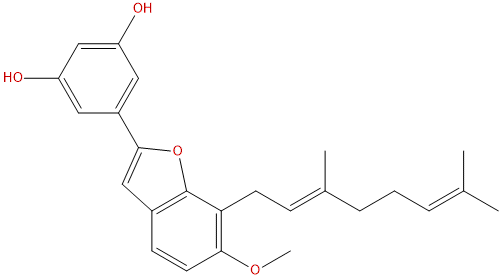
The chemical name of mulberry furan B is (2S, 3R) -2- (2,4-dihydroxyphenyl) -5-hydroxy-8,8-dimethyl-3- [(2S, 3R, 4R, 5S, 6S) -3,4,5-trihydroxy-6- (hydroxymethyl) oxycyclohex-2-yl] -4H, 8H-benzo [1,2-b: 3,4-b] difuran-4-one. Its molecular formula is C21H20O7 and its molecular weight is 392.4950 g/mol.
Structurally, mulberry furan B belongs to the characteristic furan flavonoid Diels Alder adducts of the mulberry genus. Its core skeleton is composed of two aromatic rings (A ring and C ring) connected by a dihydrofuran ring (B ring), forming a unique benzodifuranone system. The A ring is usually a benzene ring structure, while the C ring is a pyranone ring. Its structural features include chiral centers at C-2 and C-3 positions, as well as a sugar group (usually a glucose group) connected to C-3 position, which has a significant impact on its water solubility and biological activity. This structure gives it good planarity and conjugated system, which is the structural basis for its antioxidant activity.
Based on its calculated physicochemical parameters, mulberry furan B exhibits typical natural phenolic compound characteristics. The lipophilic water partition coefficient (LogP) of the compound is 6.1692, indicating that it has high lipophilicity. The topological polar surface area (TPSA) is 62.83 Å ², which is relatively low. The predicted water solubility value is 0.0103 mg/mL, which belongs to the category of insoluble compounds. These parameters collectively determine the absorption and distribution characteristics of mulberry furan B in living organisms. Its high LogP value suggests that it may easily penetrate the cell membrane, but it may also lead to limited oral bioavailability and easy accumulation in adipose tissue. A lower TPSA is consistent with a higher LogP value, further supporting its lipophilic characteristics. Preliminary drug risk prediction shows that its ability to cross the blood-brain barrier is low, suggesting that it may not have direct or side effects on the central nervous system; The negative prediction of hERG channel inhibition risk indicates a low potential risk of arrhythmia; The Ames test predicted a result of 0.0, indicating that there may be no direct genetic toxicity risk. These preliminary computer predictions provide direction for subsequent experimental research.
Plant sources and extraction methods
Mulberry furan B mainly comes from plants in the mulberry family, including white mulberry(Morus alba L. The root bark (mulberry bark) is the main source. In addition, in Monsang(Morus mongolica)Chicken Sang(Morus australis)The compound has also been reported to be isolated from the root bark and branches of plants in the genus Morus. Mulberry bark, as a traditional Chinese medicine, is rich in various mulberry furan, flavonoid, and alkaloid components in its ethanol extract.
The extraction and separation of mulberry furan B usually follow the conventional process of natural product chemistry. Firstly, the dried mulberry bark is crushed and extracted using organic solvents. The most commonly used extraction solvent is ethanol (such as 95% ethanol), which has good extraction efficiency for polar and medium polar components and is relatively safe. Extraction methods include cold soaking, hot reflux extraction, and ultrasound assisted extraction. The hot reflux method is often used due to its high efficiency.
After obtaining the crude extract, it needs to undergo systematic separation and purification to obtain the monomeric compound mulberry furan B. The general process is as follows:
1. Rough classification After concentrating the ethanol extract, extract and segment it using solvents of different polarities such as petroleum ether, ethyl acetate, n-butanol, etc. Mulberry furan B is mainly enriched in the ethyl acetate extraction site due to its structure containing both phenolic hydroxyl and sugar groups, with moderate polarity.
2. chromatographic separation The ethyl acetate fraction was further separated using various column chromatography techniques. Silica gel column chromatography is commonly used, with different ratios of petroleum ether ethyl acetate or chloroform methanol gradient elution. Subsequently, refining was carried out in combination with reversed phase silica gel column chromatography (such as ODS, eluted with methanol water system) and dextran gel column chromatography (such as Sephadex LH-20, eluted with methanol or methanol chlorine mixed solvent).
3. appraisal The final pure product was structurally identified using modern spectroscopic techniques, including nuclear magnetic resonance hydrogen spectroscopy (¹ H NMR), carbon spectroscopy (¹ ³ C NMR), two-dimensional nuclear magnetic resonance (such as HSQC, HMBC, COSY), mass spectrometry (MS, especially high-resolution mass spectrometry HR-ESI-MS), and optical rotation determination, and confirmed by comparison with literature data.
In recent years, preparative chromatography techniques such as high-speed countercurrent chromatography have also been applied to the efficient preparation and separation of mulberry furan B, improving separation efficiency and yield.
Pharmacological activity research
The pharmacological activity research of mulberry furan B has expanded from its initial antioxidant activity to multiple fields, among which antiviral activity is particularly prominent.
-
antioxidant activity This is the earliest reported activity of mulberry furan B. The multiple phenolic hydroxyl groups in its molecular structure are effective hydrogen donors, capable of scavenging free radicals such as DPPH free radicals, ABTS free radical cations, and exhibiting iron ion reduction ability. Research has shown that its antioxidant efficacy is comparable or slightly weaker than positive control drugs such as ascorbic acid or quercetin, but significantly stronger than some simple flavonoids. This antioxidant activity is the basis for its subsequent effects such as anti-inflammatory and protection of cells from oxidative stress damage.
-
Antiviral activity This is the most promising direction in current research on mulberry furan B.
- Antiherpesvirus Research has shown that sanfuran B has inhibitory effects on herpes simplex virus types 1 (HSV-1) and 2 (HSV-2). Its function may be related to interfering with multiple stages of the virus replication cycle, including the replication and expression of viral genes. The relevant targets involve virus DNA polymerase helper protein UL42, DNA polymerase catalytic subunit UL54, immediate early protein ICP27, and thymidine kinase (TK).
- Anti human immunodeficiency virus (HIV)Mulberry furan B shows the potential to inhibit HIV-1. Its mechanism of action may involve multiple targets: firstly, it acts as an antagonist or modulator of CCR5 and/or CXCR4, blocking HIV virus from using these co receptors to enter host cells; The second is to directly inhibit key enzymes involved in virus replication, such as HIV-1 protease (HIV1-PR) and integrase (INT), thereby inhibiting the maturation of viral particles and the integration of viral genes into the host genome.
- Other viruses Preliminary studies suggest that it may also have broad-spectrum inhibitory potential against other enveloped viruses, but the specific mechanism remains to be elucidated.
-
anti-inflammatory activity Based on its antioxidant properties, mulberry furan B exhibits anti-inflammatory effects in various cellular inflammatory models, such as the lipopolysaccharide induced macrophage RAW264.7 model. It can inhibit the excessive production of nitric oxide (NO), prostaglandin E2 (PGE2), and pro-inflammatory cytokines (such as TNF - α, IL-6, IL-1 β), and its mechanism is related to the inhibition of the activation of nuclear factor kappa B (NF - κ B) and mitogen activated protein kinase (MAPKs) signaling pathways.
-
Other potential activities Sporadic reports also involve preliminary research on the neuroprotective and anti-tumor effects of sanfuryl B, but these activities still require more systematic and in-depth experimental verification.
Mechanism of action and molecular targets
The pharmacological effects of mulberry furan B, especially its antiviral activity, are achieved through interactions with multiple molecular targets. These targets can be divided into two categories: host targets and viral targets.
1. Virus targets:
* Herpesvirus target:
* UL42 and UL54 UL54 is the catalytic subunit of HSV DNA polymerase, responsible for viral DNA synthesis; UL42 is its auxiliary subunit that enhances the sustained synthesis ability of polymerase. Mulberry furan B may interfere with the function of UL42-UL54 complex through direct binding or conformational regulation, thereby inhibiting viral genome replication.
* ICP27 The immediate early protein of HSV is an important post transcriptional regulator, which is involved in mRNA splicing, enucleation and translation. Interference with ICP27 function can completely disrupt the virus gene expression program.
* TK (thymidine kinase)Enzymes encoded by viruses play a crucial role in the activation of nucleoside analogue drugs. Mulberry furan B may affect its activity, but it is more likely to act through other major mechanisms.
* GD (glycoprotein D)The viral envelope protein mediates the binding of the virus to host cell receptors. Mulberry furan B may interfere with the interaction between gD and receptors, but there is relatively little evidence for this pathway.
* HIV target:
* HIV-1 protease (HIV1-PR)Responsible for cleaving the Gag and Gag Pol polyprotein precursors of the virus, which is crucial for the maturation of virus particles. Mulberry furan B may act as a non peptide inhibitor, occupying the active pocket of the enzyme.
* Integrate enzyme (INT)Catalyze the integration of viral cDNA into the host genome. Mulberry furan B may mimic its substrate or cofactor, competitively inhibiting its catalytic function.
* (Note: MPO (myeloperoxidase) is usually a host neutrophil enzyme with weak association with antiviral activity. The list here may be a data association, and there is insufficient evidence for its direct use as an antiviral target of mulberry furan B.). )
2. Host targets (mainly related to the entry stage of anti HIV):
* CCR5 and CXCR4 This is the main co receptor for HIV invasion into macrophages/lymphocytes. Mulberry furan B may act as a small molecule antagonist, binding to the transmembrane region or extracellular loop of these GPCRs to induce conformational changes, thereby preventing the binding of virus envelope protein gp120 and blocking virus cell fusion. This is currently considered one of the most attractive mechanisms for its anti HIV effect, as targeting host proteins can reduce the risk of viral drug resistance.
3. Indirect mechanism of action:
* Antioxidant and anti-inflammatory pathways Mulberry furan B inhibits the NF - κ B and MAPK pathways activated by oxidative stress by clearing reactive oxygen species (ROS). NF - κ B is an important transcriptional regulator for inflammation and replication of various viruses, including HIV. Inhibiting NF - κ B not only reduces inflammatory damage, but also inhibits gene transcription driven by viral long terminal repeat (LTR) sequences, thereby indirectly exerting antiviral effects. In addition, its anti-inflammatory effect helps alleviate the excessive immunopathological damage associated with viral diseases.
In summary, mulberry furan B may exert its effects through a "multi-target" mode: it can directly inhibit key viral enzymes (PR, INT, DNA polymerase complex), block co receptors for virus entry into cells (CCR5/CXCR4), and create an unfavorable intracellular environment for virus replication by regulating host immune inflammatory status (antioxidant/anti-inflammatory). The characteristic of this multi mechanism synergistic effect may give it an advantage in dealing with easily mutating viruses, but it also brings complexity to its mechanism research and drug design.
Evaluation of drug properties and pharmacokinetics
Although mulberry furan B exhibits good biological activity in vitro, its drug like and pharmacokinetic (PK) properties are key factors determining its further development as a drug. At present, there are few reports on the in vivo pharmacokinetic studies of the mulberry furan B system, but preliminary evaluations can be made based on its physicochemical properties and related compound studies.
1. Prediction and challenges of absorption, distribution, metabolism, and excretion (ADME):
* absorb The higher LogP value (6.17) and lower predicted water solubility suggest that oral absorption may face challenges. Although lipophilicity is beneficial for passive transmembrane diffusion, its extremely low water solubility may lead to poor dissolution in the gastrointestinal tract, becoming the rate limiting step of absorption. The sugar groups in its structure may contribute to active absorption through intestinal epithelial cell transporters such as SGLT1, but this requires experimental confirmation. It is expected that its oral bioavailability may be moderately low.
* distribution High lipophilicity indicates that it is easily distributed to various tissues throughout the body, especially adipose tissue, manifested as a larger apparent distribution volume (Vd). Predicting low blood-brain barrier permeability is a disadvantageous factor for the treatment of central nervous system viral infections, but it may also reduce the risk of central nervous system side effects.
* Metabolism As a polyphenolic compound, mulberry furan B is a potential substrate for liver and intestinal phase II metabolic enzymes (such as uridine diphosphate glucuronosyltransferase UGT, sulfotransferase SULT), which are highly susceptible to glucuronidation and sulfation binding reactions. In addition, its aromatic ring structure may also be subjected to oxidative metabolism by the cytochrome P450 (CYP) enzyme system. These metabolites may lead to their rapid clearance and short half-life in the body.
* excretion Metabolites are mainly excreted through bile and urine.
2. Optimization direction for drug properties:
In order to improve the pharmacological properties of mulberry furan B, future research may focus on the following strategies:
* Prodrug design To address its poor water solubility, it can be esterified with phenolic hydroxyl groups or prepared into prodrugs such as phosphate salts to improve oral dissolution and absorption.
* Structural modification On the premise of retaining the pharmacophore, modify the molecule to optimize the LogP value (such as introducing hydrophilic groups), improve solubility and metabolic stability. For example, exploring the structural modification or replacement of the sugar moiety.
* New drug delivery system Using nanotechnology, such as preparing solid dispersions, liposomes, nanoparticles, or self microemulsion delivery systems, can significantly improve their solubility, stability, and bioavailability, and may achieve targeted delivery.
* Pharmacokinetic study Urgent need to conduct systematic pharmacokinetic studies in vivo (rats, mice, etc.) to clarify their absolute bioavailability, half-life, tissue distribution, and main metabolic pathways, providing data support for formulation design and preclinical research.
At present, its hERG inhibition and Ames mutagenicity prediction risk are low, which is a good starting point, but it still needs to be confirmed through standardized preclinical safety pharmacology and toxicology experiments.
Clinical application prospects and prospects
Mulberry furan B, as a natural product with multi-target antiviral activity, has a clinical application prospect mainly focused on the treatment and adjuvant therapy of viral diseases, but also faces many challenges.
Potential application directions:
1. Development of antiviral drugs:
* Components of anti HIV combination therapy Given its potential to simultaneously act on CCR5/CXCR4, HIV protease, and integrase, sanfuryl B or its derivatives have the potential to be developed as novel anti HIV drugs, particularly for patients developing resistance to existing drugs. As a multi-target inhibitor, its combination with existing single mechanism drugs may produce synergistic effects and reduce the incidence of drug resistance.
* Antiherpesvirus drugs Mulberry furan B may provide a new treatment option for genital herpes, keratitis, etc. caused by HSV-1/2, especially for virus strains resistant to nucleoside analogues such as acyclovir.
* Broad-spectrum antiviral agents Its mechanism of action, such as blocking entry and inhibiting replication, may have broad-spectrum inhibitory potential against other enveloped viruses that rely on similar mechanisms, such as certain coronaviruses and influenza viruses, which require experimental verification.
-
Adjuvant therapy By utilizing its antioxidant and anti-inflammatory properties, mulberry furan B can be used as an adjuvant drug to alleviate oxidative stress and excessive inflammatory reactions during viral diseases such as HIV infection and viral hepatitis, protect host tissues and organs, and improve patients' quality of life.
-
Functional food or health supplement additives Under the premise of ensuring safety, mulberry tree extracts rich in mulberry furan B can be used to develop health products with enhanced immunity and antioxidant functions.
Challenges and Future Prospects:
1. Optimization of activity and selectivity It is necessary to conduct a systematic structure-activity relationship study to clarify the key pharmacophores of its antiviral activity, while maintaining or even enhancing activity, improving the selectivity of the virus target relative to the host target, in order to reduce potential toxicity.
2. Breakthrough in the bottleneck of drug development As mentioned earlier, its water solubility and metabolic stability are the main bottlenecks. The future research focus should be on the application of structure based rational drug design and novel delivery technologies.
3. In depth preclinical research Urgent need to complete standardized in vivo pharmacological evaluation (to validate efficacy on appropriate animal infection models), systematic pharmacokinetic and toxicological studies (acute toxicity, long-term toxicity, reproductive toxicity, etc.) to evaluate its therapeutic window and safety.
4. Accurate analysis of the mechanism of action It is necessary to use biochemical, structural biology (such as eutectic structure analysis), and cell biology methods to accurately elucidate its binding mode, affinity, and functional effects with each potential target (such as CCR5, HIV-PR), and distinguish between primary and secondary targets.
5. Sustainable utilization of natural product resources Exploring sustainable and large-scale supply of mulberry furan B through plant cell culture, synthetic biology, or total chemical synthesis to meet future research and production needs.
Conclusion
Mulberry furan B is a characteristic furan flavonoid compound isolated from the traditional medicinal plant mulberry, and its research process reflects the classic path from traditional use to modern scientific interpretation. From its initial antioxidant activity to its highly anticipated antiviral activity, especially its multi-target properties on HIV entering the co receptors CCR5/CXCR4 and viral enzymes, it has demonstrated unique potential in the field of antiviral drug development. However, its inherent physicochemical property defects, such as low water solubility and potential metabolic instability, are the main obstacles on the road to drug development. Future research requires interdisciplinary collaboration: medicinal chemists are committed to optimizing their ADME properties through structural modifications; Pharmacology and virologists delve into the precise contributions and synergistic mechanisms of its multi-target effects; Pharmacists develop efficient new delivery systems; Toxicologists comprehensively evaluate its safety. Only through such systematic and in-depth work can mulberry furan B be truly transformed from a potential natural active molecule into a candidate drug or adjuvant therapy for clinical treatment, providing new weapons for addressing the challenges of viral diseases.