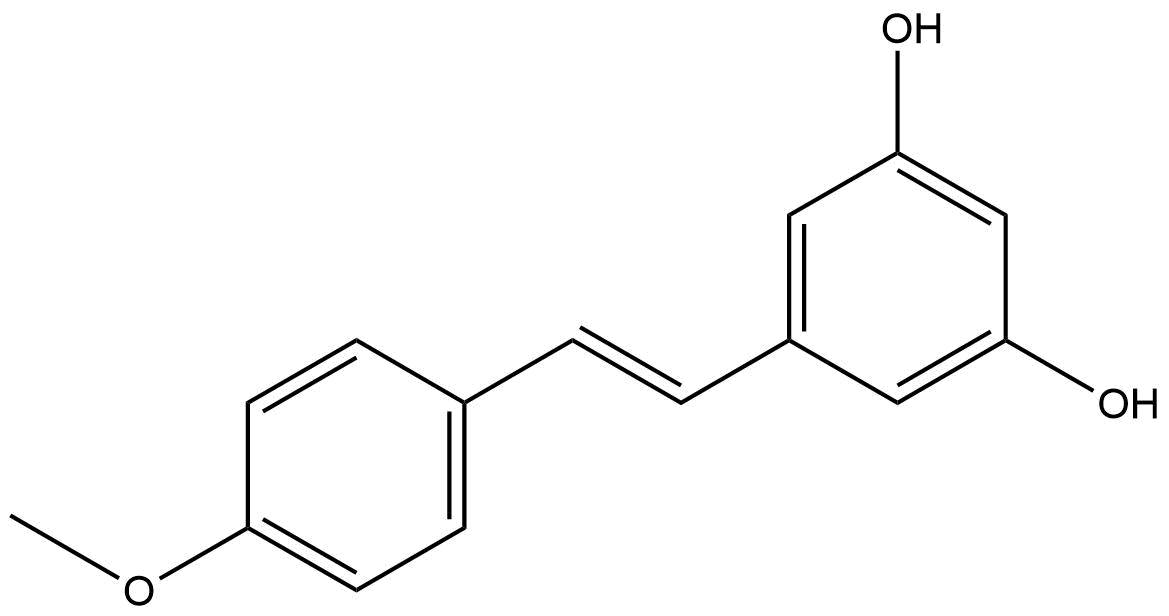


Product name: Resveratrol 4'-methyl ether
Synonym name: 4'-O-Methylresveratrol;Deoxyrhapontigenin;3,5-Dihydroxy-4'-methoxy-trans-stilbene
Catalogue No.: BP4096
Cas No.: 33626-08-3
Formula: C15H14O3
Mol Weight: 242.274
Botanical Source:
Physical Description:
Type of Compound:
Purity: 95%~99%
Analysis Method: HPLC-DAD or/and HPLC-ELSD
Identification Method: Mass, NMR
Packing: Brown vial or HDPE plastic bottle
Storage: Store in a well closed container, protected from air and light. Put into refrigerate or freeze for long term storage.
Whenever possible, you should prepare and use solutions on the same day. However, if you need to make up stock solutions in advance, we recommend that you store the solution as aliquots in tightly sealed vials at -20℃. Generally, these will be useable for up to two weeks.
The product could be supplied from milligrams to grams
Inquire for bulk scale.
For Reference Standard and R&D, Not for Human Use Directly.
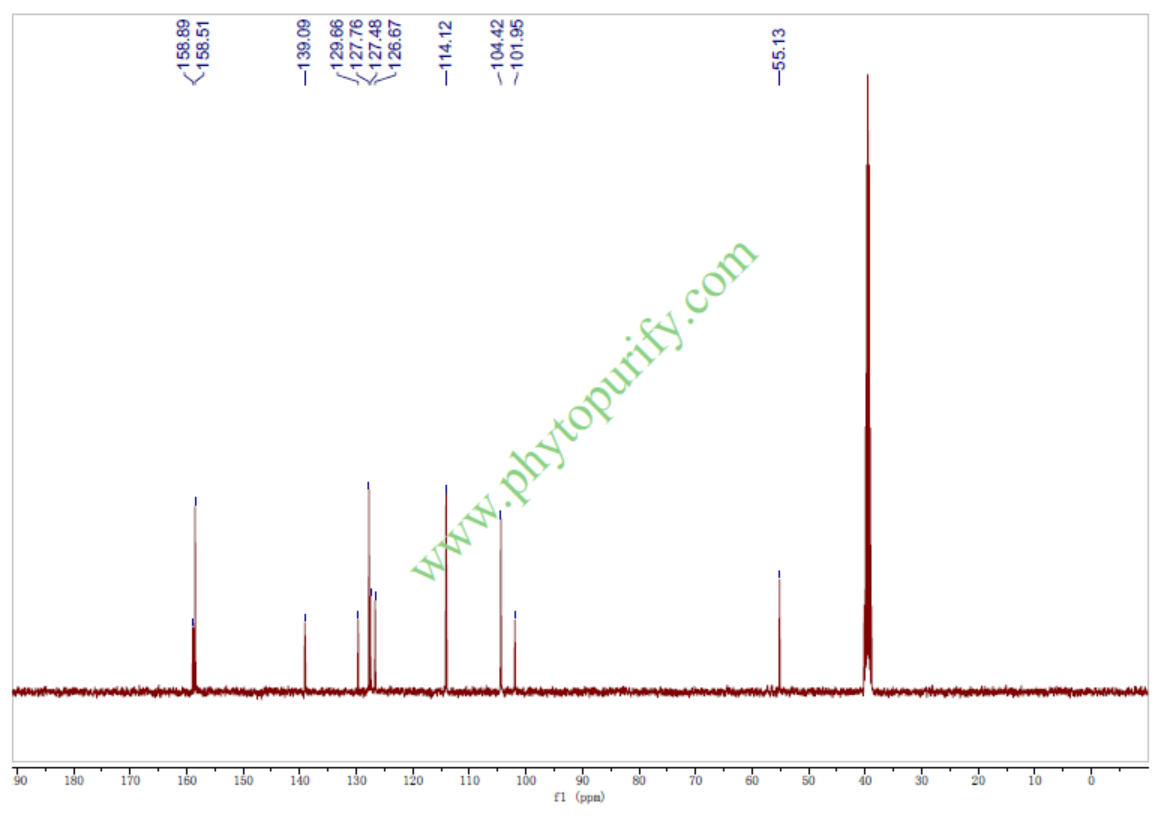
NMR of Resveratrol 4'-methyl ether
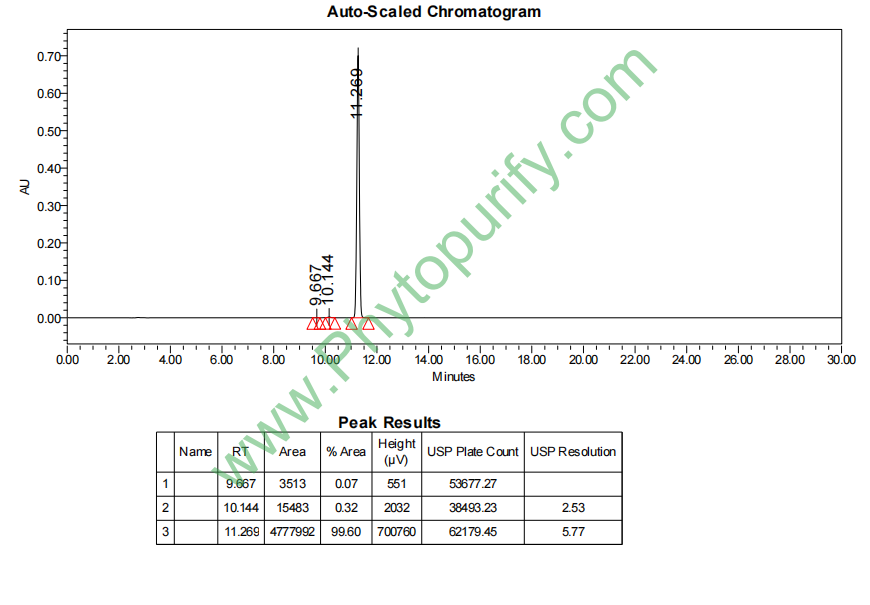
HPLC of Resveratrol 4'-methyl ether
Storage conditions:Short-term storage at 2~8℃, long-term storage at -20 ~ -80℃
49.6900
3.3195
3.3150
.0985
4.7733
16.0629
High
90.8512
1.9697
Yes
Yes
Yes
No
Yes
No
0.6
No
Yes
Yes
Yes
Resveratrol 4 '- methyl ether (CAS number 33626-08-3), also known as trans resveratrol 4' - methyl ether or SRT501, is a naturally occurring polyphenolic compound and a methylated derivative of resveratrol. As a natural product with significant biological activity, resveratrol -4 '- methyl ether has received widespread attention in the field of natural product pharmacology in recent years due to its excellent pharmacological properties and a wide range of molecular targets. This compound not only possesses multiple biological activities such as antioxidant, anti-inflammatory, cardiovascular protection, and anti-cancer, but also becomes a potential candidate drug for neurological disease research due to its ability to effectively cross the blood-brain barrier.
This review aims to systematically summarize the chemical structure and physicochemical properties, plant sources and extraction methods, pharmacological activity, mechanism of action, pharmacological evaluation, and clinical application prospects of resveratrol -4 '- methyl ether. It is expected to provide theoretical basis and research ideas for the basic research and drug development of this compound.
The chemical structure of resveratrol -4 '- methyl ether is based on the skeleton of resveratrol, with the difference being that its 4' hydroxyl group is replaced by a methyl group, forming a 4 '- methyl ether structure. Its molecular formula is C15H14O3 and its molecular weight is 242.2740. The methylation modification of this structure not only improves the lipid solubility of the molecule (LogP of approximately 3.32), but also enhances its stability and bioavailability.
In terms of physicochemical properties, the polar surface area (TPSA) of resveratrol -4 '- methyl ether is 49.69 Å ², indicating that its moderate polarity is favorable for cell membrane penetration. The low water solubility (about 0.0985 mg/mL) suggests that it may require appropriate drug delivery carriers in vivo to improve solubility. Importantly, this compound has high blood-brain barrier permeability and is suitable for therapeutic research on central nervous system related diseases. In addition, resveratrol -4 '- methyl ether did not exhibit hERG channel inhibitory activity, indicating a low risk of cardiac toxicity. The Ames mutagenicity test value was 0.6, suggesting a low risk of genotoxicity.
Resveratrol -4 '- methyl ether is mainly found in various plants, especially in the roots, stems, and fruits of Vitis spp., Arachis hypogaea, and certain medicinal plants. Its natural content is relatively low and it usually exists as a methylated derivative of resveratrol.
The extraction method often uses organic solvent extraction combined with column chromatography separation technology. Common solvents include methanol, ethanol, and ethyl acetate, which are extracted and purified by silica gel column chromatography or high-performance liquid chromatography (HPLC). In recent years, supercritical CO2 extraction and microwave-assisted extraction techniques have also been applied to improve extraction efficiency and purity. To obtain high-purity resveratrol -4 '- methyl ether, it is often refined by reverse phase HPLC.
In addition, considering the limitations of natural sources, chemical synthesis and biosynthetic methods have also been developed to meet the needs of scientific research and drug development. Methylation modification is usually carried out using selective methylation reagents to selectively modify resveratrol, ensuring the specificity of the 4 'methylation site.
Resveratrol -4 '- methyl ether exhibits multi-target and multi pathway pharmacological activities, covering multiple fields such as antioxidant, anti-inflammatory, cardiovascular protection, neuroprotection, and anti-tumor.
As a natural polyphenol, resveratrol -4 '- methyl ether has strong free radical scavenging ability. It can directly eliminate reactive oxygen species (ROS) and reactive nitrogen species (RNS), reducing oxidative stress damage. Animal models show that the compound activates the Nrf2 signaling pathway, induces the expression of downstream antioxidant enzymes such as glutathione peroxidase and superoxide dismutase, and significantly enhances the antioxidant defense ability of cells.
Resveratrol -4 '- methyl ether can inhibit the expression of various pro-inflammatory factors, such as tumor necrosis factor alpha (TNF - α), interleukin-6 (IL-6), and key kinase IKK β in the nuclear factor kappa B (NF - κ B) signaling pathway, reducing inflammatory response. Its anti-inflammatory effect has been validated in various inflammatory models, demonstrating potential value in treating chronic inflammatory diseases.
This compound promotes the production of nitric oxide (NO) in endothelial cells, improves vasodilation function, inhibits platelet aggregation and vascular smooth muscle cell proliferation, and exerts cardiovascular protection. In addition, resveratrol -4 '- methyl ether can regulate the mTOR signaling pathway, alleviate oxidative stress and apoptosis in cardiomyocytes, and prevent myocardial injury.
Due to its excellent blood-brain barrier permeability, resveratrol -4 '- methyl ether exhibits unique advantages in the field of neuroprotection. It inhibits the aggregation of β - amyloid, activates SIRT1, regulates the JAK/STAT signaling pathway, alleviates neuroinflammation and oxidative damage, and improves cognitive function. In a mouse aging model, this compound significantly improves progressive kidney injury and neurodegenerative disorders by activating the Nrf2 pathway.
Resveratrol -4 '- methyl ether exhibits inhibitory effects on proliferation and induces apoptosis in various tumor cell lines. Its mechanism of action involves inhibition of the mTOR signaling pathway, interference with DNA polymerase activity, and activation of SIRT1, regulating cell cycle and apoptosis related protein expression. In addition, as an effective inhibitor of pregnane X receptor (PXR), resveratrol -4 '- methyl ether may affect the expression of drug metabolizing enzymes and enhance the efficacy of anticancer drugs.
The multi-target mechanism of action of resveratrol -4 '- methyl ether is the basis for its multiple pharmacological activities. The main targets and signaling pathways include:
In addition, resveratrol -4 '- methyl ether promotes endothelial cell NO synthase activity, enhances NO production, improves vascular function, and exerts cardiovascular protective effects.
The pharmacological parameters of resveratrol -4 '- methyl ether show that it has good pharmacokinetic potential. Its molecular weight is moderate (242.27 Da), which conforms to Lipinski's rule and is beneficial for oral absorption. A higher LogP value (3.32) indicates moderate lipid solubility, which facilitates cell membrane penetration and blood-brain barrier penetration. The TPSA value (49.69 Å ²) is below 90 Å ², further supporting its good oral bioavailability and central nervous system permeability.
Low water solubility (0.0985 mg/mL) is a challenge in its pharmaceutical development, and it is necessary to improve solubility and bioavailability through drug formulation optimization (such as nanocarriers, liposomes, etc.). Toxicological evaluation showed no hERG channel inhibition, reducing the risk of cardiac toxicity. Ames test results showed low genotoxicity risk and good safety.
Pharmacokinetic studies have shown that resveratrol -4 '- methyl ether is rapidly absorbed after oral administration, with a moderate plasma half-life, and can effectively distribute to brain tissue, supporting its potential as a central nervous system drug. Its metabolism is mainly through the liver enzyme system, and some metabolites may have biological activity. Further research is needed on the relationship between metabolic kinetics and drug efficacy.
Based on the multiple pharmacological activities and good blood-brain barrier permeability of resveratrol -4 '- methyl ether, it has broad clinical application prospects in various disease fields.
Resveratrol -4 '- methyl ether is expected to become a potential therapeutic agent for neurodegenerative diseases such as Alzheimer's disease and Parkinson's disease by inhibiting the accumulation of β - amyloid proteins, activating the SIRT1 and Nrf2 pathways, and reducing neuroinflammation and oxidative stress. Its excellent brain penetrability gives it a unique advantage in the development of central nervous system drugs.
Resveratrol -4 '- methyl ether can improve vascular function, prevent atherosclerosis and myocardial injury, and has potential cardiovascular protection by promoting NO production, inhibiting mTOR signal and antioxidant effect. In the future, it can be used as an adjuvant therapy for cardiovascular diseases.
Resveratrol -4 '- methyl ether exhibits excellent anti-tumor potential by regulating tumor cell proliferation, apoptosis, and drug metabolism through multiple targets. Its characteristics as a pregnane X receptor inhibitor may enhance the efficacy of chemotherapy drugs and reduce drug resistance. In the future, it can be combined with existing anti-cancer drugs to enhance treatment efficacy.
The role of resveratrol -4 '- methyl ether in anti-inflammatory, anti-aging, and kidney protection is gradually being recognized, and it is expected to be expanded to the treatment of chronic inflammatory diseases, metabolic syndrome, and age-related diseases in the future.
Although resveratrol -4 '- methyl ether exhibits various pharmacological advantages, its clinical translation still faces challenges such as poor water solubility, limited bioavailability, and metabolic stability. Future research needs to focus on drug formulation optimization, systematic toxicology evaluation, and preclinical animal model validation to lay a solid foundation for clinical trials.
Resveratrol -4 '- methyl ether, as a natural polyphenol derivative, exhibits extensive pharmacological activity and good potential for drug development due to its unique chemical structure and multi-target mechanism of action. Its multiple effects such as antioxidant, anti-inflammatory, neuroprotective, cardiovascular protective, and anti-tumor provide new ideas and strategies for the treatment of various diseases.
In the future, combining modern medicinal chemistry, pharmacokinetics, and nano drug carrier technology to optimize the drug properties of resveratrol 4 '- methyl ether will help promote its clinical translation process. Thoroughly analyzing its mechanism of action and safety evaluation, conducting systematic preclinical and clinical research, will lay a solid foundation for the development of new natural product drugs and promote their application in disease prevention and treatment.
In summary, resveratrol -4 '- methyl ether, as a natural product derivative with multiple biological activities, has broad research and application prospects and deserves continuous attention and in-depth exploration in future drug development.
