| Catalog No | Package | Original Price | Price | Inventory | Quantity | Operating |
|---|---|---|---|---|---|---|
| BP4679-5mg | 5mg | $296.00 | Sign in |
|


Storage conditions:Short-term storage at 2~8℃, long-term storage at -20 ~ -80℃
11-O-Syrinylbergenin is a novel derivative of bergenin, which was isolated for the first time from the entire plant of the Chinese medicinal herb Bergenia crassifolia. As one of the hotspots in the pharmacological research of natural products, cabbagein and its derivatives have received widespread attention due to their diverse biological activities. In recent years, 11-O-eugenol based camptothecin has gradually become a research focus due to its significant anti ulcer activity. Relevant studies have revealed that its effects involve multiple gastrointestinal protective targets, demonstrating good potential for drug development. This article aims to provide a systematic review of the chemical structure and physicochemical properties, plant sources and extraction methods, pharmacological activity and mechanism of action, pharmacological evaluation and pharmacokinetic characteristics of 11-O-eugenol based camptothecin, and explore its clinical application prospects and future research directions.
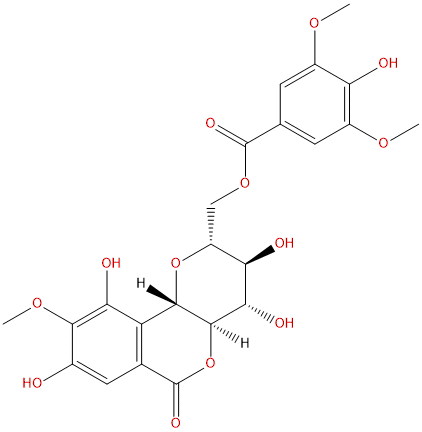
11-O-syringacyl camptothecin is an esterified derivative of camptothecin, with a molecular formula of C26H28O11 and a molecular weight of 508.4320. Its structural features include the ester bond connection between the core skeleton of camptothecin and syringayl groups. The introduction of syringayl groups not only increases the hydrophobicity of the molecule, but may also affect its binding affinity with biological targets. In terms of physical and chemical properties, the LogP value of this compound is 1.0443, indicating that it has moderate lipid solubility, which is beneficial for cell membrane penetration but not excessively hydrophobic and affects bioavailability. The polar surface area (TPSA) is 190.6700, indicating that the molecule has strong polar groups that may affect its solubility and absorption properties. The water solubility is 1.5528, indicating that it has a certain solubility in water, which is beneficial for the development of oral administration routes. The low permeability of the blood-brain barrier suggests that the compound mainly acts on peripheral tissues, reducing the risk of central nervous system side effects. The negative result of hERG channel inhibition experiment indicates a low risk of cardiac toxicity. The Ames test score is 0.6, indicating a low risk of genotoxicity and meeting safety requirements.
11-O-syringic acid is mainly isolated from the whole plant of Bergenia crassifolia. Longgu grass is a perennial herbaceous plant in the Sedum family, widely distributed in northern China and the Far East of Russia. In traditional Chinese medicine, dragon bone grass is used to treat gastric ulcers, inflammation, and kidney diseases, and its medicinal value has been confirmed by modern pharmacology.
The extraction method usually uses alcohol extraction liquid-liquid distribution combined with column chromatography separation technology. The specific steps include: crushing the entire plant of dried dragon bone grass, extracting it by reflux using ethanol or methanol as a solvent, concentrating the extract, and separating it using solvents such as ethyl acetate and n-hexane. Subsequently, high-purity 11-O-eugenol was obtained through purification techniques such as silica gel column chromatography and reverse phase high performance liquid chromatography (RP-HPLC). In recent years, the application of ultrasound assisted extraction and microwave-assisted extraction technologies has improved extraction efficiency and purity, reduced solvent usage, and is in line with the concept of green chemistry.
The pharmacological activity research of 11-O-syringic acid based camptothecin mainly focuses on its anti ulcer effect. Multiple in vitro and in vivo experiments have shown that this compound can effectively inhibit gastric mucosal damage, promote ulcer healing, and has good safety.
In the in vivo model, 11-O-eugenol significantly alleviated the pathological manifestations of gastric ulcers caused by nonsteroidal anti-inflammatory drugs (NSAIDs), alcohol, and stress, manifested as decreased gastric mucosal bleeding and erosion area, increased gastric acid pH value, and increased gastric mucus secretion. Its anti ulcer effect is comparable to commonly used clinical drugs such as rabeprazole and omeprazole, and even shows better efficacy in some experiments.
In vitro experiments have shown that the compound can regulate the secretion function of gastric mucosal cells, promote the expression of protective mucus component MUC5AC, and enhance the gastric mucosal barrier function. At the same time, 11-O-syringacyl camptothecin has a regulatory effect on gastric acid secretion related enzymes and receptors, exhibiting a multi-target synergistic effect. In addition, antioxidant and anti-inflammatory activities are also important pharmacological basis, which can alleviate oxidative stress and inflammatory response of gastric mucosa and promote tissue repair.
The anti ulcer effect of 11-O-syringic acid based camptothecin involves multiple molecular targets, mainly including:
PTGS1 (prostaglandin endoperoxide synthase 1, COX-1) and PTGS2 (COX-2)This compound can selectively regulate COX enzyme activity, promote prostaglandin synthesis, enhance gastric mucosal blood flow and secretion of protective mucus, and reduce NSAIDs induced gastric mucosal damage.
MUC5AC As the main component of gastric mucus, upregulation of MUC5AC expression helps form a physical barrier to prevent erosion of the gastric wall by gastric acid and digestive enzymes.
GAST (Gastrin) and its receptor CCKBR (Cholecystokinin B receptor)11-O-syringacyl camptothecin indirectly affects gastric acid secretion and maintains the homeostasis of the gastric environment by regulating the expression of gastrin and its receptors.
SST (Somatostatin)This compound promotes the expression of somatostatin, inhibits excessive secretion of gastric acid, and plays a protective role in the gastric mucosa.
HRH2 (histamine H2 receptor)By blocking or regulating H2 receptors, reduce histamine induced gastric acid secretion and alleviate gastric mucosal damage.
H+/K+- ATPase (proton pump)11-O-eugenol can inhibit proton pump activity in gastric wall cells, reduce gastric acid secretion, and alleviate ulcer symptoms.
TGF alpha (transforming growth factor alpha)Promote the proliferation and repair of gastric mucosal cells, and promote ulcer healing.
Overall, 11-O-syringacyl camptothecin exhibits significant anti ulcer activity through multi-target and multi pathway synergistic effects, regulating gastric acid secretion, enhancing mucosal barrier, inhibiting inflammatory response, and promoting tissue repair.
From the perspective of medicinal properties, 11-O-syringamide based camptothecin exhibits good medicinal properties. Its molecular weight is 508.4320, slightly higher than the Lipinski rule recommendation of 500 or less, but combined with its good water solubility (1.5528) and moderate LogP (1.0443), it is expected that oral absorption is still feasible. A higher TPSA (190.6700) suggests stronger polarity and may affect membrane permeability, but this also helps to target local gastrointestinal effects and reduce systemic side effects.
The low permeability of the blood-brain barrier reduces the risk of central nervous system toxicity. HERG channel inhibition is negative, indicating a low risk of cardiac toxicity and meeting safety requirements. The Ames test results showed a low risk of genotoxicity, further supporting its safety.
In terms of pharmacokinetics, relevant research is still in the preliminary stage. The in vivo metabolic kinetics experiment suggests that after oral administration, the concentration of 11-O-syringaoylbenzene in the gastrointestinal tract is relatively high, and the systemic circulating concentration is low, which is consistent with its main action on the gastric mucosa. Its metabolic pathway may involve hepatic esterase hydrolysis and intestinal microbiota metabolism, and the activity and toxicity of metabolites need further research.
Given the multi-target effects and good safety demonstrated by 11-O-eugenol based cabbagein in the field of anti ulcer, its clinical application prospects are broad. The current treatment of gastric ulcers mainly relies on proton pump inhibitors (PPIs) and H2 receptor antagonists, but long-term use poses problems such as drug resistance, drug interactions, and side effects. As a natural product derivative, 11-O-eugenol based cabbagein exhibits multi mechanism synergistic effects and may overcome the limitations of existing drugs.
Future research should focus on the following aspects:
Preclinical safety and toxicology studies Systematically evaluate the safety of long-term medication, clarify the maximum tolerated dose and potential toxicity.
Pharmacokinetic and Pharmacodynamic Relationship (PK/PD) Study Clarify the characteristics of absorption, distribution, metabolism, and excretion in the body, and optimize the dosing regimen.
Formulation development and optimization of administration routes Explore oral sustained-release formulations or gastric mucosal targeted delivery systems to improve efficacy and patient compliance.
Clinical trial design Conduct randomized, double-blind, controlled clinical trials to verify its efficacy and safety, and promote clinical translation.
Structural modification and derivative development Design and synthesize more derivatives based on the 11-O-syringacyl skeleton of camptothecin to optimize their pharmacological and pharmacokinetic properties.
In addition, the potential of this compound in other pharmacological activities such as anti-inflammatory and antioxidant is also worth further exploration, which may expand its indications.
11-O-syringacyl camptothecin, as a derivative of camptothecin derived from Longgu grass, has shown great potential for drug development due to its unique chemical structure and multi-target anti ulcer effects. Its moderate physicochemical properties, good safety, and significant gastric mucosal protective effect provide new ideas and candidate molecules for the development of novel anti ulcer drugs. In the future, through systematic pharmacological mechanism research, drug efficacy optimization, and clinical validation, it is expected to promote its becoming an effective drug for clinical application, benefiting the vast number of ulcer patients. The field of natural product pharmacology should continue to strengthen research on this type of compound, promoting the modern transformation and innovative development of traditional Chinese medicine resources.
