Batatasin III: Research progress from natural astragalus compounds to anti-tumor candidate drugs
Introduction/Overview
Natural products, as an important source of drug discovery, have played an indispensable role in the long history of human fight against diseases. Among numerous natural compounds with biological activity, stilbeneids have attracted much attention due to their unique chemical structure and extensive pharmacological activities. This type of compound has a styrene backbone as its core structure and is widely distributed in the plant kingdom, especially abundant in medicinal plants. Resveratrol, as a representative member of stilbene compounds, has been widely studied for its various biological activities such as antioxidant, anti-inflammatory, anti-aging, and anti-tumor. However, there are still many more diverse and unique active stilbene compounds in nature, which are worth exploring in depth.
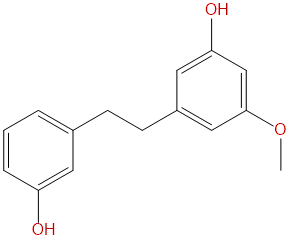
Batatasin III, also known as 3,3 '- dihydroxy-5-methoxybibenzyl, is a naturally occurring stilbene compound with CAS registration number 56684-87-8. This compound was originally derived from the yam plant in the Dioscoreaceae family(Dioscorea batatas Decne. was isolated and identified, hence the name "Yam Su". In recent years, with the deepening of research on the anti-tumor activity of natural products, yam extract III has gradually demonstrated its enormous potential in the field of cancer treatment. Research has shown that yam extract III can effectively inhibit the migration and invasion ability of cancer cells by suppressing epithelial mesenchymal transition (EMT) and FAK-AKT signaling pathways, while inducing tumor cell apoptosis, exhibiting multi-target anti-tumor activity.
This article will provide a systematic review of the research progress of Yam III from the aspects of chemical structure and physicochemical properties, plant sources and extraction methods, pharmacological activity research, mechanism of action and molecular targets, drug evaluation and pharmacokinetics, and clinical application prospects, in order to provide reference for the in-depth development and utilization of this natural product.
Chemical structure and physicochemical properties
Chemical structural characteristics
Yam extract III belongs to the Bibenyl class of stilbene compounds, and its core structure is composed of two benzene rings connected by an ethane bridge (- CH ₂ - CH ₂ -). Specifically, its chemical structure is 3,3 '- dihydroxy-5-methoxybenzyl, with a molecular formula of C ₁₅ H ₁₆ O3 and a molecular weight of 244.2900 g/mol. In this molecule, two benzene rings are respectively replaced by hydroxyl (- OH) and methoxy (- OCH ∝) groups: one benzene ring is connected to hydroxyl and methoxy groups at positions 3 and 5, respectively, while the other benzene ring is connected to a hydroxyl group at position 3 '. This substitution mode endows Yam III with unique polarity and reactivity.
Compared with the classic stilbene compound Resveratrol (3,4 ′, 5-trihydroxystilbene), the ethane bridge structure of Yam III increases its molecular flexibility, while the presence of methoxy groups changes the electronic distribution and hydrogen bonding ability of the molecule. These structural differences directly affect its interaction mode with biological targets and explain why Yam III exhibits a different pharmacological activity spectrum compared to Resveratrol.
Physical and chemical property parameters
According to the results of computational chemistry and experimental measurements, the key physicochemical properties of Yam III are as follows:
- molecular weight:244.2900 Da, Belonging to the category of small molecule compounds, it is beneficial for improving cell membrane penetration and bioavailability.
- Lipid water partition coefficient (LogP)3.0937 indicates that the compound has moderate lipid solubility and can be well distributed in the lipid bilayer while maintaining a certain degree of water solubility.
- Topological Polarity Surface Area (TPSA)49.6900 Å ², which is lower than 60 Å ², suggests that Yam III has good oral absorption potential and blood-brain barrier penetration ability.
- Water solubility:0.2613 mg/mL, Belonging to the category of micro solubility, this property may affect its in vivo absorption and formulation development.
- Blood-brain barrier penetrability A high prediction suggests that the compound may be able to enter the central nervous system, which provides the possibility for treating brain tumors and also suggests the need to pay attention to potential central nervous system toxicity.
- HERG inhibition Negative results reduce the risk of causing prolonged QT interval and arrhythmia in the heart, which is an important indicator in drug safety evaluation.
- Ames test The result is 0.0, indicating that the compound did not exhibit mutagenicity in the bacterial recovery mutation test, and the preliminary genetic toxicity risk is low.
These physicochemical properties together outline the basic profile of Shanyao Su III as a drug candidate molecule: moderate molecular weight and lipid solubility, good safety prediction indicators, but low water solubility may become a challenge for formulation development. It is worth noting that the high penetration of the blood-brain barrier makes it potentially advantageous in the treatment of central nervous system tumors such as gliomas, but caution should also be exercised about its potential impact on normal brain tissue.
Plant sources and extraction methods
Natural plant sources
Yam extract III was originally derived from the yam plant in the Dioscoreaceae family(Dioscorea batatas Separated from Decne. Yam, as a medicinal and edible plant, has a long history of use in traditional Chinese medicine clinical practice and daily diet. In addition to yam, subsequent studies have found that yam extract III is also present in other plants, mainly including:
- Dioscorea genus(Dioscorea)Plants Like Huang Du(Dioscorea bulbifera L.)、 Chuanlong Dioscorea(Dioscorea nipponica Makino et al., these plants are commonly used in traditional medicine to treat diseases such as tumors and inflammation.
- Orchidaceae plants Some orchid plants such as Dendrobium(Dendrobium The presence of Yam III has also been detected in spp. Dendrobium officinale has the effects of nourishing yin, clearing heat, benefiting the stomach and generating fluids in traditional Chinese medicine.
- Other sources In recent years, it has been reported that dioscin III or its structural analogues have also been found in some mosses and lichens, suggesting that the distribution of this compound in the plant kingdom may be more widespread than expected.
The content of artemisinin III in plants is influenced by various factors, including plant species, growth environment, harvest season, tissue location, etc. Generally speaking, the content of tubers and rhizomes is higher, which may be related to their function as storage organs for secondary metabolites.
Extraction and Separation Purification Methods
The extraction and purification of yam extract III usually follow the classic process of natural product chemistry, which mainly includes the following steps:
1. Raw material pretreatment Fresh or dry plant materials are crushed and extracted using organic solvents. Common extraction solvents include methanol, ethanol, ethyl acetate, or their mixed solvents. Research has shown that a 70% -95% ethanol aqueous solution has a high extraction efficiency for yam extract III, which matches its moderate polarity.
2. Extraction method:
- Cold soaking method Soak plant powder in solvent at room temperature for 24-72 hours, which is gentle but time-consuming.
- reflux extraction Heating reflux extraction for 2-4 hours is efficient but may lead to degradation of thermosensitive components.
- Ultrasound assisted extraction Using the cavitation effect of ultrasound to destroy cell walls and improve extraction efficiency, it usually takes 30-60 minutes to complete.
- Microwave assisted extraction Microwave heating rapidly increases the temperature inside cells, accelerates the dissolution of target components, and has the advantages of being fast and efficient.
3. Preliminary purification After vacuum concentration, the crude extract was preliminarily separated using liquid-liquid extraction method. Usually, solvents of different polarities such as petroleum ether, chloroform, ethyl acetate, and n-butanol are used for sequential extraction, and yam extract III is mainly enriched in the ethyl acetate extraction site.
4. Chromatographic separation:
- Silica gel column chromatography Preliminary separation can be achieved by using a silica gel column with petroleum ether ethyl acetate or chloroform methanol gradient elution.
- Gel column chromatography: Sephadex LH-20 gel column chromatography is often used for further purification to remove pigments and impurities by molecular sieve effect.
- Preparation type high-performance liquid chromatography For high purity requirements, a C18 reverse phase preparation column can be used to obtain yam III monomer with a purity of over 98% through isocratic or gradient elution using methanol water or acetonitrile water systems.
5. Structural identification The purified compound was structurally confirmed by nuclear magnetic resonance spectroscopy (¹ H-NMR, ¹ ³ C-NMR), mass spectrometry (MS), infrared spectroscopy (IR), and ultraviolet spectroscopy (UV).
In recent years, with the promotion of green chemistry concepts, new technologies such as supercritical fluid extraction (SFE) and deep eutectic solvents (DESs) have also been applied to the extraction of yam extract III. These methods have the advantages of low solvent consumption and environmental friendliness, but further optimization is needed for industrial application.
Pharmacological activity research
Antitumor activity
The most notable pharmacological activity of yam extract III is its anti-tumor effect. Both in vitro and in vivo studies have shown that the compound exhibits significant growth inhibition and cytotoxicity against various tumor cell lines.
1. Inhibit tumor cell proliferation: MTT method and CCK-8 method test results show that yam III has a dose and time dependent proliferation inhibitory effect on breast cancer (MCF-7, MDA MB-231), lung cancer (A549, H1299), liver cancer (HepG2, Huh7), colorectal cancer (HCT116, SW480), prostate cancer (PC3, DU145) and other cancer cell lines. The half maximal inhibitory concentration (IC ₅₀) value is usually within the range of 10-50 μ M, and there are differences in sensitivity among different cell lines.
2. Inducing cell apoptosis Flow cytometry analysis showed that treatment with yam extract III can lead to typical apoptotic features in tumor cells, including phosphatidylserine eversion, decreased mitochondrial membrane potential, activation of caspase-3/9, and DNA fragmentation. Further research has found that this compound upregulates pro apoptotic proteins Bax and Bad, downregulates anti apoptotic proteins MCL1 and BCL2 by regulating the expression of Bcl-2 family proteins, thereby activating mitochondrial pathway mediated cell apoptosis.
3. Inhibit cell migration and invasion Scratch experiments and Transwell chamber experiments have shown that yam extract III can significantly inhibit the migration and invasion ability of various cancer cells at subtoxic concentrations. This effect is closely related to its inhibition of epithelial mesenchymal transition (EMT). After treatment with yam extract III, the expression of epithelial marker E-cadherin was upregulated, while the expression of stromal markers N-cadherin, Vimentin, and Snail was downregulated, indicating that this compound can reverse or inhibit the EMT process.
4. Anti angiogenic effect The chicken embryo chorioallantoic membrane experiment and endothelial cell tube formation experiment showed that yam extract III can inhibit vascular endothelial growth factor (VEGF) - induced angiogenesis, reduce tumor microvascular density, and indirectly inhibit tumor growth and metastasis.
Other pharmacological activities
In addition to anti-tumor activity, yam extract III also exhibits various other biological activities:
1. Antioxidant activity DPPH radical scavenging experiments and ABTS ⁺ radical scavenging experiments showed that yam extract III has moderate antioxidant capacity, and its phenolic hydroxyl structure can effectively scavenge free radicals, protecting cells from oxidative stress damage.
2. Anti inflammatory activity In a macrophage model stimulated by lipopolysaccharide (LPS), yam extract III can inhibit the release of pro-inflammatory factors such as TNF - α, IL-6, and IL-1 β, while reducing the production of nitric oxide (NO) and prostaglandin E ₂ (PGE ₂), demonstrating anti-inflammatory potential.
3. Neuroprotective effect Due to its high blood-brain barrier penetration, the neuroprotective activity of yam extract III has also received attention. Research has found that this compound can alleviate the neurotoxicity induced by β - amyloid protein, inhibit oxidative stress and inflammatory response, indicating its potential application value in neurodegenerative diseases such as Alzheimer's disease.
4. Antibacterial activity Some studies have reported that yam extract III has a certain inhibitory effect on common pathogenic bacteria such as Staphylococcus aureus and Escherichia coli, but its activity is relatively weak, which may be related to its natural function as a plant antitoxin.
Mechanism of action and molecular targets
The anti-tumor mechanism of yam extract III involves multiple signaling pathways and molecular targets, exhibiting characteristics of multi-target and multi pathway effects. The following will elaborate on two aspects: the main signaling pathways and key target proteins.
Regulation of main signaling pathways
1. FAK-AKT signaling pathway This is one of the core mechanisms of the anti-tumor effect of yam extract III. Focal adhesion kinase (FAK) is a non receptor tyrosine kinase that plays a critical role in cell adhesion, migration, and survival. Yam extract III can significantly inhibit the phosphorylation activation of FAK, thereby blocking its downstream AKT signaling pathway. The decrease in phosphorylation level of AKT (protein kinase B) leads to changes in the activity of downstream effector molecules such as mTOR, GSK-3 β, FOXO, ultimately inhibiting cell proliferation, promoting apoptosis, reducing migration and invasion. Research has shown that inhibition of the FAK-AKT pathway is a key upstream event in the anti EMT effect of yam extract III.
2. STAT3 signaling pathway Signal transducer and activator of transcription factor 3 (STAT3) is continuously activated in various tumors, promoting tumor cell proliferation, survival, and immune escape. Yam extract III can inhibit the phosphorylation of STAT3 (Tyr705 site), preventing its nuclear translocation and transcriptional activation functions. The downregulation of STAT3 activity leads to a decrease in the expression of its target genes such as Cyclin D1, Survivor, Bcl xL, MMP2, etc., thereby inhibiting tumor progression.
3. MAPK signaling pathway The mitogen activated protein kinase (MAPK) family includes members such as ERK, JNK, and p38, which play important roles in cell proliferation, differentiation, and stress response. The effect of yam extract III on the MAPK pathway is cell type dependent. In some tumor cells, this compound can inhibit the phosphorylation of ERK1/2, while in other cells it can activate p38 and JNK, induce stress response and apoptosis. This difference may reflect the complexity of signal networks in different tumor cells.
4. HIF-1 α signaling pathway Hypoxia inducible factor-1 alpha (HIF-1 alpha) is a key transcription factor for tumors to adapt to the hypoxic microenvironment. Yam extract III can inhibit the protein expression and transcriptional activity of HIF-1 α, reduce the expression of its target genes such as VEGF, GLUT1, LDHA, etc., thereby inhibiting tumor angiogenesis and reprogramming of glycolytic metabolism (Warburg effect).
Key molecular targets
1. Apoptosis regulatory proteins:
- MCL1 Myeloid Leukemia 1 (MCL1) is an anti apoptotic protein in the Bcl-2 family, highly expressed in various tumors. Yam extract III can downregulate the level of MCL1 protein, relieve its inhibition on mitochondrial outer membrane permeability, promote cytochrome c release and caspase cascade activation.
- BCL2 B-cell lymphoma 2 (BCL2) is a classic anti apoptotic protein. Yam extract III reduces BCL2 expression through transcriptional and post-translational modification mechanisms, while upregulating the pro apoptotic protein Bax, altering the Bax/BCL2 ratio and promoting cell apoptosis.
2. Matrix metalloproteinases Matrix metalloproteinase-2 (MMP2) is a key enzyme that degrades the extracellular matrix and plays a central role in tumor invasion and metastasis. Yam extract III inhibits the gene expression and enzyme activity of MMP2, reduces basement membrane degradation, and thus suppresses the invasive ability of tumor cells.
3. Topoisomerase Topoisomerase I (TOP1) and II α (TOP2A) are essential enzymes for DNA replication and transcription, as well as targets for various chemotherapy drugs. Research has shown that yam extract III can inhibit the activity of TOP1 and TOP2A, interfere with DNA topology, lead to DNA damage and cell cycle arrest, which may be another mechanism of its anti proliferative effect.
4. Nuclear receptors and metabolic enzymes:
- ESR1(Estrogen receptor α): In estrogen receptor positive breast cancer, yam III can down regulate the expression of ESR1 or antagonize its transcriptional activity, playing an anti estrogen like role.
- CYP19A1(Aromatase): This enzyme catalyzes the conversion of androgens to estrogens. The inhibitory effect of yam extract III on CYP19A1 suggests that it may inhibit hormone dependent tumor growth by reducing local estrogen levels.
Multi target network regulation
The anti-tumor effect of yam extract III is not a linear regulation of a single target, but rather a network regulatory effect formed by interfering with multiple signaling nodes. For example, inhibition of the FAK-AKT pathway can simultaneously affect the EMT process, cell survival, and metabolic reprogramming; The downregulation of STAT3 affects inflammation tumor transformation, immune escape, and angiogenesis. This multi-target mode of action makes it difficult for tumor cells to develop drug resistance through a single gene mutation, providing a potential advantage in overcoming clinical drug resistance.
Evaluation of drug properties and pharmacokinetics
Drug similarity assessment
Based on Lipinski's "Rule of Five" and Veber's rule, evaluate the drug similarity of Yam III:
-Molecular weight 244.29 Da (<500), meets the requirements
- LogP 3.09(<5), meet the requirements
-Number of hydrogen bond donors: 2 phenolic hydroxyl groups (<5), meeting the requirements
-Number of hydrogen bond acceptors: 3 oxygen atoms (<10), meeting the requirements
-Number of rotatable keys: 4 (<10), in accordance with Veber rules
-TPSA 49.69 Å ² (<140 Å ²), meets the requirements
The above parameters indicate that yam extract III has good oral drug similarity and meets the classical drug screening criteria. However, low water solubility (0.26 mg/mL) may become a limiting factor for its oral bioavailability and needs to be improved through formulation methods.
Pharmacokinetic properties
1. Absorption Based on LogP and TPSA predictions, yam extract III has good intestinal permeability and may be rapidly absorbed orally. However, low water solubility may limit the dissolution rate and affect the degree of absorption. The use of solid dispersions, lipid nanoparticles, or cyclodextrin inclusion techniques can improve its apparent solubility and dissolution rate.
2. Distribution The high blood-brain barrier penetration suggests that the compound may have a high distribution in brain tissue, providing favorable conditions for the treatment of glioblastoma, but potential toxicity to normal brain tissue also needs to be considered. The plasma protein binding rate is expected to be moderately high, which may affect the concentration of free drugs.
3. Metabolism The phenolic hydroxyl structure is a common substrate for phase II metabolic enzymes such as UDP glucuronosyltransferase and sulfotransferase. Yam III may undergo glucuronidation and sulfation binding reactions in the liver and intestine, forming water-soluble metabolites that are excreted from the body. In addition, methoxy may undergo O-demethylation metabolism mediated by cytochrome P450 enzymes (CYP450). The study of metabolic stability still needs to be systematically carried out.
4. Excretion Metabolites are mainly excreted through bile and urine. Due to its small molecular weight, the prototype drug may also undergo glomerular filtration, but tubular reabsorption may be higher, prolonging the retention time in the body.
safety evaluation
- Genotoxicity The Ames test result is negative, preliminarily indicating no mutagenicity. But further in vitro micronucleus tests and in vivo chromosome aberration tests are needed to comprehensively evaluate the genetic toxicity risk.
- cardiotoxicity HERG inhibition is negative, reducing the risk of QT interval prolongation. However, in vivo electrocardiogram monitoring is still necessary to rule out other potential cardiac toxicity.
- acute toxicity Preliminary animal experiments have shown that the acute toxicity of yam extract III is relatively low, with an LD ₅₀ value possibly greater than 1000 mg/kg and a wide safety window. However, long-term toxicity research is still lacking, and a systematic evaluation of its chronic toxicity to important organs such as the liver, kidneys, and nervous system is needed.
- Target related toxicity Due to the inhibition of signaling pathways such as FAK and STAT3, which may affect the physiological functions of normal cells, attention should be paid to possible adverse reactions such as delayed wound healing and immune suppression.
Formulation development strategy
To address the issue of low water solubility of Yam III, the following formulation strategies can be considered:
1. Liposome preparation Using lipid bilayers to encapsulate drugs, improving bioavailability and achieving targeted delivery.
2. polymeric nanoparticles Preparation of nanoparticles using biodegradable polymers such as PLGA and PCL to control drug release.
3. Phospholipid complex Forming complexes with phospholipids to improve oral absorption of lipophilic drugs.
4. Eutectic technology Forming drug co crystals with suitable co crystal forming materials to improve solubility and stability.
5. Prodrug design Introducing phosphate ester, amino acid ester and other functional groups on phenolic hydroxyl groups to improve water solubility, and converting them into active prototype drugs through enzymatic hydrolysis in vivo.
Clinical application prospects and prospects
Potential indications
Based on existing pharmacological research, yam extract III has potential clinical application value in the following tumor types:
1. breast cancer Especially triple negative breast cancer (TNBC) and estrogen receptor positive breast cancer. By inhibiting FAK-AKT pathway and EMT, yam III may effectively inhibit the metastasis of breast cancer, and its anti estrogen effect can assist endocrine therapy.
2. Lung cancer The inhibitory effect on proliferation and migration of non-small cell lung cancer (NSCLC), as well as its anti angiogenic activity, make it a candidate drug for lung cancer treatment.
3. Liver cancer By inhibiting HIF-1 α and STAT3 signaling, it is possible to improve the hypoxic microenvironment and immunosuppressive state of liver cancer.
4. Glioma of the brain The high blood-brain barrier penetration gives it a unique advantage in the treatment of brain tumors, and its role in glioblastoma (GBM) deserves further investigation.
5. Colorectal cancer Inhibition of EMT and MMP2 can reduce liver metastasis in colorectal cancer.
Combination therapy strategy
Given that natural products typically have mild effects, multiple targets, but limited efficacy, combination therapy may be an important way to leverage the clinical value of Yam III:
- Combined use with chemotherapy drugs Combined with traditional chemotherapy drugs such as paclitaxel, cisplatin, and doxorubicin, it may synergistically enhance anti-tumor effects through different mechanisms, while reducing the dosage and toxicity of chemotherapy drugs.
- Combined with targeted drugs Combined use with FAK inhibitors, AKT inhibitors, or STAT3 inhibitors may result in a dual blocking effect on signaling pathways.
- Combined with immune checkpoint inhibitors By regulating the tumor microenvironment, the therapeutic effect of PD-1/PD-L1 antibodies is enhanced.
- Combined with natural products Combined with other natural compounds with anti-tumor activity, such as resveratrol and curcumin, it exhibits multi-target synergistic effects.
Challenges and research directions faced
Although yam extract III has shown promising anti-tumor potential, there are still many challenges from laboratory research to clinical application
1. Pharmacokinetic optimization Systematic in vivo pharmacokinetic studies are needed to clarify its absorption, distribution, metabolism, and excretion characteristics, and develop suitable formulations to improve bioavailability.
2. Comprehensive evaluation of toxicity spectrum Conduct safety evaluations on long-term toxicity, reproductive toxicity, immune toxicity, etc., with a particular focus on potential impacts on the central nervous system.
3. In depth analysis of the mechanism of action Using omics techniques (proteomics, metabolomics) and systems biology methods, comprehensively reveal the molecular targets and action network of Yam III, providing a basis for precision medicine.
4. Study on structure-activity relationship Synthesis of structural analogues of yam extract III, systematic study of the effects of substituent types, positions, and numbers on activity, providing guidance for structural optimization and lead compound discovery.
5. Clinical translational research After completing sufficient preclinical research, design a reasonable clinical trial plan and gradually verify its safety and effectiveness starting from phase I dose escalation trials.
6. Resource sustainability Due to limited natural extraction yields, it is necessary to develop chemical synthesis or biosynthetic methods to ensure the supply of raw materials for drug development. At present, there are literature reports on the complete synthesis route of yam extract III, but the yield and cost still need to be optimized.
Conclusion
Yam extract III, as a natural astragalus compound, has shown remarkable potential in the field of anti-tumor drug development due to its unique chemical structure and multi-target pharmacological activity. From the discovery of plant chemistry to the elucidation of molecular mechanisms, from in vitro activity screening to pharmacological evaluation, researchers have built a relatively complete research framework for this natural product. Its mechanism of inhibiting tumor metastasis by suppressing the FAK-AKT signaling pathway and EMT process provides important insights for the development of novel anti metastatic drugs. Meanwhile, good drug similarity parameters and preliminary safety data have laid the foundation for its further development.
However, transitioning from natural products to clinical drugs is a challenging path. The issues of limited water solubility, unclear pharmacokinetic properties, and lack of long-term toxicity data of Yam III need to be systematically addressed in subsequent research. With the collaborative efforts of multiple disciplines such as medicinal chemistry, pharmacy, pharmacology, and toxicology, as well as the development of new formulation technologies and drug delivery systems, yam extract III is expected to enter the preclinical development stage in the near future, ultimately bringing new treatment options for cancer patients.
Natural products are precious treasures bestowed upon humanity by nature. The research process of Yam III once again proves that excavating active ingredients from traditional medicinal plants and combining them with modern pharmacology and medicinal chemistry methods for in-depth development is still an important way to discover innovative drugs. Looking forward to more research results on Yam III in the future, promoting this natural product from the laboratory to clinical practice and making contributions to human health.