Introduction/Overview
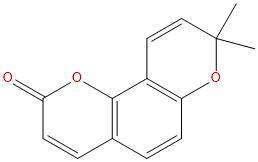
Natural products have long been an important source of innovative drug discovery, with their structural diversity and wide range of biological activities providing unique molecular frameworks for addressing major human health challenges such as cancer and inflammation. Seselin, a coumarin furan derivative derived from various traditional medicinal plants, is increasingly becoming a new star in the field of pharmacology research. Its CAS number is 523-59-1. Modern pharmacological research has preliminarily revealed its multiple biological activities such as anti-cancer, anti-inflammatory, and antifungal, and it has oral activity, demonstrating good potential for development. Especially in the field of inflammation related diseases, artemisinin exhibits unique advantages in multi-target regulation by acting on key signaling nodes such as interleukin-6 (IL-6), signal transduction and transcription activator 3 (STAT3), and nuclear factor kappa B (NF - κ B). Inflammation is the common soil for various pathological processes such as cancer, neurodegenerative diseases, metabolic syndrome, etc. Therefore, in-depth exploration of the pharmacological effects and molecular mechanisms of artemisinin not only helps to clarify the scientific connotation of traditional drugs, but also may provide lead compounds for the development of new multi-target therapeutic drugs. This article aims to systematically review the chemical properties, plant sources, pharmacological activities, mechanisms of action, medicinal properties, and clinical application prospects of Artemisia annua, in order to provide comprehensive academic references for the in-depth research and development of this natural product.
Chemical structure and physicochemical properties
Xie Hao Su is a typical linear furan coumarin, with the chemical name 2,3-dihydro-6,7-dimethoxy-2- (1-methylvinyl) - furan [3,2-g] chromene-5-one. Its molecular formula is C14H12O3 and its molecular weight is 228.2470 g/mol. Structurally, it is composed of a coumarin core (benzo [a] - pyranone) fused with a dihydrofuran ring at positions 6 and 7, forming a tricyclic fused system. The C-2 position is connected by a 1-methylvinyl (isopropylidene) group, which is one of its important structural features and may be closely related to its biological activity and lipid solubility.
In terms of physicochemical properties, Artemisia scoparia exhibits typical coumarin like compound characteristics. Its lipid water partition coefficient (LogP) is 3.1966, indicating that the compound has a moderately high lipophilicity, which is beneficial for its penetration of cell membranes, but may also affect its water solubility and formulation development. Its topological polar surface area (TPSA) is 39.44 Å ², which is relatively small, further confirming its good membrane permeability. The water solubility data (0.0097 mg/mL) indicates that artemisinin has extremely low solubility in water, which is a key consideration in its administration route and dosage form design. Based on its small molecular weight, moderate LogP, and small TPSA, it is predicted according to empirical rules that artemisinin has a high blood-brain barrier penetration potential, which provides a structural basis for its application in central nervous system related inflammations or diseases such as neuropathic pain and neurodegenerative diseases. Preliminary pharmacological screening showed no significant hERG potassium channel inhibitory activity at the tested concentration (hERG inhibition: No), indicating a low risk of cardiac toxicity. However, the Ames test result is 1.5 (usually expressed as mutation rate, subject to specific experimental conditions), indicating a slight mutagenic signal in a specific experimental system, which requires further evaluation through more comprehensive genetic toxicity testing in subsequent development.
Plant sources and extraction methods
Artemisia annua is not unique to a single plant, but is widely distributed in plants of multiple families and genera such as Rutaceae and Umbelliferae. Its content is particularly high in plants with a long history of application in traditional medical systems. Its main plant sources include:
1. Rutaceae plants: Multiple types Citrus The roots, bark, and fruits of citrus plants, and Ruta Plants of the Rutaceae genus are a common source of artemisinin. These plants are used in many cultures to treat inflammation, pain, and infections.
2. Umbelliferae plants:Seseli The plant of the genus Artemisia, named after its genus name, is the iconic source of this compound. In addition,Ferula It is also commonly detected in plants of genera such as the Avei genus.
3. Other sources: In Clausena(Huangpi genus)Murraya There have also been reports of isolation in plants such as the genus Aquilaria.
The extraction and separation of artemisinin usually follow the conventional process of natural product chemistry. Firstly, dry and crush plant materials such as roots, stems, and bark. The commonly used initial extraction solvents include methanol, ethanol, ethyl acetate, or alcohol water mixed solvents with different ratios, and crude extracts are obtained by impregnation, reflux, or ultrasound assisted extraction methods. Subsequently, taking advantage of the moderate polarity of artemisinin, solvent extraction methods (such as segmented extraction with petroleum ether, chloroform, and ethyl acetate) are often used to preliminarily enrich the crude extract. Further purification mainly depends on chromatographic techniques, including silica gel column chromatography (elution with petroleum ether ethyl acetate or chloroform methanol gradient), gel column chromatography (Sephadex LH-20) and high performance liquid chromatography (HPLC). Modern analytical techniques such as thin-layer chromatography (TLC), high-performance liquid chromatography-mass spectrometry (HPLC-MS), and nuclear magnetic resonance (NMR) are used to monitor the extraction process and confirm the structure of the final compound. In recent years, green extraction techniques such as supercritical fluid extraction (SFE) and microwave-assisted extraction (MAE) have also been explored for the extraction of coumarin compounds due to their high efficiency and environmental friendliness.
Pharmacological activity research
Numerous in vitro and in vivo pharmacological studies have confirmed that artemisinin has multiple biological activities, among which anti-cancer and anti-inflammatory activities are the most prominent.
1. Anti cancer activity:
Xie Hao Su exhibits growth inhibition and pro apoptotic effects on various human cancer cell lines. Studies have shown that it can inhibit the proliferation of breast cancer (such as MCF-7, MDA-MB-231), lung cancer (A549), liver cancer (HepG2), colon cancer (HT-29) and leukemia (HL-60) in a dose-dependent manner. Its anti-cancer mechanism involves inducing cell cycle arrest (such as G2/M phase arrest), activating mitochondrial dependent apoptosis pathway (increasing Bax/Bcl-2 ratio, activating caspase-3/9), and inhibiting cell migration and invasion. In vivo animal models (such as mouse transplant tumor models) have also preliminarily confirmed that artemisinin can inhibit tumor growth and may produce synergistic effects when combined with certain chemotherapy drugs.
2. Anti inflammatory activity:
Anti inflammation is another core pharmacological effect of artemisinin. In various animal models of acute (such as carrageenan induced rat paw edema) and chronic inflammation, oral or intraperitoneal administration of artemisinin can significantly reduce tissue edema, inflammatory cell infiltration, and pain response. In cell models, it can effectively inhibit the production of nitric oxide (NO), prostaglandin E2 (PGE2), and various pro-inflammatory cytokines induced by stimuli such as lipopolysaccharide (LPS) in macrophages (such as RAW 264.7 cells).
3. Antifungal activity:
Artemisinin exhibits inhibitory activity against various plant pathogenic fungi and some human pathogenic fungi, such as Candida albicans. The mechanism may involve disrupting the integrity of fungal cell membranes, interfering with hyphal growth, or affecting fungal metabolic processes.
4. Other activities:
In addition, studies have reported that artemisinin has potential activities such as antioxidant, antiviral (such as anti dengue virus), analgesic, and antispasmodic properties, which are often associated with its anti-inflammatory effects.
Mechanism of action and molecular targets
The pharmacological effects of Artemisia annua, especially its excellent anti-inflammatory activity, stem from its multi-target intervention on key nodes of the inflammatory signaling network. Existing research has preliminarily revealed its core targets and pathways of action:
1. Inhibition of NF - κ B signaling pathway:
Nuclear factor kappa B (NF - κ B) is the core transcription factor in inflammatory response. Research has shown that artemisinin can inhibit LPS induced degradation and phosphorylation of I κ B α protein, thereby preventing the translocation of NF - κ B p65 subunit to the nucleus. This directly leads to the inhibition of transcription of a series of pro-inflammatory mediator genes downstream, including tumor necrosis factor - α (TNF - α), interleukin-6 (IL-6), inducible nitric oxide synthase (NOS2/iNOS), and cyclooxygenase-2 (PTGS2/COX-2). The regulation of the NFKB1 (encoding p105/p50 subunits) pathway is the cornerstone of its anti-inflammatory effect.
2. Regulating the STAT3 signaling pathway:
Signal transducer and activator of transcription factor 3 (STAT3) is another important pro-inflammatory and pro cancer pathway. Xie Hao Su can inhibit STAT3 tyrosine phosphorylation induced by cytokines such as IL-6, block its dimerization and nuclear translocation, and thereby inhibit STAT3 dependent gene expression. This simultaneously contributes to its anti-inflammatory and anticancer effects.
3. Regulating inflammasomes and CASP1:
It has been confirmed that artemisinin can inhibit the activation of NLRP3 inflammasome, thereby reducing the activation of caspase-1 (CASP1). Activated caspase-1 is responsible for cleaving pro-IL-1 β and pro-IL-18 into their active forms and triggering cell pyroptosis. Inhibiting this process helps to control excessive inflammatory reactions.
4. Affects pain related ion channels:
Xie Hao Su has a regulatory effect on transient receptor potential vanillic acid subtype 1 (TRPV1) and transient receptor potential anchor protein subtype 1 (TRPA1) channels. These two channels are key sensors that mediate inflammatory pain and neuropathic pain. Xie Hao Su may exert analgesic effects by antagonizing or regulating the activity of these channels.
5. Inhibition of cyclooxygenase (COX) activity:
Xie Hao Su has a direct or indirect inhibitory effect on the activity of cyclooxygenase-1 (PTGS1/COX-1) and cyclooxygenase-2 (PTGS2/COX-2), reducing the production of prostaglandin inflammatory mediators. This is one of the classic mechanisms of its anti-inflammatory, antipyretic, and analgesic effects.
6. Downregulation of TNF - α expression:
Xie Hao Su can effectively reduce the mRNA and protein expression levels of TNF - α. TNF - α is an early and core cytokine in the inflammatory cascade, and its downregulation is crucial for controlling the inflammatory process.
In summary, artemisinin forms a synergistic anti-inflammatory network by simultaneously acting on multiple targets such as NF - κ B, STAT3, inflammasomes, pain channels, and COX. This may be the fundamental reason for its highly effective anti-inflammatory and multi disease therapeutic potential.
Evaluation of drug properties and pharmacokinetics
Although Artemisia annua has shown promising biological activity, its potential as a drug still requires systematic pharmacological evaluation.
Pharmacokinetic (PK) characteristics:
At present, research on the pharmacokinetics of artemisinin system is relatively limited. Based on its physicochemical properties (moderate LogP, low TPSA), it can be predicted that it will have good gastrointestinal absorption after oral administration. Limited animal studies have shown that after oral administration, artemisinin can be absorbed into the bloodstream and distributed to multiple tissues. Its high lipid solubility and predicted high blood-brain barrier permeability suggest that it may effectively distribute to the central nervous system. In terms of metabolism, as a coumarin compound, artemisinin is likely to undergo extensive phase I metabolism (such as oxidation and dealkylation of cytochrome P450 enzymes) and phase II binding reactions (such as glucuronidation and sulfation) in the liver. Its isopropylidene group may be one of the main metabolic sites. Metabolites are mainly excreted through bile and urine. Clear absolute bioavailability, half-life, major metabolites and activities, as well as the presence of hepatic intestinal circulation and other key PK parameters, need to be further studied through more standardized radioactive labeling or high-sensitivity LC-MS/MS methods.
Advantages and challenges of pharmaceutical properties:
Advantage: ① Clear oral activity; ② Small molecular weight and clear structure; ③ Multi targeted effects may produce synergistic therapeutic effects and reduce the risk of drug resistance; ④ Preliminary safety analysis showed no significant hERG inhibition; ⑤ Natural source with traditional application background.
Challenge: ① Poor water solubility This is the primary challenge facing its formulation development, which may need to be improved through salt formation, formation of inclusion complexes, nano formulations, or prodrug strategies. ② Potential metabolic stability issues It is necessary to clarify its main metabolic pathways, metabolic enzymes, and whether there is a problem of insufficient exposure caused by rapid metabolism. ③ Toxicity risk The preliminary positive signal of Ames test needs to be thoroughly clarified. Coumarin compounds typically require attention to their phototoxicity, hepatotoxicity, and interactions with other drugs (especially through CYP450 enzymes). ④ Selective action Although multi-target therapy is advantageous, it is also necessary to evaluate its potential interference with normal physiological functions to ensure that the treatment window is wide enough.
Clinical application prospects and prospects
The multi-target anti-inflammatory properties of Artemisia annua have broad prospects for its application in various disease fields
1. Inflammatory related diseases:
* Rheumatoid arthritis, osteoarthritis By inhibiting key inflammatory mediators such as IL-6, TNF - α, and PGE2, it is expected to alleviate joint swelling, pain, and bone destruction.
* Inflammatory bowel disease (IBD)After oral administration, it may locally act on the intestine, regulate intestinal immune imbalance, and alleviate colitis.
* Neuroinflammatory disease With its potential BBB penetration ability, artemisinin may be used for the treatment of Alzheimer's disease, Parkinson's disease, multiple sclerosis, and neuropathic pain, by inhibiting the activation of microglia/astrocytes and protecting neurons.
* skin disease For conditions such as psoriasis and atopic dermatitis, topical or oral preparations can be developed.
2. Cancer treatment:
It can be used as an adjuvant therapy drug, combined with conventional chemotherapy, radiotherapy or immunotherapy, to enhance efficacy, reduce side effects and improve tumor microenvironment through dual mechanisms of anti-inflammatory and direct anti-cancer. Especially suitable for cancers closely related to chronic inflammation, such as liver cancer and colon cancer.
3. Pain management:
Especially for TRPV1/TRPA1 mediated inflammatory and neuropathic pain, it may be developed into a novel analgesic drug.
Future research directions and development strategies:
1. structural optimization Conduct systematic structure-activity relationship studies and structural modifications using artemisinin as the lead compound. Focus on improving its water solubility and metabolic stability, while enhancing selectivity and efficacy towards specific targets, and reducing potential toxicity.
2. Formulation innovation Develop new delivery systems such as nanocrystals, liposomes, solid dispersions, and cyclodextrin inclusion complexes to address their solubility and bioavailability issues.
3. Deepening mechanism Using chemical biology methods such as affinity fishing and molecular probes to discover new direct targets; Using systems pharmacology and omics techniques to elucidate the network diagram of multi-target synergistic effects.
4. Preclinical systematic review Complete comprehensive pharmacological, pharmacokinetic, and toxicological (acute, subchronic, genetic, reproductive toxicity) evaluations that meet IND application requirements, and clarify their safety windows.
5. Explore combination therapy Systematically evaluate the potential for combination therapy with existing standard therapies in complex disease models such as cancer and autoimmune diseases.
Conclusion
As a natural source of furanocoumarin, Artemisia annua has shown significant potential in anti-cancer and anti-inflammatory fields due to its unique chemical structure and multi-target pharmacological effects. It constructs an efficient anti-inflammatory network by precisely intervening in key inflammatory signaling nodes such as NF - κ B, STAT3, inflammasomes, COX, and pain channels. Although it faces challenges such as poor water solubility and the need for comprehensive evaluation of metabolism and toxicity in drug development, these challenges are precisely the areas that modern pharmaceutical chemistry and pharmacy can focus on addressing. With a deeper understanding of its mechanism of action, rational optimization based on structure, and the application of innovative delivery technologies, artemisinin is highly likely to transform from a traditional natural product into an excellent lead compound or candidate drug for the development of new multi-target anti-inflammatory and anticancer drugs. The research process has once again confirmed the enormous value of finding modern solutions from the treasure trove of traditional medicine, providing new ideas and hope for addressing complex inflammation related diseases. Future research requires close collaboration among multiple disciplines to promote the clinical translation of artemisinin, ultimately benefiting human health.