Introduction/Overview
Natural products, as an important source of drug discovery, play an irreplaceable role in the history of human disease treatment. Among them, isoquinoline alkaloids have always been a hot topic in medicinal chemistry and pharmacology research due to their structural diversity and wide range of biological activities. Wuyao alkaloid (+) - Cochrane, also known as (R) - Cochrane, is a benzylisoquinoline alkaloid with a tetrahydroisoquinoline skeleton. As the enantiomer of its stereoisomer (S) - coumarine, the (R) - configuration of wuyao alkaloid has a relatively limited distribution in nature, but its unique stereochemical structure endows it with a specific biological activity spectrum. In recent years, with a deeper understanding of the mechanisms of gastrointestinal disorders and the rise of multi-target treatment strategies, Wuyao alkaloids have attracted much attention for their potential multi-target effects in regulating gastrointestinal function. Its effects involve multiple key targets such as transient receptor potential vanillic acid subtype 1 (TRPV1), muscarinic acetylcholine receptor M3 (CHRM3), μ - opioid receptor (OPRM1), α 2-adrenergic receptor (ADRA2), and 5-hydroxytryptamine 3A receptor (5-HT3A), suggesting its potential value in the treatment of functional gastrointestinal diseases, irritable bowel syndrome, postoperative intestinal paralysis, and chemotherapy-induced nausea and vomiting. This article aims to systematically review the chemical properties, plant sources, pharmacological activities, mechanisms of action, medicinal properties, and clinical application prospects of wuyao alkaloids, in order to provide comprehensive scientific references for the in-depth research and development of this natural product.
Chemical structure and physicochemical properties
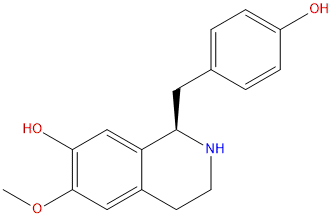
The chemical name of Wuyao alkaloid is (R) -1,2,3,4-tetrahydro-1- [(4-hydroxyphenyl) methyl] -6-methoxy-7-isoquinolinol, and its CAS registration number is 2196-60-3. Its molecular formula is C17H19NO3, with a molecular weight of 285.3430 g/mol.
From a chemical structure perspective, the core of Wuyao alkaloid is a tetrahydroisoquinoline ring system. Its stereochemical center is located at the C-1 position, in the R configuration, which is the key distinguishing feature from the S-enantiomer. The structural features include: a methoxy group (- OCH3) connected to the 6th position of the isoquinoline ring and a hydroxyl group (- OH) connected to the 7th position. The presence of these two substituents enhances the polarity of the molecule. In addition, a para hydroxybenzyl group is connected to the C-1 position via a methylene group (- CH2-), which contributes significantly to its binding affinity with various receptors. This structure, which combines hydrophobic aromatic rings with hydrophilic hydroxyl and methoxy groups, gives it amphiphilic properties.
The physicochemical parameters related to drug properties calculated based on its structure show that the logarithm of its lipid water partition coefficient (LogP) is 2.0084, indicating that the compound has moderate lipophilicity and is conducive to transmembrane transport. The topological polar surface area (TPSA) is 61.72 Å ², which is within a range favorable for oral absorption (typically<140 Å ²). The predicted water solubility is about 1.45 mg/mL, belonging to the category of slight solubility, which may need to be considered in formulation development. Of particular note is that its predicted blood-brain barrier permeability is "high", indicating that wuyao alkaloids can enter the central nervous system, providing a structural basis for their potential action on central and peripheral targets to regulate gastrointestinal function (such as through central opioid receptors or 5-HT3 receptors). However, computer prediction models suggest the potential risk of hERG potassium channel inhibition (predicted as' yes'), which is associated with potential arrhythmogenic side effects and is a key safety issue that must be rigorously evaluated in future drug development. The Ames test predicted a result of 0.0, indicating that there may be no direct genetic toxicity risk, but further experimental verification is needed.
Plant sources and extraction methods
Wuyao alkaloid is mainly found in various medicinal plants, especially Lauraceae, Ranunculaceae, and Annonaceae plants, which are common sources. Its name "Wuyao Alkali" is directly related to the traditional Chinese medicine Wuyao (Lindera aggregata (Sims) Kosterm., Lauraceae), which has been proven to contain this ingredient in the roots of Wuyao. This may also be related to the traditional use of Wuyao for promoting qi circulation, relieving pain, warming the kidneys, and dispersing cold. In addition, it has also been found in other plants with important medicinal or ethnobotanical value, such as the biosynthetic precursors of certain benzylisoquinoline alkaloids in the poppy plant Papaver somniferum, and in the embryo (lotus seed heart) of the lotus plant Nelumbo nucifera. It is worth noting that many plants contain both (R) - and (S) - enantiomers, but their proportions vary depending on species, location, and growth conditions.
Extracting wuyao alkaloid from plant materials usually follows the conventional process of natural product chemistry. Firstly, dry plant tissues such as roots, stems, and leaves are crushed. The extraction method often uses solvent extraction, commonly using methanol, ethanol, or acidified alcohol/water mixed solvents for cold soaking or hot reflux extraction to fully dissolve alkaloids. Due to the fact that wuyao alkaloid belongs to alkaloids, it can be initially enriched by utilizing its characteristic of salt formation with acid, dissolution in water, and free precipitation after alkalization, which is the classic acid extraction and alkali precipitation method.
After obtaining the crude extract, further separation and purification rely on various chromatographic techniques. Silica gel column chromatography is commonly used for preliminary separation, with gradient elution using organic solvents of different polarities (such as chloroform methanol). Then, fine purification is carried out in combination with reverse phase chromatography (such as C18 packing, methanol water or acetonitrile water as mobile phase), gel chromatography (Sephadex LH-20) or preparative thin layer chromatography. Due to the presence of enantiomers in wuyao alkaloid, obtaining optically pure (R) - wuyao alkaloid may require the use of chiral stationary phase high-performance liquid chromatography (HPLC) for final separation during the separation process. Modern technologies such as high-speed countercurrent chromatography (HSCCC) have also been applied to the preparation of such alkaloids due to their high efficiency and avoidance of irreversible adsorption by solid adsorbents. The optimization of extraction and separation processes requires real-time monitoring and identification using thin-layer chromatography (TLC) or high-performance liquid chromatography (HPLC).
Pharmacological activity research
The pharmacological activity research of Wuyao alkaloid mainly focuses on its regulatory effect on gastrointestinal function, which is in line with the modern interpretation of the efficacy of traditional medicinal plants. Existing research indicates that it has multiple gastrointestinal pharmacological effects.
1. Gastrointestinal motility regulation effect: In the in vitro intestinal smooth muscle experiment, wuyao alkaloid showed a concentration dependent regulatory effect. At low concentrations, it may slightly enhance intestinal muscle contraction by activating the cholinergic system or inhibiting the adrenergic system; At higher concentrations or in specific pathological models, activation of opioid receptors or α 2-adrenergic receptors may produce a diastolic effect and alleviate spastic contractions. This bidirectional regulatory characteristic makes it potentially applicable to different states of gastrointestinal motility disorders.
2. Visceral analgesia and anti nociceptive effects: Animal model studies have shown that wuyao alkaloid can alleviate visceral pain responses caused by stimuli such as colon dilation. Its analgesic effect may not be entirely central, but also involves regulation of peripheral sensory nerve endings, such as by acting on TRPV1 receptors or opioid receptors in the intestine to reduce the transmission of nociceptive signals.
3. antiemetic effect: Based on its potential antagonistic effect on 5-HT3A receptors, wuyao alkaloids have shown the potential to prevent vomiting in animal models of chemotherapy-induced vomiting (such as cisplatin) or radiation-induced vomiting. 5-HT3 receptor antagonists are first-line antiemetic drugs in clinical practice, and the activity direction of wuyao alkaloids has clear translational medical value.
4. Neuroprotection and cardiovascular activity: Although not the focus of this article, early research suggests that benzylisoquinoline alkaloids with similar structures may have neuroprotective activities such as antioxidant and anti ischemia-reperfusion injury. In addition, its effect on adrenergic receptors also suggests that it may affect blood pressure and heart rate, but this, like its potential hERG inhibition risk, is a cardiovascular safety aspect that requires close attention.
It should be pointed out that most pharmacological data currently come from in vitro receptor binding experiments, cell models, or ex vivo tissue experiments. Systematic in vivo pharmacological evaluations, especially in animal models of diseases, still need to be further explored and expanded. The differences in activity intensity and selectivity between it and enantiomer (S) - clavulane are also interesting topics in comparative pharmacology.
Mechanism of action and molecular targets
The role of Wuyao alkaloids in regulating gastrointestinal function is not through a single target, but presents the characteristics of multi target synergy or balance, which is in line with the characteristics of natural product action and may also provide advantages for its application in complex diseases such as irritable bowel syndrome (IBS). Its core mechanism of action involves the following key molecular targets:
Transient receptor potential vanillic acid subtype 1 (TRPV1): TRPV1 is a non selective cation channel widely expressed in primary sensory neurons of the gastrointestinal tract (such as dorsal root ganglion and vagus nerve ganglion neurons) and intestinal epithelial cells. It can be activated by capsaicin, heat, protons, etc., and participates in visceral pain sensitization and inflammatory response. Wuyao alkaloids may act as modulators (possibly antagonists or partial agonists) of TRPV1, reducing calcium ion influx and neuropeptides (such as substance P and CGRP) release by inhibiting excessive activation of this channel, thereby alleviating visceral hypersensitivity and inflammatory pain, which is of great significance in pain management of IBS and inflammatory bowel disease.
2. Muscatine acetylcholine receptor M3 (CHRM3): CHRM3 is a Gq/11 protein coupled receptor, mainly distributed in smooth muscle cells and glandular cells of the gastrointestinal tract. Acetylcholine activates CHRM3, causing strong smooth muscle contraction and glandular secretion. If wuyao alkaloid is used as an antagonist of CHRM3, it can alleviate gastrointestinal spasms, abdominal pain, and diarrhea caused by excessive excitation of cholinergic nerves, and is suitable for diarrheal IBS. On the contrary, if used as an allosteric modulator or weak agonist, it may produce positive regulation when the power is insufficient.
3. μ - opioid receptor (OPRM1): OPRM1 is a Gi/o protein coupled receptor that, upon activation, inhibits adenylate cyclase, reduces neurotransmitter release, and produces analgesic and intestinal peristaltic effects. Wuyao alkaloid may act as an agonist of OPRM1, directly acting on opioid receptors on intestinal neurons or smooth muscles, producing analgesic and slowing down intestinal transmission effects, which are beneficial for treating abdominal pain and diarrhea. However, it is important to be aware of the common side effects of opioid drugs, such as constipation, tolerance, and dependence.
4. α 2-adrenergic receptor (ADRA2): ADRA2 belongs to the Gi/o protein coupled receptor family and is mainly located at the cholinergic neuron terminals and vascular smooth muscle of the enteric myenteric plexus. Norepinephrine activates ADRA2, which can inhibit acetylcholine release and cause gastrointestinal smooth muscle relaxation. If wuyao alkaloid is used as an ADRA2 agonist, it can inhibit excessive intestinal peristalsis and relieve spasms through this pathway. This mechanism is similar to some alpha 2-activators used clinically to treat diarrhea and visceral pain, such as clonidine.
5. 5-hydroxytryptamine 3A receptor (5-HT3A): 5-HT3A receptors are ligand gated cation channels. In the gastrointestinal tract, chemotherapy, radiation therapy, or intestinal inflammation can lead to a large release of 5-HT from intestinal chromaffin cells, activating 5-HT3 receptors on vagus afferent nerves, triggering vomiting reflex and visceral pain sensation. Wuyao alkaloid, as a potential 5-HT3 receptor antagonist, can block this process and exert antiemetic and visceral pain relieving effects.
In summary, Wuyao alkaloids may comprehensively regulate gastrointestinal function by simultaneously regulating multiple receptors and ion channels such as TRPV1, CHRM3, OPRM1, ADRA2, and 5-HT3A, through inhibiting visceral sensory input (analgesia, antiemetic), regulating intestinal smooth muscle tone (spasmolytic or prokinetic), and affecting intestinal secretion. This "multi-target cocktail" effect may give it a comprehensive regulatory advantage over single target drugs in the treatment of complex gastrointestinal functional diseases, but it also makes the analysis and optimization of its mechanism of action network more complex.
Evaluation of drug properties and pharmacokinetics
To develop wuyao alkaloids into modern drugs, a systematic evaluation of their drug like and pharmacokinetic (PK) properties is necessary. Based on the physical and chemical parameters described earlier, it is predicted that Wuyao alkaloid has certain potential for oral absorption: moderate LogP values (2.0) and TPSA (61.7 Å ²) comply with the Rule of Five, indicating that it may have good membrane permeability and oral bioavailability. The prediction of high blood-brain barrier permeability implies that it can act simultaneously in both central and peripheral mechanisms, which may be beneficial for regulating gastrointestinal function involving both central and peripheral mechanisms, but also increases the risk of central side effects.
However, its medicinal properties face several key challenges:
1. HERG inhibition risk: This is the most noteworthy safety red light. Inhibition of hERG potassium channels can lead to QT interval prolongation and increase the risk of apical torsion type ventricular tachycardia, which is an important reason for many drug development failures. The prediction suggests that there is a risk associated with Wuyao alkaloid, therefore it must be confirmed through experiments (such as patch clamp technology) and attempts must be made to eliminate this toxicity through structural modifications and other means.
2. Water solubility: The characteristic of slight solubility may affect the dissolution rate and in vivo absorption of its formulation, especially after oral administration. This may need to be improved through formulation strategies such as salt formation (such as forming hydrochloride and sulfate salts), preparation into solid dispersions, liposomes, or nanocrystals.
3. Metabolic stability and drug interactions: As an isoquinoline alkaloid, wuyao alkaloid is likely to be metabolized by the liver cytochrome P450 (CYP) enzyme system (such as CYP2D6, CYP3A4). Its metabolic rate, main metabolites and their activities, as well as whether it inhibits or induces CYP enzymes to trigger drug drug interactions, all need to be elucidated through in vitro liver microsomal experiments and in vivo studies.
4. Enantiomer specificity: (R) There may be significant differences in efficacy, pharmacokinetics, and toxicity between - and (S) - wuyao alkaloids. As a candidate drug, optically pure monomers must be used for all evaluations, and their stereochemical stability (i.e., no racemization occurs in vivo) must be clarified.
At present, there is a lack of detailed pharmacokinetic studies on the Wuyao alkaloid system, such as absorption, distribution, metabolism, and excretion parameters, in public literature. Future research requires the establishment of sensitive and specific biological analysis methods (such as LC-MS/MS) to comprehensively examine key PK parameters such as absolute bioavailability, plasma protein binding rate, tissue distribution characteristics, major metabolic pathways, excretion pathways (kidney, bile), and half-life in animal models (rats, dogs, etc.). These data are the foundation for designing rational dosing regimens and advancing preclinical development.
Clinical application prospects and prospects
As a natural small molecule with multi-target regulatory properties, Wuyao alkaloid has promising clinical application prospects in the field of gastrointestinal diseases, but the road ahead is long and full of challenges.
Potential clinical application directions:
1. Functional gastrointestinal diseases (FGIDs): Especially irritable bowel syndrome (IBS), its pathophysiology involves visceral hypersensitivity, motility disorders, and brain gut axis dysregulation. The simultaneous targeting of TRPV1 (analgesia), CHRM3/ADRA2 (motility regulation), and 5-HT3A (analgesia/antiemetic) by Wuyao alkaloid may make it a novel comprehensive therapeutic drug, while improving abdominal pain, bloating, and abnormal bowel habits.
2. Chemotherapy induced nausea and vomiting (CINV): Its potential 5-HT3 receptor antagonistic activity suggests that it may serve as a novel antiemetic drug or a supplement to existing antiemetic regimens. Combined use with aripipitan (NK-1 antagonist) may cover acute and delayed CINV.
3. Postoperative intestinal paralysis (POI): Delay in postoperative gastrointestinal motility recovery is a common problem. Wuyao alkaloid may help safely promote postoperative gastrointestinal function recovery by regulating the cholinergic and adrenergic systems.
4. Chronic abdominal pain management: Based on its analgesic mechanism mediated by TRPV1 and opioid receptors, it may be developed for the treatment of non cancerous chronic visceral pain, and may have a lower addiction risk than pure opioid drugs (to be validated).
Future research and development prospects:
1. In depth preclinical research: The urgent task is to systematically evaluate the efficacy and dose-response relationship of Wuyao alkaloid in animal models that are closer to human diseases, such as IBS animal models and CINV models, and clarify its treatment window.
2. Comprehensive Security Assessment: It is necessary to confirm its hERG inhibitory potential through experiments and conduct comprehensive preclinical toxicology studies (acute toxicity, subchronic toxicity, reproductive toxicity, etc.) to ensure its safety is acceptable.
3. Accurate analysis of the mechanism of action: It is necessary to use techniques such as molecular docking, point mutagenesis, and functional experiments to clarify the specific modes and functional effects (excitatory/antagonistic/allosteric regulation) of the binding of Wuyao alkaloids to each target, and to elucidate the synergistic or antagonistic relationships between multiple targets.
4. Structural optimization and drug design: In response to its deficiencies in water solubility and hERG inhibition, reasonable structural modifications can be made to optimize its drug properties and develop better derivatives or prodrugs while retaining the core pharmacophore and multi-target activity.
5. Exploring the potential of combination therapy: Given its multi-target nature, studying its combined efficacy with existing gastrointestinal drugs such as antispasmodics, prokinetic drugs, and probiotics may lead to the discovery of better treatment options.
6. Expand into new therapeutic areas: Based on its neuroprotective and cardiovascular activity clues, its potential application value in neurological diseases (such as ischemic stroke) or cardiovascular diseases can be explored.
Conclusion
As a structurally clear (R) - configuration benzylisoquinoline alkaloid, (+) - Cochrane has emerged from traditional medicinal plants and is attracting the attention of modern pharmacological research due to its unique multidimensional pharmacological activity targeting multiple key gastrointestinal functional targets such as TRPV1, CHRM3, OPRM1, ADRA2, and 5-HT3A. It represents a successful example of extracting a single active molecule with clear multi-target synergistic effects from the overall action mode of "multi-component multi-target" natural products. Although it has shown encouraging potential in regulating gastrointestinal motility, relieving visceral pain, and potentially antiemetic effects, its path to clinical application is still fraught with obstacles, particularly the risk of hERG channel inhibition, lack of systematic pharmacokinetic data, and the need for in-depth in vivo efficacy validation. Future research needs to accurately analyze its complex mechanism of action network while ensuring safety, and optimize its drug properties through modern medicinal chemistry and formulation methods. If these challenges can be successfully addressed, Wuyao alkaloid is expected to develop into a new multi-target drug for the treatment of functional gastrointestinal diseases, chemotherapy-induced nausea and vomiting, and other diseases. It will not only provide patients with new treatment options, but also further demonstrate the immortal value of natural products in modern drug discovery.