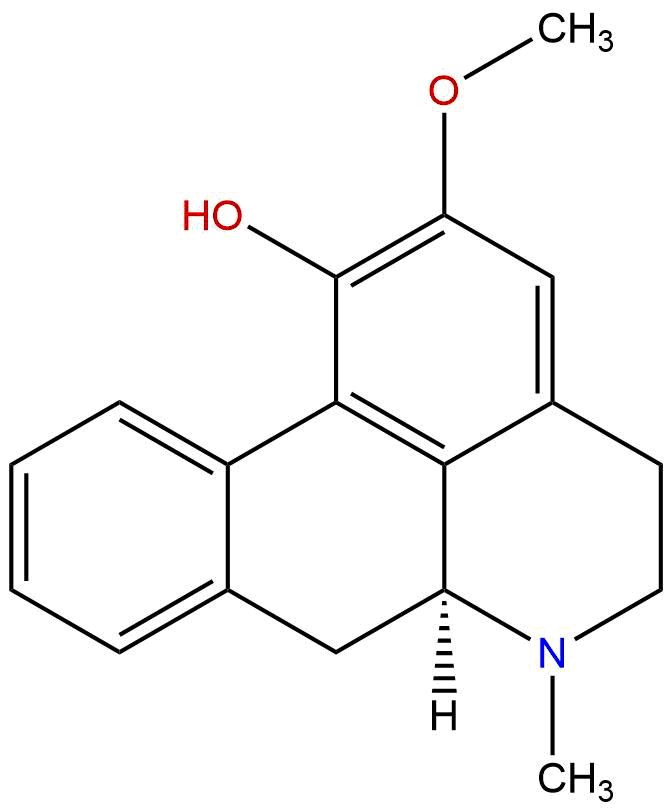


Product name: Lirinidine
Synonym name: (+)-Lirinidine;(6aS)-2-Methoxy-6-methyl-5,6,6a,7-tetrahydro-4H-dibenzo[de,g]quin olin-1-ol
Catalogue No.: BP4393
Cas No.: 54383-28-7
Formula: C18H19NO2
Mol Weight: 281.355
Botanical Source:
Type of Compound:
Purity: 95%~99%
Analysis Method: HPLC-DAD or/and HPLC-ELSD
Identification Method: Mass, NMR
Packing: Brown vial or HDPE plastic bottle
Storage: Store in a well closed container, protected from air and light. Put into refrigerate or freeze for long term storage.
Whenever possible, you should prepare and use solutions on the same day. However, if you need to make up stock solutions in advance, we recommend that you store the solution as aliquots in tightly sealed vials at -20℃. Generally, these will be useable for up to two weeks.
The product could be supplied from milligrams to grams
Inquire for bulk scale.
For Reference Standard and R&D, Not for Human Use Directly.
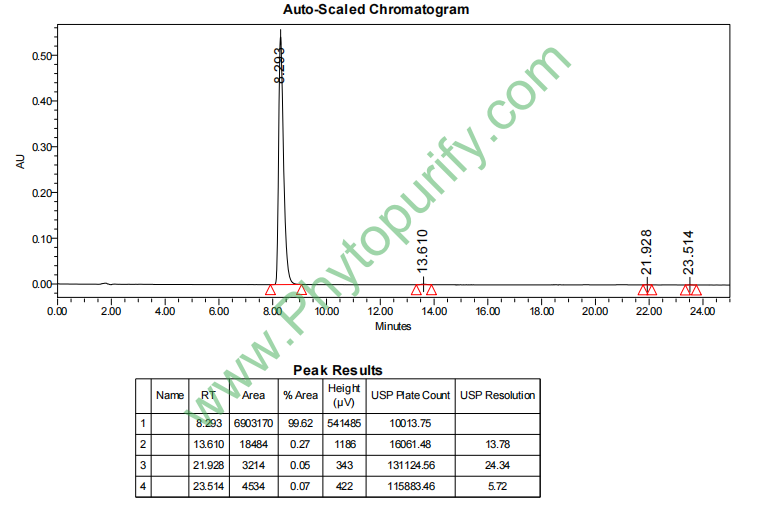
HPLC of Lirinidine
Storage conditions:Short-term storage at 2~8℃, long-term storage at -20 ~ -80℃
32.7000
3.2319
2.6558
.0339
6.3574
14.6011
High
84.2534
2.8717
No
Yes
No
No
Yes
No
0.6
Yes
No
No
No
Natural products have long been an important treasure trove for innovative drug discovery, among which alkaloid compounds have attracted much attention due to their structural diversity and significant biological activity. Lirinidine, also known as (+) - Lirinidine, is a unique North American species of Lirinidine(Liriodendron tulipifera L. Isoquinoline alkaloids isolated from leaves. Since its discovery, this compound has gradually entered the field of pharmacological researchers due to its potential antioxidant and anticancer activities. Its CAS number is 54383-28-7, providing a foundation for subsequent standardization research.
In recent years, with the continuous increase of the incidence rate of tumors, especially the drug resistance and recurrence problems faced in the treatment of hematological malignancies such as leukemia, it is urgent to find new, efficient and low toxic anti-cancer drugs. The regulatory ability of North American gooseberry alkaloid on various leukemia related key signaling pathways and targets demonstrated in vitro studies makes it an attractive candidate molecule. In addition, its antioxidant properties also provide scientific basis for its application in the cosmetics field, reflecting the potential of natural products to be versatile.
This article aims to systematically review the chemical properties, plant sources, pharmacological activities, molecular mechanisms of action, pharmacological characteristics, and application prospects of the North American gooseberry alkaloid, in order to provide comprehensive academic references for the in-depth research and development of this compound.
The molecular formula of the North American goosefoot alkaloid is C ₁₇ H ₁₉ NO3, with a molecular weight of 281.3550 g/mol. Its core structure belongs to the benzylisoquinoline alkaloids, consisting of an isoquinoline ring and a benzene ring connected by a carbon chain. This structure contains multiple methoxy substituents, which have a significant impact on its biological activity and physicochemical properties. Its absolute configuration is right-handed (+), and its stereochemical characteristics may be closely related to its biological activity and specific recognition of targets.
From the analysis of physicochemical parameters related to drug properties, the lipid water partition coefficient (LogP) of the North American gooseberry alkaloid is 3.2319, indicating that the compound has moderate lipophilicity, which is beneficial for its penetration of cell membranes but may also affect its water solubility. Its topological polar surface area (TPSA) is 32.7000 Å ², which is relatively small and further confirms its good membrane permeability. The water solubility parameter is 0.0339, indicating that it belongs to a poorly soluble compound, which is a key consideration and solution in formulation development. It is worth noting that its blood-brain barrier (BBB) penetration is predicted to be "high", which means that the compound has the potential to act on central nervous system related targets, such as microtubule associated protein tau (MAPT) involved in the study, providing a possibility for the treatment of neurodegenerative diseases or central nervous system leukemia. In addition, preliminary toxicity screening showed negative hERG inhibition and an Ames test result of 0.6 (usually considered negative if<1.0), indicating a low risk of cardiac and genetic toxicity and a good safety threshold.
The main source of nicotine alkaloids in North American Liriodendron is from the genus Liriodendron in the Magnoliaceae family(Liriodendron tulipifera L.)。 This tree species is native to the eastern part of North America and is a tall deciduous tree with unique goosefoot shaped leaves and tulip shaped flowers, hence it is also known as the "tulip tree". In traditional medicine, the bark of the North American tulip tree has been used for antipyretic, antimalarial, and deworming purposes. Modern plant chemistry research focuses on its rich bioactive components, especially various benzylisoquinoline and aporphine alkaloids, among which North American goosefoot alkaloid is one.
The extraction and separation of North American goosefoot alkaloid from plant materials usually follow the conventional process of natural product chemistry. Firstly, the collected goosefoot leaves are dried and crushed, and then extracted using methanol, ethanol, or methanol water mixed solvents for extraction or ultrasound assisted extraction to maximize the extraction of alkaloids within the polarity range. Subsequently, crude extract was obtained by vacuum concentration. The crude extract is dissolved in acidic water, and after filtering out insoluble substances, it is extracted with organic solvents such as chloroform and dichloromethane. Alkaloids will transfer from the aqueous phase to the organic phase under alkaline conditions. This step can preliminarily enrich total alkaloids.
Further purification relies on chromatographic techniques. Silica gel column chromatography is commonly used, with different ratios of chloroform methanol or hexane ethyl acetate gradient elution, and preliminary separation is carried out based on polarity differences. After obtaining a fraction containing the target compound, it is usually necessary to use more efficient resolution methods, such as preparative thin layer chromatography (PTLC) or high-performance liquid chromatography (HPLC, often using a reverse phase C18 column with methanol water or acetonitrile water as the mobile phase) for final purification. By using nuclear magnetic resonance (NMR), mass spectrometry (MS), and specific optical rotation measurements, its chemical structure can be accurately identified and its stereoconfiguration confirmed. Optimizing the extraction process and improving yield are the foundation for achieving sustainable research and future applications.
The pharmacological activity research of North American gooseberry alkaloids mainly focuses on antioxidant and anti-tumor aspects, among which the anti leukemia activity is particularly prominent.
1. Antioxidant activity:
North American tulip tree alkaloids exhibit moderate in vitro antioxidant activity. Research is usually evaluated using the iron ion reduction ability (FRAP) method and free radical scavenging experiments (such as DPPH, ABTS method). The data shows that the compound has a certain iron reduction ability, indicating that it can provide electrons to reduce oxidized metal ions and interrupt the formation of free radical chains. However, its direct scavenging ability against stable free radicals such as DPPH • is relatively small. This antioxidant property may be related to the phenolic hydroxyl groups or easily oxidizable groups in its molecular structure. Although its activity is not the strongest, it provides preliminary theoretical basis for its use as an antioxidant in cosmetics to resist skin oxidative stress and photoaging.
2. Antitumor activity:
The anticancer activity of North American gooseberry alkaloids is currently the core of research. Numerous in vitro experiments have confirmed that it has significant inhibitory effects on proliferation and induces apoptosis in various leukemia cell lines, such as HL-60, K562, U937, etc. Its anti-cancer activity is not broad-spectrum high cytotoxicity, but shows a certain selectivity, with relatively low toxicity to certain normal cells, suggesting that it may exert its effect by interfering with specific survival pathways of tumor cells.
In addition to leukemia, there have been preliminary studies exploring its effects on other tumor cells, but the data is not yet sufficient. Its anti-tumor activity is closely related to the multi-target mechanism of action that will be elaborated later.
The anti leukemia activity of North American gooseberry alkaloid is not achieved through a single pathway. Existing research suggests that it has multi-target and multi pathway characteristics, which is in line with the "multi-target synergistic" mode of action of many natural products. Its function involves the following key targets and pathways:
Regulating cell apoptosis and balance of survival: This compound can significantly downregulate the expression of anti apoptotic proteins Bcl-2 and Mcl-1, and may also affect pro apoptotic proteins, thereby disrupting the mitochondrial membrane stability of leukemia cells, promoting cytochrome C release, and initiating endogenous apoptotic pathways. This is one of the core mechanisms by which it induces tumor cell death.
Affects energy metabolism and stress response: It has been confirmed that the alkaloid of North American goosefoot can activate AMP activated protein kinase (AMPK, encoded by PRKAA1). AMPK is an energy receptor in cells, and its activation inhibits synthetic metabolism (such as protein and lipid synthesis), promotes catabolism, and can inhibit its abnormally vigorous growth signals in tumors. At the same time, it can also activate nuclear factor E2 related factor 2 (Nrf2, encoded by NFE2L2), which is the main regulator of antioxidant stress response. Its activation helps cells resist oxidative damage, which may explain the source of some of its antioxidant activity. However, the sustained activation of Nrf2 in tumors may also produce a pro survival effect, and its dual role needs to be analyzed specifically.
Intervention in signal transduction and transcriptional activation: This compound can inhibit the phosphorylation and activation of signal transduction and transcription activator 3 (STAT3). STAT3 is an important oncogenic transcription factor that is continuously activated in leukemia, driving cell proliferation, inhibiting apoptosis, and promoting immune escape. Inhibiting the STAT3 pathway is a key step in its anti-cancer effect. In addition, it can also inhibit the Notch1 signaling pathway. Notch1 is often mutated in diseases such as T-cell acute lymphoblastic leukemia (T-ALL) and is a key factor driving tumor development.
Acting on epigenetics and DNA metabolism: The study also found that quinine from the North American goosefoot tree can inhibit the activity of the deacetylase SIRT1. SIRT1 participates in the regulation of cellular stress, metabolism, and aging by deacetylating various proteins such as p53 and FOXO. Its role in tumors is complex, and inhibiting SIRT1 may promote apoptosis or cell cycle arrest. Additionally, it has been reported to inhibit the activity of DNA topoisomerase I (TOP1). TOP1 is a key enzyme for DNA replication and transcription, and also a target of chemotherapy drugs such as irinotecan. Inhibiting TOP1 can lead to DNA damage and cell death.
Potential central nervous system targets: Given its high blood-brain barrier penetration, its impact on microtubule associated protein tau (MAPT) and isocitrate dehydrogenase 1 (IDH1) deserves attention. Abnormal phosphorylation of tau protein is associated with the formation of neurofibrillary tangles, while IDH1 mutations are common in gliomas and acute myeloid leukemia, leading to the accumulation of metabolite 2-hydroxyglutarate and driving epigenetic disorders. The effect of North American goosefoot alkaloid on these targets may provide clues for its expanded application in neurological related diseases or central nervous system leukemia.
In summary, the North American gooseberry alkaloid exerts synergistic effects on multiple key targets such as AMPK, STAT3, Bcl-2/Mgl-1, Notch1, etc., interfering with the survival of leukemia cells from multiple levels such as energy metabolism, signal transduction, and apoptosis regulation, demonstrating the potential of multi-target anti leukemia.
Based on its physical and chemical parameters and preliminary biological data, a preliminary pharmacological evaluation of the North American goosefoot alkaloid can be conducted.
Advantage:
- Good membrane permeability and central permeability: A moderate LogP value and low TPSA indicate good oral absorption potential and cell membrane penetration ability. The high blood-brain barrier penetration is its unique advantage, providing the possibility for treating central nervous system diseases or leukemia with central infiltration.
- Preliminary safety is good: The negative results of hERG inhibition and Ames test have reduced significant concerns about cardiac toxicity and genetic toxicity in early development, laying a good safety foundation for its subsequent development.
- Clear multi-target activity: Targeting the activity of multiple key targets in leukemia may help overcome the problem of drug resistance that may arise from single target drugs.
Challenge:
- Poor water solubility: The extremely low water solubility (0.0339) is its main drawback, which will seriously affect its oral bioavailability and the development of formulations for intravenous administration. In the future, it may be necessary to improve its solubility and dissolution rate through formulation technologies such as salt formation, preparation into nanocrystals, liposomes, cyclodextrin inclusion complexes, or prodrug modification.
- Metabolism and pharmacokinetics unknown: At present, there is almost no research on the in vivo pharmacokinetics of this compound (such as absorption, distribution, metabolism, excretion, i.e. ADME properties). Key information such as metabolic stability, major metabolites, half-life in vivo, and tissue distribution characteristics urgently need to be systematically evaluated through animal experiments. The interaction between it and drug metabolizing enzymes (such as CYP450 enzyme system) also needs to be investigated.
- The selectivity needs further verification: Although it has low toxicity to normal cells, whether its multi-target effect will have unacceptable off target effects on normal tissues, especially on normal cells with high expression of certain targets (such as AMPK, SIRT1), needs to be validated in more complex in vivo models.
The clinical application prospects of North American gooseberry alkaloids mainly revolve around their two core activities:
1. As a candidate drug for anti leukemia:
Its multi-target mechanism of action is of great value for the treatment of refractory/recurrent leukemia, especially those subtypes with abnormal activation of STAT3, Notch1, or Bcl-2 family proteins. Future research directions include:
- In depth preclinical research: Systematically evaluate the in vivo efficacy, optimal administration regimen, and toxicity profile of leukemia xenograft models constructed in immunodeficient mice.
- Exploration of combination therapy: Studying its synergistic effect with existing chemotherapy drugs (such as cytarabine and daunorubicin) or targeted drugs (such as BCL-2 inhibitor vinaclor) is expected to reduce dosage, minimize toxic side effects, and overcome drug resistance.
- Targeted drug development: Developing delivery systems targeting the leukemia bone marrow microenvironment or leukemia stem cells (LSCs) using nanotechnology to improve efficacy and reduce systemic exposure toxicity.
2. Application in the field of cosmetics:
Based on its antioxidant activity, North American goosefoot alkaloid can be used as a functional ingredient in high-end skincare products. Its functions include:
- Anti photoaging: Eliminate or reduce UV induced reactive oxygen species (ROS), protect skin cells, and slow down collagen degradation.
- Anti inflammatory and Soothing: Oxidative stress is closely related to skin inflammation, and its antioxidant effect may indirectly exert anti-inflammatory effects.
- Promote skin health: By activating pathways such as Nrf2, enhance the skin's own antioxidant defense ability.
In this field, it is necessary to focus on evaluating its skin permeability, local irritation, photostability, and compatibility in formulations.
3. Potential new directions for expansion:
Its potential to act on MAPT and IDH1 is worth exploring its value in Alzheimer's disease, tau protein disease, or IDH mutant tumors. The high BBB penetration makes these explorations possible.
As a natural alkaloid isolated from the North American goosefoot tree, the alkaloid nicotine has become a promising candidate molecule in the study of natural products for anti leukemia due to its unique chemical structure and multi-target pharmacological activity. It exhibits strong potential in inducing apoptosis of leukemia cells by regulating key signaling networks such as AMPK/STAT3/BCL-2. Meanwhile, its excellent membrane penetration, central accessibility, and preliminary safety data provide favorable conditions for its drug development. However, its poor water solubility and unclear pharmacokinetic properties in vivo are the main obstacles that must be overcome to move towards clinical application.
Future research needs to focus on optimizing its physicochemical properties through medicinal chemistry and formulation methods, and conducting systematic preclinical pharmacological and safety evaluations based on a thorough elucidation of its precise targets and network interactions. Whether as a lead compound for novel anti leukemia drugs or as an active ingredient in cosmetics, the development of North American gooseberry alkaloids reflects the translational medical value of interdisciplinary applications from traditional plants to modern times. With the continuous deepening of research, this natural molecule is expected to play its unique role in disease treatment and the health industry.
