Introduction/Overview
Natural products, as an important treasure trove for drug discovery and development, play an irreplaceable role in the long history of human fight against diseases. Among them, coumarin compounds have always been a hot topic in medicinal chemistry and pharmacology research due to their extensive and significant biological activities, such as anti-inflammatory, antioxidant, anti-tumor, neuroprotective, etc. Visamminol-3 '- O-glucoside, as a novel coumarin glycoside compound, has gradually entered the field of researchers in recent years. Its CAS number is 225409-98-3, and it is a glycosylated derivative of Visamminol. Glycosylation modification can significantly improve the water solubility, stability, and bioavailability of parent compounds, and may endow or enhance their specific pharmacological activities. Although systematic research on this compound is still in its early stages, its preliminary pharmacological parameters and potential biological activity suggest that it may have important development value in the fields of cardiovascular and cerebrovascular diseases, neurological diseases, and inflammation related diseases. This article aims to systematically review the research progress on the chemical structure, plant origin, pharmacological activity, mechanism of action, and pharmacological evaluation of visamminol-3 '- O-glucoside, in order to provide comprehensive scientific references for the in-depth research and future applications of this compound.
Chemical structure and physicochemical properties
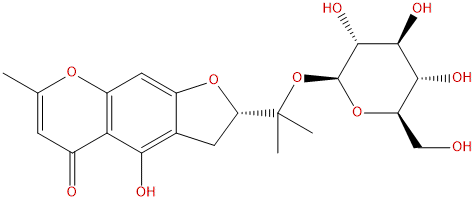
The chemical structure of visamminol-3 '- O-glucoside is based on the coumarin nucleus. The parent structure of visamminol is a linear furanocoumarin, characterized by the addition of a furan ring at positions 6 and 7 of the coumarin basic skeleton. Visamminol-3 '- O-glucoside is a glucose group connected to a specific position in the Visamminol molecule (speculated to be the 3' hydroxyl group on the side chain based on its name) through a glycosidic bond. This glycosylation modification is the key structural feature that distinguishes it from visamminol.
Based on the provided pharmacological parameters, we can conduct a preliminary analysis of its physicochemical properties:
- molecular weight:438.4290 Da, Belonging to medium-sized organic molecules. The introduction of glucose units significantly increases its molecular weight compared to many simple coumarin compounds.
- Lipid water partition coefficient (LogP): 0.4335. This value indicates that the compound has moderate lipophilicity, slightly leaning towards hydrophilicity. This is consistent with the presence of hydrophilic glucose groups in its structure, which effectively neutralize the hydrophobicity of the coumarin parent nucleus, resulting in a lower overall LogP value, which is beneficial for improving water solubility.
- Topological Polarity Surface Area (TPSA)159.0500 Å ². The higher TPSA value is mainly attributed to the numerous oxygen atoms in the molecule (from coumarin carbonyl, furan cyclic ether bonds, and multiple hydroxyl groups on glucose units), which are potential hydrogen bond acceptor and donor sites. High TPSA is usually associated with poor cell membrane permeability, but it also implies strong hydration ability and potential specific target recognition ability.
- Water solubility The value is 1.4982 (usually measured in mg/mL or logS, which is not specified here, but the value itself suggests good solubility). Combining its lower LogP and higher TPSA, it can be reasonably inferred that visamminol-3 '- O-glucoside has good water solubility, which provides a favorable physical and chemical basis for its dissolution and absorption in aqueous environments after being made into injections or orally administered.
- spectral characteristics As a coumarin glycoside compound, it should have characteristic fluorescence under ultraviolet light, and the UV absorption spectrum usually has a strong absorption peak in the range of 250-350 nm. Its nuclear magnetic resonance hydrogen spectrum and carbon spectrum should be able to clearly display the signals of each proton and carbon on the coumarin parent nucleus, furan ring, and glucose group. The configuration of glycosidic bonds (α or β) can be determined by coupling constants and other information.
Plant sources and extraction methods
At present, there are relatively limited public reports on the plant-based sources of visamminol-3 '- O-glucoside. According to the distribution clues of its parent compound visamminol, this glycoside compound is likely to mainly exist in Apiaceae and Rutaceae plants. These plant families are the main producers of furan coumarin compounds. For example, the genus Apium(Ammi spp.)、 Artemisia genus(Seseli Spp.) and the genus Peucedanum(Peucedanum Various types of visamminol and its derivatives have been isolated from plants such as spp. Therefore, there is a high possibility of isolating visamminol-3 '- O-glucoside from the roots, fruits, or whole plants of these plants.
The extraction and separation methods follow the conventional process of natural product chemistry:
1. Extract Organic solvents such as methanol, ethanol, or acetone are commonly used for cold soaking, reflux, or ultrasound assisted extraction of dried and crushed plant materials. Considering the good water solubility of the compound, using a certain proportion of water alcohol mixed solvent (such as 70% ethanol) for extraction may be more efficient and can simultaneously extract other polar components.
2. Enrichment and Separation After vacuum concentration, the crude extract can be preliminarily enriched using its high polarity. For example, using macroporous adsorption resin column chromatography and gradient elution with water and different concentrations of ethanol, the compound may be enriched in the elution site of low to medium concentration ethanol (such as 30% -50% ethanol). Further purification requires the use of modern chromatographic techniques:
- Silica gel column chromatography Often eluted using polar gradient systems such as chloroform methanol water.
- Reverse phase column chromatography (RP-C18)Due to its hydrophilicity, reverse phase chromatography (commonly used methanol water or acetonitrile water systems) is a key purification method.
- High performance liquid chromatography (HPLC)Preparation type HPLC, especially the reverse phase system, is the final and effective step for obtaining high-purity visamminol-3 '- O-glucoside. By optimizing the mobile phase ratio and detection wavelength (usually utilizing the UV absorption of coumarin, monitored around 254 nm or 320 nm), baseline separation of the compound from structurally similar compounds can be achieved.
3. appraisal The isolated pure product needs to be structurally confirmed through various spectroscopic techniques, including mass spectrometry (MS) for determining molecular weight, ultraviolet spectroscopy (UV), infrared spectroscopy (IR), as well as one-dimensional and two-dimensional nuclear magnetic resonance spectra (¹ H NMR, ¹ ³ C NMR, HSQC, HMBC, etc.), and finally compared and confirmed with literature data or chemically synthesized standards.
Pharmacological activity research
Although there are few specialized pharmacological studies on visamminol-3 '- O-glucoside, its potential pharmacological activity can be explored and anticipated based on the universal activity of its parent coumarin and glycoside compounds, combined with limited bioinformatics predictions and preliminary screening data.
-
Antioxidant and anti-inflammatory activities Coumarin compounds generally have the ability to scavenge free radicals and inhibit lipid peroxidation. The introduction of glucosides may enhance their interaction with the aqueous environment and more effectively exert antioxidant effects in biological fluids or cytoplasm. The phenolic hydroxyl group (if present) and electron rich system in its structure are the basis of antioxidant activity. The antioxidant and anti-inflammatory pathways are closely related, so this compound is likely to exert anti-inflammatory effects by inhibiting inflammatory signaling pathways such as nuclear factor kappa B (NF - κ B) and mitogen activated protein kinase (MAPK), downregulating the production of inflammatory mediators such as tumor necrosis factor - α (TNF - α), interleukin-6 (IL-6), and prostaglandin E2 (PGE2). This has potential significance for the treatment of chronic inflammatory diseases such as atherosclerosis, neuroinflammation and arthritis.
-
Neuroprotective activity Some coumarin glycoside compounds have been reported to have neuroprotective effects. Visamminol-3 '- O-glucoside may alleviate the damage of neurons (especially dopaminergic and cholinergic neurons) caused by oxidative stress and neuroinflammation through its antioxidant and anti-inflammatory properties. In addition, it may demonstrate protective potential in models such as Parkinson's disease, Alzheimer's disease, and cerebral ischemia-reperfusion injury by regulating intracellular calcium homeostasis, inhibiting apoptotic pathways (such as Caspase-3 activation), and promoting the expression of neurotrophic factors. Its lower Blood-brain barrier (BBB) permeability(Predicting as' low ') is a challenge, but it may also mean that its peripheral anti-inflammatory effect helps indirectly improve the inflammatory environment of the central nervous system, or that modifying its structure to enhance BBB permeability is a future research direction.
-
Cardiovascular protective activity Coumarin compounds, such as warfarin, have a long history in the treatment of cardiovascular diseases. Visamminol-3 '- O-glucoside may have a mechanism of action different from traditional anticoagulant coumarins. Its potential antioxidant and anti-inflammatory effects help protect vascular endothelial function, inhibit the abnormal proliferation of vascular smooth muscle cells, and thus prevent atherosclerosis. In addition, preliminary HERG inhibition A prediction of 'no' is a very positive signal, indicating that the compound may not interfere with cardiac potassium ion channels at therapeutic doses, with a lower risk of developing acquired long QT syndrome and apical torsion type ventricular tachycardia, and a promising prospect for cardiovascular safety.
-
Other potential activities Some coumarin derivatives exhibit anti-tumor, antibacterial, antiviral and other activities. Whether Visamminol-3 '- O-glucoside has these activities remains to be experimentally verified. Its good water solubility provides a physical and chemical basis for its development as an injectable anti-tumor drug or anti infective drug.
Mechanism of action and molecular targets
At present, the exact molecular targets and detailed mechanisms of action of visamminol-3 '- O-glucoside are still unknown and urgently need to be explored. Based on its chemical structure category and preliminary activity prediction, we can make reasonable speculations on its possible mechanism of action:
-
Interaction with redox systems As a potential antioxidant, it may directly act as an electron donor to scavenge reactive oxygen/nitrogen species such as superoxide anions (O ₂•⁻), hydroxyl radicals (• OH), and peroxynitrite (ONOO ⁻). In addition, it may act by activating the cell's own antioxidant defense system, such as upregulating the nuclear factor E2 related factor 2 (Nrf2) signaling pathway, promoting the expression of downstream antioxidant enzymes such as heme oxygenase-1 (HO-1), quinone oxidoreductase 1 (NQO1), superoxide dismutase (SOD), and glutathione peroxidase (GPx).
-
Regulation of inflammatory signaling pathways This is one of its most likely core mechanisms of action. It is speculated that it may inhibit the activity of IKK complex, prevent the phosphorylation and degradation of NF - κ B inhibitory protein (I κ B), and thus inhibit the nuclear translocation of NF - κ B and its mediated transcription of inflammatory genes. At the same time, it may also inhibit the phosphorylation activation of MAPK family members (such as p38, JNK, ERK), synergistically suppressing inflammatory responses through multiple pathways.
-
Regulation of specific enzymes or receptors The coumarin structure can simulate certain endogenous ligands or enzyme substrates. Visamminol-3 '- O-glucoside may act as a weak inhibitor or regulator on disease-related enzymes, such as:
- Phosphodiesterases (PDEs)Some coumarins can inhibit PDE, increase intracellular cAMP/cGMP levels, and thus produce vasodilatory and anti-inflammatory effects.
- Cyclooxygenase-2 (COX-2)Selective inhibition of COX-2 and reduction of prostaglandin inflammatory mediators.
- Protein kinases (such as Akt, PKC)Key signaling nodes that intervene in cell survival and proliferation.
- Histone deacetylases (HDACs)Some coumarin derivatives are HDAC inhibitors with epigenetic regulation and anti-tumor potential.
-
Intervention in cell death pathways In the context of neuroprotection and anti-tumor effects, it may inhibit the activation of Caspase cascade reaction by regulating the Bcl-2/Bax protein ratio, suppressing the decrease of mitochondrial membrane potential and cytochrome C release, and thus combating cell apoptosis. It may also exert protective or lethal effects by regulating autophagic flow.
Future research requires the use of techniques such as molecular docking, surface plasmon resonance (SPR), cellular thermal shift analysis (CETSA), and activity/affinity based proteomics analysis to systematically screen and validate the molecular targets they directly target.
Evaluation of drug properties and pharmacokinetics
Based on the provided parameters, a preliminary evaluation of the pharmacological properties of visamminol-3 '- O-glucoside is conducted
-
Prediction of drug properties and absorption, distribution, metabolism, excretion (ADME):
- absorb Moderate LogP and high TPSA suggest that its oral bioavailability may face challenges. High TPSA and polar glucose groups may limit their passive diffusion across intestinal epithelial cell membranes. However, its good water solubility is beneficial for dissolution in the gastrointestinal tract. Is it recognized by active transporters in the intestine, such as analogs of glucose transporter SGLT1? )Being absorbed is an interesting scientific question that requires further research. If absorption is poor, it may be considered to develop it into an injection or improve absorption through structural modifications (such as prodrug preparation).
- distribution: Predicted Low blood-brain barrier permeability As mentioned earlier, it limits the direct action of the central nervous system, but may be beneficial in reducing central side effects. Its distribution volume may be small, mainly distributed in blood and extracellular fluid.
- Metabolism As a glycoside compound, it is likely to be first hydrolyzed by β - glucosidase in the intestine or liver in the body, releasing the aglycone visamminol and glucose. Visamminol (glycoside) has a higher LogP, making it easier to enter cells and be metabolized by cytochrome P450 (CYP) enzymes (such as hydroxylation, dealkylation, etc.), and then combines with glucuronic acid or sulfuric acid to form a more water-soluble complex that is excreted from the body. Therefore, its pharmacokinetic behavior may be a comprehensive manifestation of glycosides and aglycones.
- excretion Metabolites are mainly excreted through the kidneys (urine), and prototype drugs may also be partially excreted through the kidneys.
-
Preliminary Safety Assessment:
- Genotoxicity:Ames test The value is 0.6 (usually referring to the ratio of the number of revertant mutant colonies to the control), which is less than 2 and close to 1, indicating that no mutagenicity was observed under the conditions of this experiment. This is a positive early safety signal. But further confirmation such as mammalian cell chromosome aberration test and micronucleus test is still needed.
- cardiotoxicity:HERG inhibition predicted as' no 'It significantly reduces the risk of inducing serious adverse cardiac reactions, which is a major advantage of its application in the cardiovascular field.
- Other The toxicity of the liver, kidney, blood and other systems needs to be comprehensively evaluated through in vitro liver cell toxicity tests, in vivo acute and long-term toxicity tests.
-
pharmaceutical properties Good water solubility makes it easy to make solution injections (such as intravenous injection, intramuscular injection) or oral liquids, freeze-dried powder injections, and other dosage forms. If oral solid dosage forms are required, appropriate excipients may need to be added to promote their dissolution and absorption.
Clinical application prospects and prospects
The clinical application prospects of visamminol-3 '- O-glucoside depend on the results of its subsequent in-depth pharmacological and toxicological research. Based on existing information, its potential application directions include:
-
Adjuvant therapy for cardiovascular and cerebrovascular diseases: With its potential antioxidant, anti-inflammatory, endothelial protective effects and good cardiac safety (hERG negative), it is expected to be developed as a drug or functional food additive for preventing or assisting the treatment of atherosclerosis, hypertension, myocardial ischemia-reperfusion injury. Especially suitable for patients who require long-term medication but have concerns about the risk of bleeding (compared to traditional anticoagulant coumarin).
-
Neurological disorders Although BBB permeability is low, its potent peripheral and potentially indirect central anti-inflammatory effects make it still valuable in the treatment of neurodegenerative diseases associated with systemic inflammation (such as Alzheimer's disease, Parkinson's disease) or cerebral small vessel disease. It is also possible to explore improving its brain targeting through nano drug delivery systems (such as liposomes, polymer nanoparticles) or prodrug strategies.
-
Chronic inflammatory diseases If the anti-inflammatory mechanisms of rheumatoid arthritis, inflammatory bowel disease, chronic obstructive pulmonary disease, etc. are confirmed, they can be developed as a new type of anti-inflammatory candidate drug.
-
As a lead compound for structural optimization Its structure has clear modification sites (glucose group, coumarin nucleus), and medicinal chemists can systematically modify it, such as:
- Acylation or alkylation of glucose groups to regulate lipid solubility and targeting.
- Modify the coumarin nucleus with substituents to enhance its affinity for specific targets or improve metabolic stability.
- Developed as a prodrug to enhance oral bioavailability or BBB penetration ability.
Future research should focus on: 1) validating its exact pharmacological activity in cell and animal models (especially disease models); 2) Elucidate its detailed molecular mechanism of action and direct targets; 3) Conduct systematic preclinical pharmacokinetic and toxicological studies to clarify their safety window; 4) Explore appropriate routes and dosage forms of administration.
Conclusion
Visamminol-3 '- O-glucoside, as a structurally clear coumarin glycoside natural product, has a unique chemical structure (combining coumarin core and glucose unit) that endows it with good water solubility and promising pharmacological parameters, such as low hERG inhibition risk and negative preliminary Ames test results. Although there is currently a lack of research on the pharmacological activity and mechanism of its system, based on its parent compound category and physicochemical properties, it has shown broad research potential in the fields of antioxidant, anti-inflammatory, neuroprotective, and cardiovascular protection. The challenge lies in its potentially low oral bioavailability and blood-brain barrier permeability. Future research requires interdisciplinary collaboration, utilizing natural product chemistry, pharmacology, pharmacokinetics, and medicinal chemistry to deeply explore their biological activities, elucidate their mechanisms of action, and based on this, carry out rational structural optimization and formulation design. Only through solid basic research and rigorous preclinical development can the true medicinal value of visamminol-3 '- O-glucoside be accurately evaluated, and its progress from laboratory to clinical application be promoted, contributing new candidate drug molecules to the cause of human health.