Introduction/Overview
Diabetes is a global chronic metabolic disease, its incidence rate continues to rise, has become a serious public health challenge. Although current first-line clinical drugs can effectively control blood sugar, long-term use often accompanies side effects such as weight gain, low blood sugar risk, and cardiovascular events, prompting researchers to continuously explore potential candidate molecules with novel structures, diverse mechanisms of action, and better safety from natural products. Batatasin I, a traditional medicinal and edible plant derived from Dioscorea opposita(Dioscorea batatas)Dihydrostilbenes, which were isolated from Chinese herbal medicines, have attracted increasing attention in the field of natural product pharmacology because of their biological activities in anti diabetes, antibacterial, anti-inflammatory and other aspects. Early studies have preliminarily revealed its antibacterial properties, but in recent years, its pharmacological effects such as regulating glucose and lipid metabolism and improving insulin resistance have gradually become a research hotspot. The purpose of this paper is to systematically review the chemical properties, plant sources, pharmacological activities of yam I, especially its multi target mechanism of anti diabetes effect, pharmaceutical parameters, and prospects its clinical application prospects, in order to provide a comprehensive scientific basis for the in-depth development and transformation of this natural product.
Chemical structure and physicochemical properties
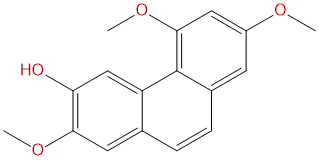
The chemical name of yam extract I is 3,3 '- dihydroxy-5-methoxydihydro stilbene, and its CAS number is 51415-00-0. Structurally, it belongs to the dihydro stilbene class compounds and is the reduced form of stilbene class compounds. Its molecular skeleton is composed of two benzene rings (A ring and B ring) connected by an ethane bridge. There are 3-hydroxy and 5-methoxy substituents attached to ring A, and 3 '- hydroxyl groups attached to ring B. This specific substitution pattern of hydroxyl and methoxy groups is crucial for its biological activity, especially antioxidant and interaction with target proteins.
Its molecular formula is C ₁₇ H ₁₈ O3, and its molecular weight is 284.3110 g/mol. The calculated lipid water partition coefficient (LogP) is 3.4433, indicating that the compound has moderate lipophilic properties, which is consistent with its good solubility in organic solvents. The topologically polar surface area (TPSA) is 47.92 Å ², which is relatively small, indicating that its membrane permeability may be good. However, its water solubility value is relatively low, about 0.0048 mg/mL, which may be a limiting factor for its oral bioavailability and a key issue that needs to be addressed in formulation development. Preliminary pharmacological risk assessment shows that yam extract I has high blood-brain barrier permeability potential, no significant hERG potassium channel inhibition risk (indicating low risk of cardiac toxicity), and an Ames test result of 1.2 (usually considered negative if less than 2), indicating that it is non mutagenic and has preliminary safety basis for further development.
Plant sources and extraction methods
Yam extract I mainly comes from the Dioscorea plant in the Dioscoreaceae family(Dioscorea batatas The root and stem blocks of ginseng (also known as ginseng). Dioscorea has long been used as a food and traditional medicine in East Asia, with the effects of strengthening the spleen and stomach, nourishing the kidneys and essence. Yam extract I, as one of its active ingredients, often coexists with other astragalus and saponins.
The extraction of yam extract I from plant materials is usually carried out using organic solvent extraction method. The common process includes: first, degreasing the dried yam root powder with petroleum ether or n-hexane to remove non-polar impurities such as oil and chlorophyll. Subsequently, medium polarity solvents such as methanol, ethanol, or ethyl acetate were used for main extraction. Among them, ethanol is often chosen due to its safety, environmental friendliness, and high extraction efficiency. The extraction methods include cold soaking, hot reflux, or ultrasound assisted extraction, the latter of which can significantly shorten the extraction time and improve the yield.
After filtration and concentration, the crude extract needs to be further separated and purified to obtain high-purity yam extract I. Conventional separation strategies often use column chromatography techniques, such as silica gel column chromatography, using different ratios of petroleum ether ethyl acetate or chloroform methanol gradient elution. On this basis, compounds with chromatographic purity can be obtained by combining preparative high-performance liquid chromatography (HPLC). Modern technologies such as high-speed counter current chromatography (HSCCC) are also applied to the efficient preparation and separation of such natural products due to their advantages of not requiring solid phase carriers and high sample recovery rates. The optimization of extraction and purification processes is the foundation for ensuring subsequent pharmacological research and development.
Pharmacological activity research
Yam I exhibits a wide range of pharmacological activities, among which the antibacterial, anti-inflammatory and anti diabetes effects are the most prominent.
1. Antibacterial activity:
Early studies have confirmed that yam extract I has inhibitory effects on various Gram positive bacteria (such as Staphylococcus aureus and Bacillus subtilis) and some fungi. The mechanism may be related to the destruction of microbial cell membrane integrity, interference with energy metabolism, or inhibition of biofilm formation. This activity provides the possibility for its use in the development of natural antibacterial agents or auxiliary anti infective drugs.
2. Anti inflammatory activity:
Yam extract I exhibits significant anti-inflammatory effects in various cellular (such as macrophage) and animal inflammatory models. It can effectively inhibit the excessive production of nitric oxide (NO), prostaglandin E2 (PGE2), and pro-inflammatory cytokines such as tumor necrosis factor alpha and interleukin-6 induced by lipopolysaccharides. Its anti-inflammatory effect is closely related to the inhibition of classical inflammatory signaling pathways such as nuclear factor kappa B (NF - κ B) and mitogen activated protein kinases (MAPKs). Since chronic low-grade inflammation is one of the core pathological characteristics of metabolic diseases such as type 2 diabetes and obesity, its anti-inflammatory activity lays an important foundation for its metabolic regulation.
3. Anti diabetes activity:
This is the most studied direction of yam extract I in recent years. In the animal model of diabetes induced by streptozotocin or fed with high-fat diet, yam I can significantly reduce fasting blood glucose, improve glucose tolerance and reduce insulin resistance. Its effect is not only limited to reducing glucose, but also extends to regulating lipid metabolism, such as reducing serum triglyceride and total cholesterol levels, which has potential significance for the prevention and treatment of diabetes complications. Further in vitro studies have shown that it can promote glucose uptake by adipocytes and muscle cells, simulating insulin-like effects.
Mechanism of action and molecular targets
The anti diabetes effect of yam I is not achieved through a single way, but presents the characteristics of multi target and multi channel synergy, which is just in line with the strategy of modern "multi target" drugs to treat complex metabolic diseases. Current research suggests that its effects involve the following key targets and pathways:
1. Activate AMPK pathway:
Adenosine activated protein kinase (AMPK) is a core regulator of cellular energy metabolism. Research has shown that yam extract I can directly or indirectly activate AMPK (composed of subunits such as PRKAA1). The activation of AMPK promotes fatty acid oxidation and inhibits lipid synthesis in skeletal muscle and liver; On the other hand, it can enhance insulin sensitivity and promote the translocation of glucose transporter 4 (GLUT4, encoded by the SLC2A4 gene) to the cell membrane, thereby increasing the uptake and utilization of glucose by peripheral tissues.
2. Regulating the insulin signaling pathway:
Yam extract I can enhance tyrosine phosphorylation of insulin receptor substrate 1 (IRS1), thereby activating the downstream phosphatidylinositol 3-kinase (PI3K, whose regulatory subunit is PIK3R1)/protein kinase B (Akt, AKT1) signaling axis. The activation of this pathway is the core of insulin's metabolic regulation, ultimately leading to the activation of GLUT4, increased glycogen synthesis, and reduced hepatic glucose output.
3. Acting on nuclear receptors and metabolic enzymes:
Yam extract I has been found to be a partial agonist or modulator of peroxisome proliferator activated receptor gamma (PPAR gamma). PPAR γ is a target of insulin sensitizer thiazolidinedione drugs, regulating adipocyte differentiation, lipid storage, and systemic insulin sensitivity. In addition, it may inhibit the activity of sodium glucose cotransporter 2 (SGLT2), reduce renal reabsorption of glucose, and increase urinary glucose excretion, which is similar to the mechanism of action of current SGLT2 inhibitor hypoglycemic drugs. There have also been reports on the potential regulatory effects of glucokinase (GCK) and dipeptidyl peptidase-4 (DPP4), but more evidence is needed to confirm them.
4. Anti inflammatory and antioxidant:
By inhibiting pathways such as NF - κ B, yam extract I alleviates chronic inflammation, which is an important trigger of insulin resistance. Its phenolic hydroxyl structure also endows it with antioxidant capacity, which can clear free radicals and alleviate oxidative stress damage to pancreatic beta cells and insulin sensitive tissues.
To sum up, yam I plays an anti diabetes role from multiple dimensions, such as increasing insulin sensitivity, promoting glucose utilization, and regulating lipid metabolism, through synergistic action on multiple key targets such as AMPK, PI3K/Akt, PPAR γ, and supplemented by anti-inflammatory and antioxidant effects.
Evaluation of drug properties and pharmacokinetics
Although yam extract I shows great potential in pharmacological activity, its successful conversion into a drug depends on the systematic pharmacological evaluation and pharmacokinetic properties.
Based on its physicochemical parameters, yam extract I belongs to the Biopharmaceutical Classification System (BCS) Class II or IV compounds, namely low solubility, high permeability, or low solubility, low permeability. Its high LogP value and low water solubility are the main bottlenecks affecting its oral absorption. Preliminary in vitro Caco-2 cell monolayer model permeability experiments may demonstrate good intestinal permeability, but dissolution rate may become the rate limiting step in absorption. Therefore, formulation strategies are crucial, such as preparing it into solid dispersions, nanocrystals, liposomes, or cyclodextrin inclusion complexes to significantly increase its solubility and dissolution rate, thereby improving oral bioavailability.
Regarding its pharmacokinetics, there is relatively limited publicly available in vivo research data. Based on the properties of its structurally similar compounds, it is speculated that yam extract I may be absorbed in the intestine after oral administration and undergo a first pass effect (possibly resulting in glucuronidation and sulfation binding reactions in the liver). Its high fat solubility may lead to a large distribution volume, and the prediction of its high blood-brain barrier permeability suggests that it may have potential effects on metabolic regulation or complications related to the central nervous system (such as diabetes encephalopathy), but it is also necessary to be alert to possible neurological side effects. Metabolites may be mainly excreted through bile and urine. A comprehensive ADME (absorption, distribution, metabolism, excretion) study, including precise bioavailability, half-life, identification of major metabolites, and tissue distribution characteristics, is a necessary step in preclinical development.
In terms of safety, in addition to the absence of hERG inhibition and Ames mutagenicity risks, preclinical safety evaluations such as acute toxicity, subchronic toxicity, and reproductive toxicity need to be conducted to comprehensively evaluate its treatment window.
Clinical application prospects and prospects
Yam I, as a natural product with multi target anti diabetes activity, has broad clinical application prospects, but also faces many challenges.
Potential application directions:
1. Lead compounds of new anti diabetes drugs: Its unique multi-target mechanism of action, particularly involving AMPK activation, insulin signaling enhancement, and potential SGLT2 inhibition, may bring comprehensive metabolic benefits that are superior to single target drugs, such as stable blood sugar reduction, improvement of blood lipids, and weight loss. It is expected to be developed as a single component chemical drug or a new type of traditional Chinese medicine.
2. Dietary supplements or functional food additives: Since it comes from Dioscorea zingiberensis, which has a good safety foundation, it can be considered to develop health care products for people in pre diabetes or to assist in the management of diabetes patients.
3. Combination medication components: Combining with existing hypoglycemic drugs (such as metformin, SGLT2 inhibitors, etc.) may result in a synergistic effect, reducing their respective dosages and minimizing side effects.
4. Expand other indications: Its anti-inflammatory and antioxidant properties make it of exploratory value in fields such as metabolic inflammatory syndrome, non-alcoholic fatty liver disease, and even neurodegenerative diseases.
Challenges and future research directions:
1. Optimization of drug properties: The primary task is to solve the problem of poor water solubility. It is necessary to develop an efficient and stable delivery system using modern pharmaceutical technology, and verify its ability to achieve effective in vivo exposure through pharmacokinetic studies.
2. Deep analysis of the mechanism of action: At present, the understanding of the target of yam extract I is still mostly based on indirect evidence and correlation studies. It is necessary to use chemical biology methods such as affinity fishing, molecular docking and kinetic simulation, gene knockout/knockdown techniques to directly verify its interaction mode, binding sites, and precise regulatory mechanisms with targets such as AMPK and PPAR γ.
3. Structure performance relationship research: Structural modification of the mother nucleus of yam extract I was carried out to synthesize a series of derivatives, and the effects of changes in functional groups such as hydroxyl and methoxy on activity, selectivity, and drug properties were systematically studied. It is expected to obtain candidate molecules with stronger activity and better pharmacokinetic properties.
4. Preclinical and clinical studies: After completing the pharmacological, pharmacokinetic, and safety evaluations of the system, it is necessary to gradually advance clinical trials to verify its effectiveness, safety, and optimal medication regimen in humans.
Conclusion
Yam extract I is a dihydro stilbene compound with significant research value discovered from the traditional medicinal plant Dioscorea. It not only shows basic activity in antibacterial and anti-inflammatory aspects, but also shows unique potential in anti diabetes and related metabolic disorders through multi target synergistic effects such as AMPK, PI3K/Akt and PPAR γ. Although it currently faces challenges such as poor water solubility and lack of systematic pharmacokinetic data, these challenges provide opportunities for modern medicinal chemistry and pharmacy. With the in-depth analysis of its mechanism of action, structural optimization and the application of advanced delivery technology, yam I is expected to gradually move from a potential natural lead compound to clinical use, providing new, natural options for the prevention and treatment of complex metabolic diseases such as diabetes. The research process once again confirms the eternal value of seeking inspiration for modern medicine from traditional medicinal plants.