Introduction/Overview
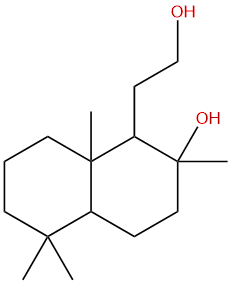
Natural products, as an important source of drug discovery, play an irreplaceable role in the long history of human struggle against diseases. From the classic analgesic morphine to the anticancer drug paclitaxel, the diverse secondary metabolites in nature continue to provide valuable lead compounds for modern drug development. In the vast family of terpenes, diterpenes have attracted much attention due to their rich biological activity and unique structural features. Sclareol glycol, as a diterpenoid diol derived from the microbial transformation of Sclareol, has gradually entered the field of researchers in recent years. Its chemical name is (1R, 2R, 8aS) -1- (3-hydroxy-3-methyl-4-pentenyl) -2,5,5,8a-tetramethyldecalin-2-ol, CAS number 55881-96-4, and it is a natural product derivative with potential medicinal value.
Perilla diol was initially discovered as a precursor of ammonia oxides, and its unique biotransformation pathway - degraded by a specific strain Hyphozyma roseonigra ATCC 20624- revealed the enormous potential of microorganisms in the structural modification of natural products. This transformation process not only enriches the structural diversity of diterpenoid compounds, but also provides a material basis for subsequent pharmacological activity research. In recent years, with the deepening of research on perilla diol, its anti-inflammatory activity and related molecular mechanisms have gradually been revealed, showing promising application prospects in the treatment of inflammation related diseases. This article will provide a systematic and in-depth review of perilla diol from multiple dimensions, including chemical structure, physicochemical properties, plant origin, pharmacological activity, mechanism of action, medicinal properties, and clinical application prospects, in order to provide reference for further research and development of this natural product.
Chemical structure and physicochemical properties
The chemical structure of perilla diol belongs to diterpenoid compounds, with a skeleton composed of 20 carbon atoms and a decalin core structure. Specifically, its structural features include a decahydronaphthalene ring system with a hydroxyl containing side chain (3-hydroxy-3-methyl-4-pentenyl) attached at C-1 and a hydroxyl group at C-2. This dihydroxy structure endows perilla diol with unique chemical properties and biological activity. Its molecular formula is C ₁₆ H ∝₀ O ₂, with a molecular weight of 254.4140 g/mol, belonging to the category of small molecule natural products.
In terms of physical and chemical properties, perilla diol exhibits typical lipophilic characteristics. The lipid water partition coefficient (LogP) of the compound is 3.5682, indicating strong lipid solubility, which is consistent with the hydrophobicity of its diterpenoid skeleton. A higher LogP value indicates that perilla diol is easily able to penetrate biofilms and may have good cell membrane permeability. The topologically polar surface area (TPSA) is 40.4600 Å ², which is lower than the commonly believed oral drug absorption threshold (approximately 140 Å ²), indicating that the compound may have good oral absorption potential. However, its water solubility is only 0.1194 mg/mL, which belongs to low water solubility compounds, which may limit its bioavailability and require attention in formulation development.
It is worth noting that the blood-brain barrier (BBB) penetration ability of perilla diol has been evaluated as "high", which gives it the potential to act on central nervous system targets, but may also pose a risk of central nervous system side effects. In addition, the hERG inhibition assessment result is' no ', indicating that the compound has a low risk in terms of cardiac safety. The Ames test result is 0.0, indicating that it does not have significant mutagenicity. These pharmacological parameters provide positive preliminary safety data for the further development of perilla diol.
Plant sources and extraction methods
Perilla diol is not directly derived from secondary metabolism in higher plants, but is obtained through microbial transformation pathways. Its precursor compound, Sclareol, is a diterpenoid widely present in the family Lamiaceae plant Salvia sclarea L. Perilla frutescens, also known as Southern European Salvia miltiorrhiza, is a perennial herbaceous plant. Its flowers and leaves are rich in volatile oils, among which perilla alcohol is one of the main diterpenoid components. The traditional method of extracting perilla alcohol usually uses steam distillation or organic solvent extraction to extract from dried flower clusters or leaves of perilla.
However, the acquisition of perilla diol depends on specific microbial transformation processes. According to existing research, Hyphozyma roseonigra ATCC 20624 is currently the only reported strain capable of efficiently converting perilla alcohol into perilla diol. This biotransformation process involves hydroxylation reactions at specific positions within the molecules of perilla alcohol, ultimately producing metabolites primarily composed of perilla diol. This strain belongs to yeast like fungi and has a unique metabolic enzyme system that can recognize and modify the diterpenoid skeleton of perilla alcohol.
From a technical perspective, the preparation of perilla diol typically involves the following steps: firstly, extracting perilla alcohol from perilla plants; Secondly, adding perilla alcohol as a substrate into the fermentation culture system of Hyphozyma roseonigra ATCC 20624; Under appropriate temperature, pH, and ventilation conditions, the strain converts perilla alcohol into perilla diol through its intracellular enzyme system; Finally, the target product is isolated and purified from the fermentation broth using methods such as organic solvent extraction, column chromatography, or recrystallization. This biotransformation method has the advantages of mild reaction conditions, high selectivity, and environmental friendliness, and is the main pathway for obtaining perilla diol. In addition, with the development of synthetic biology, it is also possible to achieve large-scale production of perilla diol through engineered microorganisms or chemical synthesis methods in the future.
Pharmacological activity research
At present, research on the pharmacological activity of perilla diol mainly focuses on the anti-inflammatory field. Inflammation is a defensive reaction of the body to infection, tissue damage or stimulation, but excessive or sustained inflammatory reaction can lead to the occurrence of many diseases, such as rheumatoid arthritis, inflammatory bowel disease, asthma, atherosclerosis and even cancer. Therefore, the development of safe and effective anti-inflammatory drugs has important clinical significance.
The anti-inflammatory activity of perilla diol has been preliminarily validated through various in vitro and in vivo models. Research has shown that this compound can significantly inhibit the production of pro-inflammatory cytokines in macrophages stimulated by lipopolysaccharide (LPS). In the classic RAW264.7 macrophage inflammation model, treatment with perilla diol can dose dependently reduce the release of nitric oxide (NO) and prostaglandin E ₂ (PGE ₂), two molecules that are key mediators of inflammatory response. In addition, perilla diol can also inhibit the expression of various pro-inflammatory cytokines, including tumor necrosis factor - α (TNF - α), interleukin-6 (IL-6), etc.
In animal models, coumarin also showed certain anti-inflammatory effects. For example, in the carrageenan induced toe swelling model, administration of perilla diol can alleviate inflammation and reduce the degree of local tissue edema. In the acute lung injury model, perilla diol can reduce the infiltration of inflammatory cells in the lungs and lower the levels of inflammatory factors in bronchoalveolar lavage fluid. These research results preliminarily confirm the anti-inflammatory potential of perilla diol in vitro and in vivo, providing experimental evidence for its further development as an anti-inflammatory drug.
It is worth noting that the anti-inflammatory activity of perilla diol may be related to its regulation of various inflammation related signaling pathways. Its targets are extensive, involving multiple molecules closely related to inflammatory response, such as IL-6, STAT3, CASP1, TRPV1, RELA, PTGS1, TNF, TRPA1, IKBKB, NOS2, etc. This multi-target characteristic of action may give coumarin a unique advantage in anti-inflammatory treatment, but it also increases the complexity of its mechanism of action research.
Mechanism of action and molecular targets
The anti-inflammatory mechanism of Perilla frutescens diol involves multiple molecular targets and signaling pathways, exhibiting the characteristics of coordinated regulation of multiple targets and pathways. According to existing research, its mechanism of action mainly involves the following aspects:
Firstly, perilla diol can inhibit the nuclear factor kappa B (NF - κ B) signaling pathway. NF - κ B is the core transcription factor of inflammatory response, regulating the expression of a large number of pro-inflammatory genes. RELA (p65) is an important member of the NF - κ B family. Perilla diol can inhibit the activity of I κ B kinase (IKBKB), prevent the phosphorylation and degradation of I κ B α, and thus suppress the nuclear translocation and transcriptional activity of NF - κ B. This mechanism directly leads to downregulation of downstream pro-inflammatory factors such as TNF - α, IL-6, inducible nitric oxide synthase (NOS2), and cyclooxygenase-2 (PTGS1/COX-2) expression.
Secondly, perilla diol can regulate the STAT3 signaling pathway. STAT3 is a member of the signal transduction and transcriptional activation factor family, playing a crucial role in inflammation and immune responses. Perilla diol may reduce cytokine mediated inflammatory responses such as IL-6 by inhibiting the phosphorylation of STAT3, blocking its binding activity to DNA. The inhibition of IL-6/STAT3 signaling axis is one of the important links in the anti-inflammatory effect of perilla diol.
In addition, perilla diol is also involved in the regulation of CASP1 (cysteine aspartic protease 1). CASP1 is a key effector molecule for inflammasome activation, involved in the maturation and secretion of IL-1 β and IL-18. Perilla diol may reduce the activity of CASP1 by inhibiting the assembly or activation of inflammasomes, thereby reducing the production of pro-inflammatory factors such as IL-1 β.
It is worth noting that the regulatory effect of perilla diol on transient receptor potential (TRP) channel family members TRPV1 and TRPA1 is also worth paying attention to. TRPV1 and TRPA1 are important nociceptors involved in the transmission of pain and inflammatory signals. Perilla diol may exert analgesic and anti-inflammatory effects by regulating the activity of these channels. This mode of action suggests that coumarin may have potential application value in the treatment of inflammatory pain.
In summary, Perilla frutescens diol exerts anti-inflammatory effects through the synergistic action of multiple targets and pathways, and its action network involves multiple key nodes such as NF - κ B, STAT3, inflammasomes, TRP channels, etc. This multi-target characteristic of action may have advantages such as comprehensive efficacy and low drug resistance in anti-inflammatory therapy, but further research is also needed to clarify the interactions and primary secondary relationships between each target.
Evaluation of drug properties and pharmacokinetics
The evaluation of drug properties is a crucial step in determining whether natural products can be successfully converted into clinical drugs. The pharmacological parameters of perilla diol have preliminarily revealed its potential and challenges as a drug candidate molecule. From the molecular weight of 254.4140 Da, this compound conforms to the typical characteristics of small molecule drugs (usually<500 Da), which is beneficial for oral absorption and in vivo distribution. The LogP value is 3.5682, which is within the ideal range of oral drug lipophilicity (usually 1-5), indicating good membrane permeability. The TPSA is 40.4600 Å ², far below the threshold for oral drug absorption (140 Å ²), further supporting its good oral absorption potential.
However, the low water solubility of perilla diol (0.1194 mg/mL) may be the main challenge facing its bioavailability. Low water soluble drugs may be difficult to fully dissolve in the gastrointestinal tract, leading to incomplete absorption and ultimately affecting their efficacy. To address this issue, formulation techniques such as solid dispersions, lipid nanoparticles, cyclodextrin inclusion complexes, etc. can be used to improve their solubility and dissolution rate. In addition, prodrug design strategies are also an effective way to improve water solubility.
In terms of pharmacokinetics, the high blood-brain barrier penetration ability of perilla diol is a noteworthy feature. This characteristic gives it the potential to treat central nervous system diseases such as neuroinflammation, chronic pain, etc. But at the same time, it may also increase the risk of central nervous system side effects, such as dizziness, drowsiness, etc. Therefore, in the process of drug development, it is necessary to fully evaluate the safety of the central nervous system.
In terms of safety evaluation, the hERG inhibition assessment result is "no", indicating that the risk of perilla diol causing QT interval prolongation in the heart is low, which is a positive signal. The Ames test result is 0.0, indicating that the compound does not have significant mutagenicity and has a low risk of genetic toxicity. These preliminary safety data lay the foundation for further development of perilla diol. However, a comprehensive toxicological evaluation is still needed, including studies on acute toxicity, chronic toxicity, reproductive toxicity, carcinogenicity, etc.
At present, detailed research on the absorption, distribution, metabolism, and excretion (ADME) process of perilla diol in the body is not yet sufficient. In the future, systematic pharmacokinetic studies are needed, including oral bioavailability, plasma protein binding rate, metabolic stability, identification of major metabolites, excretion pathways, etc. These data are crucial for guiding dosing regimen design and predicting drug drug interactions.
Clinical application prospects and prospects
Based on the anti-inflammatory activity and multi-target mechanism of action of perilla diol, this compound shows potential application prospects in the treatment of various inflammation related diseases. Firstly, in chronic inflammatory diseases such as rheumatoid arthritis, inflammatory bowel disease, psoriasis, etc., perilla diol may alleviate disease symptoms by inhibiting the NF - κ B and STAT3 signaling pathways, reducing the production of pro-inflammatory factors. Secondly, in critical conditions such as acute lung injury and sepsis, the multi-target anti-inflammatory effect of perilla diol may help control excessive inflammatory reactions and reduce tissue damage.
In addition, the regulatory effect of perilla diol on TRPV1 and TRPA1 channels makes it potentially valuable in the treatment of inflammatory pain and neuropathic pain. Chronic pain is a common clinical symptom, and existing treatment drugs such as nonsteroidal anti-inflammatory drugs and opioids have limited efficacy or significant side effects. Perilla diol, as a natural product with a novel mechanism of action, may provide a new option for pain management.
It is worth noting that the high blood-brain barrier penetration ability of perilla diol provides the possibility for its application in central nervous system inflammation related diseases. For example, neuroinflammation is an important pathological feature in neurodegenerative diseases such as multiple sclerosis, Alzheimer's disease, Parkinson's disease, etc. Perilla diol may exert neuroprotective effects by inhibiting the activation of microglia and reducing neuroinflammatory responses.
However, the clinical application of perilla diol still faces many challenges. Firstly, its low water solubility may limit oral bioavailability, requiring the development of appropriate formulation technologies. Secondly, the pharmacological activity research on perilla diol is still in its preliminary stage, and there is a lack of large-scale preclinical pharmacological and toxicological data. Thirdly, although its multi-target mechanism has advantages, it may also bring off target effects and unknown side effects. Fourthly, the yield and cost of producing perilla diol by microbial transformation method need to be further optimized to meet the needs of future clinical research.
Looking ahead to the future, research on perilla diol can be deepened in the following aspects: firstly, conducting systematic pharmacokinetic and toxicological studies to comprehensively evaluate its pharmacological properties; The second is to use modern medicinal chemical methods to modify the structure of perilla diol to improve its water solubility and selectivity; Thirdly, through omics techniques and network pharmacology methods, the multi-target mechanism of action can be further elucidated; The fourth is to explore the synergistic effect of perilla diol with other anti-inflammatory drugs and develop a combination therapy plan; The fifth is to promote the large-scale production process research of perilla diol, laying the foundation for clinical translation.
Conclusion
Perilla diol, as a diterpenoid natural product derived from microbial transformation, has demonstrated unique value in the field of natural product drug research due to its unique chemical structure and multi-target anti-inflammatory activity. From a chemical perspective, its dihydroxydecalin skeleton provides multiple sites for structural modification; From a pharmacological perspective, its regulatory effects on multiple inflammation related targets such as NF - κ B, STAT3, inflammasomes, and TRP channels reflect the multi-target and multi pathway characteristics of natural products; From the perspective of drug development, its good membrane permeability and preliminary safety data provide favorable conditions for drug development.
However, research on perilla diol is still in its early stages, and there is still a long way to go from laboratory discovery to clinical application. The issues of low water solubility, unclear pharmacokinetic characteristics, and limited preclinical data urgently need to be addressed. With the continuous advancement of modern medicinal chemistry, formulation, pharmacology, and biotechnology, perilla diol is expected to develop into an anti-inflammatory drug with clinical application value through structural optimization, formulation improvement, and in-depth mechanism research. This process will not only promote the drug development of perilla diol itself, but also provide useful references for the research of other natural products.