Introduction/Overview
Male infertility is a complex reproductive health problem that affects approximately 15% of couples of childbearing age worldwide, with male factors accounting for about half of it. Its causes are diverse, involving multiple aspects such as endocrine disorders, sperm production disorders, oxidative stress damage, and sexual dysfunction. Traditional Chinese medicine has accumulated rich experience in treating male reproductive system diseases, among which Epimedium plants are known for their "kidney tonifying and yang strengthening" effects. Chaohuo glycoside A, as a characteristic flavonol glycoside isolated from Korean Epimedium, has received widespread attention from pharmacological researchers in recent years due to its multiple pharmacological activities in improving male reproductive function. It not only represents a model for the modernization of traditional Chinese medicine research, but also provides a highly promising lead compound for the development of new, safe, and multi-target male infertility treatment drugs. This article aims to systematically review the chemical properties, plant sources, pharmacological activities, mechanisms of action, medicinal properties, and clinical application prospects of Chaohuo glycoside A, in order to provide comprehensive scientific references for the in-depth research and development of this compound.
Chemical structure and physicochemical properties
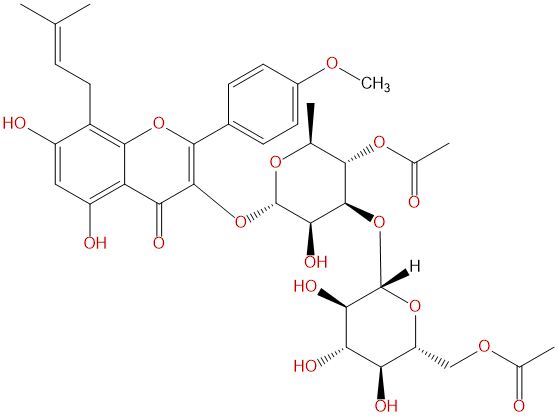
Chaohuo glycoside A is a flavonol glycoside compound, whose chemical structure is composed of a flavonol glycoside element (speculated to be icariin glycoside) connected to a sugar chain. Its molecular formula is C39H52O18 and its molecular weight is 760.7420. The structural characteristics of this compound determine its unique physicochemical properties.
From the analysis of the parameters related to drug properties, the lipid water partition coefficient (LogP) of Chaohuo glycoside A is 1.8951, indicating that it has a certain lipophilicity, but not highly lipophilic. Its topological polar surface area (TPSA) is as high as 250.3400 Å ², mainly attributed to the abundant hydrogen bond donor and acceptor sites brought about by the presence of multiple hydroxyl and glycosyl structures in the molecule. Higher TPSA is usually associated with poorer cell membrane permeability. Its water solubility value is 0.8502 (usually measured in mg/mL or log mol/L, indicating moderate to low water solubility). This "amphiphilic" but hydrophilic characteristic is consistent with many natural flavonoid glycosides.
These physical and chemical properties directly affect their bioavailability. A high polar surface area and moderate water solubility mean that its gastrointestinal absorption may face challenges, typically requiring active transport or hydrolysis (deglycosylation) by gut microbiota to form aglycones for better absorption. Its blood-brain barrier permeability is predicted to be "low", which is consistent with the characteristics of most highly polar glycosides and suggests that its main pharmacological effects may be concentrated in the peripheral system rather than the central nervous system.
Plant sources and extraction methods
Chaohuo glycoside A is mainly derived from Epimedium plants in the Berberidaceae family Korean Epimedium The above ground parts, especially the leaves. Epimedium plants have a wide distribution and medicinal history in China, South Korea, Japan, and other places. Korean Epimedium is one of the important medicinal species and is included in the Chinese Pharmacopoeia.
The extraction of Chaohuo glycoside A from plant materials usually follows the conventional process of natural product chemistry, but requires optimization of its flavonoid glycoside properties:
1. Extract Alcohol extraction is often used. After crushing the above ground parts of dried Korean Epimedium, heating reflux extraction or ultrasound assisted extraction is performed using methanol, ethanol, or different concentrations of aqueous solutions. Alcohol solvents can effectively dissolve flavonoid glycosides. In recent years, green extraction techniques such as supercritical CO ₂ extraction (which requires the addition of entrainers such as ethanol) have also been applied in research.
2. Enrichment and Separation After vacuum concentration, the crude extract was subjected to gradient extraction with organic solvents such as petroleum ether, ethyl acetate, and n-butanol, and the main enrichment site of quercetin was in the n-butanol extraction site. Further purification relies on column chromatography techniques, commonly using silica gel column chromatography, macroporous adsorption resin (such as D101, AB-8) column chromatography, polyamide column chromatography, and reverse phase silica gel (such as ODS) column chromatography. High performance liquid chromatography, especially preparative high-performance liquid chromatography, is a key technology for obtaining high-purity monomers of paeoniflorin.
3. Identification and Quality Control The structural identification of compounds comprehensively utilizes techniques such as ultraviolet spectroscopy, infrared spectroscopy, mass spectrometry, and nuclear magnetic resonance spectroscopy. In terms of quality control of medicinal materials and extracts, high-performance liquid chromatography has become the standard method for quantitative analysis of the content of Asagirizin A. It usually uses a C18 chromatographic column, gradient elution with acetonitrile water or methanol water system as the mobile phase, and detection with a UV detector.
Pharmacological activity research
The pharmacological activity research of Chaohuo glycoside A mainly focuses on its potential to improve male reproductive function, and the relevant experimental evidence mostly comes from cell and animal models.
- Promote steroid hormone synthesis Research has shown that Chaohuo glycoside A can significantly promote the synthesis of testosterone in testicular interstitial cells. This is the biochemical basis for its "aphrodisiac" effect. Its function may be achieved by upregulating the expression of acute regulatory proteins and key synthetic enzymes involved in steroid synthesis.
- Improve sperm production and quality In animal models of oligoasthenozoospermia induced by cyclophosphamide, Tripterygium wilfordii Hook. f. Hook. f. Hook. f. Hook. f. can increase testicular index, epididymal sperm count and motility, and reduce sperm deformity rate. Histopathological examination shows that it can alleviate damage to the seminiferous tubule structure and support the normal development of various levels of spermatogenic cells.
- Antioxidant and anti apoptotic effects Testicular tissue is highly sensitive to oxidative stress. Chaohuo glycoside A exhibits significant antioxidant activity, which can increase the activity of superoxide dismutase and glutathione peroxidase, and reduce the level of malondialdehyde. At the same time, it can inhibit the apoptosis of germ cells and stromal cells by regulating the Bcl-2/Bax protein ratio and inhibiting the activation of caspase-3.
- Regulating the hypothalamic pituitary gonadal axis Chaohuo glycoside A may regulate HPG axis function through multiple layers. In addition to directly acting on the testes, research suggests that it may affect the hypothalamus and pituitary gland, promoting the secretion of gonadotropin-releasing hormone, luteinizing hormone, and follicle stimulating hormone, thereby positively regulating the entire reproductive endocrine network.
- Other potential activities As a flavonoid compound, Chaohuo glycoside A may also possess common activities of Epimedium plants such as anti-inflammatory, immune enhancing, and neuroprotective effects, which indirectly contribute to creating a favorable reproductive environment.
Mechanism of action and molecular targets
The effect of Chaohuo glycoside A on improving male infertility is the result of multi-target and multi pathway synergy. Based on the provided target information, its molecular mechanism can be summarized as follows:
-
Regulating androgen metabolism and effects:
- Inhibit androgen degradation Chaohuo Glycoside A may have an impact on 5 α - reductase type 2 Has inhibitory effect. SRD5A2 is a key enzyme that converts testosterone into the more active dihydrotestosterone. In certain pathological conditions, such as benign prostatic hyperplasia, its excessive activity may lead to abnormal elevation of DHT in the prostate, but there is a risk of depletion of the systemic testosterone pool. Moderate inhibition of SRD5A2 may help maintain more sustained circulating testosterone levels.
- Activate androgen receptor signaling Chaohuo glycoside A or its metabolites may act as regulators of androgen receptors, enhancing the transcriptional activity or stability of AR, thereby amplifying the biological effects of testosterone/DHT, promoting male sexual characteristics maintenance and spermatogenesis.
-
Promote estrogen synthesis and balance:
- Regulating aromatase activity:CYP19A1 The encoded aromatase is responsible for converting androgens into estrogens. The appropriate amount of estrogen in the testes is crucial for spermatogenesis and testicular function. Chaohuo glycoside A may optimize the local male/estrogen balance in the testes and create a suitable spermatogenic microenvironment by regulating the expression or activity of CYP19A1.
-
Promote testosterone synthesis:
- Accelerate cholesterol transport:STAR Protein is the rate limiting step in testosterone synthesis, responsible for transporting cholesterol from the outer membrane to the inner membrane of mitochondria for subsequent steroid hormone synthesis chain reactions. Chaohuo glycoside A has been shown to upregulate the expression of STAR, thereby directly promoting the initiation of testosterone synthesis.
- Enhance gonadotropin signaling Chaohuo glycoside A may enhance LH and FSH The function indirectly promotes testosterone synthesis and spermatogenesis. It may upregulate testicular interstitial cells LHB receptor Sensitivity or enhanced support on cells FSHR Through signal transduction, it synergistically promotes the function of the seminiferous epithelium.
In summary, the mechanism network of action of Chaohuo glycoside A covers multiple key nodes from upstream signal regulation of HPG axis (LH/FSH and its receptors), key steps of steroid synthesis (STAR, CYP19A1), androgen response pathway (AR) to androgen metabolism (SRD5A2), forming a three-dimensional and synergistic pharmacological action network, which explains its comprehensive therapeutic effect in various male infertility animal models.
Evaluation of drug properties and pharmacokinetics
Based on the provided pharmacological parameters and existing research, the preliminary evaluation of the pharmacological properties of Chaohuo glycoside A is as follows:
- absorb As a highly polar flavonoid glycoside, the oral bioavailability of Chaohuo glycoside A may be low. Its absorption may depend on transport proteins in the gut, and the main way may be through hydrolysis by β - glucosidase secreted by gut microbiota, producing more lipophilic glycoside forms (such as icariin or glycoside), which are absorbed into the bloodstream. This is a common metabolic fate of many oral flavonoid glycosides.
- distribution Due to its moderate LogP value and low blood-brain barrier permeability in its aglycone form, Chaohuo glycoside A and its metabolites may mainly be distributed in the blood, liver, kidneys, and peripheral target organs (such as testes), making it difficult to enter the central nervous system, which is beneficial for reducing the potential risk of central nervous system side effects.
- Metabolism In addition to gut microbiota metabolism, the absorbed Chaohuo glycoside A and its aglycones will undergo extensive phase I and phase II metabolism in the liver, including hydroxylation, demethylation, glucuronidation, and sulfation, producing various metabolites. These metabolites may also have biological activity and contribute to the overall efficacy.
- excretion Metabolites are mainly excreted through the kidneys and urine, and some may also be excreted through bile and feces.
- Preliminary evaluation of safety The provided parameters show that Chaohuo glycoside A is present in Ames test The intermediate result is 0.0 (usually indicating no mutagenicity), indicating a low risk of genetic toxicity. Meanwhile, it HERG inhibition A 'no' indicates that hERG potassium channels may not be inhibited at conventional concentrations, reducing the potential risk of inducing QT interval prolongation and apical torsion ventricular tachycardia. This is an important positive signal for the cardiovascular safety of drugs. However, a comprehensive safety assessment still requires systematic preclinical research data support on acute toxicity, chronic toxicity, reproductive toxicity, and other factors.
At present, there are insufficient research reports on the pharmacokinetics of Chaohuo glycoside A system, and its key parameters such as absolute bioavailability, main active metabolites, and in vivo half-life need further clarification.
Clinical application prospects and prospects
Chaohuo glycoside A has shown clear application prospects in the field of male infertility treatment, but its transformation still faces challenges and opportunities.
prospect:
1. New multi-target therapeutic drugs For male infertility with complex causes, single target drugs often have limited efficacy. The multi-target and multi pathway characteristics of Chaohuo glycoside A make it a promising comprehensive drug for the treatment of idiopathic oligoasthenozoospermia and endocrine infertility, especially suitable for patients with traditional Chinese medicine syndrome differentiation of "kidney yang deficiency" type.
2. Standardization and modernization of traditional Chinese medicine preparations As one of the quality indicators of Epimedium in North Korea, the determination of the content of Chaohuo glycoside A can be used to control the quality of Epimedium related preparations. In the future, modern traditional Chinese medicine new drugs with Chaohuo glycoside A as the main active ingredient can be developed, such as high-purity extract capsules, tablets, or special preparations for its absorption problems (such as phospholipid complexes, nanoemulsions, solid dispersions, etc.).
3. Collaborative medication for assisted reproductive technology In assisted reproductive technologies such as in vitro fertilization embryo transfer, Chaohuo glycoside A or its compound can be used for preoperative sperm quality regulation in men, which may improve the success rate of sperm acquisition and sperm quality.
Challenges and Prospects:
1. Improved bioavailability This is the core bottleneck for the development of Chaohuo glycoside A into medicine. Future research needs to focus on: ① developing prodrugs or structural modifications to improve their lipid solubility and membrane permeability; ② Utilizing novel drug delivery systems such as liposomes and nanoparticles to promote their absorption and targeted delivery to testicular tissue; ③ Thoroughly study its in vivo metabolic profile to clarify the true pharmacological substance basis (whether it is a prototype drug or a specific metabolite).
2. In depth mechanism research It is necessary to use gene knockout/knock in animal models, molecular docking, surface plasmon resonance, and other techniques to accurately verify the direct interaction sites, affinity, and specific molecular pathways (such as PKA/CREB, PI3K/Akt signaling pathways) regulated by Chaohuo glycoside A with the aforementioned targets (AR, SRD5A2, CYP19A1, etc.).
3. Preclinical and clinical research GLP toxicology evaluation that complies with international standards must be completed to clarify its safe dose range. Furthermore, a rigorous randomized double-blind placebo-controlled clinical trial will be designed to verify its effectiveness and safety in male infertility patients with different etiologies in stages.
4. Explore a wider range of indications Based on the commonality of flavonoids, their antioxidant, anti-inflammatory, and endothelial protective activities are also worth exploring, which may expand their potential applications in menopausal syndrome, osteoporosis, cardiovascular protection, and other fields.
Conclusion
Chaohuo glycoside A, as a representative active flavonoid glycoside in Korean Epimedium, provides an attractive natural candidate molecule for the treatment of male infertility through multiple pharmacological effects such as multi-target regulation of HPG axis function, promotion of testosterone synthesis, improvement of spermatogenesis, and resistance to oxidative damage. Although it faces the common challenge of low oral bioavailability in terms of drug efficacy, its clear multi-target effect, good preliminary safety characteristics, and profound traditional application background endow it with enormous development value. Future research should focus on overcoming absorption barriers through pharmacology and medicinal chemistry, utilizing modern molecular biology techniques to elucidate the details of its effects, and ultimately verifying its efficacy through standardized clinical studies. The research process of chaohoside A is a vivid reflection of the realization of "inheriting the essence, maintaining integrity and innovation" of the active ingredients of traditional Chinese medicine through modern science and technology, which is expected to contribute Chinese wisdom and solutions to the global male reproductive health problems.