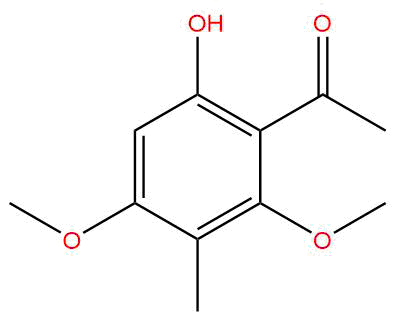


Product name: Bancroftinone
Synonym name: 5-Methylxanthoxylin
Catalogue No.: BP4514
Cas No.: 14964-98-8
Formula: C11H14O4
Mol Weight: 210.229
Botanical Source:
Type of Compound:
Purity: 95%~99%
Analysis Method: HPLC-DAD or/and HPLC-ELSD
Identification Method: Mass, NMR
Packing: Brown vial or HDPE plastic bottle
Storage: Store in a well closed container, protected from air and light. Put into refrigerate or freeze for long term storage.
Whenever possible, you should prepare and use solutions on the same day. However, if you need to make up stock solutions in advance, we recommend that you store the solution as aliquots in tightly sealed vials at -20℃. Generally, these will be useable for up to two weeks.
The product could be supplied from milligrams to grams
Inquire for bulk scale.
For Reference Standard and R&D, Not for Human Use Directly.
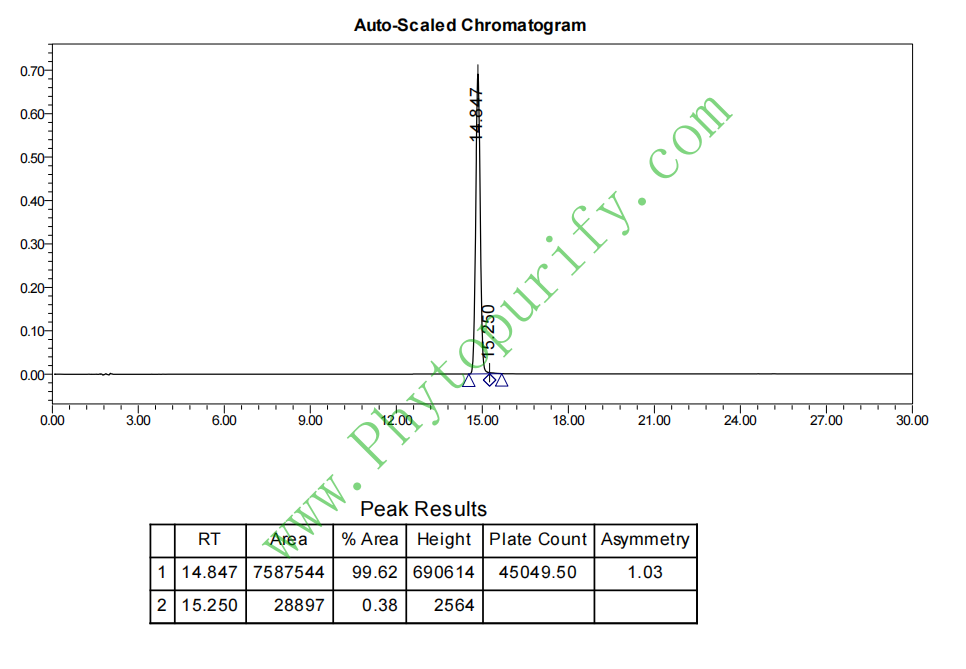
HPLC of Bancroftinone
Storage conditions:Short-term storage at 2~8℃, long-term storage at -20 ~ -80℃
55.7600
2.0412
1.9598
.8441
6.3315
39.4120
High
72.7956
2.2157
Yes
No
Yes
No
Yes
No
0.6
Yes
No
Yes
No
Inflammation is a complex and delicate defense response of the body in response to infection, tissue damage, or harmful stimuli. However, when this process is dysfunctional and becomes chronic or over reactive, it becomes the common pathological basis of many major diseases, such as rheumatoid arthritis, atherosclerosis, neurodegenerative diseases and many cancers. Therefore, the development of efficient and safe anti-inflammatory drugs has always been a core issue in the field of drug research and development. Between the treasure trove of traditional medicines and the discovery of modern drugs, natural products play an indispensable bridging role. Their structural diversity and rich biological activity provide an inexhaustible source for the discovery of new lead compounds.
Bancroftinone, as a natural product of alkylketones isolated from plants, has attracted much attention in recent years due to its significant anti-inflammatory activity. Its CAS number is 14964-98-8. Although its popularity is still relatively limited compared to some star natural products such as curcumin and resveratrol, preliminary pharmacological studies have revealed its regulatory potential in multiple key inflammatory signaling pathways and targets, involving core inflammatory mediators such as IL-6, STAT3, NF - κ B, TNF - α, and COX-2. This suggests that eugenol may have unique advantages in multi-target and multi pathway synergistic anti-inflammatory effects. This article aims to systematically review the chemical properties, plant sources, pharmacological activities, mechanisms of action, medicinal properties, and clinical application potential of eugenol, in order to provide comprehensive academic references for the in-depth research and development of this compound.
The chemical structure of eugenol belongs to the typical alkylbenzene ketone group. Its molecular formula is C13H14O3 and its molecular weight is 210.2290. Structurally, its core is a benzene ring connected to a ketone group, with specific alkyl and oxygen-containing substituents (such as methoxy) attached to the benzene ring. This structural feature makes it both lipophilic and polar.
The physicochemical parameters related to drug properties calculated or measured based on its chemical structure are as follows:
* Lipid water partition coefficient (LogP): 2.0412. This value indicates that eugenol has moderate lipophilicity, which is beneficial for its penetration of cell membranes, but also ensures that it will not accumulate or distribute too narrowly in the body due to high lipophilicity.
* Topological Polarity Surface Area (TPSA)55.7600 Å ². This value reflects the surface area of polar atoms (such as oxygen atoms) in the molecule, which is at a moderate level, indicating good membrane permeability and the ability to form certain interactions with water molecules.
* Water solubility Approximately 0.8441 mg/mL. This indicates that eugenol has limited solubility in water and belongs to slightly soluble or poorly soluble compounds, which is a key factor to consider in its formulation development process.
* Blood-brain barrier permeability Predicted as' high '. This suggests that coumarin may enter the central nervous system, providing important theoretical basis for its application in neuroinflammatory related diseases such as Alzheimer's disease, Parkinson's disease, and neuropathic pain.
* HERG inhibition risk Predicted as' no '. The inhibition of hERG potassium channels is closely related to the serious side effects of drug-induced QT interval prolongation and apical torsion type ventricular tachycardia. This negative prediction suggests a low risk of cardiac toxicity for coumarin, but experimental verification is needed.
* Genotoxicity screening (Ames test)The predicted value is 0.6 (usually judged by whether it is mutagenic, and this value needs to be combined with the specific model threshold. Generally, values less than 1.0 tend to be considered non mutagenic). This provides preliminary positive signals for its safety, but also requires confirmatory experiments.
In summary, eugenol has great potential as a drug lead compound in terms of chemical structure. Its moderate LogP and TPSA, potential BBB penetration ability, and preliminarily predicted low cardiac toxicity and genetic toxicity lay a favorable physicochemical and preliminary safety foundation for its subsequent pharmaceutical development.
Eugenol is mainly isolated from plants such as Myrtaceae. Its name "Bancroftinone" suggests a possible plant origin related to the contributions of early researchers such as Bancroft, commonly found in medicinal plants in tropical or subtropical regions. Although their specific plant sources are not as widely reported in public literature as other well-known compounds, alkylbenzene ketone compounds are widely distributed in nature, especially in various aromatic and traditional medicinal plants.
For the extraction and separation of eugenol, the conventional process of natural product chemistry is usually followed:
1. Raw material collection and pretreatment Collect plant parts containing the compound (such as bark, leaves, fruits, or roots), dry and crush them into coarse powder.
2. Solvent extraction Using the characteristic of equal polarity, methanol, ethanol, acetone, or a mixture of these solvents and water are often used for extraction, reflux, or ultrasound assisted extraction to maximize the dissolution of compounds from plant substrates.
3. Coarse separation The extract obtained by concentrating the extract is subjected to liquid-liquid distribution extraction using solvents of different polarities such as petroleum ether, ethyl acetate, n-butanol, etc. Due to its LogP value, eugenol is likely to be mainly enriched in the ethyl acetate extraction site.
4. Fine separation and purification: The ethyl acetate part is further separated by a variety of chromatographic techniques, such as silica gel column chromatography (gradient elution with different proportions of petroleum ether ethyl acetate or chloroform methanol system), gel column chromatography (Sephadex LH-20) and high performance liquid chromatography (HPLC, preparative or semi preparative). Through thin layer chromatography (TLC) or high-performance liquid chromatography monitoring, combined with spectroscopic methods such as nuclear magnetic resonance (NMR) and mass spectrometry (MS) for structural identification, high-purity eugenol monomer was finally obtained.
Modern extraction techniques such as supercritical CO2 extraction and microwave-assisted extraction may also be applied to improve extraction efficiency and selectivity. However, in order to achieve large-scale acquisition of eugenol, it is still necessary to optimize the cultivation and extraction processes of its plant sources, as well as possible chemical synthesis or biosynthetic pathways.
The core pharmacological activity of eugenol focuses on anti-inflammatory effect And it has demonstrated multiple effects in related research.
1. In vitro anti-inflammatory activity:
In various cellular inflammatory models, eugenol exhibits significant inhibitory effects. For example, in a lipopolysaccharide (LPS) - stimulated macrophage model (such as RAW264.7 cells), eugenol can dose dependently inhibit the excessive production of nitric oxide (NO) and prostaglandin E2 (PGE2), which are key mediators of inflammatory response. Meanwhile, it can effectively downregulate the protein and mRNA expression levels of inducible nitric oxide synthase (iNOS) and cyclooxygenase-2 (COX-2). In addition, studies have shown that eugenol has an inhibitory effect on the secretion of pro-inflammatory cytokines such as tumor necrosis factor - α (TNF - α) and interleukin-6 (IL-6) induced by LPS.
2. In vivo anti-inflammatory activity:
In animal inflammation models, the efficacy of eugenol has been further validated. In mouse ear swelling models (usually induced by xylene or phorbol ester), local or systemic administration can significantly reduce inflammatory swelling of the ears. In the rat paw swelling model induced by carrageenan or formalin, eugenol can also effectively inhibit the formation of edema and alleviate pain behavior (indicating its possible analgesic effect). In chronic inflammation models such as adjuvant arthritis (AA) rat models, eugenol may improve arthritis symptoms by alleviating synovial inflammation, reducing bone erosion and cartilage damage.
3. Other potential activities:
Based on its anti-inflammatory mechanism, research on eugenol has been extended to other inflammation related diseases. Its excellent blood-brain barrier permeability prediction properties have attracted attention in neuroinflammatory models, and it may have inhibitory effects on β - amyloid protein or LPS induced activation of microglia. In addition, inflammation is a core feature of the tumor microenvironment, and eugenol may also exhibit potential anti-tumor activity by inhibiting pathways closely related to tumor occurrence, proliferation, and invasion, such as STAT3 and NF - κ B. However, further research is needed to confirm this.
The anti-inflammatory effect of eugenol is not achieved through a single target, but through a complex network involving key targets and pathways as follows:
Nuclear factor kappa B (NF - κ B) signaling pathway NF - κ B is the core transcription factor of inflammatory response. Research has shown that eugenol can inhibit the degradation and phosphorylation of I κ B α protein induced by LPS, thereby preventing the translocation of NF - κ B p65 subunit to the nucleus. This directly leads to the inhibition of transcription of a series of pro-inflammatory genes downstream, such as TNF - α, IL-6, iNOS, COX-2. target NFKB1 It is a key component of this pathway.
Signal transduction and transcription activator 3 (STAT3) pathway STAT3 is the core of another important pro-inflammatory and pro cancer signaling pathway. Eugenol may inhibit the activity of upstream kinases (such as JAK) or directly affect the phosphorylation of STAT3, hindering its dimerization and nuclear translocation, thereby downregulating its mediated inflammation and survival gene expression. target STAT3 It is the core of this pathway.
Inflammatory cytokines and mediators:
Pain related ion channels:
Cyclooxygenase-1 (COX-1)Unlike selective COX-2 inhibitors, eugenol has an effect on PTGS1 COX-1 may also have some impact. COX-1 is a constitutive expression involved in gastric mucosal protection and platelet function. The selectivity ratio of COX-1/COX-2 will directly affect its gastrointestinal safety, which requires precise evaluation.
In summary, eugenol synergistically inhibits major inflammatory signaling pathways such as NF - κ B and STAT3 through multi-target intervention, downregulates the expression of key pro-inflammatory cytokines and enzymes, and may regulate pain related ion channels, thereby exerting its comprehensive anti-inflammatory and analgesic effects.
Based on the prediction of physical and chemical parameters in the previous text, eugenol has shown certain potential as a drug, but its comprehensive evaluation still requires systematic preclinical pharmacokinetic and toxicological studies.
1. Prediction and Challenges of Absorption, Distribution, Metabolism, and Excretion (ADME):
* absorb Moderate LogP and TPSA are beneficial for its oral absorption, but limited water solubility may be the main limiting factor for its bioavailability. The development of appropriate dosage forms (such as solid dispersions, nanocrystals, liposomes) or the use of solubilization techniques is key to improving their oral absorption.
* distribution The predicted high blood-brain barrier permeability is its significant advantage, providing the possibility for treating central nervous system inflammatory diseases. Its small molecular weight also facilitates tissue distribution.
* Metabolism As a benzone compound, eugenol is likely to undergo phase I metabolism (such as oxidation and reduction by cytochrome P450 enzymes) and phase II binding reactions (such as glucuronidation and sulfation) in the liver. Clarifying its main metabolic enzymes, metabolites, and activities is crucial for evaluating drug interactions and individual differences.
* excretion Metabolites may be primarily excreted through the kidneys or bile.
2. Preliminary safety assessment:
* cardiotoxicity HERG inhibition prediction is negative, indicating a positive signal, but further experimental electrophysiological validation is needed.
* Genotoxicity The predicted value of Ames test (0.6) suggests a low potential risk, but it must be confirmed through a combination of standard in vitro and in vivo genetic toxicity tests (such as micronucleus test, chromosome aberration test).
* General toxicology Acute toxicity, subacute toxicity, and chronic toxicity tests are required to determine the NOAEL and treatment window.
* off-target effects It is necessary to investigate its effects on other important enzymes and receptors, such as other CYP subtypes and other ion channels.
3. Considerations for formulation development:
Due to its poor water solubility, future formulation development needs to focus on addressing issues of dissolution and bioavailability. Nanotechnology, cyclodextrin inclusion, and prodrug strategies are all possible directions. In addition, developing dosage forms that can accurately deliver to the brain, such as intranasal administration, is also worth exploring for its potential neuroinflammatory indications.
At present, there is a lack of publicly available data on the pharmacokinetics of eugenol system, which is a key gap that must be filled in the process of transitioning from active compounds to candidate drugs.
As a multi-target anti-inflammatory natural product, eugenol has broad clinical application prospects, but also faces many challenges.
Potential application areas:
1. Chronic inflammatory diseases:
* Rheumatoid arthritis (RA) and osteoarthritis (OA)Its ability to inhibit COX-2, TNF - α, IL-6, and osteoclast activation makes it a potential drug or adjuvant therapy for the treatment of RA and OA.
* Inflammatory bowel disease (IBD)By inhibiting the NF - κ B pathway, it may alleviate intestinal mucosal inflammation in Crohn's disease and ulcerative colitis.
* Neurodegenerative diseases Based on its BBB penetration potential and inhibitory effects on microglial activation and neuroinflammation, it has exploratory value in the treatment of diseases such as Alzheimer's disease, Parkinson's disease, and multiple sclerosis.
2. pain management Especially inflammatory pain and neuropathic pain. By inhibiting the COX-2/PGE2 pathway and regulating the TRPV1/TRPA1 channel, novel analgesics may be developed, which may avoid the gastrointestinal side effects of traditional nonsteroidal anti-inflammatory drugs (NSAIDs) and the addictive nature of opioid drugs.
3. Other inflammation related diseases: such as atherosclerosis (as chronic vascular inflammation), dermatitis, asthma, etc.
Challenges faced and future research directions:
1. Deep analysis of the mechanism of action It is necessary to more accurately elucidate its direct interaction mode with various targets (such as STAT3, TRP channels) (whether it is excitatory, antagonistic, or allosteric regulation), and use techniques such as gene knockout/knockdown to verify its core targets in complex physiological and pathological networks.
2. Systematic pharmacokinetics and toxicology research This is currently the most urgent gap. A complete ADME study must be conducted to clarify its in vivo processes, absolute bioavailability, tissue distribution characteristics, major metabolic pathways, and excretion modes. At the same time, conduct a comprehensive preclinical safety evaluation.
3. Structural optimization and derivative development Using it as the parent nucleus, structural modifications are carried out to enhance its activity, selectivity (such as selectivity towards COX-2), water solubility, and metabolic stability, while reducing potential toxicity.
4. Formulation research and clinical translation Develop a new drug delivery system suitable for its physicochemical properties to improve efficacy and patient compliance. After obtaining sufficient preclinical data support, gradually advance clinical trials.
5. Multiomics and Systems Pharmacology Research Using transcriptomics, proteomics, metabolomics and other techniques, comprehensively evaluate the overall impact of eugenol on biological systems, discover its new mechanisms of action and potential biomarkers.
Bancroftinone, as a natural product of alkylketones, is gradually entering the field of drug developers due to its unique chemical structure and multi-target anti-inflammatory pharmacological activity. It effectively inhibits the expression of core inflammatory mediators such as TNF - α, IL-6, iNOS, COX-2, and may regulate pain perception related ion channels by intervening in key inflammatory signaling pathways such as NF - κ B and STAT3, demonstrating the potential for treating various chronic inflammatory diseases and pain. Its excellent prediction of blood-brain barrier permeability adds unique value to its application in the field of neuroinflammation.
However, the road from a promising natural compound to a safe and effective drug is still long. The current research mainly focuses on in vitro and preliminary in vivo pharmacodynamics, and there is a serious lack of information on systematic pharmacokinetics, toxicology, precise mechanisms of action, and formulation development. Future research needs to conduct in-depth and systematic exploration in these areas, and overcome the shortcomings in their physicochemical properties through structural optimization and modern pharmaceutical methods. In summary, eugenol is a lead compound worth exploring in depth, and its subsequent research is expected to not only generate new therapeutic drugs, but also provide important examples for a deeper understanding of the multi-target anti-inflammatory mechanisms of natural products.
