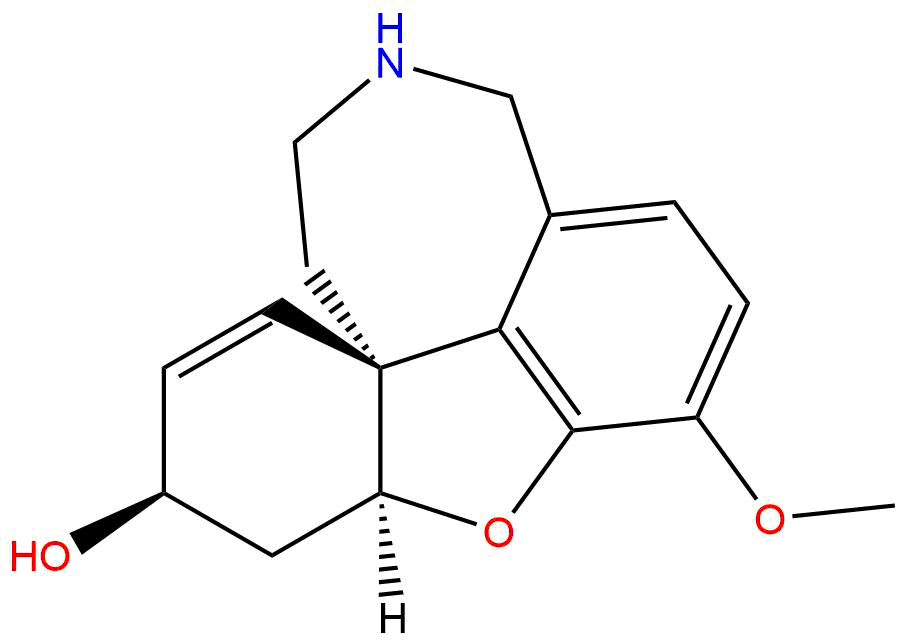


Product name: N-Desmethyl Galanthamine
Synonym name: Norgalantamine; Norgalanthamine;N-Desmethylgalantamine
Catalogue No.: BP4434
Cas No.: 41303-74-6
Formula: C16H19NO3
Mol Weight: 273.332
Botanical Source:
Type of Compound:
Purity: 95%~99%
Analysis Method: HPLC-DAD or/and HPLC-ELSD
Identification Method: Mass, NMR
Packing: Brown vial or HDPE plastic bottle
Storage: Store in a well closed container, protected from air and light. Put into refrigerate or freeze for long term storage.
Whenever possible, you should prepare and use solutions on the same day. However, if you need to make up stock solutions in advance, we recommend that you store the solution as aliquots in tightly sealed vials at -20℃. Generally, these will be useable for up to two weeks.
The product could be supplied from milligrams to grams
Inquire for bulk scale.
For Reference Standard and R&D, Not for Human Use Directly.
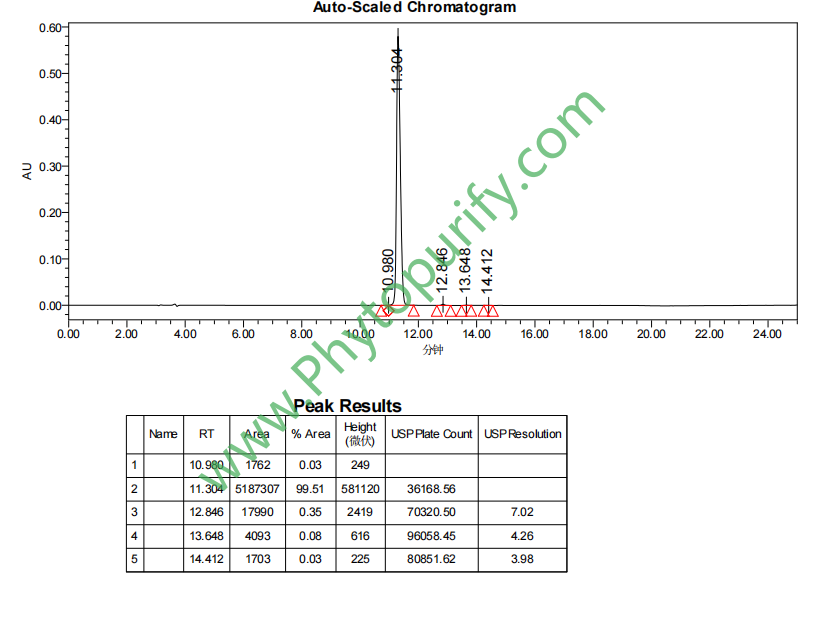
HPLC of N-Desmethyl Galanthamine
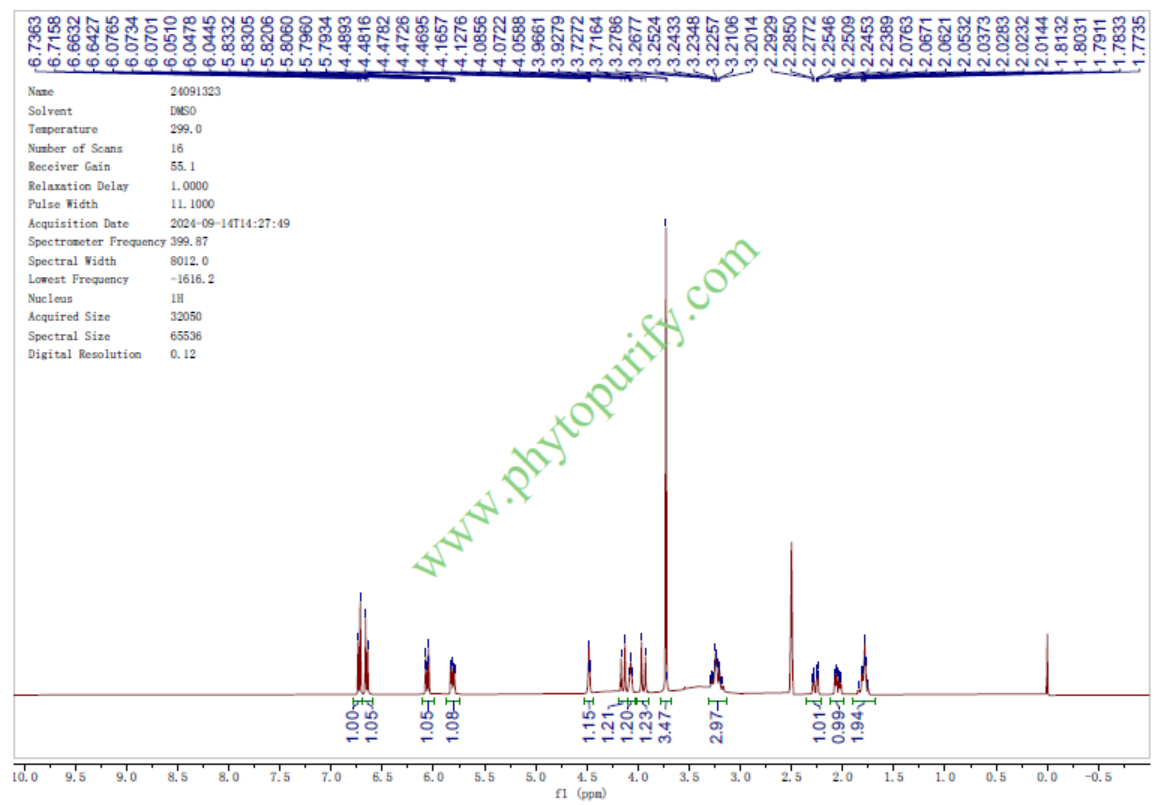
HNMR of N-Desmethyl Galanthamine
Storage conditions:Short-term storage at 2~8℃, long-term storage at -20 ~ -80℃
50.7200
1.5044
.1966
6.0636
1.7488
21.5216
High
34.1235
4.3697
No
Yes
No
No
No
No
0.0
Yes
Yes
Yes
Yes
Alzheimer's Disease (AD), as a progressive neurodegenerative disease, presents a serious challenge to global public health due to its complex pathological mechanisms, including β - amyloid (A β) deposition, excessive phosphorylation of Tau protein, cholinergic neurotransmission defects, neuroinflammation, and oxidative stress. Among various treatment strategies, acetylcholinesterase inhibitors (AChEIs) based on the cholinergic hypothesis are currently the first-line drugs for symptomatic treatment of AD. Galanthamine, an isoquinoline alkaloid derived from plants in the Alliaceae family, has become one of the widely used standard therapeutic drugs in clinical practice due to its unique dual mechanism of reversible inhibition of acetylcholinesterase (AChE) and conformational regulation of neuronal nicotinic acetylcholine receptors (nAChRs).
During the in vivo metabolism of drugs, their metabolites are often not only eliminated end products, but may also have independent biological activity, and may even contribute to or affect the overall efficacy and safety of the parent drug. N-Desmethyl Galanthamine (also known as N-Norgalanthamine, CAS number: 41303-74-6) is one of the main active metabolites of Galanthamine in the human body. Early studies have confirmed that N-demethylgalantamine itself exhibits inhibitory activity against electric eel acetylcholinesterase (EeAChE) (IC50=2.76 μ M), suggesting its potential direct contribution in AD treatment. With the deepening understanding of the pathological network of AD, research has found that the effect of N-demethylated galantamine may go beyond simple cholinesterase inhibition, involving potential regulation of multiple molecular targets closely related to AD pathological processes such as AMPK, Bcl-2 family, Notch, etc.
This article aims to provide a systematic review of N-demethylagalantamine, an important natural metabolite, and explore its chemical nature, sources, pharmacological activity, multi-target mechanism of action, and pharmacological characteristics. It also looks forward to its clinical application prospects as a novel lead compound or adjuvant therapy strategy for Alzheimer's disease.
N-demethylated galantamine is a metabolite formed by the N-demethylation reaction of galantamine catalyzed by the cytochrome P450 enzyme system (mainly CYP2D6 and CYP3A4) in the liver. Its chemical name is (4aS, 6R, 8aS) -3-hydroxy-1,2,4a, 5,6,7,8,8a-octahydro-6-methylpyrrolo [3,2,1-de] phenanthrene-9-ol. The most significant difference in its molecular structure compared to the parent compound galantamine is that the methyl group on the tertiary amine nitrogen atom (N-methyl) is removed and converted to a secondary amine structure.
This structural change directly affects its physicochemical properties. Its molecular weight is 273.3320, slightly lower than galantamine (287.35). The calculated lipid water partition coefficient (LogP) is 1.5044, indicating moderate lipophilicity. However, compared to galantamine (LogP of about 1.8), its lipophilicity slightly decreases due to a slight increase in polarity after demethylation. The topological polar surface area (TPSA) is 50.72 Å ², reflecting the hydrogen bonding ability provided by two hydroxyl groups and one secondary amine nitrogen atom in the molecule. The predicted water solubility value is 6.0636 mg/L, which belongs to the category of slight solubility. However, under physiological pH conditions, it forms salts due to protonation of nitrogen atoms, and its actual solubility may increase, which is beneficial for its distribution in the body.
It is particularly crucial that, based on its structural characteristics and computational model predictions, N-demethylated galantamine has a high blood-brain barrier (BBB) permeability. This is a prerequisite for it to exert pharmacological effects in the central nervous system for AD research. In addition, preliminary pharmacological risk assessment showed a negative hERG inhibition risk and an Ames test result of 0.0 (negative), indicating a low potential risk of arrhythmia and genetic toxicity, providing a favorable safety starting point for its further development.
N-demethylated galantamine, as an in vivo metabolite of galantamine, has received limited reports of direct plant sources. However, its parent compound galantamine is widely present in various Amaryllidaceae plants, such as:
1. Snow slice lotus genus Like summer snow sliced lotus(Leucojum aestivum)It is the main plant source for commercial extraction of galantamine.
2. Allium genus Like yellow flowered garlic(Lycoris aurea)Red flowered garlic(Lycoris radiata)。
3. Narcissus genus Like daffodils(Narcissus pseudonarcissus)。
4. Garland genus For example, Waldemarn(Galanthus woronowii)Wait.
In plants, N-demethylated galantamine may exist in the form of trace alkaloids, but more importantly, it is obtained through post extraction modification or total synthesis of galantamine.
* Extraction and Separation If directly searching from plant materials containing galantamine, the process is similar to galantamine extraction: after drying the plant materials and crushing them, extract them with alcohols (such as methanol, ethanol) or dilute acid solutions, concentrate them, alkalize them, and then extract the total alkaloids with organic solvents (such as chloroform, ethyl acetate). Subsequently, fine separation was performed using techniques such as silica gel column chromatography, high-performance liquid chromatography (HPLC), or counter current chromatography, and the structure was identified by mass spectrometry (MS) and nuclear magnetic resonance (NMR). However, due to its extremely low content in plants, this pathway is inefficient.
* Biotransformation and Chemical Synthesis A more practical method is biotransformation(Using microorganisms or enzyme systems for specific N-demethylation of galantamine) and chemical synthesis Chemical synthesis usually starts with inexpensive and readily available raw materials such as piperonal, and constructs its four ring skeleton through multiple reactions, selectively introducing hydroxyl and secondary amine functional groups. The fully synthetic route can achieve gram level or even larger scale preparation, which is the main means to meet the needs of pharmacological research.
The core pharmacological activity of N-demethylgalantamine stems from its ability to inhibit acetylcholinesterase. The experiment confirmed that its half maximal inhibitory concentration (IC50) for acetylcholinesterase (EeAChE) in electric eels was 2.76 μ M. Although its inhibitory efficacy is weaker than that of galantamine (IC50 of approximately 0.35 μ M), its activity is still significant, indicating that after taking galantamine, the N-demethylated galantamine produced in the body can continue to contribute to the inhibition of AChE, prolonging and possibly enhancing the cholinergic potentiation response of the parent drug.
In addition to its classical acetylcholinesterase inhibitory activity, an increasing number of studies suggest that N-demethylgalantamine may have broader neuroprotective and disease modifying potential, which is consistent with the multi-target pathological mechanism of AD
1. Neuroprotective effect In cell models, N-demethylagalantamine may alleviate neuronal apoptosis induced by A β oligomers, glutamate excitotoxicity, or oxidative stress by upregulating the expression of anti apoptotic proteins Bcl-2 and Mcl-1, while inhibiting pro apoptotic signals.
2. The impact on A β pathology As an AChE inhibitor, it may indirectly affect A β metabolism, as AChE itself can promote A β aggregation into plaques. In addition, some studies speculate that it may affect the generation of A β by regulating the activity or expression of APP processing enzymes (such as BACE1).
3. Anti inflammatory and immune regulation By potentially regulating inflammatory signaling pathways such as TLR4/NF - κ B, N-demethylated galantamine may inhibit excessive activation of microglia and astrocytes, reducing neuroinflammation. Its potential impact on IDO1 also suggests that it may be involved in tryptophan metabolism and immune regulation.
4. Metabolism and clearance regulation The potential effects on targets such as AMPK and ABCA1 suggest that they may affect cellular energy homeostasis and cholesterol reverse transport, which is closely related to the clearance of A β.
The mechanism of action of N-demethylagalantamine exhibits multi-target characteristics, not limited to cholinesterase inhibition, and may form a synergistic network:
Core target: Acetylcholinesterase (AChE)
Targets related to neuroprotection and apoptosis regulation
A β metabolism and clearance related targets
Neuroinflammation and immune related targets
Nuclear receptor target
This multi-target spectrum of action makes it possible to simultaneously intervene in multiple core pathological processes of AD, extending from symptom improvement (cholinergic enhancement) to disease modification (neuroprotection, reduction of A β, anti-inflammatory).
Based on calculations and limited experimental data, N-demethylgalantamine has shown certain potential as a drug.
Absorption, distribution, metabolism, excretion (ADME) prediction:
Preliminary Safety Assessment:
PK/PD relationship with galantamine In the clinical treatment of galantamine, N-demethylated galantamine is the main active metabolite, and its blood concentration is correlated with the parent drug. Its presence may help smooth the drug time curve of galantamine, prolong the duration of action, and have an impact on overall efficacy and safety (especially cholinergic side effects). The genetic polymorphism of CYP2D6 metabolic enzymes among individuals can affect the conversion rate of galantamine to N-demethylated galantamine, which may be one of the factors leading to individual differences in the efficacy and adverse reactions of galantamine.
The clinical application prospects of N-demethylgalantamine can be viewed from the following dimensions:
As a collaborative contributor to the efficacy of galantamine and a starting point for PK optimization Clarifying the exposure effect relationship of N-demethylated galantamine in existing treatment regimens can help to more accurately understand the overall efficacy of galantamine. By adjusting the dosing regimen or developing sustained-release formulations, optimizing the ratio of parent drug to metabolites, more stable and long-lasting clinical effects may be achieved, while reducing side effects caused by fluctuations in blood drug concentration.
As a leading compound for novel multi-target AD therapy Its unique multi-target mechanism of action (cholinesterase inhibition, neuroprotection, potential anti A β, anti-inflammatory) gives it the potential to be developed as a new generation of disease modifying therapies. Through structural optimization For example, introducing specific functional groups onto its skeleton can:
Components of Combination Therapy Strategy Given the complexity of AD, combination therapy is the future trend. N-demethylated galantamine or its derivatives can be used in combination with drugs targeting different pathways (such as A β immunotherapy, Tau protein inhibitors, anti-inflammatory drugs) to produce synergistic effects and more comprehensively curb disease progression.
Potential applications beyond AD Its neuroprotective, anti apoptotic, and anti-inflammatory properties also suggest that it may have research value in other neurodegenerative diseases (such as Parkinson's disease, amyotrophic lateral sclerosis), cerebrovascular diseases (such as ischemic stroke), or neuropathic pain.
However, pushing it into clinical practice also faces challenges: requiring significant funding and time investment for systematic preclinical development and clinical trials; It is necessary to clarify the dominant mechanism and potential unexpected effects in its multi-target action; Need to address the cost issue of its synthesis or large-scale production.
N-demethylated galantamine, initially viewed as a metabolic end product of galantamine, is gradually demonstrating its significant value as a natural product molecule with independent pharmacological activity and multi-target intervention potential. It not only explains the source of some clinical effects of galantamine, but more importantly, its neuroprotective, anti apoptotic, and potential disease modifying activities beyond acetylcholinesterase inhibition provide new ideas and lead structures for drug development in Alzheimer's disease.
The in-depth study of N-demethylgalantamine, from chemical structure to pharmacological mechanism, from drug prediction to application prospects, reflects the shift of modern natural product pharmacology from the paradigm of "single component single target" to "multi-component multi-target network regulation". In the future, through in-depth elucidation of molecular mechanisms, rational structural modifications, and rigorous preclinical and clinical evaluations, N-demethylgalantamine is expected to move from behind the scenes to the forefront. It not only serves as an important puzzle for understanding the effects of existing drugs, but also has the potential to generate a new generation of innovative therapeutic drugs for combating neurodegenerative diseases, bringing new hope to billions of AD patients.
