Introduction/Overview
Pain, as a core symptom shared by multiple diseases, is one of the most common and challenging challenges faced by clinical medicine. Although traditional analgesics, represented by nonsteroidal anti-inflammatory drugs and opioids, are widely used in clinical practice, their serious side effects such as gastrointestinal injury, addiction, tolerance, and respiratory depression greatly limit their long-term safe use. Therefore, exploring novel analgesic lead compounds with novel structures, unique mechanisms of action, and higher safety from nature has always been an important direction in the field of drug development. Marine red algae, as a treasure trove of bioactive substances, have attracted much attention in recent years. Among them, plants from the Rhodomyceae family Bostrychia radicans Natural products obtained through separation 4-hydroxy-N - (2-hydroxyethyl) benzamide That is Bryonamide A It has entered the research field due to its multi-target analgesic potential demonstrated in preliminary studies. The compound has a relatively simple structure, but can interact with multiple key targets in pain signaling pathways, including transient receptor potential vanillic acid subtype 1 (TRPV1), cannabinoid receptor 1 (CNR1), opioid receptor, and cyclooxygenase (PTGS), suggesting that it may exert analgesic effects by synergistically regulating different pathways, thus having potential advantages in reducing the side effects of single target drugs. This article aims to systematically review the chemical properties, plant sources, pharmacological activities, mechanisms of action, pharmacological properties, and development prospects of Bryonamide A as a lead compound for novel analgesics.
Chemical structure and physicochemical properties
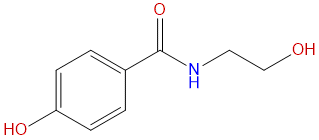
The chemical name of Bryonamide A is 4-hydroxy-N - (2-hydroxyethyl) benzamide, and its CAS registration number is 75268-14-3. Structurally speaking, this molecule is a typical benzamide derivative, with its skeleton composed of para hydroxybenzoic acid and ethanolamine connected by amide bonds.
Core structural features:
1. benzene ring As the hydrophobic core of the molecule, its 4th position (para) is connected to a phenolic hydroxyl group (- OH), which endows the molecule with certain acidity, hydrogen bond donor ability, and potential to participate in antioxidant reactions.
2. Amide bond (- CONH -)The key part connecting the benzoic acid fragment and the ethanolamine fragment is an important hydrogen bond donor and acceptor, which is crucial for the formation of intermolecular interactions with specific amino acid residues (such as serine and tyrosine) of target proteins.
3. Hydroxyethyl side chain (- NH-CH2-CH2-OH)This fragment contains a secondary amine and a primary alcohol hydroxyl group, providing additional hydrogen bond donor/acceptor sites, significantly enhancing the molecule's hydrophilicity and spatial flexibility for binding to the target.
Key physical and chemical parameters:
According to the provided pharmacological parameters, the molecular weight of Bryonamide A is 181.1910 g/mol, which belongs to the category of small molecule compounds. The logarithmic (LogP) value of its lipid water partition coefficient is 0.3600, indicating that the compound has balanced lipophilic and hydrophilic properties, leaning towards hydrophilicity, which is consistent with its multiple polar groups (phenolic hydroxyl, amide bond, alcohol hydroxyl) in the structure. The topological polar surface area (TPSA) is 69.56 Å ², which reflects the size of the polar regions on the molecular surface and is at a moderate level, usually associated with good membrane permeability, but not optimal. Its water solubility value is 7.1124 (usually measured in mg/mL or logS), indicating good solubility in water, which is beneficial for the development and in vivo absorption of the formulation.
These physicochemical properties collectively constitute the preliminary medicinal chemical characteristics of Bryonamide A: it is a molecule with small molecular weight, good solubility, moderate lipid solubility, and multiple hydrogen bond sites, providing a structural basis for its interaction with various protein targets.
Plant sources and extraction methods
The natural source of Bryonamide A is marine red algae Bostrychia radicans It belongs to the Rhodomyceae family. This genus of algae is widely distributed in the intertidal zone of temperate to tropical waters worldwide, often attached to rocks or other substrates, and is a promising resource in the study of marine natural product chemistry.
Extraction and Separation Process:
from Bostrychia radicans Obtaining Bryonamide A usually follows the classic natural product research process:
1. Collection and preprocessing After collection, fresh or dry algal samples usually need to be washed to remove attached salts and impurities, and then dried in a cool place and crushed into coarse powder to increase the extraction surface area.
2. Solvent extraction The most commonly used preliminary extraction method is to use moderately polar organic solvents (such as methanol, ethanol, or methanol water mixed solvents) for impregnation or ultrasound assisted extraction. These solvents can effectively dissolve phenolic amides including Bryonamide A and various moderately polar secondary metabolites.
3. Rough classification and enrichment After vacuum concentration, the obtained crude extract may be subjected to liquid-liquid partition extraction using solvents of different polarities (such as petroleum ether, ethyl acetate, n-butanol) in sequence to preliminarily separate components of different polarities. Bryonamide A is usually enriched in the ethyl acetate or n-butanol extraction fractions due to its physicochemical properties.
4. Chromatographic separation and purification Further chromatographic separation of the portion rich in the target compound is a key step in obtaining the pure product. Normal phase silica gel column chromatography is commonly used for preliminary separation using gradient elution systems such as chloroform methanol or petroleum ether ethyl acetate. Subsequently, high-purity Bryonamide A crystals or powders were obtained by combining reverse phase high performance liquid chromatography (RP-HPLC, commonly C18 column, using methanol water or acetonitrile water as mobile phase) or preparative thin layer chromatography (PTLC) for fine purification.
5. Structural Identification The structure of pure compounds is determined by modern spectroscopic techniques, including nuclear magnetic resonance (1H NMR, 13C NMR), mass spectrometry (MS), infrared spectroscopy (IR), and X-ray single crystal diffraction (if single crystals can be obtained), thus confirming their chemical structure as 4-hydroxy-N - (2-hydroxyethyl) benzamide.
Pharmacological activity research
The most notable pharmacological activity of Bryonamide A is concentrated in analgesia field Although its direct and detailed in vitro and in vivo pharmacological data are not yet abundant in public literature, based on its known molecular target associations, it can be inferred and partially validated that it has the potential for multi-path analgesia.
Inference and evidence of core analgesic activity:
1. Potential of multi-target analgesia The target list provided (TRPV1, CNR1, OPRD1/M1/K1, PTGS1/2, TRPA1, SLC6A4, DRD2) almost covers the main pathways of peripheral and central pain regulation. This means that Bryonamide A may possess both:
* Peripheral anti-inflammatory and anti nociceptive effects By inhibiting PTGS1/2 (COX-1/2) and reducing the production of pain mediators such as prostaglandins, it exerts a similar effect as nonsteroidal anti-inflammatory drugs.
* Modulation of peripheral sensory nerves By regulating the activity of TRPV1 (capsaicin receptor) and TRPA1 (mustard oil receptor), these two receptors are key molecular sensors mediating thermal pain, chemical pain, and inflammatory pain, and their antagonists or modulators are important directions for analgesic research.
* Central analgesia and emotion regulation effects By acting on opioid receptors (OPRM1/D1/K1), cannabinoid receptor 1 (CNR1), and dopamine D2 receptor (DRD2), it directly or indirectly affects the central pain suppression system and reward/emotion pathways. Meanwhile, the potential effects on the serotonin transporter (SLC6A4) may affect the serotonergic system, which is associated with antidepressant and alleviation of mood disorders associated with chronic pain.
- potential advantages This multi-target mode of action may bring two major advantages: firstly Synergistic effect By simultaneously intervening in multiple stages of pain signal transduction, a stronger analgesic effect than a single target is achieved; Second Reduce side effects For example, generating analgesia through non opioid or atypical opioid mechanisms may reduce the risk of addiction and respiratory depression; Moderate and partially inhibited COX regulation may alleviate gastrointestinal injury.
Other potential activities:
In addition to pain relief, the phenolic hydroxyl groups in its structure suggest that it may have certain antioxidant Activity. In addition, considering that some targets (such as CNR1, DRD2, SLC6A4) are also involved in neuroprotective and anti anxiety processes, Bryonamide A may also have potential application value in neurological related diseases (such as neuropathic pain and anxiety disorders), but further experimental verification is needed.
Mechanism of action and molecular targets
The analgesic mechanism of Bryonamide A is speculated to be based on its interaction with a series of key pain related targets. The following is a mechanism analysis of its main potential targets:
-
TRPV1 and TRPA1 channel adjustment TRPV1 and TRPA1 are non selective cation channels expressed on nociceptive sensory neurons, activated by heat, acid, capsaicin, and cold/irritant chemicals, respectively, leading to calcium influx and neuronal depolarization, producing pain signals. Bryonamide A may serve as a potential channel for these channels Antagonists or negative regulators Inhibiting its excessive activation can block the transmission of harmful stimuli to the central nervous system, especially for the treatment of inflammatory and neuropathic pain.
-
Activation of the endocannabinoid system Cannabinoid receptor 1 (CNR1) is mainly distributed in the central nervous system and also exists in the peripheral nervous system. Activation of CNR1 can inhibit adenylate cyclase, regulate ion channels, and ultimately suppress neurotransmitter release, resulting in analgesic, anti-inflammatory, and mood regulating effects. Bryonamide A may serve as a potential candidate for CNR1 Excitants or allosteric modulators Simulating the action of endogenous cannabinoids, providing a non psychoactive (due to its low blood-brain barrier permeability, see below) or peripheral limited analgesic pathway.
-
The role of opioid receptor system The μ, δ, and κ opioid receptors (OPRM1, OPRD1, OPRK1) are classic analgesic targets. Exciting these receptors can activate Gi/o proteins, inhibit voltage-gated calcium channels, activate inward rectifying potassium channels, hyperpolarize neurons, and reduce neurotransmitter release. Bryonamide A may act as a receptor for these receptors Partial agonists or allosteric modulators In particular, the selective effects on delta and kappa receptors may lead to the development of less addictive alternatives to opioid analgesics.
-
Cyclooxygenase (COX) inhibition PTGS1 (COX-1) and PTGS2 (COX-2) are key enzymes involved in the conversion of arachidonic acid into prostaglandins, which are potent mediators of pain and inflammation. Bryonamide A may mimic the pharmacophores of certain nonsteroidal anti-inflammatory drugs through its benzamide structure,Competitive inhibition of COX enzyme activity Reduce prostaglandin synthesis and exert anti-inflammatory and analgesic effects.
-
Monoamine energy system regulation Serotonin transporter (SLC6A4) is responsible for the reuptake of serotonin in the synaptic cleft, and its inhibitors (SSRIs/SNRIs) can be used to treat chronic pain and depression. Dopamine D2 receptor (DRD2) is involved in regulating the emotional and motivational components of pain. Bryonamide A may Inhibit SLC6A4 and Adjust DRD2 Function to enhance the descending inhibitory pathway and improve pain related emotional disorders.
Mechanism integration Bryonamide A is likely not a potent ligand with high affinity for all of these targets, but rather serves as a "multi-target targeting ligand" that simultaneously regulates several key targets with moderate or micromolar potency, producing a networked analgesic effect by "fine-tuning" multiple pain related systems, which may be its unique value.
Evaluation of drug properties and pharmacokinetics
Based on the provided preliminary pharmacological parameters and its chemical structure, the pharmacological properties of Bryonamide A can be preliminarily evaluated
Advantage:
1. Small molecular weight and simple structure The molecular weight is 181.2, which meets the requirements of Lipinski's "Five Rules" for small molecule drugs and is conducive to chemical synthesis and structural modification.
2. Good solubility Good water solubility (7.1124) is beneficial for the dissolution and gastrointestinal absorption of oral preparations, and also facilitates the preparation of injections.
3. Low safety warning signal The Ames test result is 0.0, indicating no mutagenicity under the experimental conditions and a low risk of genetic toxicity. HERG inhibition is' no ', indicating a lower risk of inducing QT interval prolongation and apical torsion type ventricular tachycardia, which is an important cardiac safety advantage.
4. LogP moderate LogP is 0.36, indicating its balanced lipid water partitioning, which theoretically facilitates penetration of cell membranes without causing non-specific tissue accumulation due to high lipid solubility.
Challenges and research questions:
1. Low blood-brain barrier permeability The parameter clearly indicates that its blood-brain barrier (BBB) permeability is "low". This is a double-edged sword for its pharmacological effects.Advantage If its main analgesic mechanism relies on peripheral targets (such as peripheral TRPV1, COX, peripheral opioid or cannabinoid receptors), low BBB permeability can avoid central side effects (such as sedation, addiction, respiratory depression).disadvantage If its key target is located in the central nervous system (such as central opioid receptors, CNR1, SLC6A4), low permeability will severely limit its efficacy. Therefore, it is crucial to clarify the specific distribution of its target of action (central vs peripheral). Future research may require structural modifications (such as preparing prodrugs or analogues) to regulate its BBB permeability, in order to adapt to different therapeutic purposes.
2. Metabolism and stability The molecule contains phenolic hydroxyl and amide bonds, which may become sites for glucuronic acid binding, sulfation, or amidase hydrolysis, affecting its metabolic stability and half-life in vivo. At present, there is a lack of data on its in vitro metabolic stability (such as liver microsomal stability), plasma protein binding rate, and in vivo pharmacokinetics (absorption, distribution, metabolism, excretion).
3. Potency and selectivity As a natural product, its EC50 or IC50 data for each target are unknown. It is necessary to confirm whether it can effectively regulate the above targets at physiologically relevant concentrations, and how selective its targets are. Low potency or overly broad selectivity may result in excessive dosage or unexpected effects.
Clinical application prospects and prospects
Bryonamide A, as a natural analgesic lead compound with novel structure and multi-target potential, its clinical application prospects depend on the results of future in-depth research.
Potential application directions:
1. Development of new multi-target analgesics Developing a drug that synergistically acts on multiple non opioid or atypical opioid targets (such as TRPV1/TRPA1, CNR1, COX-2) for chronic pain (such as neuropathic pain and inflammatory arthritis pain) is expected to significantly reduce the addiction, gastrointestinal, and cardiovascular risks of existing drugs while ensuring efficacy.
2. Peripheral selective analgesics By utilizing its low BBB permeability, it can be developed into Peripheral restrictive analgesics For example, it is used to treat osteoarthritis, muscle pain, postoperative pain, etc., mainly targeting peripheral inflammatory sites and sensory nerve endings, while avoiding central nervous system side effects.
3. Components of combination therapy Its unique multi-target properties make it possible to be used as a component in combination therapy, in combination with low-dose traditional analgesics such as acetaminophen and weak opioid drugs, to enhance efficacy, reduce component doses and side effects.
Future research prospects:
1. Target validation and mechanism elucidation The primary task is to use methods such as radioligand binding assay, calcium flow detection, and enzyme activity assay at the cellular level Quantitative verification Direct interactions between Bryonamide A and key targets such as TRPV1, CNR1, COX, etc., to determine its nature of action (excitatory/antagonistic) and efficacy.
2. Preclinical pharmacodynamic evaluation Establish various rodent pain models (such as formalin test, acetic acid writhing test, chronic sciatic nerve ligation, complete Freund's adjuvant induced arthritis, etc.), systematically evaluate their in vivo analgesic effects, effective doses, duration, and compare them with positive control drugs.
3. Comprehensive pharmacokinetic and safety evaluation Conduct systematic ADME research to clarify its oral bioavailability, tissue distribution, metabolic pathways, excretion status, and potential toxicity (acute toxicity, long-term toxicity).
4. Research on Structural Optimization and Structure Performance Relationship Based on its core structure, carry out systematic chemical modification. For example, by modifying the phenolic hydroxyl or hydroxyethyl side chains to regulate their lipid solubility, BBB permeability, metabolic stability, as well as selectivity and efficacy towards specific targets, in order to obtain candidate drugs with greater development potential.
5. Explore other indications Given its target spectrum, potential applications can be explored in other neurological related diseases such as migraine, itching, comorbidities of anxiety, depression, and pain.
Conclusion
4-Hydroxy-N - (2-hydroxyethyl) benzamide (Bryonamide A) is derived from marine red algae Bostrychia radicans A natural product with a simple benzamide structure discovered in. Its greatest scientific value lies in its role as a "small and beautiful" molecular skeleton, potentially interacting with multiple key nodes in the pain signaling network, including TRP channels, endocannabinoid system, opioid system, cyclooxygenase, and monoamine system. This multi-target characteristic provides an exciting blueprint for its development into a new generation of synergistic, low side effect analgesic drugs. Although there are still many gaps in the detailed pharmacological data and clear mechanism of action diagram of Bryonamide A, and its pharmacological characteristics such as low blood-brain barrier permeability need to be viewed dialectically and optimized accordingly, Bryonamide A is undoubtedly an attractive lead compound. Future research should focus on target validation, mechanism elucidation, efficacy confirmation, and structural optimization, gradually transforming this natural molecule derived from the ocean into potential therapeutic drugs that may benefit a wide range of pain patients, while also providing new ideas and templates for multi-target drug design strategies.