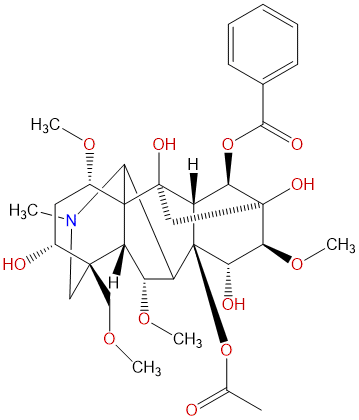
| Catalog No | Package | Original Price | Price | Inventory | Quantity | Operating |
|---|---|---|---|---|---|---|
| BP4444-5mg | 5mg | $250.00 | Sign in |
|


Product name: 10-Hydroxy mesaconitine
Synonym name: Beiwutine
Catalogue No.: BP4444
Cas No.: 76918-93-9
Formula: C33H45NO12
Mol Weight: 647.718
Botanical Source:
Type of Compound:
Purity: 95%~99%
Analysis Method: HPLC-DAD or/and HPLC-ELSD
Identification Method: Mass, NMR
Packing: Brown vial or HDPE plastic bottle
Storage: Store in a well closed container, protected from air and light. Put into refrigerate or freeze for long term storage.
Whenever possible, you should prepare and use solutions on the same day. However, if you need to make up stock solutions in advance, we recommend that you store the solution as aliquots in tightly sealed vials at -20℃. Generally, these will be useable for up to two weeks.
The product could be supplied from milligrams to grams
Inquire for bulk scale.
For Reference Standard and R&D, Not for Human Use Directly.
Storage conditions:Short-term storage at 2~8℃, long-term storage at -20 ~ -80℃
10 Hydroxy mesaconitine, as a natural product, has attracted widespread attention in the field of pharmacology in recent years. Its unique chemical structure and multi-target pharmacological activity have shown potential application value in the treatment of multiple diseases such as pain relief. Beiwujian belongs to the class of benzoate compounds with a complex molecular structure. Its pharmacological activity involves multiple neurotransmitter receptors and inflammation related targets, exhibiting the characteristic of multi-target synergistic effects. This article will provide a systematic review of the chemical structure and physicochemical properties, plant sources and extraction methods, pharmacological activity and mechanism of action, pharmacological evaluation, pharmacokinetic characteristics, and clinical application prospects of Ulva alkaloids. The aim is to provide theoretical basis and reference for the in-depth research and development of this natural product.
The molecular formula of North Wu alkaloid is C36H47N2O_11, with a molecular weight of 647.7180. Its molecular structure contains multiple hydroxyl and ester groups, belonging to the natural product of benzoate esters. The specific structural features include the modification of 10 hydroxyl groups, which gives it uniqueness in molecular polarity and spatial configuration. The LogP value is 1.2058, indicating that it has moderate lipid solubility, which is conducive to cell membrane penetration but not too hydrophobic. The polar surface area (TPSA) is 173.6800, and a higher polar surface area indicates better solubility in polar environments, but there are certain limitations on crossing the blood-brain barrier. The water solubility is 0.2229, indicating low water solubility, but sufficient to support a certain degree of bioavailability. Low blood-brain barrier permeability suggests that berberine mainly acts on the peripheral nervous system or peripheral targets. The negative result of hERG inhibition experiment indicates a low risk of cardiac toxicity. The Ames test result is 0.0, indicating no significant genetic toxicity risk.
The main source of berberine is Aconitum spp., especially in some traditional Chinese medicinal herbs such as Aconitum carmichaelii and Aconitum kusnezofii, which are abundant in content. Aconitum plants are widely distributed in China, Japan, and other parts of East Asia, and have always been used as traditional analgesics and anti-inflammatory drugs.
The methods for extracting alkaloids from North Ukraine mainly include solvent extraction, liquid-liquid distribution, and column chromatography. The commonly used solvents are ethanol or methanol, combined with ultrasound assisted extraction or reflux extraction techniques, which can effectively improve extraction efficiency. The extraction solution is concentrated, separated and purified, and subjected to qualitative and quantitative analysis using high performance liquid chromatography (HPLC) and mass spectrometry (MS) techniques to ensure the purity and structural identification of berberine. In recent years, supercritical fluid extraction (SFE) and membrane separation techniques have also been attempted to be applied to the extraction and purification of North Ukrainian alkaloids, further improving extraction efficiency and environmental friendliness.
The main pharmacological activity of berberine is focused on its analgesic effect. Multiple in vitro and in vivo experiments have shown that berberine can significantly alleviate inflammatory and neuropathic pain, and its strength of action is comparable to traditional analgesics. Its analgesic effect is not only manifested as acute pain relief, but also has a good inhibitory effect on chronic pain models.
In addition, berberine has shown certain potential in anti-inflammatory, antioxidant, and neuroprotective effects. Animal experiments have shown that berberine can inhibit the release of inflammatory mediators, alleviate tissue inflammatory reactions, and protect nerve cells from oxidative stress damage. These effects provide a theoretical basis for its application in neuropathic pain and related neurodegenerative diseases.
The analgesic mechanism of berberine involves multiple molecular targets and exhibits the characteristic of multi-target synergistic regulation. The main targets include:
TRPV1 (Transient receptor potential vanillic acid receptor 1)As an important ion channel for perceiving thermal pain, the activation of TRPV1 is closely related to pain conduction. Beiwujian regulates the activity of TRPV1 channel, inhibits excessive excitation of nerve endings, and reduces the transmission of pain signals.
CNR1 (cannabinoid receptor 1)Participate in the analgesic regulation of the central and peripheral nervous systems, and berberine may exert neuroprotective effects and relieve pain by activating or regulating CNR1 receptors.
OPRD1, OPRM1, OPRK1 (δ, μ, κ opioid receptors)The interaction between berberine and opioid receptors enhances its analgesic effect, especially playing a key role in regulating chronic pain and neuropathic pain.
PTGS1 and PTGS2 (cyclooxygenase 1 and 2)As a key enzyme involved in the synthesis of inflammatory mediators, berberine exerts anti-inflammatory and analgesic effects by inhibiting PTGS1/2 activity, reducing prostaglandin production.
TRPA1 (Transient Receptor Potential Channel A1)Participate in the transmission of inflammatory pain, and the regulation of TRPA1 by berberine further enhances its analgesic effect.
SLC6A4 (5-hydroxytryptamine transporter)Regulating the reuptake of neurotransmitter serotonin and affecting pain regulation in the central nervous system.
DRD2 (dopamine D2 receptor)By regulating the dopamine signaling pathway, berberine may affect the emotional and cognitive dimensions of pain.
In summary, the synergistic effect of berberine on multiple targets and pathways regulates the perception, transmission, and central regulation of pain, demonstrating a complex and effective analgesic mechanism.
The pharmacological parameters of berberine show that it has good potential for drug development. The moderate molecular weight and LogP value ensure its moderate distribution and cell membrane penetration ability in vivo. The higher TPSA and lower blood-brain barrier permeability suggest that it mainly acts on peripheral targets, reducing the risk of central nervous system side effects. The negative inhibition of hERG channel and the absence of genetic toxicity risk further support its safety.
Pharmacokinetic studies have shown that the oral absorption of berberine is relatively slow, and its bioavailability is limited by its water solubility and metabolic stability. The distribution in the body is mainly concentrated in the liver, kidneys, and nerve tissues. The metabolic pathway mainly involves oxidation and hydrolysis through the liver cytochrome P450 enzyme system, and the metabolites have certain activity. Excretion is mainly accomplished through the renal and biliary pathways. Moderate half-life, suitable for daily dosing regimen design.
At present, pharmacokinetic optimization strategies for berberine include formulation improvement (such as nanocarriers, liposome encapsulation), structural modification to enhance water solubility and metabolic stability, aiming to improve its bioavailability and therapeutic index.
As a multi-target analgesic natural product, berberine has broad clinical application prospects. Its potential is particularly prominent in the management of inflammatory pain, neuropathic pain, and chronic pain. Compared to traditional opioid analgesics, berberine may become a safe and effective alternative due to its low central side effects and lower addiction risk.
Future clinical research needs to focus on the dose safety assessment, long-term drug toxicity, drug interactions, and individualized treatment plan design of North Wujian. At the same time, combining modern drug delivery technology to optimize its pharmacokinetic properties and improve clinical efficacy.
In addition, the potential applications of berberine in neuroprotection, anti-inflammatory, and psychiatric disorders also deserve further exploration. The multi-target mechanism of action provides a theoretical basis for the development of multifunctional drugs, which is expected to promote the development of natural product pharmacology towards precision medicine.
As a natural product with unique chemical structure and multi-target pharmacological activity, berberine has shown significant value in the fields of analgesia and related disease treatment. Its excellent pharmacokinetic parameters and safety features provide a solid foundation for the development of new drugs. In the future, through in-depth mechanism research, pharmacokinetic optimization, and clinical validation, berberine is expected to become an important candidate for innovative analgesic drugs. The continuous progress in pharmacology of natural products will open up broader prospects for the development and application of berberine and similar compounds.
