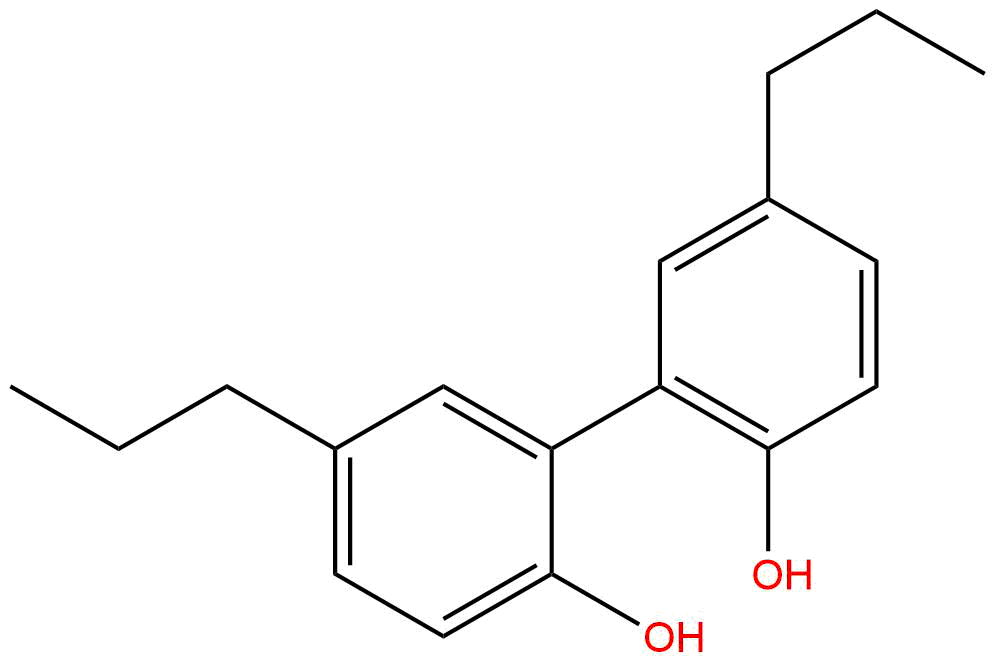


Product name: Tetrahydromagnolol
Synonym name: Magnolignan
Catalogue No.: BP4363
Cas No.: 20601-85-8
Formula: C18H22O2
Mol Weight: 270.372
Botanical Source:
Type of Compound:
Purity: 95%~99%
Analysis Method: HPLC-DAD or/and HPLC-ELSD
Identification Method: Mass, NMR
Packing: Brown vial or HDPE plastic bottle
Storage: Store in a well closed container, protected from air and light. Put into refrigerate or freeze for long term storage.
Whenever possible, you should prepare and use solutions on the same day. However, if you need to make up stock solutions in advance, we recommend that you store the solution as aliquots in tightly sealed vials at -20℃. Generally, these will be useable for up to two weeks.
The product could be supplied from milligrams to grams
Inquire for bulk scale.
For Reference Standard and R&D, Not for Human Use Directly.
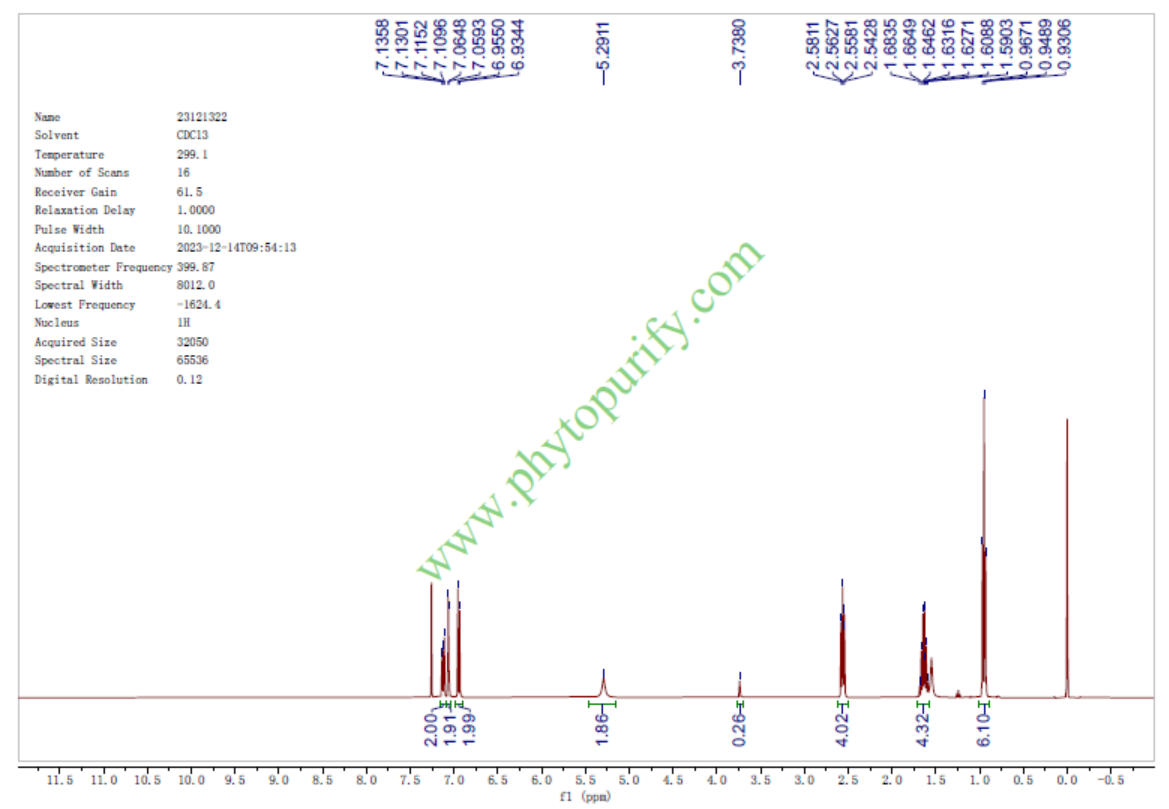
HNMR of Tetrahydromagnolol
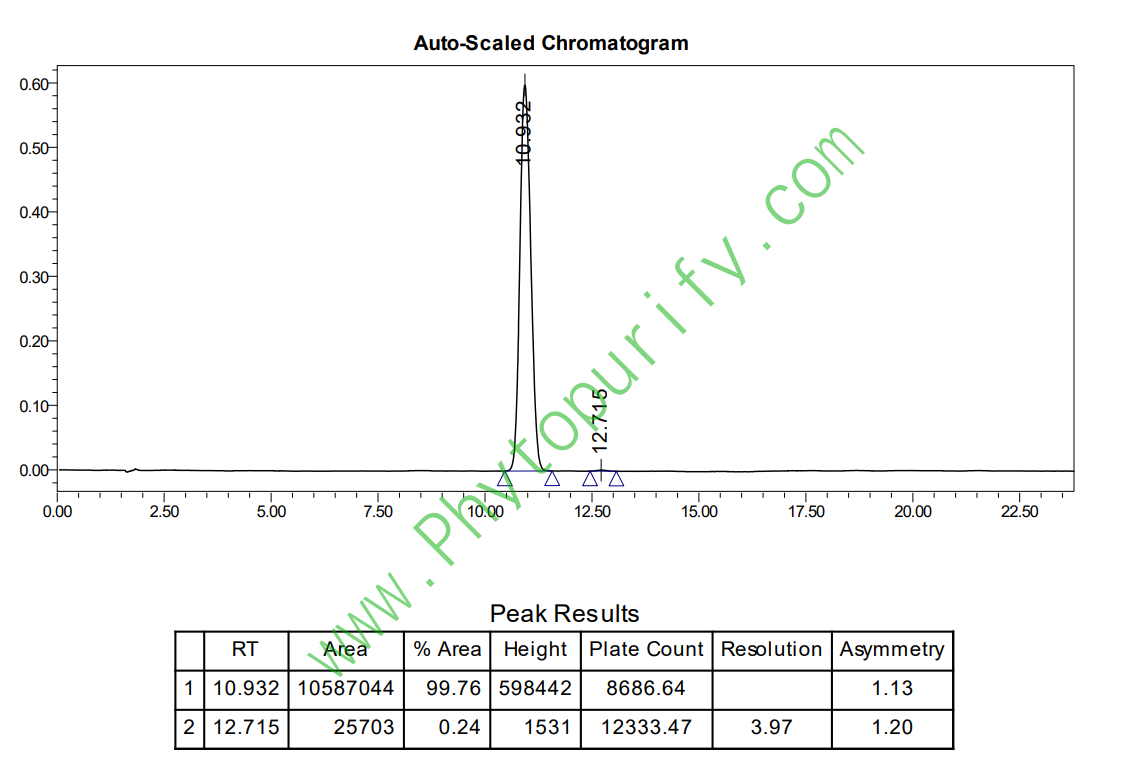
HPLC of Tetrahydromagnolol
Storage conditions:Short-term storage at 2~8℃, long-term storage at -20 ~ -80℃
Tetrahydromagnolol (CAS number: 20601-85-8), as the main metabolite of magnolol, has attracted widespread attention in the field of natural product pharmacology in recent years. Magnolia officinalis is a natural product of bisphenol A isolated from Magnolia officinalis, which has significant anti-inflammatory, antifungal, and analgesic activities. Tetrahydromagnolol, as its reducing metabolite, exhibits more unique biological characteristics, especially in the selective activation of cannabinoid receptor CB2. CB2 receptors are mainly distributed in the immune system and peripheral tissues, participating in the regulation of inflammatory response and immune function. Therefore, tetrahydromagnolol has potential application value in anti-inflammatory, immune regulation, and neuroprotection fields. In addition, tetrahydromagnolol also showed weak antagonistic activity against GPR55 receptors, suggesting that it may exert pharmacological effects through a multi-target mechanism. This article provides a systematic review of the chemical structure, physicochemical properties, sources and extraction methods, pharmacological activity and mechanism of action, pharmacological evaluation, pharmacokinetic characteristics, and clinical application prospects of tetrahydromagnolol. The aim is to provide a theoretical basis and reference for further research and development of this compound.
The molecular formula of tetrahydromagnolol is C18H18O2, with a molecular weight of 270.3720. Its chemical structure is based on the bisphenol skeleton of magnolol, which forms a tetrahydro structure through partial hydrogenation of aromatic rings, hence it is named tetrahydromagnolol. Structurally, tetrahydromagnolol retains two phenolic hydroxyl groups, endowing it with certain polarity and antioxidant capacity. Its LogP value is 5.1744, indicating strong lipid solubility, which has a positive significance for penetrating biological membranes, especially the blood-brain barrier (BBB). The TPSA (topological polar surface area) is 40.4600, indicating that its molecular polarity is moderate and conducive to cell membrane permeability. Low water solubility (0.0160 mg/mL) suggests limited solubility in aqueous phase, which may pose challenges for formulation design. It is worth noting that tetrahydromagnolol has a high blood-brain barrier penetration ability, which is beneficial for the treatment of central nervous system diseases. The hERG inhibition test result is negative, indicating a low risk of cardiac toxicity. The Ames test result is 0.0, indicating that it does not have significant genotoxicity.
Tetrahydrohonokiol mainly comes from the traditional Chinese medicine Magnolia officinalis and its related species. The main active ingredients of Magnolia officinalis include magnolol and curcumin. Tetrahydromagnolol, as a metabolite of magnolol, is usually generated in vivo through enzymatic reduction reactions. In the laboratory, tetrahydrohonokiol can be synthesized through the catalytic hydrogenation reaction of honokiol, or it can be purified from the extract of Magnolia officinalis through multiple steps of separation.
Traditional extraction methods mainly rely on solvent extraction, commonly using ethanol or methanol as solvents, combined with ultrasound assisted extraction or reflux extraction techniques to improve extraction efficiency. Subsequently, high-purity magnolol was obtained through separation techniques such as liquid-liquid distribution and column chromatography (such as silica gel column, reverse phase C18 column). Further catalytic hydrogenation treatment can convert magnolol into tetrahydromagnolol. Modern extraction processes also use supercritical CO2 extraction technology, which has advantages such as strong selectivity and environmental friendliness. During the extraction and purification process, it is important to avoid high temperatures and strong acid-base conditions to prevent structural damage to the compound.
The pharmacological activity of tetrahydromagnolol mainly focuses on its selective excitatory effect on the cannabinoid receptor CB2. In vitro experiments have shown that tetrahydromagnolol has an EC50 of 170 nM and a Ki of 416 nM for CB2 receptors, and its selectivity for CB2 receptors is about 20 times higher than that for CB1 receptors, indicating its good targeting ability. CB2 receptor activation is usually associated with anti-inflammatory, immune regulation, and neuroprotection, and therefore tetrahydromagnolol shows potential therapeutic value in these fields.
In addition, tetrahydromagnolol exhibits weak antagonistic activity against GPR55 receptors. GPR55, as an emerging G protein coupled receptor, is involved in regulating inflammation, pain, and tumor biological processes. Its antagonist is believed to have anti-inflammatory and anticancer potential. The GPR55 antagonistic effect of tetrahydromagnolol provides theoretical support for its multi-target pharmacological effects.
Houpo phenol itself has antifungal, anti-inflammatory, and analgesic effects, and tetrahydroHoupo phenol, as its metabolite, is also believed to inherit and partially enhance these activities. Animal model studies have shown that tetrahydromagnolol can alleviate inflammation, pain, and anxiety symptoms through the CB2 receptor-mediated signaling pathway. Its anti anxiety effect is potentially cross regulated with multiple neurotransmitter system related targets (such as MAOA, SLC6A4, HTR2A, DRD2, HTR1A, GABA receptor subunits, etc.), suggesting that it may exert a comprehensive effect through a complex neural regulatory network.
The main molecular target of tetrahydromagnolol is the cannabinoid receptor CB2. The CB2 receptor belongs to the G protein coupled receptor family and is mainly expressed in immune cells and peripheral tissues. Upon activation, it inhibits adenylate cyclase through Gi/o protein, reduces cAMP levels, regulates cytokine secretion, and suppresses inflammatory responses. Tetrahydromagnolol, as a selective agonist of CB2 receptors, can effectively regulate immune cell function and alleviate inflammatory damage.
In addition, the weak antagonistic effect of tetrahydromagnolol on GPR55 receptors may be achieved by blocking GPR55 mediated signaling, inhibiting inflammation and pain related pathways. The activation of GPR55 is associated with various pathological states, and its antagonists are considered potential therapeutic agents.
In terms of anti anxiety effects, tetrahydromagnolol may be achieved by regulating various neurotransmitters and receptors, including:
Through the synergistic regulation of these targets, tetrahydromagnolol exhibits the potential for anti anxiety and neuroprotection.
The pharmacological parameters of tetrahydromagnolol show that it has good potential for drug development. The molecular weight of 270.3720 conforms to Lipinski's rule, and the LogP 5.1744 is slightly higher but still within an acceptable range, indicating that it has good lipid solubility and is conducive to cell membrane penetration. TPSA 40.4600 is relatively low, which is beneficial for blood-brain barrier penetration and supports its application in central nervous system diseases. Low water solubility (0.0160 mg/mL) suggests that solubility improvement strategies should be considered in formulation design, such as nanocarrier or liposome encapsulation.
The blood-brain barrier has high penetration ability, which meets its needs for playing a role in neurological diseases. HERG channel inhibition is negative, reducing the risk of cardiac toxicity. The Ames test result is 0.0, indicating no significant mutagenicity and good safety.
In terms of pharmacokinetics, existing literature reports are relatively limited, but based on its structure and physicochemical properties, it is speculated that tetrahydromagnolol has good oral absorption and wide distribution, especially at high concentrations in brain tissue. The metabolic process may involve further transformation of the liver enzyme system, and the excretion pathway still needs to be further studied. In the future, it is necessary to combine in vivo pharmacokinetic studies to clarify its bioavailability, half-life, metabolites, and excretion characteristics, providing a basis for clinical development.
Based on the highly selective excitatory effect of tetrahydromagnolol on CB2 receptors and its multiple pharmacological activities such as anti-inflammatory, anti anxiety, and neuroprotective effects, tetrahydromagnolol has shown broad application prospects in various disease fields.
Anti inflammatory and immune regulating diseases
CB2 receptor agonists have potential therapeutic value in inflammatory diseases such as rheumatoid arthritis and inflammatory bowel disease. Tetrahydrohonokiol may become a candidate for novel anti-inflammatory drugs by regulating immune cell function and inhibiting the release of inflammatory mediators.
Neuropsychiatric disorders
Its excellent blood-brain barrier penetration ability and regulation of multiple neurotransmitter systems support its application in neurological and psychiatric disorders such as anxiety and depression. Tetrahydrohonokiol may improve neurological function and alleviate emotional disorders through a multi-target mechanism.
Analgesic treatment
As a CB2 receptor agonist, tetrahydromagnolol has the potential to alleviate chronic pain and neuropathic pain, especially for patients with poor tolerance or high dependence on traditional opioid drugs.
Antitumor potential
The expression of GPR55 receptor is abnormal in various tumors, and the GPR55 antagonistic activity of tetrahydromagnolol suggests that it may have anti-tumor effects, which is worth further exploration.
Future research should focus on preclinical safety evaluation, pharmacokinetic optimization, and formulation development of tetrahydrohonokiol, while combining modern drug design techniques to improve its water solubility and bioavailability. Multi center clinical trials will be a key step in verifying its efficacy and safety.
As the main metabolite of magnolol, tetrahydromagnolol exhibits significant potential in anti-inflammatory, anti anxiety, analgesic, and neuroprotective effects due to its highly selective activation of CB2 receptors and multi-target pharmacological activity. Its good pharmacological parameters and safety evaluation have laid the foundation for clinical development. In the future, combining systematic pharmacokinetic studies and preclinical trials, tetrahydromagnolol is expected to become a new highlight in the development of natural product drugs, promoting the application of natural bisphenol compounds in modern medicine. Through in-depth analysis of its mechanism of action and optimization of drug properties, tetrahydromagnolol may provide new strategies and choices for the treatment of various diseases.
