Introduction/Overview
Natural products, as an important source of drug discovery, play an irreplaceable role in the long history of human fight against diseases. Among them, plants of the Salvia genus in the Lamiaceae family have attracted much attention due to their rich secondary metabolites and extensive biological activities. Rosmaquinone, An aromatic diterpenoid compound isolated from this genus of plants has rapidly become an emerging hotspot in the field of natural product pharmacology research due to its unique chemical structure and significant anti-tumor activity since its discovery. Its CAS number is 121927-71-7, and its main pharmacological activity focuses on the field of anti-tumor, involving multiple key links such as regulating cell apoptosis, inhibiting tumor invasion and metastasis, interfering with tumor cell signaling and energy metabolism. This article aims to provide a systematic review of the chemical properties, plant origin, pharmacological activity, mechanism of action, pharmacological evaluation, and clinical application prospects of Rosmaquinone, in order to provide comprehensive scientific references for the in-depth research and future development of anti-tumor drugs for this compound.
Chemical structure and physicochemical properties
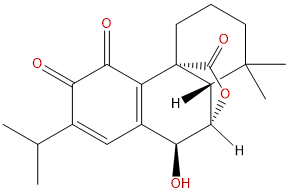
The chemical structure of Rosmaquinone belongs to the class of aromatic diterpenes. Its molecular formula is C21H28O4 and its molecular weight is 344.4070. Its core structural feature lies in a naphthoquinone or phenanthrenequinone parent nucleus (depending on its exact structural isomer, commonly described in literature as an aromatic system with a quinone structure), connected to one or more isopropyl or other alkyl side chains, forming its unique planar aromatic system and hydrophobic region. This structure enables it to interact with hydrophobic pockets of various biomolecules.
From the analysis of physical and chemical properties, Rosmaquinone exhibits typical lipophilic characteristics. The calculated lipid water partition coefficient LogP value is 2.5728, indicating that the compound has good lipid solubility, which is beneficial for its penetration into cell membranes. Its topological polar surface area (TPSA) is 80.6700 Å ², which belongs to the moderate level, which is related to the polar groups such as quinone carbonyl and possible hydroxyl groups contained in its structure. The water solubility parameter is 0.0736, which is a low value and confirms its poor water solubility. This may require special attention in formulation development. It is worth noting that its blood-brain barrier (BBB) penetration is predicted to be "high", indicating that Rosmaquinone or its analogues have the potential to act on central nervous system related tumors. The preliminary screening of drug efficacy risks showed that the hERG inhibition risk was "no", and the Ames test result was 0.0 (negative), indicating a low potential risk of arrhythmia and genetic toxicity, providing preliminary favorable data for further safety evaluation.
Plant sources and extraction methods
Rosmaquinone mainly comes from plants of the Salvia genus in the family Lamiaceae. This genus has a wide variety of plant species and is widely distributed worldwide. Many species are used in traditional medicine to treat diseases such as inflammation, infections, and cancer. Rosmaquinone was originally derived from a specific species (such as Salvia Separated and identified from the roots, stems, or leaves of spp. There may be significant differences in the content of Rosmaquinone among different species, regions, harvest seasons, and plant parts, which poses challenges for resource development and standardized production.
At present, the extraction of Rosmaquinone mainly adopts organic solvent extraction method. The common process includes leaching or reflux extraction of dried and crushed sage plant materials using methanol, ethanol, acetone, or mixed solvents such as methanol dichloromethane. After decompression and concentration, the crude extract is separated and purified by various chromatographic techniques, such as silica gel column chromatography, reverse phase column chromatography (such as ODS), gel column chromatography (such as Sephadex LH-20), and high performance liquid chromatography (HPLC). Its quinone structure has characteristic absorption at specific wavelengths, making it easy to track through ultraviolet detectors. With the development of green extraction technology, modern methods such as ultrasound assisted extraction, microwave-assisted extraction, and supercritical fluid extraction may also be applied to improve the extraction efficiency and selectivity of Rosmaquinone. However, due to its usually low content in plants, fully synthetic or semi synthetic pathways are also important directions to ensure its stable supply for further research. However, there are currently insufficient reports on related synthetic pathways.
Pharmacological activity research
The most notable pharmacological activity of Rosmaquinone is its broad-spectrum and highly effective anti-tumor effect. A large number of in vitro studies have shown that it has significant proliferation inhibitory activity on a variety of human tumor cell lines, including but not limited to breast cancer, liver cancer, lung cancer, colon cancer, prostate cancer and leukemia cells. Its anti-tumor activity is mainly achieved through inducing tumor cell apoptosis, blocking the cell cycle, inhibiting cell migration and invasion.
In addition to its direct cytotoxic effects, research also suggests that Rosmaquinone may have other beneficial biological effects. For example, its quinone structure suggests that it may have redox regulatory ability, affecting the level of oxidative stress in cells. Although the Ames test is negative in the existing pharmacological parameters, the potential oxidative damage effects of quinones under specific conditions (such as high concentrations and specific enzyme systems) still need to be evaluated in more comprehensive toxicological studies. In addition, sporadic studies have explored its anti-inflammatory or antibacterial potential, but these are not its main research directions and the evidence chain is not yet complete. At present, its core pharmacological activity research is highly concentrated in the field of anti-tumor.
Mechanism of action and molecular targets
The anti-tumor effect of Rosmaquinone involves a complex regulatory network of multiple targets and pathways, which is related to its aromatic planar structure being able to embed into the active sites or interaction interfaces of multiple proteins. According to the provided target information, its mechanism of action can be summarized into the following key aspects:
-
Regulating the apoptotic pathway of cells Rosmaquinone can target members of the Bcl-2 protein family. It inhibits the function of anti apoptotic proteins MCL1 and BCL2, thereby relieving their inhibition of pro apoptotic proteins and initiating mitochondrial pathway induced cell apoptosis. This is one of the core mechanisms by which it induces tumor cell death.
-
Inhibition of signal transduction and transcriptional activation Signal transduction and transcription activator 3 (STAT3) is an important oncogenic transcription factor. Rosmaquinone has been shown to inhibit the phosphorylation (activation) of STAT3 and the expression of downstream target genes, thereby blocking cell proliferation, survival, and immune escape signals mediated by STAT3.
-
Interference with cell cycle and DNA metabolism Rosmaquinone is an inhibitor of topoisomerase I (TOP1) and topoisomerase II alpha (TOP2A). It stabilizes the enzyme DNA cleavage complex, preventing DNA reconnection, leading to DNA damage and replication fork breakdown, which in turn triggers cell cycle arrest (usually in the G2/M phase) and apoptosis.
-
Inhibit tumor invasion and metastasis Matrix metalloproteinase-2 (MMP2) is a key enzyme that degrades extracellular matrix and promotes tumor invasion and metastasis. Rosmaquinone can downregulate the expression or activity of MMP2, thereby inhibiting the migration and invasion ability of tumor cells.
-
Affects tumor microenvironment and metabolic adaptation Rosmaquinone can inhibit the stability or activity of hypoxia inducible factor 1 alpha (HIF1A). HIF1A is a core regulatory factor for cells to adapt to hypoxic environments, and its inhibition can interfere with tumor angiogenesis, glycolysis metabolism, and metastasis processes.
-
Intervention hormone related signals: For hormone dependent tumors such as breast cancer, Rosmaquinone shows the regulatory effect on estrogen receptor α (ESR1) and aromatase (CYP19A1). By interfering with estrogen synthesis or signal transduction, it exerts an anti hormone dependent tumor growth effect.
-
Regulating kinase signaling pathway Mitogen activated protein kinase 1 (MAPK1, ERK2) is a key component of the MAPK/ERK pathway, involved in cell proliferation and survival. Rosmaquinone's inhibition of this pathway may contribute to its growth inhibitory effect.
In summary, Rosmaquinone forms a synergistic anti-tumor effect by simultaneously acting on multiple key nodes such as apoptosis regulation, transcriptional regulation, DNA damage repair, extracellular matrix remodeling, metabolic adaptation, and hormone signaling, reducing the risk of tumor cells developing drug resistance through single pathway mutations.
Evaluation of drug properties and pharmacokinetics
Based on the provided calculation parameters and existing research, a preliminary evaluation of the pharmacological properties of Rosmaquinolone is conducted
Advantage aspects:
- drug-likeness The molecular weight (344.4) conforms to Lipinski's "five rules", the LogP value (2.57) is within the ideal range (1-3), and the TPSA value (80.7) is moderate, indicating that it has good oral absorption potential.
- Good security warning There is no significant risk of hERG inhibition (cardiac safety warning) and Ames test mutagenicity (genetic toxicity warning), laying the foundation for preclinical development.
- Central Penetration Potential Prediction of high blood-brain barrier penetration gives it a unique advantage in the treatment of brain tumors or brain metastases.
Challenge aspect:
- Poor water solubility One of the main obstacles to its drug development is its extremely low water solubility (0.0736), which may affect its oral bioavailability and the development of intravenous dosage forms. In the future, it may be necessary to improve its solubility and dissolution rate through formulation technologies such as nanocrystals, liposomes, cyclodextrin inclusion, prodrug modification, etc.
- Metabolic stability unknown Quinone compounds are prone to undergo reduction metabolism (such as being reduced to hydroquinone by NQO1) or covalent binding in vivo. However, there is currently a lack of systematic in vitro and in vivo research data on their specific metabolic pathways, metabolic enzymes, active/toxic metabolites, half-life, and other key pharmacokinetic parameters.
- Potential off target effects and toxicity Although the initial screening is optimistic, its multi-target nature may also bring off target effects and unforeseeable toxicity. Comprehensive in vitro liver microsomal stability testing, CYP enzyme inhibition/induction evaluation, and long-term animal toxicology studies (acute, subchronic, chronic toxicity, reproductive toxicity, etc.) are essential.
At present, there are very limited public reports on pharmacokinetic studies of the Rosmaquinolone system, such as absorption, distribution, metabolism, and excretion. The in vivo pharmacological studies of it are mostly in the preliminary validation stage of animal transplant tumor models. Therefore, conducting in-depth ADME/T (absorption, distribution, metabolism, excretion/toxicity) research is a key step in promoting its transformation from active compounds to candidate drugs.
Clinical application prospects and prospects
Rosmaquinone, as a natural product with novel structure and multi-target anti-tumor mechanism, has broad clinical application prospects, but also faces many challenges.
prospect:
1. New multi-target anti-tumor candidate drugs Its unique multi-target mechanism of action, especially its ability to intervene in difficult to drug targets such as MCL1, STAT3, TOP1/2, makes it possible to use it for the treatment of malignant tumors resistant to existing targeted drugs.
2. Combination therapy sensitizer Rosmaquinolone, when used in combination with conventional chemotherapy drugs (such as topoisomerase inhibitors, DNA damaging agents) or targeted drugs, may produce synergistic effects, reduce drug dosage, and overcome drug resistance. For example, its BCL-2 family inhibitory properties may enhance chemotherapy-induced apoptosis.
3. Treatment of central nervous system tumors Its predicted high BBB penetration makes it potentially valuable for the treatment of brain malignancies such as glioblastoma.
4. Structural optimization and derivative development By using it as the parent nucleus for structural modification (such as introducing water-soluble groups, enhancing the affinity for specific targets, and reducing potential toxicity), it is expected to obtain derivatives with better activity and drug properties.
Challenges and Prospects:
1. Resources and Synthesis To address the issue of limited natural sources, it is necessary to develop efficient and economical fully synthetic or semi synthetic routes to meet the needs of subsequent research and development.
2. Optimization of drug properties The primary task is to address its water solubility issue and improve its oral bioavailability or design suitable injection formulations through prodrug strategies or pharmaceutical methods.
3. Deep exploration of mechanisms It is necessary to use chemical biology methods such as affinity fishing and proteomics to more accurately identify its direct target of action, elucidate its network pharmacology panorama, and verify its exact mechanism of action in different tumor models.
4. System preclinical evaluation It is necessary to strictly follow the standards for innovative drug development, complete systematic pharmacological (more in vivo models), pharmacokinetic, and safety evaluations, and provide solid data for its clinical trial application (IND).
5. Explore biomarkers Finding biomarkers that can predict tumor sensitivity to Rosmaquinone (such as high expression of specific targets, specific gene mutations) can help achieve precision medicine.
Conclusion
Rosmaquinone is an aromatic diterpenoid compound with significant research value discovered from the traditional medicinal plant Salvia miltiorrhiza. It exhibits synergistic anti-tumor potential through multiple pathways by acting on key tumor related targets such as MCL1, STAT3, TOP1/2A, MMP2, HIF1A, etc., thanks to its unique chemical structure. The preliminary pharmacological parameters show that it has certain drug like properties and safety basis, especially the potential high blood-brain barrier penetration ability adds its characteristics. However, its poor water solubility, lack of systematic pharmacokinetic and toxicological data, and other shortcomings are the main bottlenecks in its conversion to drugs. Future research should focus on improving its physicochemical properties through chemical modification and formulation technology innovation, conducting systematic ADME/T research and precise analysis of its mechanism of action, and actively exploring its application value in combination therapy and targeting specific tumor types such as brain tumors and drug-resistant tumors. Only through continuous interdisciplinary efforts can Rosmaquinone, a promising natural molecule, be truly transformed into a new anti-tumor drug that benefits patients.