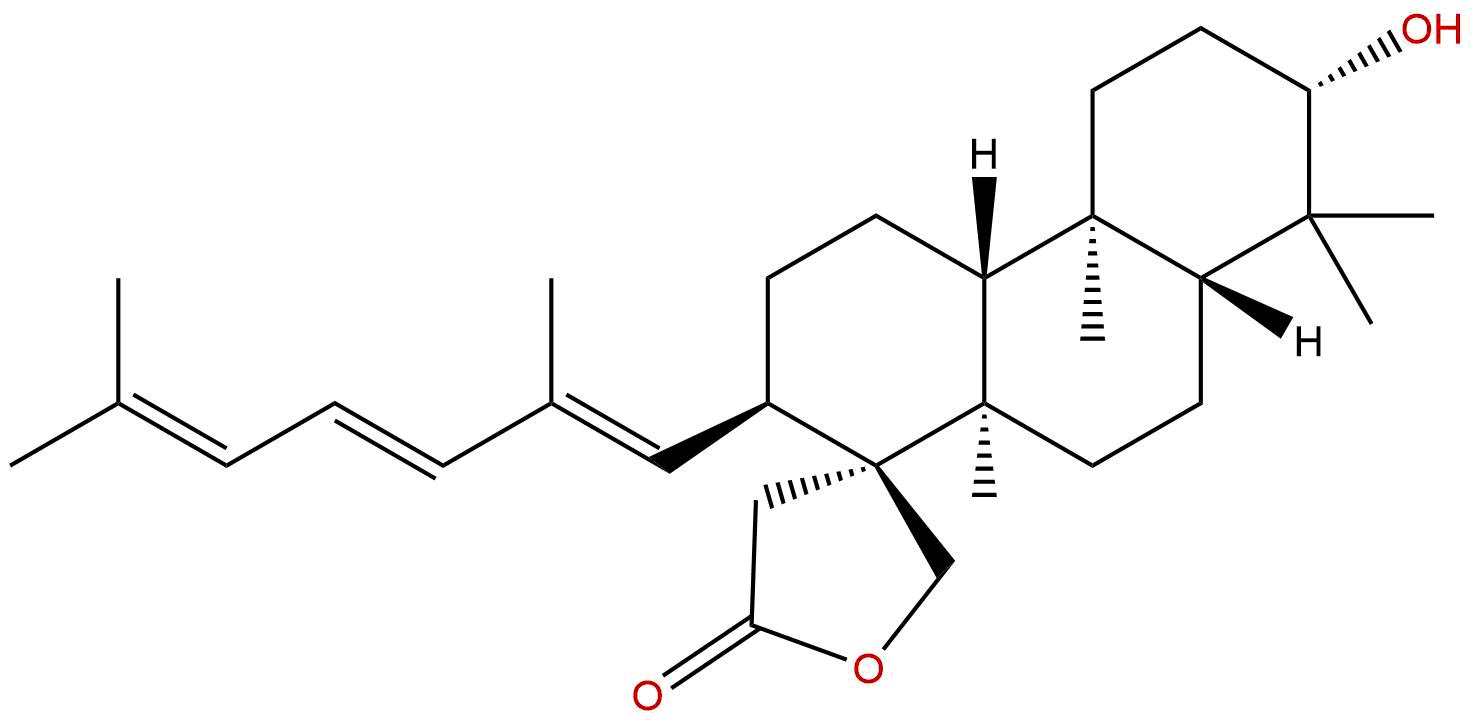


Product name: Ebelin lactone
Synonym name: trans-Ebelin lactone
Catalogue No.: BP5359
Cas No.: 3649-76-1
Formula: C30H46O3
Mol Weight: 454.695
Botanical Source:
Type of Compound:
Purity: 95%~99%
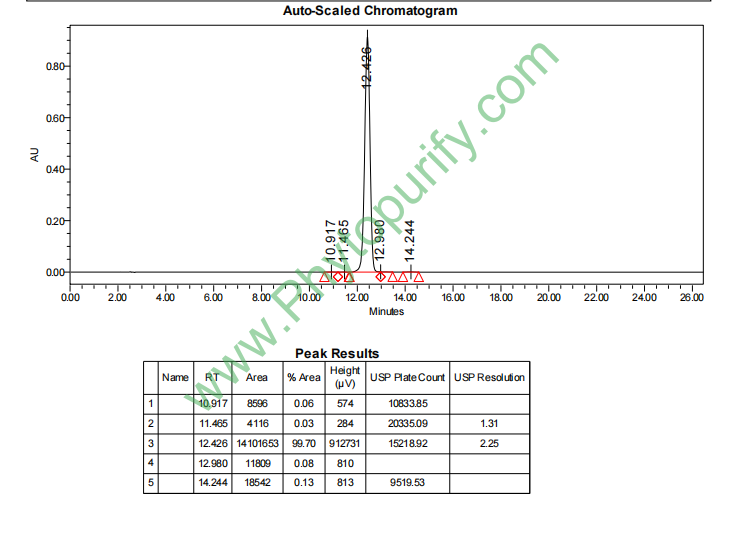
Analysis Method: HPLC-DAD or/and HPLC-ELSD
Identification Method: Mass, NMR
Packing: Brown vial or HDPE plastic bottle
Storage: Store in a well closed container, protected from air and light. Put into refrigerate or freeze for long term storage.
Whenever possible, you should prepare and use solutions on the same day. However, if you need to make up stock solutions in advance, we recommend that you store the solution as aliquots in tightly sealed vials at -20℃. Generally, these will be useable for up to two weeks.
The product could be supplied from milligrams to grams
Inquire for bulk scale.
For Reference Standard and R&D, Not for Human Use Directly.
HPLC of Ebelin lactone
Storage conditions:Short-term storage at 2~8℃, long-term storage at -20 ~ -80℃
46.5300
6.6845
6.6845
.0007
5.1111
9.2145
High
92.6772
5.3635
No
No
No
No
No
No
0.0
No
No
Yes
Yes
Natural products, as an important source of drug discovery, play an irreplaceable role in the long history of human fight against diseases. From ancient plant medicines to modern targeted drugs, the chemical diversity inherent in nature provides endless inspiration for medicinal chemists. Among numerous natural products with biological activity, triterpenoids have attracted much attention due to their structural diversity and extensive pharmacological activities. Ebelin lactone, as a tetracyclic triterpenoid lactone derived from the plant kingdom, has gradually entered the field of researchers in recent years due to its significant potential in neuroprotection.
The discovery and research process of Xiangguoling lactone is closely related to the modern scientific exploration of traditional medicinal plants. It was initially isolated from certain specific plants, which are often used in folk medicine to treat diseases related to aging and cognitive decline. With the increasing incidence of neurodegenerative diseases, especially Alzheimer's disease (AD) and Parkinson's disease (PD) in the world, the search for compounds that can effectively intervene in the disease process and protect the function of neurons has become the key direction of pharmacological research. Xiangguoling lactone has been screened as a potential neuroprotective candidate molecule due to its unique chemical skeleton and preliminary biological activity.
Modern pharmacological studies have shown that the mechanism of action of coumarin is not singular, but involves multiple signaling pathways closely related to the pathogenesis of neurodegenerative diseases. It can regulate the key protein BCL2 family of cell apoptosis, affect the generation and aggregation of β - amyloid protein (A β) (through APP and BACE1), intervene in the excessive phosphorylation of tau protein (through MAPT and GSK3B), and activate antioxidant stress and mitochondrial protection pathways (through NFE2L2, SIRT1, and MAPK1). This multi-target and multi pathway characteristic of action makes it uniquely advantageous in dealing with complex and multifactorial neurodegenerative diseases. This article aims to comprehensively review the chemical properties, plant sources, pharmacological activities, mechanisms of action, and pharmacological evaluation of coumarin lactone, in order to provide a systematic scientific basis for the in-depth research and development of this natural product.
The chemical structure of Xiangguoling lactone belongs to the tetracyclic triterpenoid class, and its core skeleton is composed of four fused cyclohexane rings (A, B, C, D rings), which is a typical feature of triterpenoids. Specifically, its structure can be classified as a derivative of dammarane type tetracyclic triterpenes. The uniqueness of this compound lies in the presence of a gamma lactone ring structure on its D ring, which is the origin of its name "Xiangguoling lactone" and one of its key pharmacophore groups. The presence of lactone rings endows molecules with a certain degree of rigidity and specific spatial conformation, which is crucial for their interaction with biological targets. In addition, molecules typically contain multiple oxygen-containing functional groups such as hydroxyl and/or carbonyl groups, which not only affect their chemical reactivity but also form the basis for non covalent interactions such as hydrogen bonding with target proteins.
From the perspective of physical and chemical properties, the molecular formula of coumarin lactone is C ③₀ H ₄₆ O3, with a molecular weight of 454.6950 g/mol, belonging to medium-sized natural product molecules. Its lipophilic water partition coefficient (LogP) is 6.6845, which is a very high value indicating that the compound has strong lipophilicity. High lipophilicity means that coumarin lactone is highly soluble in organic solvents such as chloroform, methanol, ethanol, dimethyl sulfoxide, etc., while its solubility in water is extremely low (water solubility is only 0.0007 mg/mL). This characteristic poses a challenge to its bioavailability and administration method, as after oral administration, the drug needs to first dissolve in the liquid environment of the gastrointestinal tract before it can be absorbed. However, high lipophilicity also brings a significant advantage: it endows coumarin with extremely high blood-brain barrier (BBB) penetration ability. According to the prediction, its blood-brain barrier penetration is "high", which means that the compound can effectively enter the central nervous system from the bloodstream and directly act on targets in the brain. For drugs used to treat neurodegenerative diseases, the ability to efficiently penetrate the blood-brain barrier is a crucial prerequisite. In addition, the topological polar surface area (TPSA) of coumarin lactone is 46.53 Å ², which is lower than the threshold for passive diffusion through the BBB (approximately 60-70 Å ²), further supporting its good brain permeability. Overall, the physicochemical properties of Xiangguoling lactone exhibit the characteristics of "high lipophilicity, low water solubility, and high brain permeability". This is not only its advantage as a candidate drug for the central nervous system, but also the difficulty it needs to overcome in formulation development.
Xiangguoling lactone, as a natural product, mainly comes from certain specific higher plants, especially those species with a history of application in traditional medicine. The main source plants reported in current literature include certain Salvia species(Salvia)Plants, such as Danshen(Salvia miltiorrhiza)Some varieties or closely related species, as well as some other Lamiaceae plants. In addition, some studies have isolated this compound from certain ferns or lichens. It is worth noting that the content of coumarin in plants is usually low, belonging to trace or trace components, which makes it difficult to obtain in large quantities. The biosynthetic pathways of triterpenoids in plants usually involve the mevalonic acid (MVA) pathway or the methyl erythritol phosphate (MEP) pathway. As a derivative of the damaane type triterpenoids, the biosynthesis of coumarin lactone may involve the cyclization of 2,3-oxidized squalene, skeleton rearrangement, and subsequent oxidation and lactonization modifications.
Given its low content in plants, the extraction and purification process of coumarin typically requires a combination of various modern chromatographic techniques. A typical extraction process is as follows:
1. Raw material pretreatment Crush dry plant materials (such as roots, stems, and leaves) to an appropriate fineness to increase the solvent contact area.
2. Solvent extraction Taking advantage of the high lipophilicity of coumarin, organic solvents with lower polarity are usually used for extraction, such as petroleum ether, chloroform, ethyl acetate, or ethanol. Among them, ethanol is often used as a crude extraction solvent due to its good penetration and relatively low toxicity. The extraction method can be cold soaking, percolation, or heating reflux extraction to improve the extraction efficiency.
3. Preliminary separation After concentrating the crude extract, preliminary separation is carried out through liquid-liquid extraction (such as petroleum ether water, chloroform water) to enrich the target compound in the organic phase.
4. Column chromatography separation This is the core step of purification. Usually, silica gel column chromatography is used, with gradient elution using different ratios of petroleum ether ethyl acetate or chloroform methanol mixed solvents. Xiangguoling lactone will be eluted at a specific elution ratio due to its specific polarity.
5. Fine purification: For components that still contain impurities after preliminary purification by silica gel column, more efficient separation methods should be used, such as preparative high performance liquid chromatography (Prep HPLC), reverse phase silica gel column chromatography (such as C18 column) or gel column chromatography (such as Sephadex LH-20). By optimizing the composition of the mobile phase (such as acetonitrile water or methanol water systems), high-purity coumarin lactone monomers can be obtained.
6. Structural Identification The final pure product was structurally confirmed by spectroscopic techniques such as nuclear magnetic resonance spectroscopy (NMR), high-resolution mass spectrometry (HR-MS), infrared spectroscopy (IR), and ultraviolet spectroscopy (UV).
Due to the extremely low yield and high cost of natural extraction, it is particularly important to develop chemical total synthesis or semi synthesis methods for coumarin lactone in order to meet the needs of subsequent pharmacological research and potential clinical applications. At present, some studies have reported their total synthesis routes, but usually the steps are lengthy and the overall yield is not high. In the future, reconstructing the biosynthetic pathway of microorganisms (such as yeast) through biosynthetic engineering methods may become a more promising strategy for sustainable production of coumarin lactone.
The pharmacological activity research of Xiangguoling lactone mainly focuses on the field of neuroprotection, which is highly consistent with its ability to efficiently penetrate the blood-brain barrier. A large amount of in vitro and in vivo experimental evidence shows that coumarin has significant protective effects on various neurotoxic injury models.
1. Anti apoptotic and neuroprotective effects
At the cellular level, coumarin can effectively counteract neuronal death caused by factors such as beta amyloid (A β) oligomers, glutamate excitotoxicity, oxidative stress inducers (such as hydrogen peroxide H ₂ O ₂ or 6-hydroxydopamine 6-OHDA), and ischemia-reperfusion injury. Research has shown that treatment with coumarin can significantly improve the survival rate of nerve cells (such as PC12 cells, SH-SY5Y cells, and primary cortical neurons) under injury conditions. Its protective effect is closely related to the inhibition of cell apoptosis, manifested by reducing the formation of apoptotic bodies, decreasing the expression of pro apoptotic proteins (such as Bax, cleaved Caspase-3, cleaved Caspase-9), and upregulating the level of anti apoptotic protein BCL2. BCL2 protein is a key regulatory factor in the mitochondrial apoptosis pathway. Xiangguoling lactone stabilizes mitochondrial membrane potential by regulating the balance of BCL2 family members, thereby preventing the release of cytochrome c and the activation of downstream Caspase cascade reactions, ultimately inhibiting neuronal apoptosis.
2. Anti Alzheimer's disease activity
Given the core pathological features of Alzheimer's disease (AD) - A β deposition and tau protein hyperphosphorylation, coumarin has shown intervention effects on both processes. Firstly, it can regulate the processing of amyloid precursor protein (APP). APP can be cleaved by alpha secretase or beta secretase (BACE1), producing non pathogenic sAPP alpha and pathogenic A beta, respectively. Research has found that coumarin can inhibit the activity or expression of BACE1, thereby reducing the production of A β. At the same time, it may also promote the processing of non amyloid protein pathways in APP, increasing the production of sAPP alpha with neurotrophic effects. Secondly, Xiangguoling lactone can inhibit the excessive phosphorylation of tau protein. Abnormal phosphorylation of tau protein can cause it to dissociate from microtubules and aggregate into neurofibrillary tangles (NFTs). This compound effectively reduces the phosphorylation level of tau protein at multiple AD related sites (such as Ser404, Thr231, etc.) by inhibiting the activity of key kinases such as glycogen synthase kinase-3 β (GSK3B), thereby protecting microtubule stability and maintaining normal axonal transport function of neurons.
3. Antioxidant and anti-inflammatory effects
Oxidative stress and neuroinflammation are important driving factors for the progression of neurodegenerative diseases. Xiangguoling lactone has been proven to have strong antioxidant activity. It can activate the nuclear factor E2 related factor 2 (NFE2L2/Nrf2) signaling pathway. Nrf2 is a core transcription factor in the cellular antioxidant defense system, which can promote the expression of a series of antioxidant enzymes (such as heme oxygenase-1 HO-1, quinone oxidoreductase NQO1, superoxide dismutase SOD, etc.) after activation, thereby clearing reactive oxygen species (ROS) and reducing oxidative damage. In addition, coumarin can also reduce the release of inflammatory factors by inhibiting the mitogen activated protein kinase (MAPK) pathway, especially the phosphorylation of p38 MAPK and JNK. It can inhibit the excessive activation of microglia, reduce the production of pro-inflammatory mediators such as tumor necrosis factor - α (TNF - α), interleukin-1 β (IL-1 β), and nitric oxide (NO), thereby exerting a neuroinflammatory regulatory effect.
4. Other neuroprotective related activities
In addition to the main functions mentioned above, coumarin also exhibits other beneficial neuropharmacological effects. For example, it can improve mitochondrial function, enhance cellular energy metabolism, and stress resistance by activating the deacetylase SIRT1. The activation of SIRT1 is also associated with delaying aging and improving cognitive function. In addition, the study suggests that coumarin may promote neuronal growth and synaptic plasticity by regulating the MAPK1 (ERK2) signaling pathway, which is of great significance for the repair and functional reconstruction of damaged neurons.
The neuroprotective effect of coumarin is not derived from the regulation of a single target, but is achieved through a complex, multi-target, and multi-level signaling network. Its core mechanism of action can be summarized as the following key pathways:
1. Regulating the balance between apoptosis and survival (BCL2/CASP9 axis)
This is the most direct mechanism by which coumarin exerts neuroprotective effects. Under neurotoxic stimulation, the outer membrane permeability of mitochondria increases, leading to the release of cytochrome c into the cytoplasm, which binds with Apaf-1 to form apoptotic bodies, thereby activating the initial Caspase-9 (CASP9) and ultimately activating the execution of Caspase-3, triggering irreversible cell apoptosis. Xiangguoling lactone stabilizes mitochondrial membrane and prevents the release of cytochrome c by upregulating the expression of anti apoptotic protein BCL2 and possibly directly or indirectly inhibiting the activity of pro apoptotic protein Bax. This effect directly blocks the upstream events of the mitochondrial apoptosis pathway, effectively inhibiting the activation of CASP9 and rescuing neurons from apoptosis.
2. Intervention in A β production and tau protein phosphorylation (APP/ACE1/MAPT/GSK3B axis)
Regarding the core pathology of AD, Xiangguoling lactone exhibits dual intervention capabilities.
* Inhibit the generation of A βBACE1 is the rate limiting enzyme in the process of A β production. Xiangguoling lactone can downregulate the protein expression level of BACE1 or directly inhibit its enzyme activity. This leads to a decrease in β - secretase cleavage in the APP, thereby reducing the production of toxic peptide segments such as A β 40 and A β 42. At the same time, the processing pathway of the APP may tilt towards non amyloid protein pathways, increasing the production of sAPP alpha with neurotrophic and protective effects.
* Inhibit excessive phosphorylation of tau protein GSK3B is one of the main kinases causing abnormal phosphorylation of tau protein. Xiangguoling lactone can effectively inhibit the activity of GSK3B. The mechanism may involve the regulation of upstream signaling pathways, such as activating protein kinase B (Akt) to phosphorylate the Ser9 site of GSK3B and inactivate it. The decrease in GSK3B activity directly reduces the phosphorylation level (MAPT) of tau protein at multiple AD related sites (such as Ser396, Ser404, etc.), thereby preventing tau protein from detaching from microtubules and aggregating to form NFTs, maintaining the stability of the cytoskeleton and axonal transport function.
3. Activate the antioxidant defense system (NFE2L2/SIRT1 axis)
Oxidative stress is a common feature of neurodegenerative diseases. Xiangguoling lactone is an effective activator of the Nrf2 signaling pathway. Under normal conditions, Nrf2 binds to Keap1 and is anchored in the cytoplasm. Under the action of coumarin, Nrf2 dissociates from Keap1 and translocates into the nucleus, binding to antioxidant response elements (ARE) and initiating the transcription of a series of phase II detoxifying enzymes and antioxidant enzyme genes, including HO-1, NQO1, glutathione S-transferase (GST), etc. These enzymes work together to effectively eliminate ROS and enhance the antioxidant capacity of cells. In addition, coumarin can activate SIRT1, an NAD ⁺ - dependent deacetylase. The activation of SIRT1 can further deacetylate and activate downstream targets, such as peroxisome proliferator activated receptor gamma co activator protein-1 alpha (PGC-1 alpha), thereby promoting mitochondrial biosynthesis, improving mitochondrial function, and enhancing cellular resistance to oxidative stress. The activation of SIRT1 is also closely related to inhibiting inflammatory responses and delaying the aging process.
4. Regulating inflammation and stress signaling pathways (MAPK1/MAPK axis)
The MAPK family (including ERK, JNK, p38 MAPK) plays a crucial role in mediating inflammatory responses and cellular stress. Xiangguoling lactone can selectively inhibit pro-inflammatory and pro apoptotic MAPK pathways (such as p38 MAPK and JNK), while possibly activating MAPK pathways with pro survival and pro growth effects (such as ERK/MAPK1). By inhibiting the phosphorylation of p38 MAPK and JNK, coumarin reduced the activation of microglia and astrocytes, and decreased the release of pro-inflammatory cytokines such as TNF - α and IL-1 β. The activation of ERK/MAPK1 is associated with increased cell proliferation, differentiation, and synaptic plasticity, which may contribute to neural repair and improvement of cognitive function.
In summary, Xiangguoling lactone forms a synergistic network regulation mode by simultaneously acting on multiple key targets such as BCL2, APP, BACE1, MAPT, GSK3B, NFE2L2, SIRT1, MAPK1, CASP9, etc. This multi-target mechanism of action enables it to combat the complex pathological processes of neurodegenerative diseases from multiple dimensions, and has potential advantages that single target drugs cannot match.
To push Xiangguoling lactone from laboratory research to clinical application, a systematic evaluation of its drug like and pharmacokinetic (ADME) properties is necessary. Based on its physicochemical properties and preliminary pharmacological data, the following analysis can be conducted:
1. Evaluation of drug properties
* Analysis of drug properties According to Lipinski's "Rule of Five", the molecular weight of coumarin lactone (454.69 Da) is slightly above the threshold of 500 Da, and LogP (6.68) is much higher than the threshold of 5. The number of hydrogen bond donors (usually 1-2 hydroxyl groups) and acceptors (oxygen atoms in the lactone ring) may conform to or be close to the rule. Therefore, it slightly violates the "Five Rules", indicating that its oral bioavailability may be poor. However, for central nervous system (CNS) drugs, there are higher requirements for lipophilicity due to the need to penetrate the BBB, so a slight violation of the "Five Rules" is not an absolute barrier. Its high LogP and low TPSA are precisely the key to its efficient entry into the brain.
* safety assessment Preliminary toxicological predictions indicate that coumarin has no inhibitory risk on hERG potassium channels (hERG inhibition: no), which means its risk of causing prolonged QT interval and fatal arrhythmias in the heart is low. The Ames test result was 0.0, indicating that it did not exhibit mutagenicity in the bacterial recovery mutation test, suggesting a low risk of genetic toxicity. These preliminary data provide positive signals for its safety, but comprehensive toxicological evaluations (including acute toxicity, chronic toxicity, reproductive toxicity, etc.) still need to be conducted in animal models.
2. Pharmacokinetic characteristics and challenges
* absorb The extremely low water solubility (0.0007 mg/mL) of coumarin is the biggest challenge facing its oral absorption. According to the Biopharmaceutical Classification System (BCS), it is likely to belong to Class II (low solubility, high permeability) or Class IV (low solubility, low permeability) drugs. After oral administration, the dissolution rate of the drug in the gastrointestinal tract is extremely slow, resulting in incomplete absorption and significant individual differences, with extremely low bioavailability. Therefore, developing suitable drug delivery systems (such as liposomes, nanoparticles, solid dispersions, phospholipid complexes, etc.) to improve their solubility and dissolution rate is key to improving their oral absorption.
* distribution Due to its high lipophilicity, coumarin lactone is widely distributed in the body, especially capable of efficiently penetrating the blood-brain barrier and achieving high drug concentrations in brain tissue. This is its biggest advantage as a neuroprotective agent. Meanwhile, it may also accumulate in lipid rich areas such as adipose tissue.
* Metabolism As a lipophilic compound, coumarin is likely to undergo phase I metabolism (such as oxidation, reduction, hydrolysis) mainly through the cytochrome P450 (CYP450) enzyme system in the liver, followed by phase II binding reactions (such as glucuronidation, sulfation) to generate more water-soluble metabolites for excretion from the body. Its lactone ring structure may also be hydrolyzed by esterases to open the ring. Detailed research is needed on its metabolic pathways, metabolic enzymes, and potential drug drug interactions.
* excretion Metabolites and small amounts of prototype drugs are mainly excreted through bile and urine. Due to its high lipophilicity, the prototype drug is easily reabsorbed in the renal tubules, resulting in a lower renal clearance rate.
3. Penetration of blood-brain barrier
As mentioned earlier, Xiangguoling lactone has extremely high BBB penetration, which is its most prominent pharmacokinetic advantage. The prediction model and preliminary in vivo distribution experiments both support this conclusion. This means that even if the oral bioavailability is not high, it is still possible to achieve effective therapeutic concentrations in the brain through non oral routes (such as intravenous injection, nasal administration) or using advanced delivery systems.
Xiangguoling lactone, with its unique multi-target neuroprotective mechanism and superior brain permeability, has shown exciting clinical application prospects in the treatment of neurodegenerative diseases, especially in the following areas:
1. Treatment of Alzheimer's disease (AD)
AD is the most common neurodegenerative disease, and its pathogenesis is complex, involving multiple links such as A β deposition, tau protein lesions, oxidative stress, neuroinflammation, and synaptic loss. Xiangguoling lactone can simultaneously act on multiple targets such as APP/ACE1 (reducing A β), GSK3B/MAPT (inhibiting tau phosphorylation), NFE2L2/SIRT1 (antioxidant), BCL2/CASP9 (anti apoptotic), and MAPK (anti-inflammatory). This multi pronged action pattern perfectly fits the characteristics of AD multifactorial pathogenesis. Therefore, it is expected to become a candidate drug for Disease Modifying Therapy (DMT) that can delay or even reverse the pathological process of AD. More research on genetically modified AD animal models (such as APP/PS1, 3xTg AD mice) is needed in the future to verify their long-term therapeutic effects on cognitive function improvement and clearance of A β plaques and NFTs pathology.
2. Treatment of Parkinson's disease (PD)
The main pathological features of PD are progressive loss of dopaminergic neurons in the substantia nigra of the midbrain and abnormal aggregation of alpha synuclein. Oxidative stress and mitochondrial dysfunction play a central role in the pathogenesis of Parkinson's disease. The strong antioxidant (via Nrf2) and mitochondrial protective (via SIRT1) abilities of Xiangguoling lactone make it a potential candidate molecule for treating PD. In addition, its anti apoptotic effect can directly protect dopaminergic neurons from damage by neurotoxins such as 6-OHDA or MPTP. Future research should focus on its improvement effect on motor dysfunction in PD animal models and its impact on the pathology of α - synuclein.
3. Neuroprotection after cerebral ischemia/stroke
Excitatory toxicity, oxidative stress, inflammatory response, and cell apoptosis are key factors leading to neuronal death in cerebral ischemia-reperfusion injury. Xiangguoling lactone has inhibitory effects on these pathological processes. Its ability to quickly penetrate the BBB makes it highly suitable for intervention in acute cerebral ischemic events. In animal models, treatment with coumarin after ischemia is expected to reduce infarct volume and improve neurological function scores. Its clinical application potential lies in its use as an acute phase neuroprotective agent, combined with thrombolysis or thrombectomy therapy.
4. Other neurological and psychiatric disorders
Given its anti-inflammatory, antioxidant, and synaptic plasticity regulating effects, the potential indications of coumarin may also extend to other neurological and psychiatric disorders, such as amyotrophic lateral sclerosis (ALS), Huntington's disease (HD), multiple sclerosis (MS), as well as depression and anxiety. For example, in depression, neuroinflammation and oxidative stress are considered important pathophysiological mechanisms, and the anti-inflammatory and antioxidant effects of coumarin may exert antidepressant effects.
Challenges and Future Directions Faced
Despite its broad prospects, the clinical translation of coumarin still faces severe challenges. The primary issue is its extremely low water solubility and oral bioavailability. Future research directions must include:
1. Drug delivery system development Focus on developing formulation technologies that can improve its solubility and oral absorption, such as self microemulsifying drug delivery systems (SMEDS), lipid nanoparticles, polymer micelles, phospholipid complexes, etc. Nose to brain administration is also a promising route of drug delivery that bypasses the blood-brain barrier and directly targets the central nervous system.
2. Research on Structure Modification and Structure Activity Relationship Systematic chemical modification of the parent nucleus of Xiangguoling lactone, such as introducing hydrophilic groups (such as phosphate groups and amino acid esters) at the lactone ring, hydroxyl groups, etc., to synthesize a series of derivatives, in order to improve its water solubility and pharmacokinetic properties while maintaining or enhancing neuroprotective activity. Meanwhile, in-depth research on structure-activity relationships (SAR) is crucial for guiding drug design.
3. In depth in vivo pharmacological and toxicological research Long term and systematic pharmacological evaluations are needed in various animal models that are closer to human pathology, and comprehensive toxicological studies (including acute toxicity, long-term toxicity, reproductive toxicity, carcinogenicity, etc.) are conducted to evaluate their safety and treatment window.
4. In depth analysis of the mechanism of action Using modern molecular biology techniques such as proteomics, transcriptomics, chemical biology probes, etc., further clarify the direct target proteins of coumarin lactone and elucidate its precise molecular mechanisms for regulating multiple signaling pathways.
Xiangguoling lactone, as a natural product of plant derived tetracyclic triterpenoid lactones, has shown great potential in the field of neuroprotection due to its unique chemical structure and excellent brain permeability. Its pharmacological mechanism of action is not single, but achieves multiple synergistic effects of anti apoptosis, anti A β, anti tau, antioxidant, and anti-inflammatory by simultaneously regulating multiple key targets and signaling pathways closely related to the pathogenesis of neurodegenerative diseases, such as BCL2, APP/ACE1, GSK3B/MAPT, NFE2L2/SIRT1, MAPK, etc. This multi-target mode of action gives it unparalleled advantages over single target drugs in dealing with complex diseases such as Alzheimer's disease and Parkinson's disease.
However, the extremely low water solubility of coumarin and the resulting low oral bioavailability are the biggest stumbling blocks for its transition from laboratory to clinical application. Future research should focus on using advanced drug delivery systems to improve their bioavailability, and optimizing their structures through the study of structure-activity relationships, in order to obtain derivatives with better drug properties. At the same time, in-depth in vivo pharmacological validation and comprehensive toxicological evaluation are also indispensable links for its clinical translation.
In summary, Xiangguoling lactone is a natural neuroprotective lead compound with great research value and development prospects. Despite the numerous challenges ahead, with the interdisciplinary integration and collaborative research of medicinal chemistry, pharmacy, pharmacology, and chemical biology, we have reason to believe that coumarin and its derivatives have the potential to bring new therapeutic hope to billions of patients with neurodegenerative diseases worldwide in the future. In depth research on such natural products not only helps to reveal the scientific connotations of traditional medicinal plants, but also provides valuable molecular templates and sources of ideas for the development of modern innovative drugs.
