

Storage conditions:Short-term storage at 2~8℃, long-term storage at -20 ~ -80℃
Epipodophyllotoxin (-) - Epipodophyllotoxin) is a natural product derived from plants in the family Podophyllophyllaceae, belonging to the lignan class of compounds. As a natural product with significant biological activity, podophyllotoxin has attracted widespread attention in the field of anti-tumor drug development. Its derivatives such as etoposide and teniposide have been successfully applied in the treatment of various malignant tumors, demonstrating the important role of these compounds in the development of anticancer drugs. In recent years, with the advancement of molecular biology and pharmacology techniques, the mechanism of action, molecular targets, and pharmacological characteristics of podophyllotoxin have been deeply explored, providing a theoretical basis for its clinical application.
This article provides a systematic review of the chemical structure and physicochemical properties, plant sources and extraction methods, pharmacological activity and mechanism of action, pharmacological evaluation and pharmacokinetic characteristics of podophyllotoxin. It also looks forward to its clinical application prospects in anti-tumor therapy, aiming to provide comprehensive reference materials for researchers in the field of natural product pharmacology.
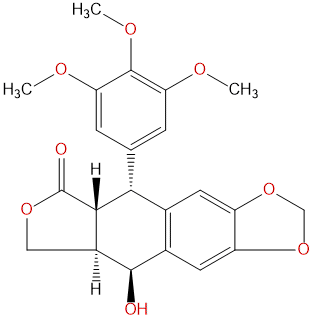
The chemical name of podophyllotoxin is (-) - Epipodophyllotoxin, with a CAS number of 4375-07-9, a molecular formula of C22H22O8, and a molecular weight of 414.41. Its structure belongs to the lignin class, with a core skeleton of a four ring structure containing multiple hydroxyl and methoxy substituents, endowing it with unique chemical properties. The structural characteristics of podophyllotoxin determine its ability to bind to various biomolecules, especially exhibiting significant activity in DNA topoisomerase inhibition.
In terms of physical and chemical properties, the LogP value of podophyllotoxin is 1.947, indicating that it has moderate lipophilicity and is beneficial for membrane permeation; The TPSA (topologically polar surface area) is 92.68 Å ², reflecting its moderate molecular polarity, which facilitates interaction with biological targets. Low water solubility (0.12 mg/mL) suggests limited solubility in aqueous phase, which may affect its bioavailability. The high penetration ability of the blood-brain barrier indicates its potential application value in the treatment of central nervous system diseases. The hERG channel inhibition test was negative, indicating a low risk of cardiac toxicity; The Ames test result is 0.0, indicating a low risk of genotoxicity and meeting safety requirements.
Podophyllotoxin mainly exists in plants of the Podophyllodontidae family, especially in the Podophyllum genus, such as Podophyllum peltatum in the United States and Podophyllum hexandrum in India. These plants are used in traditional medicine to treat various diseases, especially tumors and viral infections.
The traditional methods for extracting podophyllotoxin include solvent extraction, column chromatography separation, and crystallization purification. Generally, ethanol or methanol is used as the extraction solvent, and crude extract is obtained by reflux extraction, followed by separation and purification using silica gel column chromatography or high-performance liquid chromatography (HPLC). In recent years, the application of emerging technologies such as ultrasound assisted extraction and microwave-assisted extraction has improved extraction efficiency and purity, reduced solvent usage and environmental pollution.
In addition, the study of biosynthetic pathways provides a theoretical basis for the regulation of biosynthesis of podophyllotoxin. The application of genetic engineering and metabolic engineering technologies is expected to achieve efficient biosynthesis and solve the problems of scarce wild resources and environmental protection.
Podophyllotoxin and its derivatives have shown extensive pharmacological activity in the field of anti-tumor. Its main anti-tumor mechanism includes inhibiting DNA topoisomerase II (TOP2A) activity, inducing DNA double strand breaks, blocking tumor cell cycle progression, and promoting cell apoptosis. In addition, podophyllotoxin can regulate multiple signaling pathways, affecting cell proliferation, migration, and invasion ability.
In vitro experiments showed that epipodophyllotoxin had significant cytotoxic effects on many tumor cell lines, including lung cancer, breast cancer, colorectal cancer, leukemia, etc. Animal model studies further confirm its anti-tumor effect, manifested as tumor growth inhibition and reduced metastasis.
In addition to its anti-tumor activity, podophyllotoxin also exhibits various pharmacological effects such as anti-inflammatory and antiviral effects, but related research is still in the preliminary stage and further in-depth exploration is needed.
The anti-tumor effect of podophyllotoxin is mainly achieved through multi-target synergistic regulation. Its key targets include:
In summary, podophyllotoxin achieves comprehensive regulation of tumor cells and enhances anti-tumor effects through multi-target and multi pathway synergistic effects.
The pharmacological parameters of podophyllotoxin show that it has good potential for drug development. The molecular weight of 414.41 and LogP 1.947 comply with Lipinski's rule, indicating that it has good oral bioavailability potential. TPSA 92.68 Å ² is moderate and beneficial for cell membrane penetration and target binding. Low water solubility is a major challenge in the development of its formulations, which requires improvement in solubility and stability through techniques such as salt formation and nanocarriers.
The high penetration ability of the blood-brain barrier suggests its potential advantages in the treatment of central nervous system tumors and related diseases. HERG inhibition was negative and Ames test showed no mutagenicity, indicating good safety and low risk of cardiac and genotoxicity.
Pharmacokinetic studies have shown that podophyllotoxin is widely distributed in the body, with metabolism mainly through the liver enzyme system and excretion mainly through bile and urine. Its plasma half-life is moderate, supporting the design of clinical dosing regimens. Due to its poor water solubility and limited bioavailability, it is necessary to optimize the administration route and dosage form to improve the therapeutic effect.
Podophyllotoxin and its derivatives have become lead compounds for various anti-tumor drugs, with clinical applications mainly focused on the chemotherapy regimens of etoposide and etoposide, treating various malignant tumors such as lung cancer, lymphoma, and small cell lung cancer. In the future, with a deeper understanding of the mechanism of action of podophyllotoxin and advances in drug design technology, it is expected to develop more efficient and low toxicity new anti-tumor drugs.
In addition, the multi-target action characteristics of podophyllotoxin provide a theoretical basis for combination therapy strategies, which can be synergistically applied with other targeted drugs and immunotherapy drugs to enhance the effectiveness of tumor treatment. Its excellent blood-brain barrier penetration ability also provides new possibilities for the treatment of brain tumors and neurological diseases.
In terms of formulation development, the application of nanotechnology, liposome carriers, and sustained-release formulations will effectively solve the problems of poor water solubility and low bioavailability, and promote clinical translation. Future research should focus on optimizing drug design, clarifying pharmacokinetic characteristics, evaluating long-term safety, and exploring new indications.
As a natural product with significant clinical value, the unique chemical structure and multi-target anti-tumor mechanism of podophyllotoxin make it an important template for the development of anticancer drugs. Despite challenges in terms of water solubility and bioavailability, its good safety and blood-brain barrier penetration ability provide broad prospects for its clinical application.
In the future, through interdisciplinary integration, combined with modern medicinal chemistry, molecular biology, and drug delivery technology, it is expected to further explore the potential of podophyllotoxin, promote its transformation into a wider range of clinical applications, and benefit a large number of patients. Continuous research in the field of natural product pharmacology will provide a solid foundation for innovative drug development of podophyllotoxin and its derivatives.
