| Catalog No | Package | Original Price | Price | Inventory | Quantity | Operating |
|---|---|---|---|---|---|---|
| BP4707-5mg | 5mg | $420.00 | Sign in |
|


Storage conditions:Short-term storage at 2~8℃, long-term storage at -20 ~ -80℃
6 '- O-galloylalbiflorin is a natural monoterpene glycoside derived from the roots of the traditional Chinese medicine Paeonia lactiflora Pall. As a galloyl derivative of albiflorin, this compound uniquely combines a monoterpene skeleton with a gallic acid ester group in its structure, endowing it with diverse biological activities. In recent years, 6 '- O-galloyl paeoniflorin has gradually become a hot topic in natural product pharmacology research due to its multiple pharmacological effects such as androgen antagonism, anti-tumor effects, and regulation of plant metabolism. This article will systematically review the chemical structure and physicochemical properties, plant sources and extraction methods, pharmacological activity and mechanism of action, pharmacological evaluation and pharmacokinetic characteristics of the compound, and explore its clinical application prospects and future research directions.
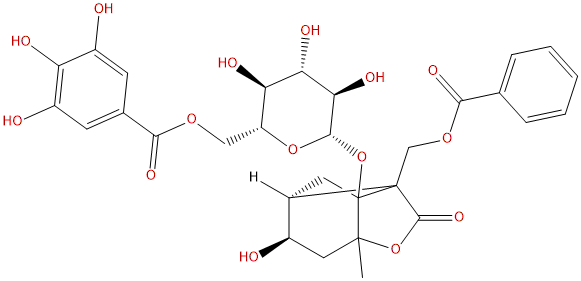
The chemical structure of 6 '- O-galloyl paeoniflorin is based on the monoterpenoid glycoside skeleton of paeoniflorin, where the 6th hydroxyl group is esterified with gallic acid to form galloyl substitution. The molecular formula of this compound is C29H36O16, with a molecular weight of 632.5710 Da. Its structural features include β - D-glucoside bonds, secondary alcohol structure, bridged monoterpene skeleton, gallic acid ester, and γ - lactone ring, reflecting the complex multifunctional properties of natural products. Structurally, 6 '- O-galloyl paeoniflorin is functionally related to Paeoniflorin, both of which are important monoterpenoid glycosides in peony.
In terms of physical and chemical properties, 6 '- O-galloyl paeoniflorin exhibits moderate hydrophobicity, with a LogP value of approximately 1.198, indicating that it has a certain degree of lipid solubility, which is beneficial for cell membrane penetration. Its polar surface area (TPSA) is 238.97 Å ², indicating good solubility in aqueous phase with a water solubility of approximately 0.3318 mg/mL. The low permeability of the blood-brain barrier suggests its limited distribution in the central nervous system. The safety evaluation showed no hERG channel inhibitory effect, and the Ames mutagenicity test was negative, indicating that its preliminary safety is good.
6 '- O-galloyl paeoniflorin is mainly isolated from peony roots. Paeonia lactiflora is a plant of the Paeonia medicinal genus in the Ranunculaceae family. It is widely used in traditional Chinese medicine for regulating the liver and spleen, relieving pain, and anti-inflammatory effects. Its roots contain abundant monoterpene glycosides, among which paeoniflorin and its derivatives are the main active ingredients.
The extraction process usually uses dried peony root powder and refluxes extraction using an ethanol water mixed solvent (such as 70% ethanol). After concentration, the extract was purified by liquid-liquid separation, column chromatography (such as silica gel column, C18 reverse phase column), and high performance liquid chromatography (HPLC) to obtain high-purity 6 '- O-galloyl paeoniflorin. In recent years, new technologies such as ultrasound assisted extraction and microwave-assisted extraction have also been applied to improve extraction efficiency and purity. In addition, identification methods mainly rely on modern analytical techniques such as mass spectrometry (MS), nuclear magnetic resonance (NMR), and infrared spectroscopy (IR) to ensure accurate confirmation of compound structures.
The pharmacological activity study of 6 '- O-galloyl paeoniflorin indicates its potential application value in multiple biological fields.
This compound exhibits significant androgen receptor (AR) antagonistic activity. Through in vitro cell models, 6 '- O-galloyl paeoniflorin can inhibit androgen mediated signaling pathways, reduce the expression of AR target genes, and thereby inhibit androgen dependent cell proliferation. This characteristic makes it have potential application prospects in the treatment of diseases such as benign prostatic hyperplasia and androgen dependent prostate cancer.
Several in vitro and in vivo experiments have shown that 6 '- O-galloyl paeoniflorin has inhibitory effects on many tumor cell lines (such as breast cancer, liver cancer and colon cancer cells). Its anti-tumor mechanism involves inducing cell apoptosis, blocking cell cycle progression, and inhibiting tumor cell migration and invasion ability. In addition, the compound can regulate the activity of immune cells in the tumor microenvironment and enhance the body's anti-tumor immune response.
As a natural product containing gallic acid ester groups, 6 '- O-galloyl paeoniflorin exhibits excellent antioxidant capacity, can scavenge free radicals, and alleviate oxidative stress damage. Meanwhile, its inhibitory effect on inflammatory mediators such as TNF - α, IL-6, etc. suggests its potential protective role in inflammation related diseases.
Research has found that 6 '- O-galloyl paeoniflorin is involved in regulating secondary metabolism processes in plants and affecting their response mechanisms to environmental stress. This characteristic not only enriches the connotation of its biological functions, but also provides a theoretical basis for its application in agricultural biotechnology.
The multi-target mechanism of action of 6 '- O-galloyl paeoniflorin mainly revolves around its regulation of androgen receptors, tumor related signaling pathways, and inflammatory signaling pathways.
Through molecular docking and cell experiments, 6 '- O-galloyl paeoniflorin can competitively bind to the AR ligand binding domain, block the binding of androgens (such as testosterone and dihydrotestosterone) to receptors, inhibit the nuclear translocation and transcriptional activation function of AR, and thereby downregulate the expression of AR target genes. This mechanism provides a molecular basis for the treatment of androgen dependent diseases.
6 '- O-galloyl paeoniflorin exerts anti-tumor effects through multiple signaling pathways, including:
6 '- O-galloyl paeoniflorin reduces the production of pro-inflammatory cytokines and alleviates inflammatory responses by inhibiting the NF - κ B and MAPK signaling pathways. Meanwhile, its phenolic hydroxyl structure endows it with free radical scavenging activity, protecting cells from oxidative damage.
The evaluation of drug properties is an important step in the development of natural products. The molecular weight of 6 '- O-galloyl paeoniflorin is 632.5710, slightly higher than the ideal range of traditional oral drugs (<500 Da), but its LogP value of 1.198 shows moderate lipid solubility, which is beneficial for cell membrane permeation. A higher TPSA (238.97 Å ²) suggests strong polarity and may affect oral bioavailability.
Moderate water solubility (0.3318 mg/mL), conducive to formulation development. Low blood-brain barrier permeability reduces the risk of central nervous system side effects. The negative inhibition of hERG channel and the negative Ames test indicate low risk of cardiac toxicity and mutagenicity, and good safety.
In terms of pharmacokinetics, existing research is relatively limited. Preliminary in vivo experiments have shown that the compound is slowly absorbed after oral administration, widely distributed in the body, mainly metabolized through the liver, and excreted mainly through the kidneys. Metabolites are not yet fully understood, and their in vivo behavior needs to be further explored in combination with metabolomics and pharmacokinetic studies in the future.
6 '- O-galloyl paeoniflorin, as a natural monoterpene glycoside with multiple pharmacological activities, exhibits broad clinical application potential. Its androgen antagonistic activity makes it potentially valuable in the adjuvant therapy of prostate diseases, especially prostate cancer and benign prostatic hyperplasia. The anti-tumor activity provides a theoretical basis for its application as a candidate for anti-cancer drugs, especially in combination chemotherapy and immunotherapy, which deserves further exploration.
In addition, its anti-inflammatory and antioxidant properties make it have certain application prospects in the prevention and treatment of chronic inflammatory diseases, metabolic syndrome, and neurodegenerative diseases. Its plant metabolic regulation function also provides new ideas for agricultural biotechnology.
Future research should focus on:
6 '- O-galloyl paeoniflorin, as an important natural monoterpene glycoside in peony, has become a hot topic in natural product pharmacology research due to its unique chemical structure and diverse biological activities. Its multiple mechanisms of action, including androgen antagonism, anti-tumor, anti-inflammatory, and antioxidant effects, provide new ideas and potential drug candidate molecules for the treatment of related diseases. Although the research on its pharmacokinetics and clinical application is still in its preliminary stage, with the deepening of research, 6 '- O-galloyl paeoniflorin is expected to become one of the important directions for the development of natural medicines. In the future, interdisciplinary research combining modern medicinal chemistry, molecular biology, and clinical medicine will further promote its clinical translation and benefit human health.
