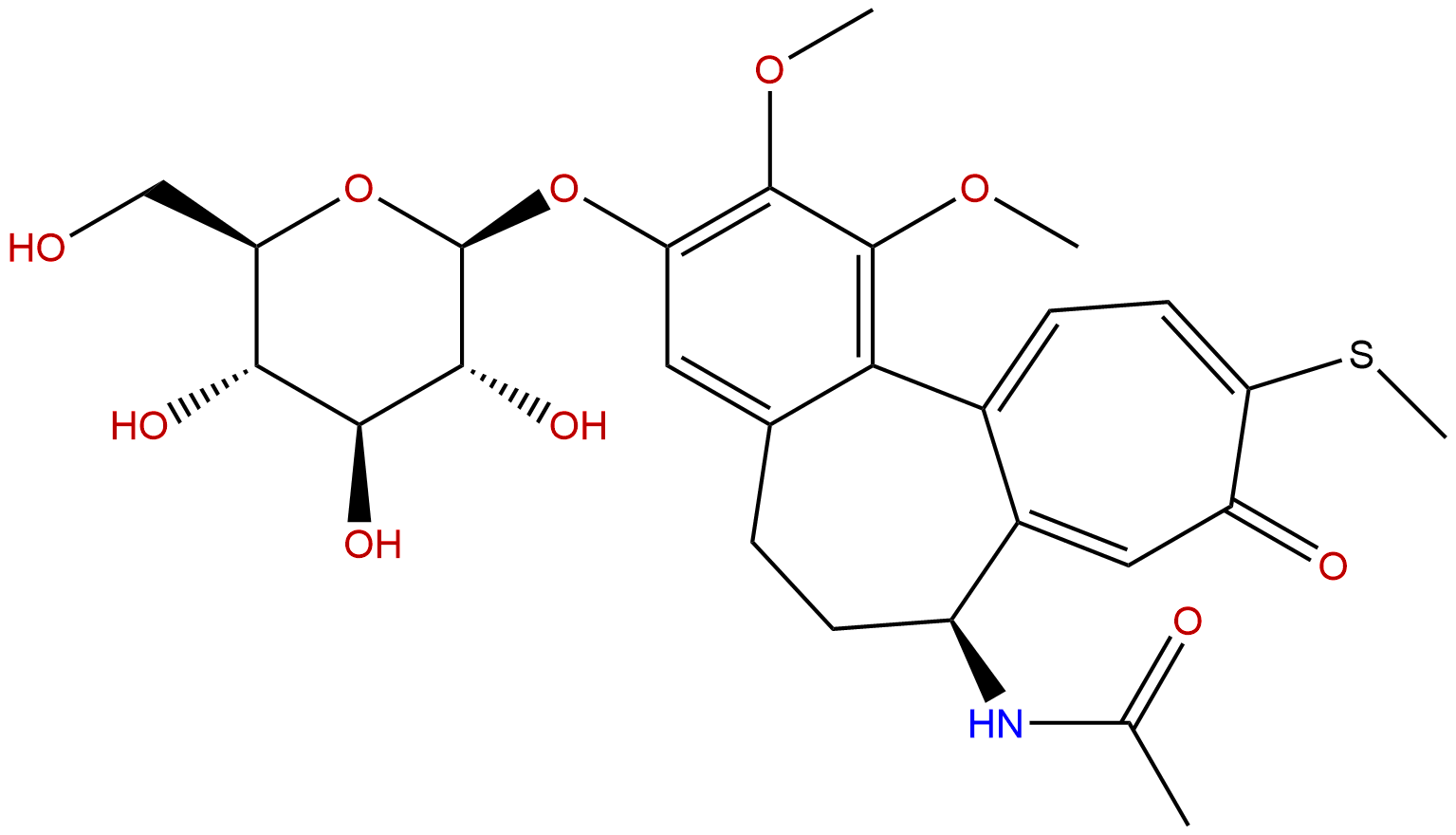


Product name: Thiocolchicoside
Synonym name: Coltramyl; Coltrax; Miorel; Miotens; Muscoril; NSC 147755
Catalogue No.: BP1833
Cas No.: 602-41-5
Formula: C27H33NO10S
Mol Weight: 563.618
Botanical Source:
Physical Description:
Type of Compound:
Purity: 95%~99%
Analysis Method: HPLC-DAD or/and HPLC-ELSD
Identification Method: Mass, NMR
Packing: Brown vial or HDPE plastic bottle
The product could be supplied from milligrams to grams. Inquire for bulk scale.
We provide solution to improve the water-solubility of compounds, thereby facilitating the variety of activity tests and clinic uses.
For Reference Standard and R&D, Not for Human Use Directly.
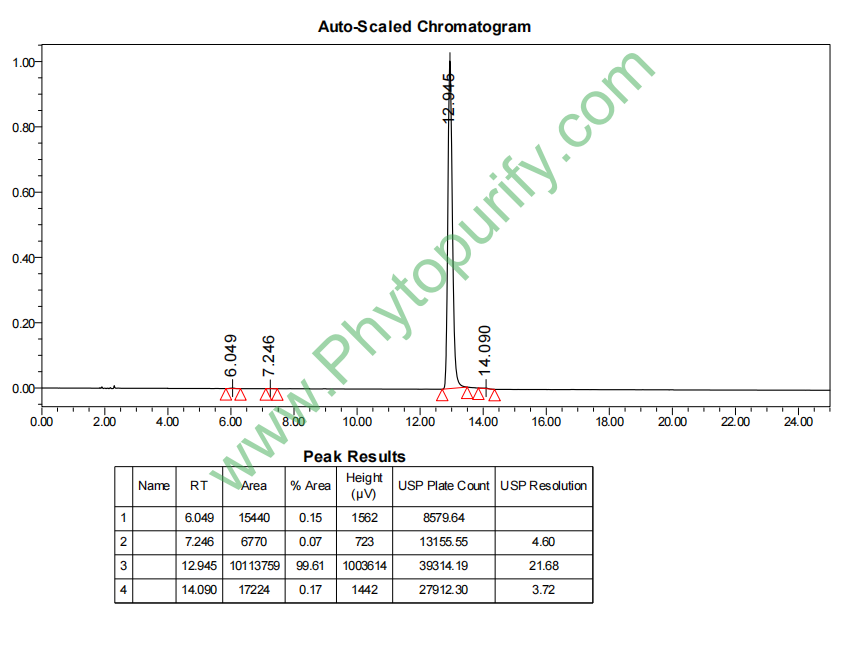
HPLC of Thiocolchicoside
Storage conditions:Short-term storage at 2~8℃, long-term storage at -20 ~ -80℃
164.0100
.3019
.3019
.6951
.5276
.2800
Low
72.0946
4.3124
No
No
No
No
No
No
0.0
Yes
No
Yes
Yes
Musculoskeletal pain and inflammation are common clinical problems that affect the quality of life of hundreds of millions of people worldwide, especially in diseases such as osteoarthritis, lower back pain, and gouty arthritis. Pain and muscle spasms are often mutually causal, forming a vicious cycle. Traditional treatment strategies often use nonsteroidal anti-inflammatory drugs (NSAIDs) or central muscle relaxants, but the former often accompanies gastrointestinal and cardiovascular risks, while the latter may cause central inhibitory side effects such as drowsiness and fatigue. Therefore, the development of drugs that combine efficient pain relief, anti-inflammatory, and muscle relaxation effects with better safety has always been an important direction in drug research and development. In this context, the semi synthetic derivative derived from the traditional medicinal plant narcissus, Thiocolchicoside, has attracted much attention due to its unique multiple pharmacological activities.
Thioglucoside (CAS number: 602-41-5) is a thioglucoside derivative of colchicine. Colchicine has been used to treat acute gout since ancient times, but its narrow therapeutic window, severe gastrointestinal toxicity, and bone marrow suppression limit its widespread application. By modifying the structure of colchicine molecules, scientists have obtained sulfur colchicine glycoside, which significantly reduces the toxicity of the parent compound while retaining or even enhancing some pharmacological activity. Research has shown that sulfur autumn narcissin is a competitive gamma aminobutyric acid type A (GABAA) receptor antagonist and glycine receptor agonist, providing a molecular basis for its powerful central muscle relaxation effect. Meanwhile, a large number of studies have revealed that it exhibits significant anti-inflammatory and analgesic effects in various acute and chronic inflammation and pain models. Its mechanism of action involves the regulation of multiple key inflammatory targets, especially in the pathological stages of diseases such as gouty arthritis, demonstrating the potential for multi-target intervention.
This article aims to systematically review the chemical structure, plant origin and preparation, pharmacological activity, multi-target mechanism of action, pharmacological characteristics, and clinical application prospects of sulfur autumn narcissin, in order to provide comprehensive scientific references for the in-depth research and clinical translation of this compound.
Sulfur autumn narcissin is a semi synthetic natural product derivative with a molecular formula of C27H33NO10S and a molecular weight of 563.6250. Its structural core retains the unique tricyclic skeleton (A, B, C rings) of colchicine, which is formed by the fusion of one ketone ring (A ring) and two seven membered carbon rings (B, C rings). The key difference between colchicine and colchicine is that the methoxy group (- OCH3) on the C-ring of colchicine is replaced by a thioglucoside group. Specifically, thiocolchicine is linked to a β - D-glucosinolate group via a thioether bond at position C-10. This structural modification is the basis for fundamental changes in its physicochemical properties and pharmacological activity.
From the analysis of physical and chemical properties, the lipid water partition coefficient (LogP) of sulfur autumn narcissin is 0.3019, indicating that it has moderate lipophilicity but overall leans towards hydrophilicity. Its topological polar surface area (TPSA) is as high as 164.0100 Å ², which is mainly attributed to the numerous oxygen atoms and glycosidic structures in the molecule, indicating that it has more hydrogen bond donor and acceptor sites. Its water solubility is 0.6951 mg/mL, belonging to the range of slightly soluble to soluble, which is superior to the solubility characteristics of the parent colchicine and beneficial for formulation development. These parameters collectively determine its pharmacokinetic behavior: higher TPSA and relatively lower LogP values predict its ability to cross the blood-brain barrier (BBB) as "low", which is consistent with its muscle relaxation effect primarily acting at the spinal cord level (rather than higher brainstem or cortex), and may also help reduce advanced side effects in the central nervous system.
In addition, preliminary evaluations of its pharmacological properties indicate that sulfur autumn narcissin has no significant inhibitory effect on hERG potassium channels (hERG inhibition: no), suggesting a low potential risk of arrhythmia. In the preliminary screening of genetic toxicity, the Ames test result was 0.0, indicating that no mutagenicity was observed in this testing system, providing preliminary support for its safety.
The direct plant source of sulfur autumn narcissin is not widely available, and its production is semi synthesized using colchicine as the starting material. Colchicine is mainly extracted from plants in the Colchicum genus of the Liliaceae family, with the most famous source being Colchicum autumnale, commonly known as "saffron" or "grass saffron". In addition, other species of the same genus, such as C. speciosum and Gloriosa plants, also contain abundant colchicine alkaloids.
The extraction of colchicine is a classic natural product separation process. Usually, dry autumn narcissus bulbs or seeds are used as raw materials. Traditional methods include using dilute acid (such as hydrochloric acid or acetic acid) aqueous solution or alcohol water mixed solvent for percolation or hot reflux extraction to convert alkaloids into soluble salts. After alkalization, the extraction solution is repeatedly extracted with organic solvents such as chloroform, dichloromethane, or ethyl acetate. After concentration, it is separated and purified by silica gel column chromatography to obtain crude colchicine, which is then recrystallized to obtain pure product. Modern technology may combine techniques such as ultrasound assisted extraction, microwave extraction, or supercritical fluid extraction to improve efficiency and yield.
After obtaining high-purity colchicine, the semi synthesis of sulfur colchicine glycoside can be carried out. The key step is to convert the C-10 methoxy group in the colchicine molecule into a thiol group, and then undergo glycosylation reaction with activated glucose derivatives (such as acetyl bromoglucose) to form a thio glycosidic bond. Finally, after deprotection and other steps, thio colchicine is obtained. The entire synthetic route requires precise control of reaction conditions to ensure regioselectivity and stereoselectivity, in order to obtain biologically active β - configured glycosides. At present, the industrial production of sulfur autumn narcissin has formed a mature process, ensuring a stable supply of drugs.
The pharmacological activities of sulfur autumn narcissin have been extensively studied, mainly focusing on its muscle relaxation, anti-inflammatory, and analgesic properties, and have been validated in various preclinical models.
1. Muscle relaxation activity:
The most prominent feature of sulfur autumn narcissin is its potent central muscle relaxation effect. In various animal models (such as rats and mice), whether administered orally or parenterally, sulfasalazine can dose dependently inhibit skeletal muscle rigidity and spasms caused by electrical stimulation, chemical stimulation (such as paeoniflorin and tetracycline), or nociceptive stimulation. Its strength of action is comparable or stronger than classical central muscle relaxants such as chlorpheniramine, but its mechanism of action is different. It is worth noting that its muscle relaxation effect is usually not accompanied by significant sedation or motor coordination damage at therapeutic doses, which reflects its relatively good therapeutic index.
2. Anti inflammatory and analgesic activity:
Sulfur autumn narcissin has shown clear anti-inflammatory effects in various acute and chronic inflammation models. In the rat paw edema model induced by carrageenan and carrageenan, it can significantly reduce tissue swelling. In chronic proliferative inflammation models such as cotton ball granuloma, it can also inhibit granulation tissue formation. More importantly, in animal models of gouty arthritis, thiocolchicine can effectively alleviate joint swelling, inflammatory cell infiltration, and painful behavior induced by sodium urate crystals.
Its analgesic effect includes both inhibition of inflammatory pain and relief of neuropathic pain and acute nociceptive pain. In the second phase of the formalin test (inflammatory pain phase), the acetic acid writhing test, and the chronic compression injury model of the sciatic nerve, sulfamethoxazole showed good analgesic efficacy.
3. Other potential activities:
Some studies also suggest that sulfur autumn narcissin may have the potential to resist osteoporosis and fibrosis. In the rat model of osteoporosis induced by ovariectomy, it showed a certain bone protective effect. In the liver fibrosis model, its inhibitory effect on collagen deposition was also observed. These findings provide new clues for the expansion of its indications, but further in-depth research is needed.
The pharmacological effects of sulfur autumn narcissin stem from its multi-target regulation of the nervous system and immune inflammatory system, and its mechanism is complex and interrelated.
1. Central nervous system targets: GABAA and glycine receptors
This is the core mechanism by which it exerts its muscle relaxation effect. Sulfur autumn narcissin is a competitive antagonist of GABAA receptors. GABAA receptors are the main inhibitory ion channel receptors in the central nervous system, and their activation leads to chloride ion influx, neuronal hyperpolarization, and inhibition of neural excitation. However, at the spinal cord level, inhibitory interneurons play a crucial role in regulating motor neurons. Research has shown that sulfur autumn narcissin may indirectly affect the spinal polysynaptic reflex pathway by antagonizing certain specific subtypes of GABAA receptors, reducing excessive excitation of alpha motor neurons and resulting in muscle relaxation effects. Meanwhile, it is also an agonist of glycine receptors. Glycine receptors are also important inhibitory ligand gated chloride ion channels, particularly abundant in the spinal cord and brainstem. Activation of glycine receptors can directly enhance the inhibitory tension of the spinal cord. The antagonism of GABAA receptors and the excitation of glycine receptors may seem contradictory, but in fact, it may be a fine, region specific regulation that jointly leads to the inhibition of spinal reflex arcs and the decrease of muscle tone.
2. Peripheral anti-inflammatory and analgesic target network:
The anti-inflammatory and analgesic effects of sulfur autumn narcissin involve a complex inflammatory signaling network, especially in the pathological context of gouty arthritis. Its intervention on multiple key targets has been experimentally confirmed:
* NLRP3 inflammasome/Caspase-1/IL-1 β pathway: This is the core link of gout inflammation. Sodium urate crystals can be recognized by macrophages, activating NLRP3 inflammasome and subsequently activating Caspase-1 (CASP1). Activated Caspase-1 cleaves pro-IL-1 β into mature IL-1B with strong pro-inflammatory activity. Research has shown that sulfur autumn narcissin can inhibit the assembly and activation of NLRP3 inflammasomes, reduce the activity of Caspase-1, and thus reduce the maturation and release of IL-1 β.
* Inflammatory cytokines: In addition to inhibiting IL-1 β, sulfamethoxazole can also downregulate the expression and secretion of other key pro-inflammatory factors such as tumor necrosis factor - α (TNF).
* Enzyme targets: It can inhibit the activity of cyclooxygenase-2 (PTGS2/COX-2) and reduce the production of inflammatory mediators such as prostaglandin E2. Meanwhile, inhibition of xanthine oxidase (XDH) may reduce uric acid production and intervene in gout from the source.
* Purine energy signal: The ATP released during cell damage or stress can trigger the activation of NLRP3 inflammasome by activating the P2X7 receptor (P2RX7). Sulfur autumn narcissin has been proven to be a non competitive antagonist of the P2X7 receptor, inhibiting the release of cytokines such as IL-1 β by blocking this "danger signal" pathway.
In summary, sulfur autumn narcissin achieves dual therapeutic effects of "muscle relaxation" and "anti-inflammatory and analgesic" by simultaneously acting on central neurotransmitter receptors and peripheral inflammatory signaling networks, demonstrating the advantages of multi-target drugs in the treatment of complex pathological states.
Based on its physicochemical properties, sulfur autumn narcissin exhibits relatively good medicinal properties. Clinical pharmacokinetic studies are mainly based on its application data in the human body.
Absorption and distribution:
After oral administration, sulfur autumn narcissin is rapidly and well absorbed in the gastrointestinal tract. Due to its hydrophilicity, the absorption mechanism may involve active transport or passive diffusion. The peak blood drug concentration (Tmax) is reached approximately 1-2 hours after oral administration. Its distribution volume in the body is moderate and its tissue distribution is extensive, but as mentioned earlier, its high TPSA characteristics limit its free passage through the intact blood-brain barrier. The concentration of drugs in central areas such as the spinal cord may reach an effective level through specific transporters or increased barrier permeability under inflammatory conditions.
Metabolism and excretion:
The metabolism of sulfur autumn narcissin in vivo is a key link in its pharmacokinetics. It is mainly not metabolized through the cytochrome P450 enzyme system, but undergoes extensive hydrolysis and binding reactions. Firstly, in the gastrointestinal tract and liver, its glucosinolate bonds may be hydrolyzed by β - glucosidase or gut microbiota enzymes, releasing aglycones (demethyl colchicine thiol) and glucose. Glycosides can undergo further oxidation, reduction, or binding reactions. Sulfur autumn narcissin and its metabolites mainly bind with glucuronic acid to form compounds with higher polarity. This metabolic pathway makes it less likely to produce highly cytotoxic metabolites (which is different from the toxic metabolites generated by CYP3A4 metabolism of colchicine), and is one of the important reasons why its safety is superior to colchicine.
The excretion pathway is mainly through the kidneys, and the prototype drug and metabolites are mainly excreted through urine. The elimination half-life (t1/2) is approximately 16-36 hours, supporting a 1-2 time daily dosing regimen.
Security:
Overall, sulfur autumn narcissin has good tolerance. Common adverse reactions are often related to the gastrointestinal tract (such as nausea and stomach discomfort), but their incidence and severity are much lower than those of colchicine. Central nervous system side effects such as drowsiness and dizziness occasionally occur, but are usually mild. It does not inhibit the hERG channel and reduces the risk of cardiac toxicity. Long term medication still requires monitoring of liver and kidney function, but severe liver toxicity and bone marrow suppression are rare. Compared with NSAIDs or other muscle relaxants, its safety profile has certain advantages.
At present, thiocolchicine has been marketed as a prescription drug in many countries in the world (mainly in Europe, Asia and Latin America). Its dosage forms include oral tablets, capsules, gel for external use, and injections, which are used to treat acute musculoskeletal pain, low back pain, neck shoulder syndrome, postoperative pain, and other diseases accompanied by muscle spasm.
Existing applications and advantages:
Its clinical advantage lies in its fast onset, dual effects of relieving muscle tension and inflammatory pain, and relatively weak central sedative effect, with little impact on patients' daytime function. Topical preparations are directly used for painful areas, with low systemic exposure and higher safety, providing a choice for local treatment.
Expanding prospects:
Based on its multi-target anti-inflammatory mechanism, sulfur autumn narcissin has broad prospects for expansion in the following fields:
1. Acute treatment of gouty arthritis: Its inhibitory effect on key gout targets such as NLRP3, IL-1 β, P2X7, COX-2 provides a new therapeutic perspective. It can be used as a substitute or combination therapy for traditional drugs such as colchicine and NSAIDs, especially for patients who are intolerant to colchicine or have contraindications to NSAIDs. Clinical studies have preliminarily confirmed its effectiveness and safety in the treatment of acute gout.
2. Other crystalline arthritis and self inflammatory diseases: For conditions such as pseudogout (calcium pyrophosphate deposition) or other diseases driven by abnormal activation of NLRP3 inflammasomes, sulfamethoxazole may also have therapeutic potential.
3. Adjuvant therapy for neuropathic pain: Its characteristics of acting on glycine receptors and GABAA receptors in the spinal cord, as well as its anti-inflammatory effect, may be beneficial to some types of neuropathic pain (such as diabetes neuralgia), which is worth exploring.
4. Combination therapy strategy: The combination use of low-dose NSAIDs, acetaminophen, or other analgesics with different mechanisms may produce synergistic effects, reduce individual doses, and minimize side effects.
Challenges and Future Directions:
Despite the promising prospects, there are still challenges: firstly, in one of the world's largest pharmaceutical markets (such as the United States), it has not yet obtained regulatory approval and requires more large-scale, randomized, controlled clinical trials that meet international standards to confirm its efficacy and safety. Secondly, its exact mechanism of action, especially the contribution ratio of central and peripheral effects, and the dominant targets in different disease states, still requires further molecular and systemic pharmacology research. In addition, developing more targeted new derivatives or formulations (such as nano delivery systems) to improve their bioavailability or central selectivity is also a future research direction.
As a successful structural optimization product of colchicine, sulfur colchicine perfectly demonstrates the value of natural product derivatization in drug development. It not only significantly reduces toxicity by transforming the highly toxic structure of the parent compound into a safe glucosinolate, but also unexpectedly endows it with potent central muscle relaxation ability and unique multi-target anti-inflammatory properties. From competitive GABAA receptor antagonists and glycine receptor agonists, to inhibitors of multiple inflammatory key nodes such as NLRP3 inflammasome, P2X7 receptor, COX-2, etc., the mechanism network of action of sulfasalazine is becoming increasingly clear, laying a solid scientific foundation for its application in musculoskeletal diseases, especially gouty arthritis.
Currently, sulforaphane has evolved from a traditional muscle relaxant to a novel anti-inflammatory and analgesic drug candidate with precise multi-target intervention potential. In the future, further accumulation of high-level clinical evidence, in-depth analysis of the mechanism of action, and development of innovative dosage forms will determine whether it can move from regional medication to the global stage, and provide an efficient and relatively safe treatment option for more patients suffering from pain and inflammation. Its research and development process continues to inspire us that the re exploration and rational modification of classic natural products are still important ways to discover new drug treasures.
