Introduction/Overview
Peptic ulcer is a highly prevalent gastrointestinal disease worldwide, and its pathological process involves an imbalance between gastric mucosal defense factors and attack factors. Although modern drugs such as proton pump inhibitors have significant therapeutic effects, the side effects and recurrence issues caused by long-term use have prompted researchers to continuously search for safer and multi-target therapeutic candidate molecules from natural products. Glycyrrhiza uralensis Fisch, as an important medicine in traditional Chinese medicine, has been widely recognized for its anti ulcer activity. Liquiritigenin-7-O-apiosyl (1-2) - glucoside (CAS: 135432-48-3) is a flavonoid glycoside isolated from licorice, and is one of the key active ingredients in licorice flavonoids that exert gastric mucosal protective effects. In recent years, with the deepening application of modern pharmacology and molecular biology techniques, the multidimensional anti ulcer pharmacological activity and complex network of action of new glycyrrhizin from celery sugar have gradually been revealed. This article aims to provide a systematic review of the chemical properties, plant sources, pharmacological activities, molecular mechanisms of action, and potential medicinal properties of the new glycyrrhizin from celery sugar, in order to provide comprehensive scientific references for the in-depth research and future development of this compound.
Chemical structure and physicochemical properties
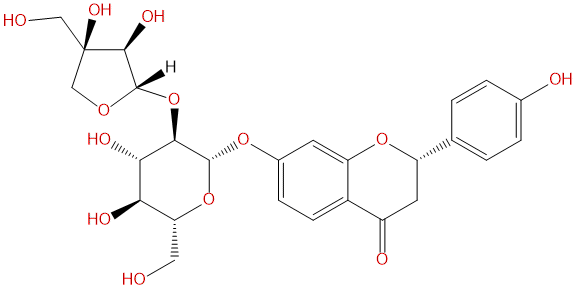
The chemical name of the new glycyrrhizin from celery sugar clearly reveals its structural characteristics: it is a glycoside compound formed by the 7-hydroxyl group of glycyrrhizin and a disaccharide chain connected by a 1 → 2 glycosidic bond between apiose and glucose. Its molecular formula is C26H30O13 and its molecular weight is 550.5130. This unique glycosylation modification, especially the presence of rare sugar celery sugar, significantly affects its physicochemical properties and biological activity.
From the analysis of parameters related to drug properties, this compound exhibits typical polar molecular characteristics: the calculated lipid water partition coefficient (LogP) is -0.3364, indicating its strong hydrophilicity; The topologically polar surface area (TPSA) is as high as 204.83 Å ², mainly attributed to multiple hydroxyl groups and oxygen atoms on the sugar ring in the molecule. The high TPSA and negative LogP values together explain its good water solubility (calculated value of approximately 1.8326 mg/mL). These properties indicate that its distribution in the body may be more inclined towards aqueous chambers, and the blood-brain barrier permeability is predicted to be "low", which may actually reduce the risk of central nervous system side effects for anti ulcer drugs that mainly act on the peripheral gastrointestinal system. The preliminary toxicity prediction shows that the hERG channel inhibition risk is "no", and the predicted value of Ames mutagenicity test is 0.0, indicating that it has good cardiac safety and genetic toxicity safety window, laying a good foundation for subsequent development.
Plant sources and extraction methods
The new glycyrrhizin in celery sugar mainly comes from various plants of the genus Glycyrrhiza in the legume family, among which glycyrrhiza uralensis fisch and Glycyrrhiza glabra As the main source. In plants, it often coexists with other flavonoid glycosides (such as glycyrrhizin and isoliquiritigenin) and triterpenoid saponins (such as glycyrrhizic acid).
Its extraction and separation usually follow the classic process of natural product chemistry. Firstly, alcohol water solution (such as 70% ethanol) is used for reflux extraction or ultrasound assisted extraction of licorice roots and rhizomes to fully extract polar glycosides. Subsequently, the crude extract was enriched and purified using macroporous adsorption resins such as D101 and AB-8. Through gradient elution with different concentrations of ethanol aqueous solutions, the new glycyrrhizin of celery sugar was usually enriched in the middle to high polarity sites (such as the 30% -50% ethanol elution portion). Further purification relies on modern chromatographic techniques, including silica gel column chromatography, reverse phase silica gel column chromatography, and high-performance liquid chromatography. Preparation type HPLC, especially using C18 reverse phase chromatography column and gradient elution with methanol water or acetonitrile water system as mobile phase, is currently the most effective method for obtaining high-purity new glycyrrhizin monomers from celery sugar. The optimization of extraction processes, such as combining enzymatic assisted extraction or pressurized solvent extraction, aims to improve the yield and purity of target compounds.
Pharmacological activity research
The core pharmacological activity of new glycyrrhizin from celery sugar focuses on Anti peptic ulcer Its function is reflected in the multi-level protection of the gastric mucosa.
1. Inhibit excessive secretion of gastric acid: In vitro and in vivo studies have shown that celery sugar glycyrrhizin can dose dependently inhibit gastric acid secretion induced by stimulants such as histamine and pentagastrin. Its strength of action may be comparable to classical antacids, but its pathways of action are more diverse.
2. Enhance mucosal defense barrier:
* Promote mucus secretion: This compound can significantly upregulate the expression and secretion of mucin 5AC in gastric mucosal epithelial cells, increase the thickness and viscosity of the gastric mucus layer, and this mucus bicarbonate barrier is the first physical and chemical line of defense that isolates gastric acid from gastric epithelial cells.
* Stimulating cell protective factors: Research has shown that celery sugar glycyrrhizin can promote the synthesis and release of prostaglandin E2 in gastric mucosa, which is an important endogenous cell protective factor that can maintain mucosal blood flow, promote epithelial cell renewal and repair.
* Antioxidant and anti-inflammatory: In ulcer models induced by ethanol, stress, and other factors, celery sugar glycyrrhizin exhibits significant antioxidant activity, which can reduce the level of malondialdehyde in gastric tissue, enhance the activity of antioxidant enzymes such as superoxide dismutase and glutathione peroxidase, while inhibiting the production of pro-inflammatory cytokines and reducing mucosal inflammatory damage.
3. Promote ulcer healing: In the chronic ulcer model, celery sugar glycyrrhizin not only prevents ulcer formation, but also accelerates the healing process of already formed ulcers. Its mechanism involves promoting granulation tissue formation, angiogenesis, and epithelial cell migration and proliferation.
Mechanism of action and molecular targets
The anti ulcer effect of celery sugar glycyrrhizin is not achieved through a single target, but through a synergistic network of multiple targets and pathways, which reflects the characteristics of natural products with multiple components and targets. The key molecular targets and signaling pathways are as follows:
1. Regulating targets related to gastric acid secretion:
* Histamine H2 receptor: May act as antagonists or modulators to interfere with the binding of histamine to HRH2 receptors, thereby inhibiting histamine mediated gastric acid secretion in parietal cells.
* Gastrin/cholecystokinin B receptor and somatostatin: It may indirectly regulate the neuroendocrine axis of gastric acid secretion by modulating the GAST/CCKBR pathway and affecting the release of SST.
* H+/K+- ATPase (proton pump): Research has shown that the new glycyrrhizin from celery sugar or its metabolites may partially inhibit the activity of proton pumps in a non covalent competitive manner, but its inhibitory intensity and mode of action may be different from irreversible inhibitors such as omeprazole.
2. Regulating mucosal defense and repair related targets:
* Cyclooxygenase pathway: This is one of the core mechanisms by which it exerts mucosal protective effects. Celery sugar neoglycyrrhizin can selectively or non selectively regulate the activity or expression of PTGS1 (COX-1) and PTGS2 (COX-2). Under physiological conditions, it may tend to maintain or mildly enhance COX-1-mediated synthesis of protective prostaglandins (such as PGE2); In an inflammatory state, it may inhibit excessive COX-2 expression, thereby playing a dual role of anti-inflammatory and promoting repair.
* Mucin MUC5AC: Upregulation of MUC5AC gene transcription and expression directly or through activation of specific transcription factors (such as SPDEF) is the direct molecular basis for strengthening the mucosal barrier.
* Transforming Growth Factor - α: TGF α is a key factor in the growth and repair of epithelial cells. Celery sugar glycyrrhizin may upregulate the expression of TGF α, activate the epidermal growth factor receptor signaling pathway, and promote the proliferation, migration, and repair of gastric mucosal epithelial cells, accelerating ulcer healing.
3. Intracellular signaling pathways: Its antioxidant and anti-inflammatory effects are closely related to activating the Nrf2/ARE antioxidant pathway and inhibiting the NF - κ B inflammatory pathway. By clearing free radicals, enhancing cellular antioxidant capacity, and inhibiting the release of inflammatory mediators such as TNF - α and IL-6, mucosal oxidative stress and inflammatory damage can be fundamentally alleviated.
Evaluation of drug properties and pharmacokinetics
Although the new glycyrrhizin from celery sugar has shown excellent activity in vitro and animal models, its pharmacological properties still need to be comprehensively evaluated.
Pharmacokinetic characteristics: As a flavonoid glycoside compound, its oral absorption faces challenges. Glycoside bonds may undergo hydrolysis under the action of glycosidases secreted by gut microbiota, releasing the aglycone glycyrrhizin and glycosyl portion. Glycosides (glycyrrhizin) have higher lipid solubility and are more easily absorbed, so the bioavailability of new glycyrrhizin from celery sugar may partially depend on the activity of its intestinal metabolites. Animal pharmacokinetic studies are expected to show a short peak time and low blood drug concentration, but may have high distribution or retention in the gastric mucosa. Its metabolic pathways mainly involve hydrolysis, glucuronidation, and sulfation combined reactions, which are excreted through urine and bile.
Advantages and Challenges:
* Advantage: The multi-target mechanism of action may bring more comprehensive therapeutic effects and lower risk of drug resistance; Originating from natural edible plants, with good historical safety data; The predicted risk of cardiac toxicity and genetic toxicity is low.
* Challenge: Higher polarity and molecular weight may lead to suboptimal oral bioavailability; Easy to be hydrolyzed by enzymes in the gastrointestinal tract, the stability of the prototype drug needs to be investigated; As a single ingredient, its efficacy may not be as strong as synthetic single target drugs, and its optimal therapeutic positioning needs to be clarified (such as adjuvant therapy, prevention of recurrence, or mild to moderate patients).
Formulation strategy: To improve its efficacy, the development of gastric retention drug delivery systems (such as floating tablets, bio adhesive tablets) can be considered to prolong the residence time of drugs in the stomach and increase local drug concentration; Or it can be prepared into new carriers such as phospholipid complexes and nanoparticles to improve its membrane permeability and stability.
Clinical application prospects and prospects
The clinical application prospects of new glycyrrhizin from celery sugar are broad, but it needs to be transformed along a clear path.
1. Drug development direction:
* New type of anti ulcer plant medicine: As a single active ingredient, it can be developed into modern Chinese medicine or herbal medicine for the treatment and prevention of peptic ulcers, especially ulcers related to weakened mucosal defense.
* Core components of compound preparations: By utilizing its multi-target and mucosal protective properties, and combining it with components with clear acid inhibiting effects (such as other licorice flavonoids or trace alkaloids) to form a compound, a synergistic effect of acid inhibition, membrane protection, and repair can be achieved, which may be suitable for treating refractory ulcers or preventing recurrence.
* Functional food/health products: Given its good safety, functional foods can be developed for gastrointestinal health care, targeting sub-health conditions such as stomach discomfort and excessive stomach acid.
2. Future research focus:
* In depth mechanism research: Using proteomics, metabolomics, and gene editing techniques, accurately map its target network and elucidate the specific molecular details of key mechanisms such as selective regulation of the COX pathway.
* System drug optimization: Conduct comprehensive preclinical pharmacokinetic and toxicological studies. The key is to solve the oral absorption problem and improve its bioavailability through structural modification (such as preparing prodrugs) or advanced drug delivery systems.
* Exploring new indications: Based on its anti-inflammatory, antioxidant, and repair promoting properties, its potential application value in early intervention of inflammatory bowel disease, gastritis intestinal metaplasia gastric cancer sequence, and protection against radiation-induced intestinal mucosal injury can be explored.
* Clinical validation: Ultimately, rigorous clinical trials need to be designed to validate its effectiveness, safety, and optimal medication regimen in humans.
Conclusion
As a characteristic flavonoid glycoside with clear anti ulcer activity in licorice, the value of celery sugar new glycyrrhizin lies not only in its inheritance of the wisdom of traditional Chinese medicine, but also in its interpretation of the unique advantages of natural products in treating complex diseases through modern scientific language - multi-target, multi-channel action network. From inhibiting attack factors to strengthening defense factors, from acute protection to promoting chronic repair, it demonstrates a comprehensive regulatory ability on gastric mucosal homeostasis. Although breakthroughs are urgently needed in the development of mature drugs, especially in oral absorption, with the continuous deepening of its essential mechanism of action and the rapid development of drug delivery technology, the new glycyrrhizin from celery sugar is expected to evolve from an excellent pharmacological lead compound into a new type of drug for the treatment of peptic ulcers and related gastric diseases, providing patients with a more comprehensive and potentially safer option. Its research paradigm also provides important references for the modern development of other natural active ingredients.