Introduction/Overview
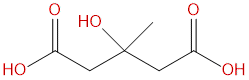
3-Hydroxy-3-methylglutaric acid (3-HMG acid) is a naturally occurring dicarboxylic acid with a unique structure, chemical formula C6H10O5, and molecular weight of 162.1410. This compound has received widespread attention due to its important role in human metabolic abnormalities and plant metabolism. 3-HMG acid was first identified as abnormally accumulating in the urine of patients with 3-hydroxy-3-methylglutaryl-CoA lyase (HMG CoA lyase, EC 4.1.3.4) deficiency, indicating its critical role in fatty acid and ketone metabolism. In addition, the compound exists as a plant metabolite in plants such as Astrolus complexus, demonstrating potential biological activity and pharmacological value. In recent years, 3-HMG acid has become a hot topic in natural product pharmacology research due to its anti metabolic drug activity and molecular target relationships with various metabolic diseases.
This article will provide a systematic review of the chemical structure and physicochemical properties, plant sources and extraction methods, pharmacological activity and mechanism of action, pharmacological evaluation and pharmacokinetic characteristics of 3-HMG acid, with a focus on exploring its potential application prospects in metabolic acidosis and other diseases, providing theoretical basis for subsequent basic and clinical research.
Chemical structure and physicochemical properties
The chemical name of 3-HMG acid is 3-hydroxy-3-methylglutaric acid, with the molecular formula C6H10O5 and CAS number 503-49-1. Its structural feature is that the third carbon atom of the glutaric acid skeleton is simultaneously connected to a hydroxyl (- OH) and a methyl (- CH3) substituent, forming a chiral center. This structure distinguishes it from ordinary glutaric acid compounds, endowing it with unique chemical properties and biological activity.
In terms of physical and chemical properties, the molecular weight of 3-HMG acid is 162.1410, with a LogP value of -0.3657, indicating its strong hydrophilicity and good water solubility (91.5157 mg/mL, water solubility numerical characterization). Its topological polar surface area (TPSA) is 94.83 Å ², reflecting the distribution of polar functional groups in the molecule, which is conducive to the binding of the molecule to protein targets. The low permeability of the blood-brain barrier suggests its limited ability to penetrate the central nervous system. The hERG channel inhibition test and Ames mutagenesis test both showed high safety and did not show significant risks of cardiac toxicity and genetic toxicity.
3-HMG acid has good chemical stability, is easily soluble in water and polar solvents, and is suitable for in vitro pharmacological activity determination and biological sample analysis. The presence of hydroxyl and carboxyl groups provides possibilities for chemical modification and derivative design, and is expected to improve its pharmacokinetic properties through structural optimization.
Plant sources and extraction methods
3-HMG acid, as a natural product, is mainly found in certain leguminous plants, especially in the abundance of Astrolus complexus. Pig manure beans are used in traditional Chinese medicine to regulate metabolism and detoxify, and the study of their active ingredients reveals the important role of 3-HMG acid in plant secondary metabolism.
The common methods for extracting 3-HMG acid include a combination of water extraction and organic solvent extraction. Generally, the following steps are adopted:
- Raw material pretreatment Collect dry pig manure bean plant materials and grind them to the appropriate particle size to increase extraction efficiency.
- Water extraction Soak the powder in distilled water and use hot reflux or ultrasound assisted extraction. The extraction time is usually 1-3 hours.
- Organic solvent extraction Using polar solvents such as methanol and ethanol for secondary extraction to improve the recovery rate of 3-HMG acid.
- Concentration and Purification The extraction solution is concentrated by rotary evaporation and separated and purified using ion exchange resin, silica gel column chromatography, or high-performance liquid chromatography (HPLC).
- Structural Identification Confirm the structure of 3-HMG acid using mass spectrometry (MS), nuclear magnetic resonance (NMR), and infrared spectroscopy (IR).
In recent years, the application of supercritical fluid extraction (SFE) and membrane separation technology has gradually improved extraction efficiency and purity, providing technical support for industrial production.
Pharmacological activity research
The pharmacological activity research of 3-HMG acid mainly focuses on its role as a metabolic regulator and anti metabolic drug. Its accumulation in HMG CoA lyase deficiency suggests its involvement in key fatty acid and ketone body metabolic pathways. Related studies have shown that 3-HMG acid can affect the activity of various metabolic enzymes and regulate the energy metabolism balance within cells.
Anti metabolic drug effects
3-HMG acid, as an anti metabolic drug, can inhibit the activity of certain key metabolic enzymes, interfere with cellular metabolic pathways, and particularly exhibit potential inhibitory effects in tumor cells and metabolically abnormal cells. Its mechanism of action involves the regulation of NAD (P) H-dependent dehydrogenases (EC 1.1.1 class), affecting the functions of key enzymes such as lactate dehydrogenase (LDHA) and glutamate dehydrogenase (GLUD1), thereby regulating intracellular energy metabolism and acid-base balance.
Metabolic acidosis related effects
Metabolic acidosis is a common pathological manifestation of various metabolic disorders, and 3-HMG acid may participate in regulating acid-base balance in the body through interactions with multiple metabolic related targets. Its targets include:
- LDHA (lactate dehydrogenase A)Regulating the conversion of lactate and pyruvate, affecting the accumulation of acidic metabolites in cells.
- CA2 (carbonic anhydrase II)Participate in the balance of carbon dioxide and bicarbonate, and regulate blood pH.
- SLC13A3, SLC26A6 (transporters)Mediate the transmembrane transport of organic acids and inorganic ions, affecting the elimination of cellular metabolic waste.
- ATP6V1A (proton pump subunit)Adjust the pH gradient inside and outside the cell to maintain acid-base homeostasis.
- GLUD1 (Glutamate Dehydrogenase 1)、CPS1 (Carbonyl Phosphate Synthase 1)、HMGCL (3-hydroxy-3-methylglutaryl-CoA lyase)、HMGCS2 (3-hydroxy-3-methylglutaryl-CoA synthase 2)、SLC25A13 (mitochondrial transporter protein)Various enzymes and transporters play critical roles in energy metabolism and amino acid metabolism, and 3-HMG acid may alleviate the pathological state of metabolic acidosis by regulating these targets.
Other potential pharmacological activities
Partial in vitro and in vivo studies suggest that 3-HMG acid may have anti-inflammatory, antioxidant, and apoptosis regulating effects, but the relevant mechanisms are still unclear and require further in-depth research.
Mechanism of action and molecular targets
The mechanism of action of 3-HMG acid is mainly based on its interaction with metabolic enzymes and transporters, regulating intracellular energy metabolism and acid-base balance. Its molecular targets cover multiple key metabolic nodes, and the specific mechanism is as follows:
-
HMG CoA lyase (HMGCL) inhibition and accumulation of metabolic intermediates
HMGCL acts as a 3-HMG CoA lyase, catalyzing the cleavage reaction of 3-hydroxy-3-methylglutaryl-CoA. The lack of this enzyme leads to the accumulation of 3-HMG acid and its coenzyme A derivatives in the body, inducing metabolic disorders. The accumulation of 3-HMG acid reflects the impairment of enzyme activity and may also feedback regulate HMGCL activity.
-
Regulating lactate dehydrogenase (LDHA) activity
3-HMG acid regulates the conversion of lactate and pyruvate by affecting the NADH/NAD+dependent activity of LDHA, affecting intracellular lactate levels and alleviating acidosis caused by lactate accumulation.
-
Carbonic Anhydrase (CA2) Mediated pH Regulation
3-HMG acid may regulate CA2 activity, promote the balance of carbon dioxide and bicarbonate, and maintain the acid-base homeostasis of cells and blood.
-
Function of Organic Acid Transporters (SLC13A3, SLC26A6)
3-HMG acid, as an organic acid substrate, may regulate its transmembrane transport through these transporters, affecting intracellular and extracellular organic acid concentrations and metabolic waste excretion.
-
Mitochondrial metabolic regulation
3-HMG acid regulates fatty acid beta oxidation, amino acid metabolism, and ketone body production by affecting the activity of mitochondrial transporter SLC25A13 and related enzymes such as HMGCS2 and GLUD1, maintaining energy metabolism balance.
The combined effect of these mechanisms enables 3-HMG acid to play an important role in the pathological regulation of metabolic diseases and provides a theoretical basis for its use as a drug target.
Evaluation of drug properties and pharmacokinetics
The pharmacological evaluation of 3-HMG acid shows that it has certain potential for drug development:
- Molecular weight (162.1410)Moderate, in line with Lipinski's rules, beneficial for drug absorption and distribution.
- LogP value (-0.3657)This indicates that it has strong hydrophilicity, which may limit its membrane permeability, but is beneficial for dissolution and circulation in the blood.
- TPSA(94.83 Ų)Moderate, indicating that it has a certain polarity and a certain number of hydrogen bond donors/acceptors, which is beneficial for target binding.
- High water solubility (91.5157 mg/mL)Easy for formulation development and in vivo absorption.
- Low permeability of blood-brain barrier It is suggested that it mainly acts on peripheral metabolic tissues to reduce the risk of central nervous system side effects.
- HERG channel inhibition negative Reduce the risk of cardiac toxicity.
- Ames test negative This indicates a low risk of genetic toxicity.
In terms of pharmacokinetics, 3-HMG acid may have limited oral bioavailability due to its high polarity and low fat solubility, and is easily cleared by the kidneys. It is mainly excreted by the kidneys through organic acid transporters in the body, with a short half-life. There is still a lack of systematic pharmacokinetic studies in vivo, and in the future, animal models and clinical trials are needed to further clarify its absorption, distribution, metabolism, and excretion characteristics (ADME).
Structural modification and formulation optimization (such as prodrug design and nanocarrier encapsulation) may improve its pharmacokinetic performance and enhance its clinical application potential.
Clinical application prospects and prospects
3-HMG acid, as a natural anti metabolic drug, has broad clinical application potential, especially in the treatment of metabolic acidosis and related metabolic diseases, showing unique advantages.
Treatment of metabolic acidosis
Metabolic acidosis is a common complication of many diseases (such as diabetes ketoacidosis, renal failure, genetic metabolic disease). 3-HMG acid may correct acid-base imbalance, alleviate metabolic disorders, and become a novel therapeutic candidate molecule by regulating key metabolic enzymes and transporters.
Diagnosis and Treatment of Genetic Metabolic Diseases
The accumulation of 3-HMG acid in the urine of patients with HMG CoA lyase deficiency suggests its diagnostic value as a biomarker. In the future, combining genetic testing and metabolomics, 3-HMG acid is expected to be used for early screening and efficacy monitoring. Meanwhile, intervention strategies targeting its metabolic pathways may provide new therapeutic ideas for genetic metabolic diseases.
Antitumor and other metabolic related diseases
The anti metabolic effect of 3-HMG acid provides a potential target for tumor metabolism regulation, especially in the context of abnormal energy metabolism in tumor cells. Its characteristic of regulating NAD (P) H-dependent enzyme activity has the potential to be developed as an anti-tumor adjuvant drug. In addition, its potential anti-inflammatory and antioxidant effects provide possibilities for the comprehensive treatment of chronic metabolic diseases.
Future research directions
- Structural optimization and derivative development Improve bioavailability and targeting through chemical modification.
- Pharmacokinetic and Toxicological System Research Clarify internal behavior and safety.
- In depth analysis of the mechanism Revealing its functional network based on multi omics techniques.
- Clinical trial design Evaluate its efficacy and safety in metabolic diseases.
Conclusion
3-hydroxy-3-methylglutamate, as an important natural metabolite, has shown broad application prospects in the pathological mechanism and treatment of metabolic diseases due to its unique chemical structure and multi-target regulatory ability. Although preliminary progress has been made in current research, its pharmacological mechanisms, pharmacokinetics, and clinical applications still require systematic and in-depth exploration. In the future, through interdisciplinary collaboration and advanced technologies in modern medicinal chemistry, molecular biology, and clinical medicine, 3-HMG acid and its derivatives are expected to become important innovative drugs in the field of metabolic disease treatment.