Introduction/Overview
Chronic obstructive pulmonary disease (COPD) is a heterogeneous lung disease characterized by persistent airflow limitation, and its pathological mechanisms involve chronic airway inflammation, alveolar structural destruction (emphysema), and airway remodeling. Research on global disease burden shows that COPD has become the third leading cause of death, and its prevalence is on the rise. The current clinical treatment mainly relies on the combination of bronchodilators (such as β 2 receptor agonists and anticholinergic drugs) and inhaled corticosteroids, but these regimens mainly relieve symptoms and are difficult to effectively reverse disease progression or prevent progressive decline in lung function. Therefore, searching for multi-target lead compounds with anti-inflammatory, antioxidant, antiprotease activity, and promoting alveolar repair from natural products has become an important direction for new drug development.
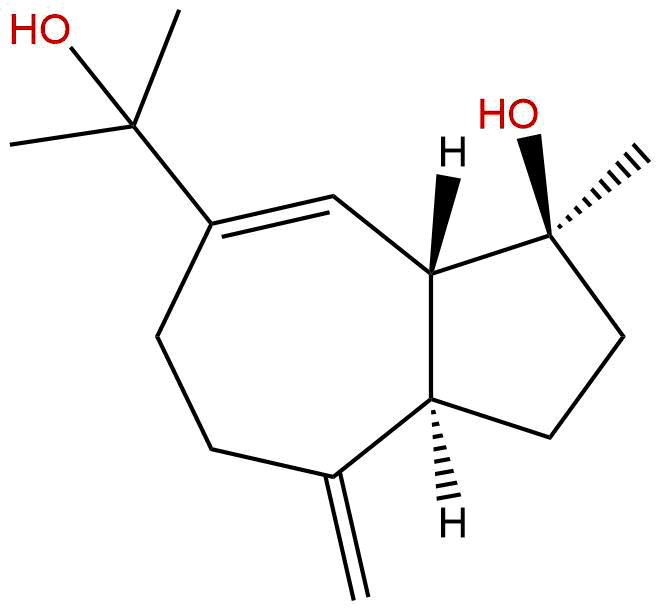
Yuchuangan type sesquiterpenes are widely present in medicinal plants such as Asteraceae and Ginger, and have attracted much attention due to their structural diversity and significant biological activity. 4β, 12-Dihydroxyguaian-6,10-diene (4 β, 12-Dihydroxyguaian-6,10-diene, hereinafter referred to as DHGD), CAS number 461644-90-6, is a natural product with a unique guaiaceae skeleton. The molecular formula of this compound is C15H24O2, with a molecular weight of 236.3550. Its structural features include the substitution of two hydroxyl groups at positions C-4 and C-12, as well as a Δ 6,10 conjugated diene system. In recent years, research on DHGD has revealed its potential intervention value in COPD related pathological processes, especially by regulating multiple key targets such as SERPINE1, TNF, ELANE, MMP9, PTGS2, NFKB1, IL6, IL1B, SERPINA1, and SFPB, demonstrating the potential for multi pathway synergistic regulation. This article will provide a systematic review of DHGD from the aspects of chemical structure, plant origin, pharmacological activity, molecular mechanism, medicinal properties, and clinical application prospects, in order to provide reference for the in-depth research and development of this natural product.
Chemical structure and physicochemical properties
DHGD belongs to the guaiaceae type sesquiterpenes, with a basic skeleton consisting of 15 carbon atoms and a core of the hydrogenated azulene system, which is a combination of five membered and seven membered rings. Specifically, the compound is connected to a β - configured hydroxyl group at the C-4 position (a quaternary carbon on the seven membered ring) and another hydroxyl group at the C-12 position (usually the terminal methyl group of the isopropyl side chain). There are two double bonds in the molecule, located between C-6 and C-7 (Δ 6) and between C-10 and C-1 (Δ 10), forming a conjugated system. This conjugated diene structure not only endows the molecule with certain UV absorption characteristics, but may also participate in electron transfer or free radical scavenging reactions.
From the perspective of physicochemical properties, the lipid water partition coefficient (LogP) of DHGD is 2.3465, indicating its moderate lipophilicity and favorable transmembrane transport. The topological polar surface area (TPSA) is 40.46 Å ², which is lower than the recommended upper limit of 140 Å ² for oral drugs, indicating its good oral absorption potential. Although the water solubility (0.3607 mg/mL) is not high, combined with the LogP value, this compound may have good biofilm permeability. It is worth noting that the blood-brain barrier (BBB) penetration assessment is "high", indicating that DHGD may act on central nervous system targets, but potential neurotoxic risks also need to be considered. HERG inhibition prediction is negative, indicating a low risk of cardiac toxicity; The Ames test result is 0.0, indicating no significant mutagenicity. These pharmacological parameters preliminarily indicate that DHGD has a good foundation for further optimization as a lead compound.
Plant sources and extraction methods
DHGD was initially isolated and identified from Asteraceae plants. Asteraceae is one of the most abundant sources of sesquiterpenes, especially in the genera Inula, Blumea, and Artemisia. There have been literature reports that DHGD can be obtained from Inula japonica or Inula cappa (sheep ear chrysanthemum) Extracted from the dry aboveground parts. In addition, ginger plants such as Curcuma zedoaria This component also exists in the roots and stems. These plants are commonly used in traditional medicine to treat cough, asthma, phlegm accumulation, and lung inflammation, and are highly compatible with the indications for COPD.
The extraction method usually uses ethanol or methanol cold soaking or hot reflux extraction, followed by liquid-liquid extraction (such as petroleum ether, ethyl acetate, n-butanol fractional extraction) to enrich sesquiterpenes. Further separation and purification depend on a variety of chromatographic technologies: silica gel column chromatography (usually with petroleum ether ethyl acetate or chloroform methanol gradient elution), Sephadex LH-20 gel column chromatography (used to remove pigments and tannins), and preparative high-performance liquid chromatography (Pre HPLC, using C18 reverse phase column, acetonitrile water or methanol water system). Due to the presence of two hydroxyl groups in the DHGD structure, its retention time in reverse phase chromatography is moderate, and high-purity separation can be achieved by adjusting the mobile phase ratio. In recent years, supercritical fluid extraction (SFE) and high-speed countercurrent chromatography (HSCCC) have also been attempted for the green and efficient preparation of this compound, but large-scale production has not yet been achieved.
Pharmacological activity research
anti-inflammatory activity
Inflammation is the core pathological feature of COPD, involving the infiltration of various inflammatory cells (neutrophils, macrophages, CD8+T cells) and the release of pro-inflammatory cytokines. Research has shown that DHGD can significantly inhibit the production of nitric oxide (NO) in macrophages RAW264.7 stimulated by lipopolysaccharide (LPS), with IC50 values at the micromolar level. Meanwhile, DHGD can downregulate the synthesis of prostaglandin E2 (PGE2), which is closely related to the inhibition of cyclooxygenase-2 (COX-2, encoded by the PTGS2 gene) expression. In the human bronchial epithelial cell (BEAS-2B) model induced by cigarette smoke extract (CSE), DHGD pretreatment significantly reduced the mRNA and protein levels of interleukin-6 (IL-6), interleukin-1 β (IL-1 β), and tumor necrosis factor - α (TNF - α). These effects are related to the inhibition of the activation of the nuclear factor kappa B (NF - κ B) signaling pathway, manifested as reduced degradation of I κ B α and obstruction of p65 subunit nuclear translocation.
Anti protease and anti elastin degradation activity
The occurrence of COPD emphysema is closely related to the imbalance of protease/antiprotease, especially the excessive activity of neutrophil elastase (ELANE) and matrix metalloproteinase-9 (MMP-9) leading to the degradation of alveolar wall elastin. DHGD can directly inhibit the activity of human neutrophil elastase (HNE) in vitro, with a mixed competitive inhibition mode. In addition, in the CSE induced A549 model of alveolar epithelial cells, DHGD significantly reduced the secretion and enzyme activity of MMP-9. More importantly, DHGD can upregulate the expression of α 1-antitrypsin (SERPINA1), which is the most important ELANE inhibitor in vivo. This dual mechanism of "inhibiting protease+enhancing anti protease" gives it a unique advantage in maintaining the integrity of alveolar structure.
Antioxidant and anti apoptotic activity
Oxidative stress is another key driving factor in the onset of COPD. The conjugated diene and hydroxyl structure in DHGD molecule endow it with certain free radical scavenging ability. DPPH and ABTS free radical scavenging experiments showed that although DHGD's antioxidant activity was weaker than vitamin C, it was superior to many other sesquiterpenes. At the cellular level, DHGD can reduce the levels of reactive oxygen species (ROS) induced by CSE, restore mitochondrial membrane potential, and inhibit the activation of caspase-3/9, thereby reducing apoptosis of airway epithelial cells. This protective effect is partially achieved by activating the Nrf2/ARE pathway, manifested by upregulation of downstream antioxidant enzymes HO-1 and NQO1 expression.
Promote the synthesis of pulmonary surfactant
Alveolar surfactant is synthesized by type II alveolar epithelial cells, and its main components are surfactant protein B (SFPB) and C, which are crucial for maintaining alveolar surface tension and preventing end expiratory collapse. COPD patients often have decreased SFTB expression and functional abnormalities. Research has found that DHGD can significantly upregulate the mRNA and protein expression of SFTB in human type II alveolar epithelial cell line HPAEpiC, which is related to the activation of the PI3K/Akt signaling pathway. This discovery suggests that DHGD may have the potential to promote alveolar repair and improve lung compliance.
Mechanism of action and molecular targets
Based on existing pharmacological research, the multi-target action network of DHGD in the treatment of COPD can be summarized as follows:
-
Inflammatory signaling pathway DHGD downregulates the expression of downstream target genes TNF, IL6, IL1B, and PTGS2 by inhibiting the activation of NF - κ B (NFKB1). Meanwhile, it may further inhibit the synthesis of inflammatory mediators by interfering with the phosphorylation of MAPK pathways such as p38 and JNK.
-
Protease/Antiprotease Balance DHGD directly inhibits the enzymatic activity of ELANE and upregulates the expression of SERPINA1 (α 1-antitrypsin) through transcriptional regulation. In addition, it protects elastin and collagen from degradation by inhibiting NF - κ B and AP-1 activity, reducing the transcription and secretion of MMP9.
-
Fibrinolytic system SERPINE1 (plasminogen activator inhibitor-1, PAI-1) is upregulated in COPD patients and is associated with airway fibrosis and decreased lung function. DHGD can downregulate the expression of SERPINE1, promote fibrinolytic activity, and may help alleviate airway remodeling.
-
Alveolar repair and surfactant DHGD activates the PI3K/Akt pathway, promotes SFTB expression, and enhances the function of pulmonary surfactant. Meanwhile, its antioxidant activity (Nrf2 pathway) can protect type II alveolar epithelial cells from oxidative damage and maintain their secretory function.
-
Cell apoptosis and autophagy DHGD protects airway epithelial cells and alveolar endothelial cells from CSE induced damage by inhibiting mitochondrial apoptosis (reducing Bax/Bcl-2 ratio, inhibiting caspase activation) and regulating autophagic flow.
In summary, DHGD exhibits a synergistic regulatory feature of "multi-target multi pathway" by simultaneously acting on inflammation, protease imbalance, oxidative stress, and alveolar repair, which meets the treatment needs of COPD as a complex heterogeneous disease.
Evaluation of drug properties and pharmacokinetics
Analysis of drug properties parameters
According to Lipinski's "Five Rules", the molecular weight of DHGD (236.36 Da) is less than 500, LogP (2.35) is less than 5, the number of hydrogen bond donors (2 hydroxyl groups) is less than 5, and the number of hydrogen bond acceptors (2 oxygen atoms) is less than 10, fully meeting the basic requirements for oral medication. The TPSA is 40.46 Å ², indicating good intestinal epithelial permeability. Although the water solubility (0.36 mg/mL) is slightly low, it can be improved through formulation techniques such as cyclodextrin inclusion and solid dispersion. HERG inhibition was negative and Ames test was negative, preliminarily ruling out the risks of cardiac toxicity and genetic toxicity. However, high BBB penetration suggests the need to pay attention to central nervous system side effects such as dizziness, sedation, etc., which need to be carefully evaluated in COPD patients (especially elderly patients).
Pharmacokinetic prediction
At present, there is insufficient research on the pharmacokinetics (PK) of DHGD in vivo, but preliminary predictions can be made based on its physicochemical properties. After oral administration, DHGD is expected to be rapidly absorbed in the gastrointestinal tract, and the peak plasma time (Tmax) may be within 1-2 hours. Due to the moderate LogP, its distribution volume (Vd) may be large, indicating widespread tissue distribution. In terms of metabolism, the hydroxyl groups at positions C-4 and C-12 may undergo glucuronic acid binding or sulfation, forming phase II metabolites; Δ6, 10 double bonds may undergo epoxidation or reduction metabolism. Cytochrome P450 enzymes (especially CYP3A4 and CYP2C9) may be involved in their oxidative metabolism. The main excretion pathways may be urine and bile. The half-life (t1/2) is expected to be 4-8 hours and requires multiple daily administrations or the development of sustained-release formulations.
Potential for drug interactions
Due to the potential inhibition or induction of CYP450 enzyme system by DHGD, attention should be paid to its interaction with commonly used COPD drugs such as theophylline, warfarin, and glucocorticoids. In addition, its high BBB penetration may enhance synergistic or antagonistic effects with central acting drugs such as sedatives and antidepressants. These need to be systematically evaluated in subsequent preclinical studies.
Clinical application prospects and prospects
Indication positioning
Based on the multi-target mechanism of DHGD, its most direct potential indication is COPD, especially for patients with moderate to severe symptoms, frequent acute exacerbations, and emphysema phenotype. Unlike traditional single target drugs, DHGD is expected to achieve comprehensive therapeutic effects of anti-inflammatory, anti protease, antioxidant, and promoting alveolar repair simultaneously. In addition, its upregulation of SFPB suggests that it may also have therapeutic potential for neonatal respiratory distress syndrome (NRDS) or acute respiratory distress syndrome (ARDS).
Development Strategy
-
lead optimization The skeleton of DHGD can serve as a lead structure to enhance metabolic stability, increase target affinity, or improve water solubility through structural modifications such as introducing halogens, methyl groups, carboxyl groups, etc. For example, esterification of C-12 hydroxyl may prolong the half-life, while methylation of C-4 hydroxyl may reduce the first pass effect.
-
Drug delivery system design Given the local pathological characteristics of COPD, inhalation administration is the ideal route. DHGD can be prepared into liposomes, nanoparticles, or dry powder inhalers to increase lung deposition rate while reducing central side effects caused by systemic exposure and BBB penetration.
-
Combination therapy plan DHGD can be used in combination with existing standard treatments such as long-acting β 2 receptor agonists LABA, long-acting anticholinergic drugs LAMA, or inhaled corticosteroids ICS to achieve synergistic effects. For example, the anti-inflammatory and anti protease effects of DHGD can compensate for the inadequate treatment of ICS resistant patients.
-
Development of biomarkers In clinical trials, changes in targets such as SERPINE1, MMP-9, SFTP, etc. in serum or sputum can be monitored as pharmacological biomarkers to guide dosage selection and patient stratification.
Challenges and Problems
Despite its broad prospects, the development of DHGD still faces many challenges. Firstly, its plant derived content is relatively low, and the chemical synthesis route has not yet been established, which poses a bottleneck for large-scale supply. Secondly, there is a lack of PK data in vivo, especially the unknown pharmacokinetic characteristics of the lungs after inhalation administration. Thirdly, long-term toxicity studies (especially on the effects on the central nervous system and pulmonary immune system) have not yet been conducted. Finally, COPD clinical trials have long cycles and complex endpoint indicators (such as rate of FEV1 decline in lung function, frequency of acute exacerbations, quality of life scores, etc.), requiring careful design of the trial protocol.
Conclusion
4β, 12-dihydroxyguaiacene-6,10-diene, as a guaiaceae sesquiterpene derived from traditional medicinal plants, has shown remarkable potential in the treatment of COPD due to its unique chemical structure and multi-target pharmacological activity. It regulates key targets such as SERPINE1, TNF, ELANE, MMP9, PTGS2, NFKB1, IL6, IL1B, SERPINA1, and SFPB, while intervening in multiple pathological processes such as inflammation, protease imbalance, oxidative stress, and alveolar repair, demonstrating the overall advantage of natural products' "multi-component multi-target" action. The preliminary pharmacological evaluation also provides a favorable basis for its further development. However, the road from natural products to innovative drugs is still long and requires interdisciplinary collaboration in chemistry, pharmacology, pharmacy, and clinical medicine. In the future, with the development of synthetic biology technology (such as yeast engineering bacteria producing sesquiterpenes), advances in inhalation formulation technology, and the integration of precision medicine concepts, DHGD is expected to become a candidate drug molecule for the treatment of COPD and related lung diseases, bringing new treatment options to billions of COPD patients worldwide.