| Catalog No | Package | Original Price | Price | Inventory | Quantity | Operating |
|---|---|---|---|---|---|---|
| BP4348-20mg | 20mg | $30.00 | Sign in |
|


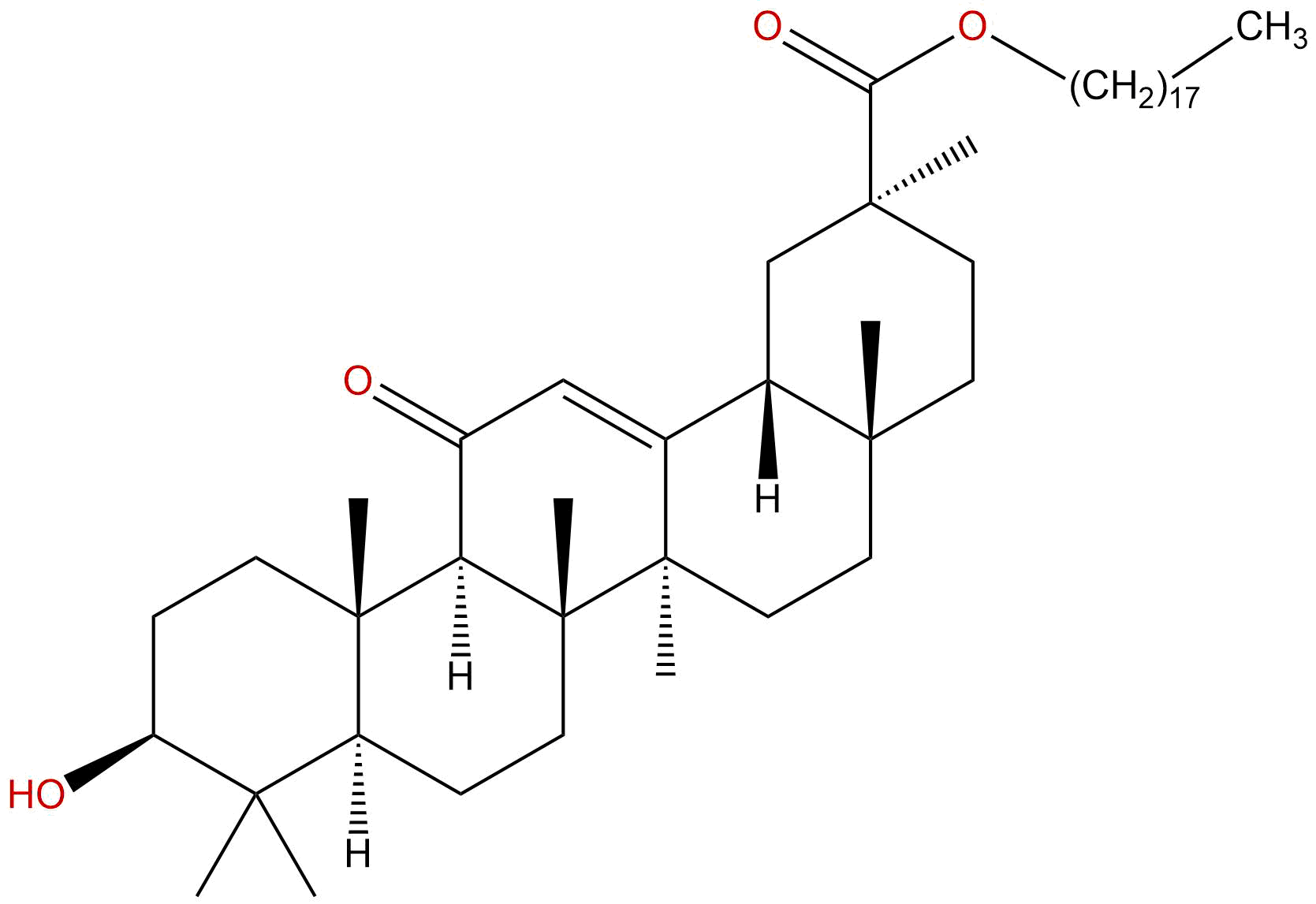
Product name: Stearyl glycyrrhetinate
Synonym name: Octadecyl glycyrrhetinate; Sea og Retinol
Catalogue No.: BP4348
Cas No.: 13832-70-7
Formula: C48H82O4
Mol Weight: 723.18
Botanical Source:
Type of Compound:
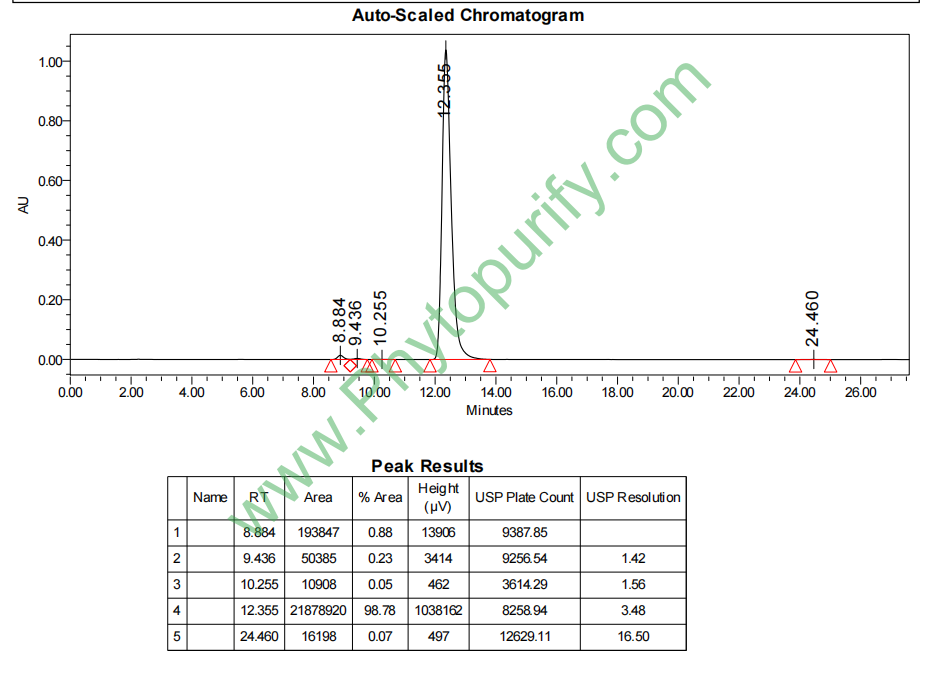
Purity: 95%~99%
Analysis Method: HPLC-DAD or/and HPLC-ELSD
Identification Method: Mass, NMR
Packing: Brown vial or HDPE plastic bottle
Storage: Store in a well closed container, protected from air and light. Put into refrigerate or freeze for long term storage.
Whenever possible, you should prepare and use solutions on the same day. However, if you need to make up stock solutions in advance, we recommend that you store the solution as aliquots in tightly sealed vials at -20℃. Generally, these will be useable for up to two weeks.
The product could be supplied from milligrams to grams
Inquire for bulk scale.
For Reference Standard and R&D, Not for Human Use Directly.
HPLC of Stearyl glycyrrhetinate
Storage conditions:Short-term storage at 2~8℃, long-term storage at -20 ~ -80℃
63.6000
12.5845
12.5857
.0000
5.4554
19.5835
High
95.9695
4.9557
No
No
No
No
No
No
0.0
No
No
No
No
Licorice (Glycyrrhiza spp.), as a traditional Chinese medicinal herb, holds an important position in both traditional Chinese medicine and modern drug development due to its extensive pharmacological activity and safety. Stealyl glycyrrhetinate (CAS number: 13832-70-7) is one of the main active ingredients in licorice extract and belongs to the fatty acid ester derivatives of glycyrrhetinic acid. In recent years, with the deepening development of natural product pharmacology, octadecyl glycyrrhetinic acid has become a research hotspot due to its unique chemical structure and diverse biological activities, especially its potential in antibacterial and gastrointestinal protection.
This review aims to systematically summarize the chemical structure and physicochemical properties, plant sources and extraction methods, pharmacological activity and mechanism of action of glycyrrhetinic acid octadecyl ester, and explore its application prospects in related diseases such as gastric ulcer based on its pharmacological evaluation and pharmacokinetic data. It is expected to provide theoretical basis and research direction for its subsequent clinical development and drug design.
Glycyrrhetinic acid octadecyl ester is a compound formed by esterification of glycyrrhetinic acid and octadecan fatty acid (stearic acid), with a molecular formula of C48H76O6 and a molecular weight of 723.18. Its structure contains a tricyclic tetrahydrofuran skeleton containing glycyrrhetinic acid, with multiple hydroxyl and carboxyl functional groups. The esterified fatty acid chains endow it with high hydrophobicity.
In terms of physical and chemical properties, the LogP value of glycyrrhetinic acid octadecyl ester is as high as 12.58, showing strong lipid solubility and water solubility close to zero (0.0000), which has an important impact on its absorption and distribution in vivo. Its extremely high lipid solubility makes it easy to penetrate cell membranes and the blood-brain barrier, and related predictions show that it has a high blood-brain barrier penetration ability. In addition, glycyrrhetinic acid octadecyl ester does not exhibit hERG channel inhibitory activity, and the Ames mutagenicity test result is negative, indicating its good safety and low risk of genetic toxicity.
Although its extremely high hydrophobicity poses challenges for its bioavailability, it also provides possibilities for its application in lipid carrier systems. The molecular surface area (TPSA) is 63.6 Å ², and moderate polarity facilitates effective binding with protein targets.
Glycyrrhetinic acid octadecyl ester mainly exists in licorice roots and rhizomes, and is a product of fatty acid esterification modification of glycyrrhetinic acid compounds. Licorice plants are widely distributed in parts of Asia, Europe, and the Americas, with a long cultivation history and significant medicinal value.
Traditional extraction methods often use alcohol solvents (such as ethanol and methanol) to extract dried licorice powder, followed by separation and purification steps such as liquid-liquid distribution and column chromatography to obtain glycyrrhetinic acid and its derivatives. For the extraction of octadecyl glycyrrhetinic acid, lipid soluble solvents such as n-hexane and ethyl acetate are often used to improve the extraction efficiency. Modern technologies such as ultrasound assisted extraction and supercritical CO2 extraction have also been applied to improve extraction efficiency and purity.
During the purification process, silica gel column chromatography and reverse phase high performance liquid chromatography (RP-HPLC) are commonly used methods to effectively separate octadecyl glycyrrhetinic acid from other glycyrrhetinic acid derivatives. Identification relies on techniques such as mass spectrometry (MS), nuclear magnetic resonance (NMR), and infrared spectroscopy (IR) to ensure accurate confirmation of the compound structure.
The pharmacological activities of glycyrrhetinic acid octadecyl ester mainly manifest as antibacterial and gastrointestinal protective effects. In vitro experiments have shown that its minimum inhibitory concentration (MIC) against Staphylococcus aureus strains is greater than 256 mg/L, indicating that its direct antibacterial activity is weak, but it may exert an enhanced antibacterial effect in composite formulations or synergistic effects.
More importantly, glycyrrhetinic acid octadecyl ester exhibits significant protective effects in gastrointestinal disease models such as gastric ulcers. Animal experiments have shown that this compound can alleviate gastric mucosal damage, promote ulcer healing, inhibit gastric acid secretion, and enhance gastric mucosal barrier function. In addition, its anti-inflammatory and antioxidant activities provide multiple mechanistic support for the treatment of gastric ulcers.
Glycyrrhetinic acid octadecyl ester exerts its pharmacological effects by regulating the expression of various inflammatory factors and oxidative stress-related enzymes. For example, it can downregulate the signaling pathways of pro-inflammatory cytokines IL-1 β and NF - κ B, inhibit the activity of prostaglandin synthesis enzymes PTGS1 and PTGS2, and activate antioxidant enzyme SOD1 to alleviate oxidative damage and promote gastric mucosal repair.
In addition, the regulation of vascular endothelial growth factor VEGFA by glycyrrhetinic acid octadecyl ester helps promote angiogenesis in ulcer sites, improve local microcirculation environment, and promote tissue regeneration. Its regulation of epidermal growth factor receptor (EGFR) and transcription factor PPAR γ further enhances cell proliferation and differentiation, promoting ulcer healing.
The mechanism of action of glycyrrhetinic acid octadecyl ester involves multiple signaling pathways and molecular targets, reflecting its pharmacological characteristics of multi-target and multi mechanism.
PTGS1 (COX-1) and PTGS2 (COX-2)
As a key prostaglandin synthase, PTGS1 maintains the physiological protective function of gastric mucosa, while PTGS2 is induced to express in inflammatory responses. Glycyrrhetinic acid octadecyl ester can moderately regulate the activity of these two enzymes, protecting the gastric mucosa, inhibiting excessive inflammation, and maintaining tissue homeostasis.
NFKB1 and IL1B
The NF - κ B signaling pathway is the core regulatory factor of inflammatory response, and IL-1 β is an important pro-inflammatory cytokine. Glycyrrhetinic acid octadecyl ester inhibits the activation of NF - κ B, reduces the expression of IL-1 β, alleviates inflammation, and alleviates gastric mucosal damage.
SMAD3
As a key transcription factor in the TGF - β signaling pathway, SMAD3 is involved in cell proliferation and fibrosis processes. Glycyrrhetinic acid octadecyl ester may promote the repair and regeneration of gastric mucosal cells by regulating SMAD3 activity.
PPARG
Peroxisome proliferator activated receptor gamma (PPAR gamma) plays an important role in regulating inflammation and metabolism. Glycyrrhetinic acid octadecyl ester activates PPAR γ, inhibits inflammatory response, and promotes cellular metabolism and repair processes.
EGFR
The epidermal growth factor receptor mediates cell proliferation and migration, while glycyrrhetinic acid octadecyl ester promotes the regeneration of gastric mucosal epithelial cells and ulcer healing by regulating EGFR signaling.
SOD1
Superoxide dismutase 1 (SOD1) is an important antioxidant enzyme, and glycyrrhetinic acid octadecyl ester enhances antioxidant defense and reduces oxidative stress damage to gastric mucosa by upregulating SOD1 expression.
VEGFA
Vascular endothelial growth factor promotes neovascularization, while glycyrrhetinic acid octadecyl ester improves blood supply to ulcer sites and promotes tissue repair by regulating VEGFA.
MUC5AC
Mucin protein MUC5AC is an important component of the gastric mucosal barrier, and glycyrrhetinic acid octadecyl ester may promote the expression of MUC5AC and enhance the protective function of the gastric mucosa.
In summary, glycyrrhetinic acid octadecyl ester exerts its protective and reparative effects on gastric mucosa by synergistically regulating inflammatory response, oxidative stress, cell proliferation, and angiogenesis through multiple targets.
The pharmacological evaluation of glycyrrhetinic acid octadecyl ester shows that it has certain advantages and challenges. Its extremely high lipid solubility (LogP 12.58) is beneficial for cell membrane penetration and blood-brain barrier penetration, but its extremely low water solubility limits its oral bioavailability and in vivo distribution uniformity.
The high penetration ability of the blood-brain barrier suggests its potential application value in central nervous system related diseases, but there is currently a lack of in-depth reporting on related research.
In terms of safety, glycyrrhetinic acid octadecyl ester does not inhibit hERG channels, reducing the risk of cardiac toxicity; The Ames test is negative, indicating a low risk of genetic toxicity. This provides a good safety foundation for its clinical development.
Pharmacokinetic studies are relatively limited, and preliminary data suggest that its metabolism is slow in vivo, possibly releasing active glycyrrhetinic acid through hepatic esterase hydrolysis to exert pharmacological effects. Its high lipid solubility makes it easy to accumulate in adipose tissue, which may affect distribution volume and half-life.
To overcome its poor water solubility, the development of new drug delivery systems such as nanocarriers, liposomes, and solid dispersions has become a future research focus, with the potential to enhance their bioavailability and therapeutic efficacy.
As a fatty acid ester derivative of glycyrrhetinic acid, octadecyl glycyrrhetinic acid combines various pharmacological activities of glycyrrhetinic acid with the advantages of lipid soluble derivatives, demonstrating broad clinical application potential.
Gastric ulcer and gastrointestinal diseases
Its protective effect on gastric mucosa and multi-target regulatory mechanism make it an ideal candidate drug for the treatment of gastrointestinal diseases such as gastric ulcers and chronic gastritis. In the future, modern pharmaceutical technology can be combined to develop oral sustained-release formulations or gastric mucosal targeted formulations to improve efficacy and patient compliance.
Antibacterial adjuvant therapy
Although its individual antibacterial activity is limited, it may exert a synergistic effect in compound formulations, assisting in the treatment of infections such as Staphylococcus aureus with antibiotics and reducing the risk of drug resistance.
Neuroprotection and Central Diseases
Its high blood-brain barrier permeability provides possibilities for the treatment of neurological diseases, such as neuroinflammation, post ischemic protection, and other fields, which are worth further exploration.
Anti inflammatory and antioxidant diseases
By regulating signaling pathways such as NF - κ B and PPAR γ, glycyrrhetinic acid octadecyl ester also has potential application value in inflammatory diseases, metabolic syndrome, and other fields.
Future research should focus on its pharmacokinetic characteristics, dosage form optimization, and clinical safety evaluation, combined with modern molecular biology techniques, to deeply analyze its mechanism of action and promote its transition from laboratory to clinical application.
Glycyrrhetinic acid octadecyl ester, as a natural product derived from traditional Chinese medicine licorice, has shown significant potential in the fields of antibacterial and gastrointestinal protection due to its unique chemical structure and multi-target pharmacological activity. Its multiple mechanisms of action cover inflammation regulation, antioxidant, cell repair, and angiogenesis, providing new ideas for the treatment of diseases such as gastric ulcers.
Despite the challenges posed by its high lipid solubility in terms of bioavailability, the development of modern pharmacy has provided technical support for its clinical translation. In the future, through systematic pharmacokinetic research, dosage form innovation, and clinical validation, glycyrrhetinic acid octadecyl ester is expected to become an important representative of natural product drug development, contributing to the prevention and treatment of related diseases.
In summary, the study of octadecyl glycyrrhetinic acid not only enriches the pharmacological connotation of natural products of licorice, but also provides valuable examples for the development of natural product drugs, which is worthy of continuous attention and in-depth exploration by scientific researchers.
