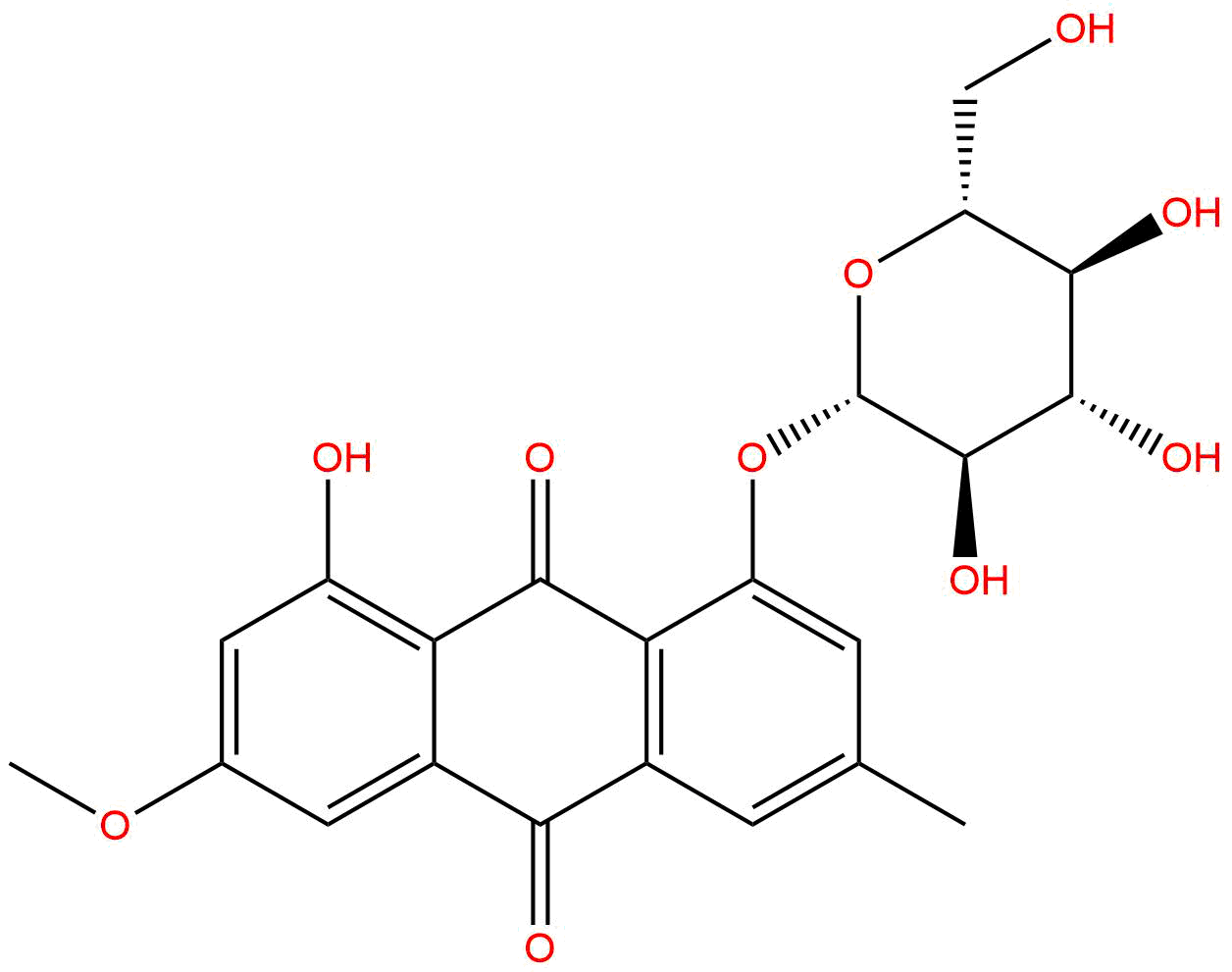


Product name: Physcion 1-glucoside
Synonym name: Physcion 1-O-β-D-glucoside;Physcion 1-O-β-D-glucopyranoside
Catalogue No.: BP4264
Cas No.: 26296-54-8
Formula: C22H22O10
Mol Weight: 446.408
Botanical Source:
Type of Compound:
Purity: 95%~99%
Analysis Method: HPLC-DAD or/and HPLC-ELSD
Identification Method: Mass, NMR
Packing: Brown vial or HDPE plastic bottle
Storage: Store in a well closed container, protected from air and light. Put into refrigerate or freeze for long term storage.
Whenever possible, you should prepare and use solutions on the same day. However, if you need to make up stock solutions in advance, we recommend that you store the solution as aliquots in tightly sealed vials at -20℃. Generally, these will be useable for up to two weeks.
The product could be supplied from milligrams to grams
Inquire for bulk scale.
For Reference Standard and R&D, Not for Human Use Directly.
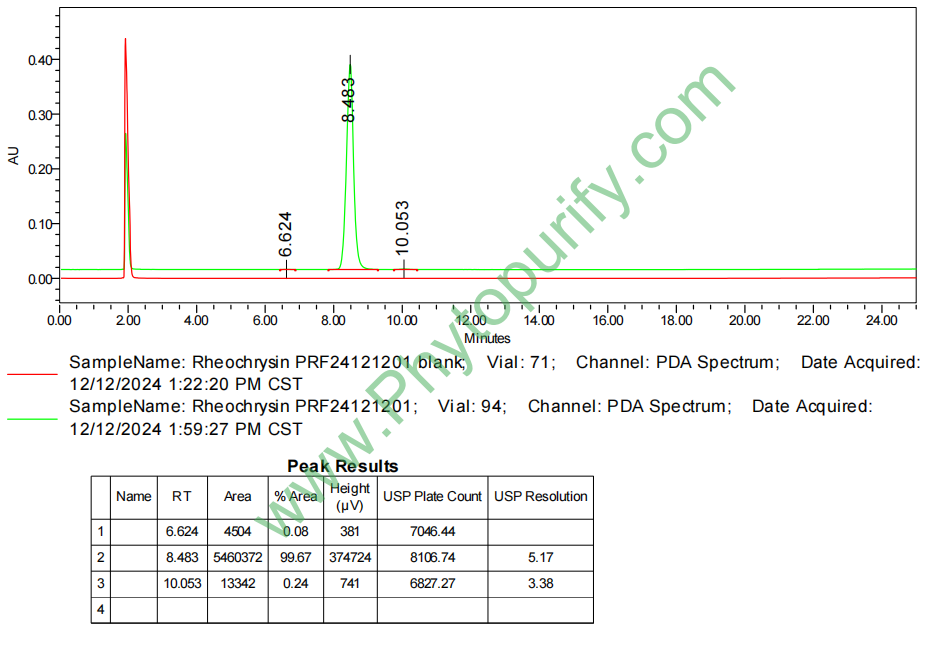
HPLC of Physcion 1-glucoside
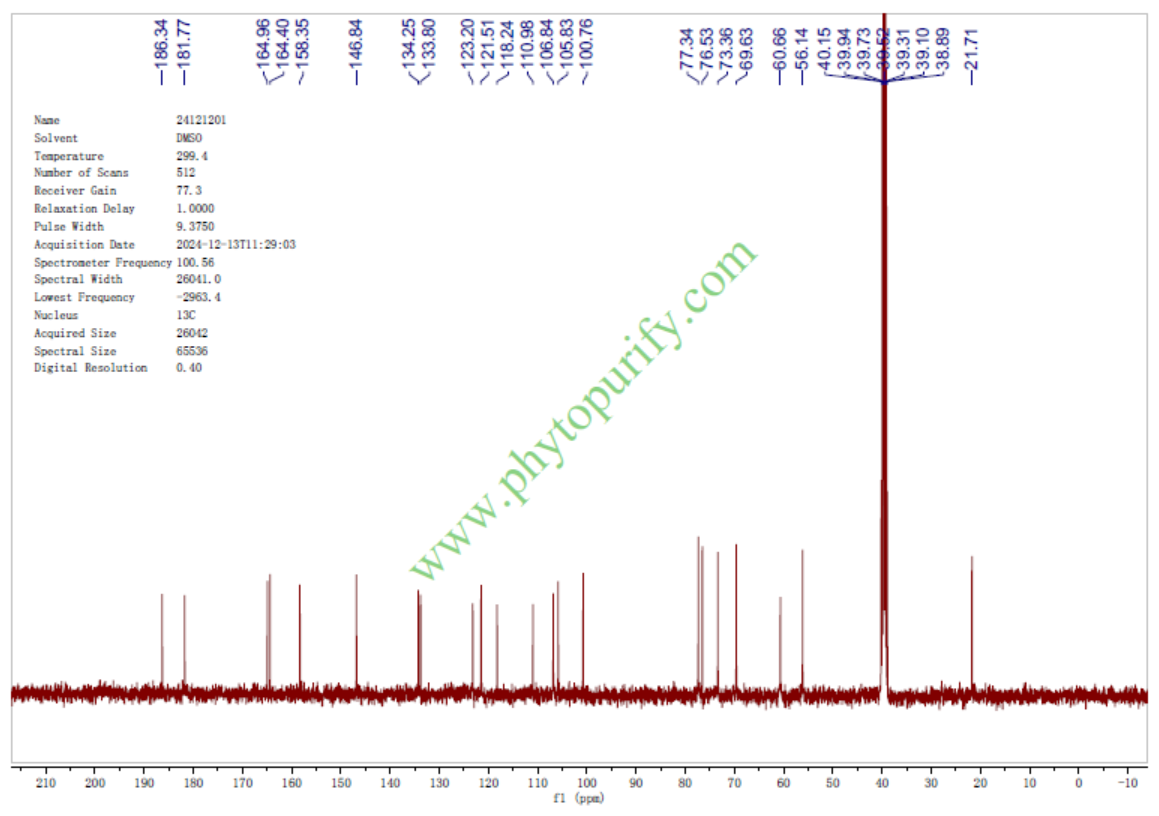
NMR of Physcion 1-glucoside
Storage conditions:Short-term storage at 2~8℃, long-term storage at -20 ~ -80℃
162.9800
.8662
.8009
.7428
.5308
.2418
Low
77.4990
3.8550
Yes
No
No
No
Yes
No
1.2
Yes
No
Yes
Yes
Physcion 1-glucoside (CAS number: 26296-54-8), as an important natural anthraquinone compound, has received widespread attention in the field of natural product pharmacology in recent years due to its unique biological activity and potential medicinal value. This compound is mainly isolated from the traditional Chinese medicine Rheum spp. and has significant multi-target regulatory ability, especially exhibiting good pharmacological activity in anti-inflammatory, antibacterial, anticancer, and regulating intestinal function. Its characteristics as an inhibitor of 6-phosphogluconate dehydrogenase (6PGD) provide new ideas for the treatment of metabolic related diseases; Simultaneously, by inhibiting the TLR4/NF - κ B signaling pathway, it exhibits anti-inflammatory and immunomodulatory potential. In addition, the regulatory effect of emodin methyl ether 1-glucoside on constipation related targets suggests its potential application in intestinal dysfunction diseases. This article will systematically review the chemical structure, sources, pharmacological activity, mechanism of action, pharmacological evaluation, and clinical application potential of the compound, aiming to provide theoretical basis and scientific guidance for subsequent drug development and clinical research.
Emodin methyl ether 1-glucoside belongs to the anthraquinone class of natural products and is a 1-glucoside derivative of emodin methyl ether (Physcion). Its molecular formula is C22H22O10 and its molecular weight is 446.4080. Structurally, the core of the molecule is an anthraquinone skeleton, and the hydroxyl group at position 1 is glycosylated to form a glycosidic bond, endowing it with high polarity and water solubility. Its LogP value is 0.8662, indicating moderate lipid solubility, which is beneficial for in vivo distribution and cell membrane penetration. The topological polar surface area (TPSA) is 162.98 Å ², reflecting the strong polarity and hydrogen bond donor/acceptor ability of the molecule, which affects its bioavailability and membrane permeability. The water solubility is 0.7428, indicating that the compound has a certain solubility in the aqueous phase, which is beneficial for the development of oral formulations. The low permeability of the blood-brain barrier suggests limited distribution in the central nervous system, which helps to reduce central side effects. The negative result of hERG channel inhibition experiment indicates a low risk of cardiac toxicity. The Ames mutagenicity test value is 1.2, indicating low mutagenicity and meeting safety requirements.
Emodin methyl ether 1-glucoside is mainly found in the traditional Chinese medicine Rheum palmatum, Rheum officinale, etc. Rhubarb, as a traditional Chinese medicine, is widely used in fields such as diarrhea, anti-inflammatory, and antibacterial. Its main active ingredients include anthraquinones, tannins, volatile oils, etc. Emodin methyl ether 1-glucoside, as one of the anthraquinone components, has a relatively low content and needs to be obtained through efficient extraction and separation techniques.
The extraction method usually adopts a combination of alcohol extraction and liquid-liquid distribution. Using 70% -95% ethanol or methanol as solvents, crude extracts are obtained by reflux extraction, followed by separation and purification using organic solvents such as ethyl acetate and chloroform. Further separation and purification of the extract were carried out using column chromatography (such as silica gel column, C18 reverse phase column) or high performance liquid chromatography (HPLC) techniques to obtain high-purity emodin methyl ether 1-glucoside. In recent years, the application of emerging technologies such as ultrasound assisted extraction and microwave-assisted extraction has improved extraction efficiency and purity, reduced solvent usage and extraction time.
The pharmacological activity research of emodin methyl ether 1-glucoside covers multiple aspects such as anti-inflammatory, antibacterial, anticancer, and regulation of intestinal function.
anti-inflammatory effect
This compound can significantly inhibit the Toll like receptor 4 (TLR4) - mediated NF - κ B signaling pathway, reduce the expression of pro-inflammatory factors such as TNF - α, IL-6, and IL-1 β, and thus exert anti-inflammatory effects. Both in vitro and in vivo experiments have confirmed its downregulation of inflammatory factors in inflammatory models, suggesting its potential application in chronic inflammatory diseases.
Antibacterial activity
Emodin methyl ether 1-glucoside exhibits inhibitory effects on various Gram positive and Gram negative bacteria, especially on drug-resistant strains such as Staphylococcus aureus and Escherichia coli. Its antibacterial mechanism may involve bacterial cell membrane disruption and metabolic inhibition.
Anti-cancer effect
This compound inhibits tumor cell proliferation by inducing apoptosis and autophagy in cancer cells. The mechanism includes activating the mitochondrial dependent apoptotic pathway, regulating the expression of Bcl-2 family proteins, and promoting cell cycle arrest. Meanwhile, as a 6PGD inhibitor, it interferes with the metabolic reprogramming of tumor cells, inhibiting their growth and metastasis. Multiple in vitro cell line and animal model studies have confirmed its anti-tumor potential.
Regulating intestinal function
Constipation, as a common gastrointestinal dysfunction, is associated with multiple ion channels and receptors. Emodin methyl ether 1-glucoside can regulate targets such as NR1H4, SLC5A1, GPBAR1, CFTR, promote intestinal peristalsis and water secretion, and improve constipation symptoms. Its protective effect on intestinal epithelial cells also provides the possibility for the treatment of intestinal diseases.
The multi-target mechanism of action of emodin methyl ether 1-glucoside mainly includes metabolic enzyme inhibition, signaling pathway regulation, and ion channel regulation.
Inhibition of 6-phosphogluconate dehydrogenase (6PGD)
6PGD is a key enzyme in the pentose phosphate pathway, involved in intracellular NADPH production and nucleotide synthesis. Emodin methyl ether 1-glucoside inhibits the activity of 6PGD by binding to it (IC50=38.5 μ M, Kd=26.0 μ M), blocks the metabolic demands of tumor cells, reduces oxidative stress, and induces cell death.
Inhibition of TLR4/NF - κ B signaling pathway
This compound exerts anti-inflammatory effects by inhibiting TLR4 receptor activation, blocking downstream MyD88 dependent NF - κ B signaling, reducing the production of inflammatory mediators.
Constipation related target regulation
By regulating the above targets, emodin methyl ether 1-glucoside can coordinate intestinal water and salt metabolism and kinetics, and improve constipation symptoms.
From the perspective of drug properties, emodin methyl ether 1-glucoside has good safety and pharmacokinetic characteristics. Its molecular weight (446.4) and LogP value (0.87) comply with Lipinski's rule, indicating good oral bioavailability. Moderate water solubility is beneficial for formulation development. Low blood-brain barrier permeability reduces the risk of central nervous system side effects. The non inhibitory hERG channel reduces the risk of cardiac toxicity. The Ames test results showed no significant mutagenicity and high safety.
In terms of pharmacokinetics, although specific in vivo metabolic data is limited, its glucoside structure is beneficial for enzymatic hydrolysis in the liver or gut microbiota after intestinal absorption, releasing active emodin methyl ether and exerting pharmacological effects. Its oral efficacy has been validated in multiple in vivo models. Further systematic research on ADME (absorption, distribution, metabolism, excretion) is needed in the future to clarify its metabolic pathways and half-life, providing a basis for clinical dose design.
Emodin methyl ether 1-glucoside, with its multi-target and multi mechanism pharmacological activity, has shown extensive clinical application potential:
Anti inflammatory diseases
Its ability to inhibit the TLR4/NF - κ B pathway makes it a potential therapeutic candidate for chronic inflammatory diseases such as inflammatory bowel disease, rheumatoid arthritis, etc.
Antitumor therapy
As a 6PGD inhibitor and an active molecule that induces cell apoptosis and autophagy, emodin methyl ether 1-glucoside is expected to become a metabolic targeted anti-cancer drug, especially for solid tumors with significant metabolic reprogramming.
Constipation and intestinal dysfunction
By regulating multiple intestinal related targets, this compound can improve intestinal motility and secretion, making it suitable for adjuvant therapy of functional constipation and related gastrointestinal diseases.
Antibacterial applications
Its inhibitory effect on various pathogens provides new ideas for the development of anti infective drugs, especially in the context of increasingly severe antibiotic resistance.
Future research should focus on its preclinical safety evaluation, pharmacokinetic optimization, and formulation development, while combining modern molecular pharmacology methods to deeply analyze its mechanism of action and target network. By modifying its structure and designing drugs to enhance its bioavailability and targeting, it is expected to promote its clinical application.
Emodin methyl ether 1-glucoside, as a natural anthraquinone compound with multiple pharmacological activities, has shown broad prospects for drug development due to its unique chemical structure and rich biological activity. Its multi-target mechanisms in anti-inflammatory, anticancer, antibacterial, and regulation of intestinal function provide new strategies for the treatment of related diseases. The drug efficacy evaluation shows that it has good safety and oral efficacy, and is suitable for further drug development. In the future, it is necessary to strengthen its pharmacokinetic research and preclinical evaluation, combined with modern drug design techniques, to promote its clinical application. In summary, as an important object of pharmacological research on natural products, emodin methyl ether 1-glucoside has significant scientific value and application potential.
