Introduction/Overview
Bone metabolism homeostasis is the core of maintaining bone health, and its imbalance is the common pathological basis of various diseases such as osteoporosis, rheumatoid arthritis bone erosion, and tumor bone metastasis. Among them, excessive bone resorption mediated by osteoclasts is a key link leading to bone loss and structural damage. Therefore, targeting the function of osteoclasts, especially their unique acidic microenvironment formation mechanism, has become an important strategy for the development of anti bone resorption drugs. Osteoclasts secrete protons through V-ATPase (vacuolar H+- ATPase) in bone resorption cavities, creating a local acidic environment that dissolves bone minerals and activates bone matrix degrading enzymes. V-ATPase, as the "proton pump" of this process, is a highly promising therapeutic target. In recent years, V-ATPase inhibitors derived from natural products have attracted extensive attention due to their high efficiency and selectivity. Among them, Diphyllin stands out, showing excellent bone absorption inhibitory activity and unique antiviral and other multiple pharmacological effects, becoming a new star molecule connecting bone metabolism and infectious diseases research.
Er Ye Cao Su is a natural compound of aromatic naphthalene lignans, initially discovered for its antiviral activity. With the deepening of research, its characteristics as a highly efficient and selective V-ATPase inhibitor have been revealed. Its inhibitory activity on osteoclast V-ATPase is at the nanomolar level, which can effectively block the acidification of lysosomes and bone resorption cavities, thereby inhibiting bone resorption without affecting the bone formation function of osteoblasts. In addition, its broad-spectrum antiviral activity, especially its anti-HIV-1 effect, provides a unique perspective for its application in infection related bone diseases such as HIV infection related bone loss. This article aims to provide a systematic review of the chemical properties, plant sources, pharmacological activities, mechanisms of action, medicinal properties, and application prospects of Eryecao Su in bone metabolism related diseases and antiviral fields, in order to provide comprehensive scientific references for the in-depth research and potential drug development of this compound.
Chemical structure and physicochemical properties
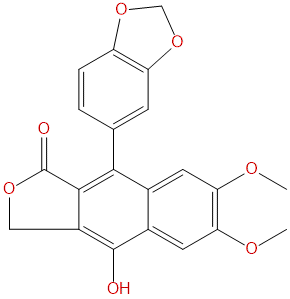
Diphyllin, chemical name (1S, 2R, 3S) -4,7-dimethoxy-5- (3,4-methylenedioxyphenyl) -1,2,3,4-tetrahydronaphtho [2,1-c] pyran-1,2,3-triol, CAS number 22055-22-7. Its molecular formula is C21H20O8 and its molecular weight is 380.3520 g/mol.
From a chemical structure perspective, dicotyledonol belongs to the aromatic naphthalene lignans, and its core skeleton is composed of a tetrahydronaphthalene ring (A, C ring) fused with a pyran ring (D ring), forming a rigid four ring system. Its structural features include: 1) a 3,4-methylenedioxyphenyl group (B ring) connected to the C-5 position, which is one of the key pharmacophores for its interaction with V-ATPase; 2) The three hydroxyl groups (C-1, C-2, C-3) connected to the A ring enhance the polarity and potential hydrogen bonding ability of the molecule; 3) There are two methoxy groups (C-4, C-7) on the C-ring. This unique fused ring structure and abundant oxygen-containing substituents determine its biological activity and physicochemical properties.
In terms of physicochemical properties, the lipid water partition coefficient (LogP) of dicotyledonous grass extract is 3.2972, indicating its moderate lipophilicity and favorable transmembrane transport. Its topological polar surface area (TPSA) is 83.45 Å ², reflecting the polarity brought by multiple hydroxyl and ether oxygen atoms in the molecule. The water solubility is relatively low, about 0.0273 mg/mL, which to some extent limits its direct application in aqueous formulations, but can be improved through structural modification or formulation methods. It is worth noting that the calculation predicts its blood-brain barrier permeability to be "high", indicating its potential therapeutic potential for central nervous system diseases such as neuroviral infections or brain lesions related to bone metastases. In addition, preliminary pharmacological risk assessment showed that the hERG inhibition risk was "no", and the Ames test result was 1.8 (usually considered>1.5 to indicate potential mutagenic risk, requiring further experimental verification). These data provide direction for subsequent safety optimization.
Plant sources and extraction methods
Er Ye Cao Su is widely present in various plants, mainly sourced from Podophyllum, Dysosma, Diphylleia, and some mosses. For example, traditional Chinese medicines such as Dysosma versipellis, Sinopodophyllum hexandrum, and Diphylleia grayi from Japan are important resources for extracting dihydroartemisinin. These plants are often used in folk medicine for anti-inflammatory, anti-tumor, and antiviral treatments, and some of their pharmacological activities are believed to be related to the presence of dihydroartemisinin and its derivatives.
Organic solvent extraction combined with chromatographic separation technology is commonly used to extract and separate dihydroartemisinin from plant materials. The standard procedure is as follows:
1. Raw material pretreatment Dry and crush plant roots or whole plants.
2. Solvent extraction Polar solvents such as methanol, ethanol, or acetone are commonly used for cold soaking or heating reflux extraction to fully dissolve lignin components.
3. Extraction and Enrichment After concentrating the total extract, liquid-liquid extraction was carried out using solvents such as petroleum ether, ethyl acetate, and n-butanol in sequence. Er Ye Cao Su is mainly enriched in the ethyl acetate fraction.
4. Separation and purification The ethyl acetate fraction was preliminarily separated by silica gel column chromatography, using chloroform methanol or petroleum ether ethyl acetate gradient elution at different ratios. Subsequently, further refining is carried out through preparative high performance liquid chromatography (HPLC), reverse phase chromatography or gel chromatography (such as Sephadex LH-20) to obtain high-purity diclofenac monomer.
5. Identification and characterization The purified compound was structurally confirmed by nuclear magnetic resonance (NMR, including 1H-NMR and 13C-NMR), mass spectrometry (MS), infrared spectroscopy (IR), and thin-layer chromatography (TLC) or high-performance liquid chromatography (HPLC) compared to standard samples.
In recent years, in order to meet research needs and protect wild plant resources, biotechnological methods such as plant cell culture and synthetic biology have also been explored for the production of dihydroartemisinin and its precursors.
Pharmacological activity research
Er Ye Cao Su exhibits diverse pharmacological activities, mainly concentrated in the fields of anti bone resorption and antiviral, and has shown potential in anti-tumor and other areas.
1. Anti bone resorption activity
This is the pharmacological effect of Eryecao Su that has received the most attention. Research has shown that dihydroartemisinin is an orally effective inhibitor of osteoclast function. At the cellular level, it can specifically inhibit the proton pump function of osteoclast V-ATPase at extremely low concentrations (IC50=0.6 nM for inhibiting acid influx), hindering lysosomal acidification and acidification of bone resorption cavities, thereby inhibiting the degradation of bone matrix. Its IC50 for inhibiting osteoclast mediated bone resorption is 17 nM, demonstrating extremely high efficacy. Importantly, while effectively inhibiting osteoclasts, berberine has no significant effect on the proliferation, differentiation, and mineralization functions of osteoblasts within the same concentration range, and even shows a slight promoting effect on osteogenesis in some studies. This selectivity of "inhibiting osteoclasts without harming osteogenesis" is its potential advantage compared to traditional anti bone resorption drugs such as bisphosphonates. In animal models, dihydroartemisinin can effectively prevent and treat bone loss induced by ovariectomy (simulating postmenopausal osteoporosis) or inflammatory factors (such as RANKL) in mice, improve bone microstructure, and no significant liver or kidney toxicity was observed.
2. Antiviral activity
Eryecao Su has broad-spectrum antiviral potential, especially in the study of HIV-1. Its IC50 for anti-HIV-1 is 0.38 μ M, and its mechanism of action is mainly related to the inhibition of V-ATPase. After the virus enters the cell, its genome needs to be released from endosomes or lysosomes, which depends on the acidic environment inside the organelles. Er Ye Cao Su inhibits V-ATPase, increases the pH value of endosomes/lysosomes, thereby blocking the fusion of viral envelope and endosome membrane and the release of viral genome. In addition, the study suggests that it may act by interfering with other targets related to virus replication, such as HIV-1 integrase. In addition to HIV-1, dihydroartemisinin also exhibits inhibitory activity against herpes simplex virus (HSV), cytomegalovirus (CMV), dengue virus, etc. Its targets may involve multiple acid dependent organelles in the viral replication cycle.
3. Other activities
Er Ye Cao Su also exhibits certain anti-tumor activity, which may be related to the inhibition of V-ATPase in tumor cells. Tumor cells often overexpress V-ATPase to maintain their intracellular pH homeostasis and promote invasion and metastasis. Inhibition of V-ATPase can disrupt the metabolism and signaling pathways of tumor cells, inducing apoptosis. In addition, its anti-inflammatory and anti angiogenic effects have also been reported, and these activities may jointly contribute to its therapeutic potential in complex diseases such as bone tumor metastasis.
Mechanism of action and molecular targets
The core mechanism of action of Eryecao Su is as an effective and selective V-ATPase inhibitor. V-ATPase is a multi subunit complex consisting of the V1 domain responsible for ATP hydrolysis and the V0 domain responsible for proton transport. Research has shown that dihydroartemisinin may mainly act on the a subunit of the V0 domain, interfering with its proton channel function and thereby inhibiting the transport of protons from the cytoplasm to the organelle lumen or extracellular space.
In Anti bone resorption In terms of molecular mechanism, it is clear: osteoclasts form closed "bone resorption pits" on the bone surface and express a large amount of V-ATPase through the crease edge, pumping protons into the pits and creating an acidic environment with a pH of about 4.5. Er Ye Cao Su specifically inhibits V-ATPase in this area, blocking the acidification process. A low pH environment is a necessary condition for the dissolution of hydroxyapatite and activation of acidic hydrolytic enzymes such as protease K. Therefore, the inhibition of acidification directly leads to the obstruction of bone mineral dissolution and the inactivation of bone matrix degrading enzymes, effectively inhibiting bone resorption. Its selectivity may stem from the specificity of the V-ATPase subunit composition in osteoclasts or its high concentration enrichment at the edge of osteoclast folds.
In antiviral In the field, its mechanism is also closely related to V-ATPase inhibition. Many viruses, such as HIV and HSV, enter cells through endocytosis and complete molting and genome release in the acidic environment of endosomes/lysosomes. Er Ye Cao Su inhibits V-ATPase on the endosome/lysosome membrane, neutralizes its internal pH, thereby blocking the conformational changes of viral envelope proteins and fusion with the endosome membrane, trapping the virus in the endosome and ultimately transporting it to lysosomes for degradation. In addition to this main mechanism, literature suggests that sophocarpine may also interact with other viral targets, such as inhibiting the activity of HIV-1 integrase (INT) or interfering with the function of viral gene expression regulatory proteins (such as ICP27, UL42, UL54 of HSV). The broad-spectrum antiviral effect of it is due to the universal dependence of different viruses on the acidic intracellular environment.
In addition, the potential effects of dihydroartemisinin on myeloperoxidase (MPO) and its structural similarity to chemokine receptor CCR5/CXCR4 antagonists may also be involved in regulating inflammation and virus entry processes, but more direct evidence is needed to confirm these.
Evaluation of drug properties and pharmacokinetics
Based on its physicochemical parameters and preliminary biological data, a comprehensive evaluation of the medicinal properties of Eryecao Su was conducted
Advantage aspects:
1. Efficiency and selectivity The nanomolar level of V-ATPase inhibitory activity and high selectivity for osteoclast function are its core advantages as a candidate drug.
2. Oral efficacy Animal experiments have confirmed that oral administration can effectively inhibit bone resorption and improve medication convenience.
3. Good membrane permeability Moderate LogP values and higher blood-brain barrier permeability predictions are beneficial for their distribution to target tissues.
4. Preliminary safety There is no risk of hERG inhibition, which reduces concerns about cardiac toxicity (long QT syndrome).
Challenge and Optimization Direction:
1. Poor water solubility Low water solubility may affect its oral bioavailability and formulation development. It can be improved by preparing salts, prodrugs (such as esterified hydroxyl groups), or using formulation techniques such as nanocrystals, liposomes, cyclodextrin inclusion, etc.
2. Potential genetic toxicity risk The Ames test results (1.8) suggest the need for more comprehensive genetic toxicity testing (such as micronucleus test, chromosome aberration test), and to reduce this risk through structural modifications (such as adjusting methoxy or methylenedioxy).
3. Lack of pharmacokinetic data At present, the publicly available systematic pharmacokinetic studies (such as absorption, distribution, metabolism, and excretion) data on dihydroartemisinin are not sufficient. It is necessary to conduct in-depth research on its metabolic pathways in vivo (which may involve glucuronidation or sulfation of hydroxyl groups, as well as demethylation of methoxy groups), major metabolites, half-life, tissue distribution characteristics (especially bone tissue targeting), and excretion mode.
4. Selective optimization Although selective for osteoclasts, it is still necessary to evaluate the potential side effects of inhibiting V-ATPase in other tissues (such as renal tubules and gastric mucosa), such as tubular acidosis and gastric acid secretion, and further optimize the structure to improve the treatment window.
Clinical application prospects and prospects
The unique dual pharmacological properties of Eryecao Su have brought broad application prospects in multiple disease fields.
1. Bone metabolism disorders
- osteoporosis As a new type of anti bone resorption drug, it is particularly suitable for patients who are intolerant or have poor therapeutic effects on existing drugs such as bisphosphonates. Its characteristics of "inhibiting bone resorption and preserving bone formation" may be more conducive to long-term maintenance of bone quality and strength.
- Rheumatoid arthritis bone erosion Overactivation of osteoclasts in an inflammatory environment is the main cause of joint bone destruction. The potential anti-inflammatory activity of Eryecao extract may bring synergistic benefits while inhibiting bone resorption.
- Tumor bone metastasis and multiple myeloma Tumor cells stimulate osteoclasts, leading to osteolytic destruction. Er Ye Cao Su can directly inhibit osteoclasts and may exert direct anti-tumor effects by inhibiting the V-ATPase of tumor cells themselves, achieving the goal of "killing two birds with one stone".
- periodontal disease Alveolar bone resorption is the main characteristic of periodontal disease, and local application or systematic administration of dihydroartemisinin may become a new strategy for controlling periodontal bone loss.
2. Viral infectious diseases
- HIV infection and related bone diseases Er Ye Cao Su can both inhibit HIV-1 replication and prevent bone loss that may be caused by HIV infection or antiretroviral therapy itself, providing a unique dual protection possibility for HIV infected individuals.
- Other viral infections The activity of HSV, CMV and other viruses makes them valuable for the treatment of herpes virus infections and antiviral infections after organ transplantation.
3. Combination therapy strategy
The potential for the combined application of Eryecao extract and existing drugs is enormous. For example, when used in combination with bone formation promoting drugs such as teriparatide, it may have a synergistic effect, leading to faster bone reconstruction; Combining antiviral drugs with different mechanisms of action can enhance efficacy and reduce the development of drug resistance.
Future research directions and prospects:
1. Structural optimization and derivative development Based on the parent nucleus of Eryecao, a systematic structure-activity relationship study is conducted to design and synthesize derivatives or prodrugs with better water solubility, higher activity, stronger selectivity, and lower toxicity.
2. In depth mechanism research Using techniques such as cryo electron microscopy to elucidate the precise binding mode of the complex between dicotyledonous grass extract and V-ATPase; Explore other direct targets in antiviral therapy besides acidification inhibition.
3. Pharmaceutical research Develop bone targeted delivery systems (such as bisphosphonate based bone targeted nanoparticles) to enhance their enrichment in bone tissue, reduce systemic exposure and side effects.
4. Preclinical and clinical research Complete the preclinical safety evaluation of the system (GLP toxicology study) and advance its early clinical trials in specific indications such as osteoporosis and tumor bone metastasis.
Conclusion
As a plant derived aromatic naphthalene lignan, Eryecao has successfully bridged the gap between bone metabolism disease treatment and antiviral therapy due to its core characteristics as a highly efficient and selective V-ATPase inhibitor. It inhibits osteoclast mediated bone resorption at the nanomolar level without affecting osteogenic function, demonstrating great potential for treating bone diseases such as osteoporosis; At the same time, it exhibits broad-spectrum antiviral activity by interfering with the acidic organelle environment necessary for the virus lifecycle. Despite facing challenges such as water solubility and potential genetic toxicity in drug development, these obstacles are expected to be overcome through the optimization of modern medicinal chemistry, formulation, and pharmacology methods. With the in-depth analysis of its mechanism of action, the rational design of its derivatives, and the innovation of its delivery system, dihydroartemisinin is expected to develop from an interesting natural product into a new therapeutic drug for treating bone resorption disorders and specific viral infections, providing new treatment options for related fields and fully reflecting the sustained vitality and value of natural products in innovative drug development.