Introduction/Overview
Natural products, as an important treasure trove for drug discovery, play an irreplaceable role in the long history of human fight against diseases. Among them, anthraquinone and its derivatives have always been a hot topic in medicinal chemistry and pharmacology research due to their wide range of biological activities, such as anti-inflammatory, antibacterial, and anti-tumor effects. Isorubrofusarin-6-O - β - gentiioside (CAS: 200127-93-1), as a structurally unique benzochromenone glycoside, has attracted much attention in recent years due to its multi-target and multi pathway potential in the field of anti-tumor effects. This compound is a derivative of erythromycin, characterized in that the 6th hydroxyl group of the parent nucleus of isoerythromycin is linked to a gentian disaccharide through a glycosidic bond. This glycosylation modification not only significantly changes its physicochemical properties, but may also profoundly affect its biological activity and selectivity. Preliminary studies have revealed that the compound exerts anti-tumor effects through regulating cell apoptosis, inhibiting tumor invasion and metastasis, and interfering with tumor cell energy metabolism at multiple levels. Its targets involve multiple key proteins such as MCL1, BCL2, STAT3, MMP2, TOP1/2A, etc. This article aims to provide a systematic review of the chemical structure, plant origin, pharmacological activity, mechanism of action, and pharmacological characteristics of isofuscin gentiopicroside, in order to provide comprehensive scientific basis for the deep development and clinical application of this natural product.
Chemical structure and physicochemical properties
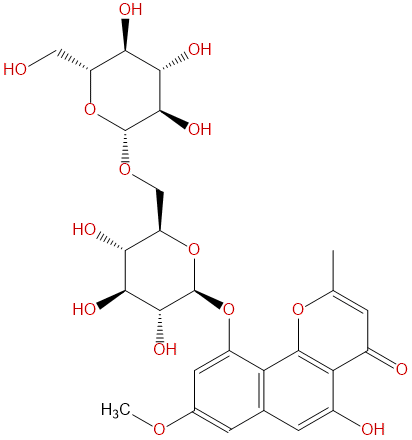
The chemical structure of isorubicin gentiopicroside consists of a benzochromenone (isorubicin) core and a gentiopicroside group. Its parent nucleus belongs to the benzochromenone subclass of anthraquinone derivatives and has a typical conjugated tricyclic system, which is the core pharmacophore for its biological activity. The characteristic structure of this compound is that the hydroxyl group at the C-6 position of its parent nucleus is connected to a gentian disaccharide through a β - glycosidic bond. Gentian disaccharide is a disaccharide unit formed by connecting two molecules of glucose through a β (1 → 6) glycosidic bond. This glycosylation modification has a decisive impact on the properties of the compound.
From the analysis of physical and chemical properties, its molecular weight is 596.5380, which belongs to the category of medium-sized molecules. The calculated lipid water partition coefficient LogP value is -0.4257, indicating that the compound has good hydrophilicity, mainly due to its large polar sugar moiety. The topologically polar surface area (TPSA) is as high as 238.2000 Å ², further confirming its strong polarity characteristics and indicating that it may have poor cell membrane permeability. The theoretically calculated water solubility value is 3.8192, which belongs to the solubility range, providing convenience for its in vitro and in vivo studies using water as a medium. Based on these parameters, the compound conforms to some of the "Five Rules for Drug like Compounds" (such as exceeding the rule of molecular weight<500, LogP<5, and having a large number of hydrogen bond donors and acceptors), and belongs to a lead compound with certain development potential but requiring structural optimization.
Plant sources and extraction methods
Isostreptomycin gentiopicroside is mainly derived from various traditional medicinal plants, especially common in Cassia and Senna plants. These plants are often used in traditional Asian medicine for clearing heat, improving vision, moisturizing the intestines, and promoting bowel movements. Their active ingredients are mostly related to anthraquinone substances. This compound is usually present as one of the anthraquinone glycosides in these plants, and its content varies significantly depending on the plant species, origin, harvest season, and location (such as seeds, leaves, or pods).
The extraction and separation method follows the conventional process of natural product chemistry. Firstly, polar solvents such as methanol, ethanol, or aqueous ethanol are used to extract or reflux the dried and crushed plant materials, in order to fully obtain polar components including glycosides. Subsequently, macroporous adsorption resin column chromatography is used for preliminary enrichment and decolorization, often using ethanol water systems of different concentrations for gradient elution. The target compound usually flows out in the medium to high polarity range. Further purification depends on modern chromatographic techniques such as normal or reverse phase silica gel column chromatography, Sephadex LH-20 column chromatography and high performance liquid chromatography (HPLC). The combination of reverse phase C18 chromatography column with methanol water or acetonitrile water mobile phase is an effective method for obtaining high-purity monomers. Structural identification involves the comprehensive use of UV visible spectroscopy (UV Vis, characteristic absorption of benzophenones), mass spectrometry (MS, providing molecular weight and fragment information), and nuclear magnetic resonance spectroscopy (NMR, especially 1H-NMR, 13C-NMR, HSQC, and HMBC) to confirm its planar structure and the connection positions and configurations of glycosidic bonds.
Pharmacological activity research
The pharmacological activity research of isorubicin gentiopicroside is currently mainly focused on the field of anti-tumor, and has shown significant activity in various in vitro tumor cell models and some in vivo experiments.
1. Anti proliferative and cytotoxic effects: The compound showed dose-dependent growth inhibition and cytotoxicity to a variety of human tumor cell lines, including breast cancer (such as MCF-7), liver cancer (such as HepG2), colon cancer (such as HT-29), lung cancer (such as A549), etc. Its half maximal inhibitory concentration (IC50 value) is usually in the micromolar range, showing a certain selectivity and higher sensitivity to certain cancer cells than normal cells.
2. Inducing cell apoptosis: Flow cytometry analysis showed that the compound can significantly increase the apoptosis rate of tumor cells. Hoechst 33258 or DAPI staining can observe typical morphological features of apoptosis, such as nuclear condensation, chromatin condensation, and formation of apoptotic bodies. This is one of the core mechanisms of its anti-tumor effect.
3. Inhibit cell migration and invasion: Through scratch healing experiments and Transwell chamber invasion experiments, it has been confirmed that the compound can effectively inhibit the migration and invasion ability of high metastatic potential tumor cells, indicating its potential value in anti-tumor metastasis.
4. Other potential activities: Based on the correlation between its parent nucleus structure and known biological activity, this compound may also have antioxidant, anti-inflammatory, and other activities, but experimental data in these areas still needs to be further enriched.
Mechanism of action and molecular targets
The anti-tumor effect of isorubicin gentiopicroside involves synergistic regulation of multiple targets and pathways, and its mechanism of action is complex and networked.
1. Regulating the apoptotic pathway (targeting MCL1 and BCL2): This compound can downregulate the expression of anti apoptotic proteins B cell lymphoma 2 (BCL2) and myeloid leukemia 1 (MCL1), while possibly upregulating the expression of pro apoptotic proteins such as BAX, leading to a decrease in mitochondrial membrane potential, release of cytochrome C, and activation of the caspase cascade reaction, ultimately triggering cell apoptosis.
2. Inhibit signal transduction and transcriptional activation (targeting STAT3, MAPK1): Signal transducer and activator of transcription factor 3 (STAT3) is an important oncogenic transcription factor. Research has shown that this compound can inhibit the phosphorylation (activated form) of STAT3, block its nuclear translocation, and inhibit the transcription of downstream target genes such as Cyclin D1 and Bcl xL. Meanwhile, it may also have a regulatory effect on the mitogen activated protein kinase 1 (MAPK1, ERK2) pathway, affecting cell proliferation and survival signals.
3. Inhibit tumor invasion and angiogenesis (targeting MMP2 and HIF1A): This compound can significantly reduce the expression and activity of matrix metalloproteinase 2 (MMP2). MMP2 is a key enzyme that degrades the extracellular matrix, and inhibition of its activity can effectively hinder the invasion and metastasis of tumor cells. In addition, it can downregulate the expression of hypoxia inducible factor 1 alpha (HIF1A). HIF1A is a core regulatory factor for tumors to adapt to the hypoxic microenvironment, and its downregulation inhibits the expression of angiogenic factors such as vascular endothelial growth factor (VEGF), thereby suppressing tumor angiogenesis.
4. Interference with DNA metabolism and hormone regulation (targeting TOP1/TOP2A, ESR1, CYP19A1): As a potential inhibitor of DNA topoisomerases I and II α (TOP1, TOP2A), this compound may interfere with DNA replication, transcription, and repair processes, leading to DNA damage and cell death. In hormone dependent tumors (such as breast cancer), it may also interfere with estrogen signaling pathway by acting on estrogen receptor alpha (ESR1) or aromatase (CYP19A1), thereby inhibiting tumor growth.
In summary, isofuscin gentiopicroside forms a multi-target attack network by simultaneously acting on multiple key biological processes such as apoptosis regulation, signal transduction, invasion and metastasis, and DNA metabolism. This helps overcome the problem of single target drug resistance, but also poses challenges for its mechanism research and selective optimization.
Evaluation of drug properties and pharmacokinetics
Based on its theoretical calculations and preliminary experimental data, a preliminary evaluation of the pharmacological properties of isofuscin gentiopicroside is conducted
1. Prediction of absorption, distribution, metabolism, and excretion (ADME) characteristics:
* Absorption: High TPSA and strong hydrophilicity (low LogP) suggest that its oral bioavailability may be low and its passive absorption in the gastrointestinal tract may be poor. The glycosidic structure may make it a substrate for intestinal transporters (such as glucose transporters) or be hydrolyzed by gut microbiota β - glucosidase, which complex factors affect its actual absorption.
* Distribution: Due to its high molecular weight and polarity, its ability to penetrate the blood-brain barrier (BBB) is predicted to be "low", which is an unfavorable factor for the treatment of central nervous system tumors, but may reduce the risk of central nervous system side effects. The distribution characteristics of its organization need to be clarified through in vivo experiments.
* Metabolism: As a glycoside compound, it is likely to undergo hydrolysis (deglycosylation) in the body to generate aglycones (isofuscin), which have enhanced lipid solubility and may have different activities and metabolic pathways. The metabolism of hepatic microsomal enzymes (such as CYP450) on their aglycones is a key focus of future research.
* Excretion: Expected to be primarily excreted through the kidneys in the form of prototypes or metabolites.
2. Preliminary safety assessment:
* HERG inhibition: The predicted result is' no ', indicating a low potential risk of causing QT interval prolongation in the heart, which is a favorable safety feature.
* Genetic toxicity: The Ames test value is 0.6 (usually expressed in terms of mutation rate, subject to specific experimental judgment criteria), which suggests that its mutagenic risk may be low, but it needs to be confirmed through a more complete combination of genetic toxicity tests (such as micronucleus test, chromosome aberration test).
3. Challenges and optimization directions for drug development:
The main challenge currently faced is Poor permeability and potential metabolic instability Future structural optimization strategies may include modifying the sugar moiety (such as preparing prodrugs, replacing sugar moieties), selectively restructuring the glycoside nucleus to improve membrane permeability, or developing novel drug delivery systems (such as nanoparticles, liposomes) to improve their absorption and targeted delivery.
Clinical application prospects and prospects
As a multi-target natural lead compound for anti-tumor treatment, the clinical application prospects of erythromycin gentiopicroside are broad but also full of challenges.
1. Development prospects:
* Lead compounds of anti-tumor drugs: Its multi-target mechanism of action provides valuable molecular frameworks for the development of new anti-tumor drugs, especially for malignant tumors that are prone to drug resistance. Through rational drug chemistry optimization, it is expected to obtain derivatives with stronger activity, higher selectivity, and better pharmacokinetic properties.
* Candidates for combination therapy: Due to its unique mechanism of action, when used in combination with existing chemotherapy drugs or targeted drugs, it may produce synergistic effects, reduce their respective dosages and toxic side effects, and overcome drug resistance.
* Adjuvant anti metastatic therapy: Its inhibitory effect on MMP2 and HIF1A makes it potentially valuable in inhibiting tumor metastasis and recurrence.
2. Challenges faced:
* Complexity of mechanism of action: The multi-target characteristic is a double-edged sword. While it brings therapeutic advantages, it also makes it difficult to clarify its exact main target and off target effects, increasing the complexity of safety assessment.
* Drug bottleneck: As mentioned earlier, its poor drug properties (especially permeability) are the main obstacle to clinical translation.
* Natural source restrictions: The extraction and isolation yield from plants is limited, making it difficult to meet the needs of in-depth research and future development. Therefore, the development of chemical total synthesis or biosynthetic methods (such as synthetic biology) is crucial.
3. Future research directions:
* In depth mechanism research: Using chemical biology methods such as affinity fishing and proteomics to directly identify the interacting protein network within its cells and draw a more accurate mechanism map.
* Pharmacokinetic study of the system: Conduct comprehensive in vivo ADME research to clarify its absorption, distribution, metabolites, excretion pathways, and absolute bioavailability.
* Research on Structural Optimization and Structure Performance Relationship: Systematically synthesize a series of sugar and glycoside modified derivatives, establish structure-activity relationships, and guide optimization directions.
* Research on New Delivery Systems: Explore modern pharmaceutical methods such as nanotechnology to improve their solubility, stability, and tumor targeting.
Conclusion
Isostreptomycin gentian glycoside is a benzochromenone glycoside with significant anti-tumor potential discovered from traditional medicinal plants. It exhibits multidimensional pharmacological activity in inhibiting tumor cell proliferation, inducing apoptosis, and preventing invasion and metastasis by simultaneously acting on multiple key tumor related targets such as MCL1, BCL2, STAT3, MMP2, and TOP1/2A. Although it currently faces challenges in drug development such as poor permeability and complex mechanisms, these characteristics precisely represent its unique value as a multi-target therapeutic drug. With the interdisciplinary integration and in-depth exploration of natural product chemistry, drug design, molecular pharmacology, and pharmacy, through systematic structural optimization, mechanism elucidation, and dosage form innovation of this lead compound, it is expected to be developed into a new, efficient, and low toxicity anti-tumor drug or adjuvant therapy, providing new strategies and choices for the treatment of malignant tumors. Studying it not only helps to promote the translational medicine process of this specific compound, but also provides a beneficial research paradigm for discovering multi-target drugs from complex natural products.